
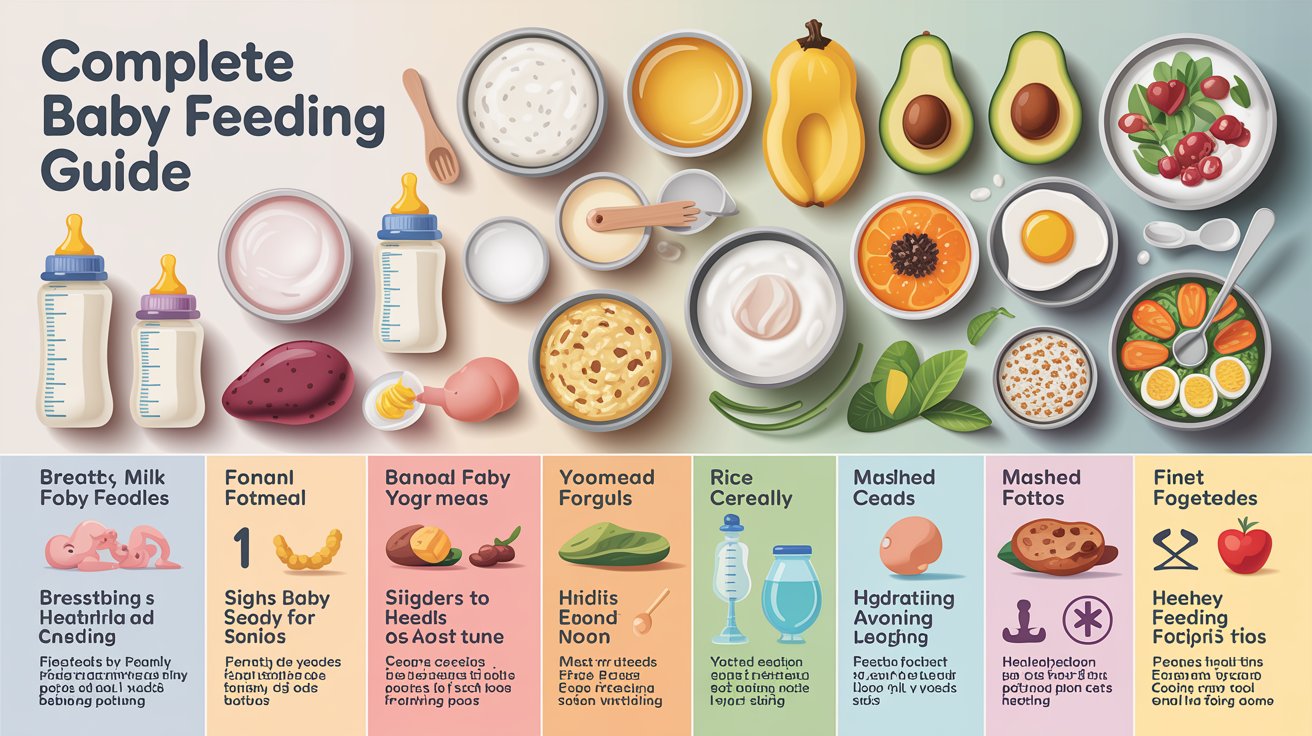
Feeding a baby properly is one of the most important parts of healthy growth and development. Babies need the right balance of nutrients, vitamins, and minerals at every stage of infancy. A proper feeding guide helps parents understand when to introduce new foods, how much food babies need, and which foods are safest for healthy development.
A balanced baby diet supports brain growth, strong bones, healthy digestion, and a strong immune system. Parents should always introduce foods slowly and monitor their baby for allergies or digestive issues.
Baby Feeding Schedule by Age
| Age | Recommended Food | Feeding Frequency |
|---|---|---|
| 0–6 Months | Breast milk or formula | Every 2–4 hours |
| 6–8 Months | Pureed fruits and vegetables | 2–3 meals daily |
| 8–10 Months | Mashed foods and soft proteins | 3–4 meals daily |
| 10–12 Months | Finger foods and soft meals | 3 meals + snacks |
| 1–2 Years | Balanced toddler meals | 3 meals + 2 snacks |
Breastfeeding and Formula Feeding
During the first 6 months, babies should mainly consume breast milk or infant formula.
Benefits of Breastfeeding
- Provides natural immunity
- Easy to digest
- Supports brain development
- Strengthens mother-baby bonding
- Contains essential nutrients
Formula Feeding Benefits
- Convenient for some families
- Provides balanced nutrition
- Helps monitor feeding amounts
- Alternative when breastfeeding is not possible
When to Start Solid Foods
Most babies are ready for solid foods around 6 months of age.
Signs Your Baby Is Ready
- Can hold their head steady
- Sits with support
- Shows interest in food
- Opens mouth when food is offered
- Swallows food properly
Best First Foods for Babies
Introducing healthy first foods helps babies develop good eating habits.
Fruits
- Banana
- Apple puree
- Pear puree
- Avocado
Vegetables
- Sweet potato
- Carrot
- Pumpkin
- Peas
Grains
- Baby cereal
- Oatmeal
- Soft rice
Protein Foods
- Egg yolk
- Lentils
- Chicken puree
- Yogurt
Baby Food Nutrition Chart
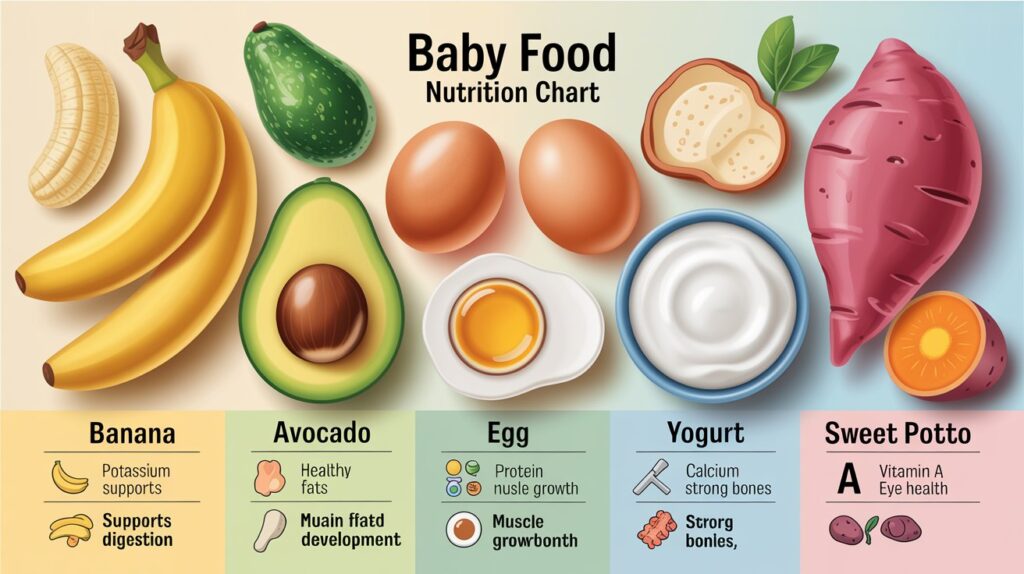
| Food | Main Nutrient | Health Benefit |
|---|---|---|
| Banana | Potassium | Supports digestion |
| Avocado | Healthy fats | Brain development |
| Egg | Protein | Muscle growth |
| Yogurt | Calcium | Strong bones |
| Sweet Potato | Vitamin A | Eye health |
Foods to Avoid for Babies
Some foods may be unsafe for infants.
Avoid These Foods Before Age One
- Honey
- Whole nuts
- Popcorn
- Raw seafood
- Sugary drinks
- Excess salt
- Unpasteurized milk
Healthy Baby Meal Ideas
Breakfast
- Oatmeal with mashed banana
Lunch
- Sweet potato puree with chicken
Snack
- Yogurt with fruit puree
Dinner
- Soft rice with mashed vegetables
Importance of Hydration
Proper hydration is essential for healthy digestion and body function.
Recommended Drinks
- Breast milk
- Formula milk
- Small amounts of water after 6 months
Drinks to Avoid
- Soda
- Sugary juice
- Energy drinks
Common Baby Feeding Mistakes
Parents should avoid these common feeding mistakes:
- Starting solids too early
- Adding sugar or salt to baby food
- Force-feeding the baby
- Ignoring allergy symptoms
- Giving choking hazard foods
Homemade vs Store-Bought Baby Food
| Feature | Homemade Food | Store-Bought Food |
|---|---|---|
| Freshness | High | Moderate |
| Cost | Lower | Higher |
| Convenience | Moderate | High |
| Additives | Minimal | Sometimes present |
| Nutrition Control | Better | Limited |
Food Allergy Warning Signs
Parents should carefully watch for allergic reactions when introducing new foods.
Common Symptoms
- Rash
- Vomiting
- Swelling
- Diarrhea
- Difficulty breathing
Seek medical help immediately if severe reactions occur.
Tips for Healthy Baby Feeding
- Introduce one food at a time
- Maintain a feeding routine
- Offer colorful foods
- Encourage self-feeding
- Avoid processed snacks
- Be patient with picky eating
Frequently Asked Questions
How often should babies eat?
Newborns usually eat every 2–4 hours, while older babies eat 3 meals plus snacks daily.
Can babies drink water?
Small amounts of water can be introduced after 6 months.
Is homemade baby food healthier?
Homemade baby food often contains fresher ingredients and fewer additives.
When can babies eat finger foods?
Most babies can start soft finger foods around 8–10 months.
Conclusion
A proper baby food feeding guide helps parents provide safe, healthy, and balanced nutrition during the most important stages of growth. Introducing nutrient-rich foods at the right time supports brain development, healthy digestion, strong immunity, and overall well-being.
By following healthy feeding practices and choosing age-appropriate foods, parents can help build lifelong healthy eating habits for their babies.
