
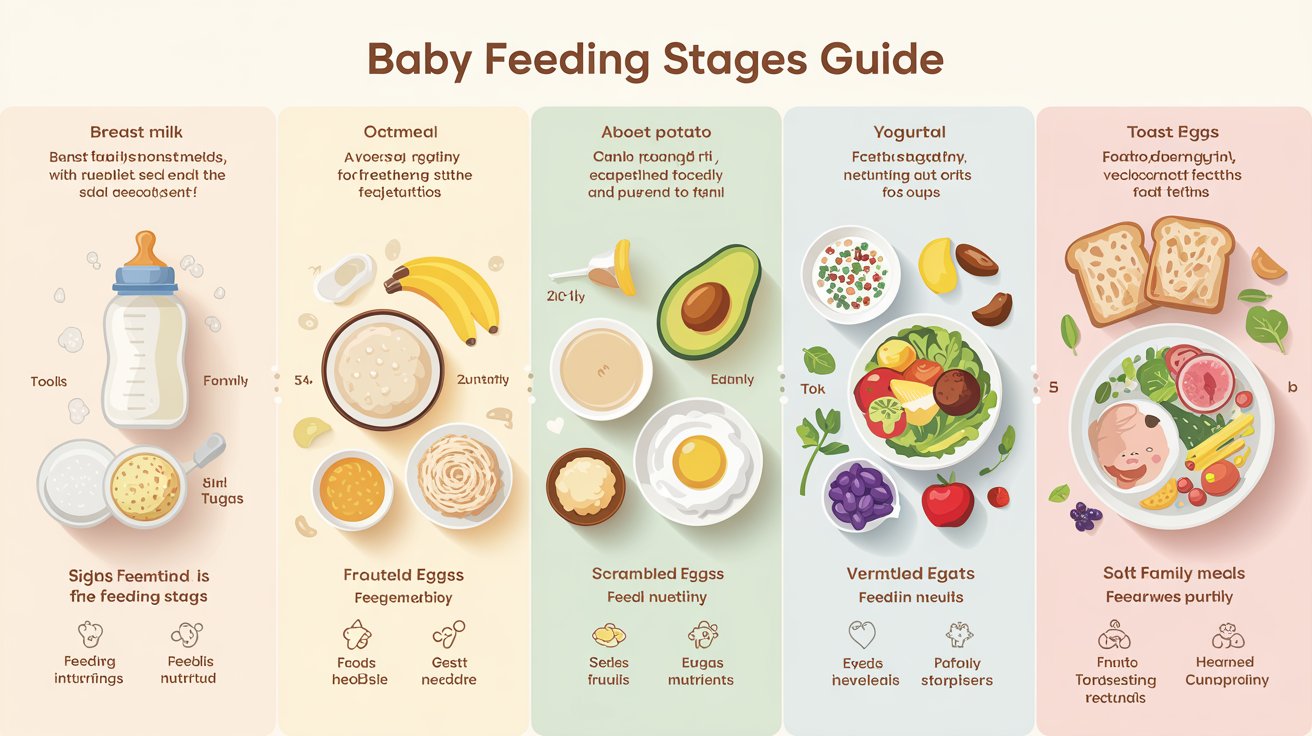
A baby’s feeding journey changes rapidly during the first two years of life. Each stage requires different foods, textures, and feeding routines to support healthy growth, brain development, digestion, and immunity. Understanding the correct feeding stages helps parents provide balanced nutrition safely and confidently.
Baby Feeding Stages by Age
| Baby Age | Feeding Stage | Food Texture | Main Foods | Feeding Frequency |
|---|---|---|---|---|
| 0–6 Months | Milk Feeding Stage | Liquid | Breast milk or formula | Every 2–4 hours |
| 6–8 Months | First Solid Foods | Smooth puree | Fruits, vegetables, baby cereal | 2–3 meals daily |
| 8–10 Months | Mashed & Soft Foods | Thick mashed foods | Soft vegetables, yogurt, eggs | 3–4 meals daily |
| 10–12 Months | Finger Food Stage | Small soft pieces | Rice, pasta, fruits, proteins | 3 meals + snacks |
| 12–24 Months | Toddler Feeding Stage | Regular soft foods | Family meals, milk, snacks | 3 meals + 2 snacks |
Stage 1: Milk Feeding Stage (0–6 Months)
During the first six months, babies receive all essential nutrition from breast milk or infant formula.
Recommended Feeding
- Breast milk on demand
- Formula every 3–4 hours
- No water or solid foods unless advised by a doctor
Benefits of Milk Feeding
- Supports brain development
- Strengthens immunity
- Easy digestion
- Healthy weight gain
Feeding Amount Guide
| Baby Age | Formula Amount | Feedings Per Day |
|---|---|---|
| Newborn | 1–2 ounces | 8–12 feedings |
| 1–2 Months | 3–4 ounces | 6–8 feedings |
| 3–4 Months | 4–6 ounces | 5–6 feedings |
| 5–6 Months | 6–8 ounces | 4–5 feedings |
Stage 2: First Solid Foods (6–8 Months)
Around 6 months, babies usually begin solid foods while continuing breast milk or formula.
Best First Foods
- Banana puree
- Apple puree
- Oatmeal
- Rice cereal
- Sweet potato puree
- Avocado
Feeding Tips
- Introduce one food at a time
- Wait 3 days before introducing another new food
- Use soft and smooth textures
- Start with small spoonfuls
Daily Feeding Example
| Meal Time | Food |
|---|---|
| Morning | Breast milk/formula |
| Breakfast | Oatmeal or cereal |
| Lunch | Vegetable puree |
| Evening | Fruit puree |
| Night | Milk feeding |
Stage 3: Mashed & Soft Foods (8–10 Months)
Babies begin learning chewing skills and can eat thicker textures.
Foods to Introduce
- Mashed vegetables
- Yogurt
- Scrambled eggs
- Lentils
- Soft rice
- Soft fruits
Healthy Snack Ideas
- Banana slices
- Yogurt
- Avocado mash
- Steamed vegetables
Important Tips
- Encourage self-feeding
- Avoid choking hazards
- Continue milk feeding
Stage 4: Finger Food Stage (10–12 Months)
Babies become more independent eaters during this stage.
Safe Finger Foods
- Soft fruit pieces
- Cooked vegetables
- Small pasta pieces
- Soft chicken
- Toast strips
Foods Babies Can Eat
| Food Type | Examples |
|---|---|
| Fruits | Banana, pear, mango |
| Vegetables | Carrot, peas, potato |
| Protein | Egg, chicken, fish |
| Grains | Rice, pasta, bread |
Stage 5: Toddler Feeding Stage (12–24 Months)
Toddlers begin eating family meals with healthy snacks and milk.
Balanced Toddler Diet
- Fruits and vegetables
- Whole grains
- Protein-rich foods
- Dairy products
- Healthy fats
Sample Toddler Meal Plan
| Meal | Example |
|---|---|
| Breakfast | Oatmeal with banana |
| Snack | Yogurt |
| Lunch | Rice, vegetables, chicken |
| Snack | Fruit slices |
| Dinner | Soft family meal |
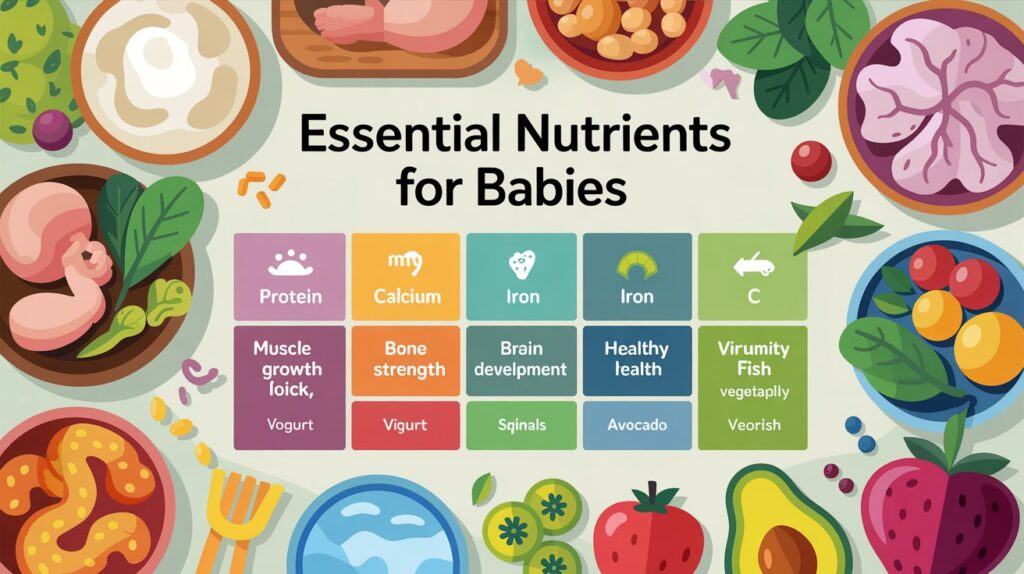
Essential Nutrients for Babies
| Nutrient | Benefits | Food Sources |
|---|---|---|
| Protein | Muscle growth | Eggs, chicken, lentils |
| Calcium | Bone strength | Milk, yogurt |
| Iron | Brain development | Spinach, cereals |
| Healthy Fats | Brain health | Avocado, fish |
| Vitamin C | Immunity | Fruits, vegetables |
Foods to Avoid During Baby Feeding Stages
Some foods can be dangerous for babies.
Avoid These Foods
- Honey before age 1
- Whole nuts
- Popcorn
- Sugary drinks
- Raw seafood
- Excess salt
Signs Your Baby Is Ready for the Next Feeding Stage
- Better head control
- Interest in food
- Ability to sit with support
- Chewing movements
- Improved hand coordination
Common Feeding Mistakes
- Starting solids too early
- Adding sugar or salt
- Force-feeding
- Ignoring allergy symptoms
- Offering unsafe food textures
Frequently Asked Questions
When should babies start solid foods?
Most babies begin solids around 6 months.
How many meals should a baby eat daily?
It depends on age. Older babies usually eat 3 meals plus snacks.
Can babies eat eggs?
Yes, fully cooked eggs are generally safe after 6 months.
When can babies eat finger foods?
Most babies can start soft finger foods around 10 months.
Conclusion
Understanding baby feeding stages helps parents provide the right nutrition at the right time. Each stage supports important physical and mental development while teaching babies healthy eating habits.
Parents should focus on safe textures, balanced meals, and gradual food introduction to help babies grow healthy and strong during every stage of development.
