
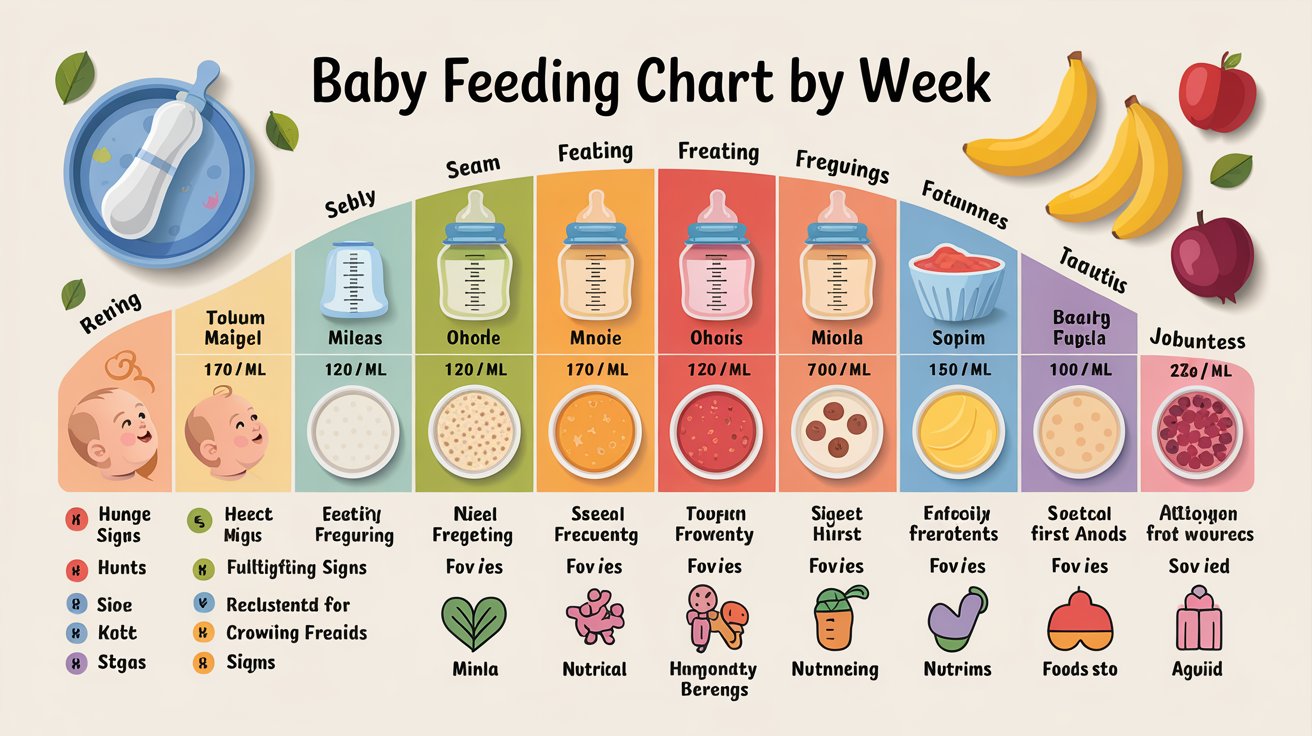
A baby feeding chart by week helps parents understand how much milk or food a baby may need during different stages of growth. Feeding needs change quickly during the first year because babies grow rapidly and require more nutrients, calories, and hydration.
This weekly baby feeding guide is based on general pediatric feeding recommendations for healthy infants. Every baby is different, so feeding amounts may vary depending on appetite, growth, and medical advice.
Newborn Baby Feeding Chart (Week 1–4)
During the first month, babies mainly consume breast milk or formula. Newborn stomachs are very small, so they feed frequently.
| Baby Age | Feeding Amount | Feeding Frequency | Daily Feedings |
|---|---|---|---|
| Week 1 | 1–2 ounces (30–60 ml) | Every 2–3 hours | 8–12 times |
| Week 2 | 2–3 ounces (60–90 ml) | Every 2–3 hours | 8–10 times |
| Week 3 | 2–3 ounces (60–90 ml) | Every 3 hours | 7–9 times |
| Week 4 | 3–4 ounces (90–120 ml) | Every 3–4 hours | 6–8 times |
Baby Feeding Chart (Week 5–8)
Babies begin drinking larger amounts of milk while feeding slightly less often.
| Baby Age | Feeding Amount | Feeding Frequency | Daily Feedings |
|---|---|---|---|
| Week 5 | 4 ounces (120 ml) | Every 3–4 hours | 6–8 times |
| Week 6 | 4–5 ounces (120–150 ml) | Every 3–4 hours | 6–7 times |
| Week 7 | 4–5 ounces (120–150 ml) | Every 4 hours | 5–7 times |
| Week 8 | 5 ounces (150 ml) | Every 4 hours | 5–6 times |
Baby Feeding Chart (Week 9–12)
Babies may begin sleeping longer at night but still need regular milk feedings.
| Baby Age | Feeding Amount | Feeding Frequency | Daily Feedings |
|---|---|---|---|
| Week 9 | 5 ounces (150 ml) | Every 4 hours | 5–6 times |
| Week 10 | 5–6 ounces (150–180 ml) | Every 4 hours | 5–6 times |
| Week 11 | 5–6 ounces (150–180 ml) | Every 4 hours | 5 times |
| Week 12 | 6 ounces (180 ml) | Every 4–5 hours | 5 times |
Feeding Chart for 4–6 Month Babies
Milk remains the primary source of nutrition during this stage.
| Baby Age | Feeding Amount | Feeding Frequency |
|---|---|---|
| 4 Months | 6 ounces (180 ml) | 5 feedings daily |
| 5 Months | 6–7 ounces (180–210 ml) | 4–5 feedings daily |
| 6 Months | 6–8 ounces (180–240 ml) | 4–5 feedings daily |
Solid Foods Around 6 Months
Some babies may begin trying solid foods at around 6 months.
Recommended First Foods
- Rice cereal
- Oatmeal
- Banana puree
- Sweet potato puree
- Apple puree
Feeding Chart for 6–9 Month Babies
Babies begin eating solids while continuing breast milk or formula.
| Age | Solid Meals | Milk Feedings |
|---|---|---|
| 6 Months | 2 meals daily | 4–5 times |
| 7 Months | 2–3 meals daily | 4 times |
| 8 Months | 3 meals daily | 3–4 times |
| 9 Months | 3 meals + snack | 3–4 times |
Feeding Chart for 9–12 Month Babies
Older babies begin eating more textured foods and finger foods.
| Age | Meals | Snacks | Milk Feedings |
|---|---|---|---|
| 9 Months | 3 meals | 1 snack | 3–4 times |
| 10 Months | 3 meals | 1–2 snacks | 3 times |
| 11 Months | 3 meals | 2 snacks | 2–3 times |
| 12 Months | Family meals | 2 snacks | 2 times |
Signs Your Baby Is Hungry
- Sucking hands
- Crying
- Rooting reflex
- Opening mouth
- Looking for food
Signs Your Baby Is Full
- Turning away from bottle or breast
- Closing mouth
- Slowing feeding
- Falling asleep during feeding
Essential Nutrients for Growing Babies
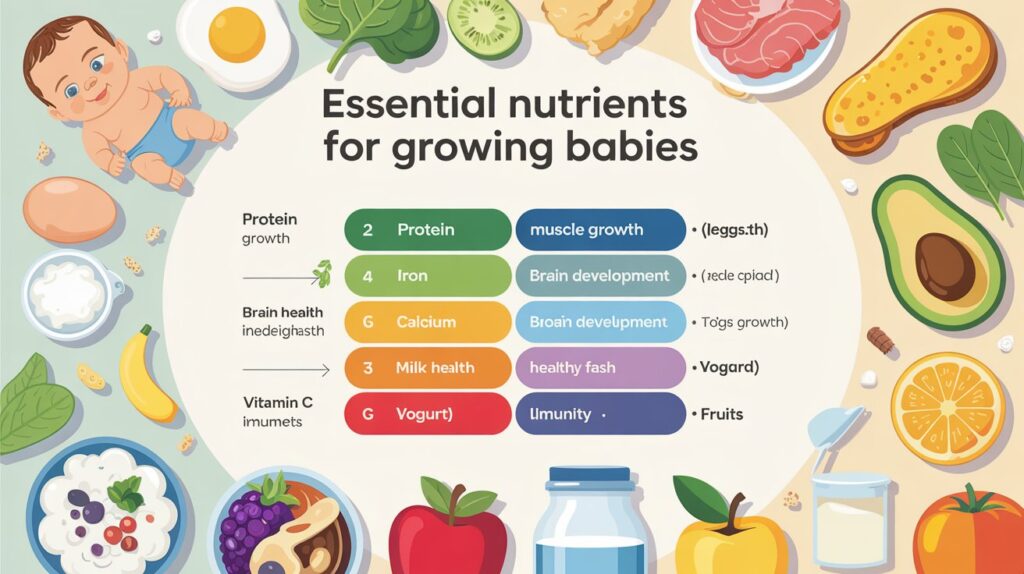
| Nutrient | Benefits | Food Sources |
|---|---|---|
| Protein | Muscle growth | Eggs, chicken |
| Iron | Brain development | Cereal, spinach |
| Calcium | Bone health | Milk, yogurt |
| Healthy Fats | Brain growth | Avocado, fish |
| Vitamin C | Immunity | Fruits |
Foods to Avoid for Babies
| Food | Reason |
|---|---|
| Honey | Risk of botulism |
| Whole nuts | Choking hazard |
| Popcorn | Choking risk |
| Sugary drinks | Poor nutrition |
| Raw seafood | Bacteria risk |
Important Baby Feeding Tips
- Feed on demand during early weeks
- Burp babies after feeding
- Introduce one new food at a time
- Avoid adding sugar or salt
- Never force-feed babies
Frequently Asked Questions
How often should newborns feed?
Newborns usually feed every 2–3 hours.
When should babies start solid foods?
Most babies are ready around 6 months.
How much formula does a baby need weekly?
Feeding amounts increase gradually based on age and growth.
Can babies sleep through the night without feeding?
Some babies begin sleeping longer around 3–6 months, but feeding needs vary.
Conclusion
Following a baby feeding chart by week helps parents understand changing feeding needs during infancy. Proper feeding schedules and balanced nutrition support healthy growth, digestion, brain development, and immunity.
Parents should watch hunger cues, introduce foods gradually, and consult healthcare professionals if they have concerns about feeding or growth.
