
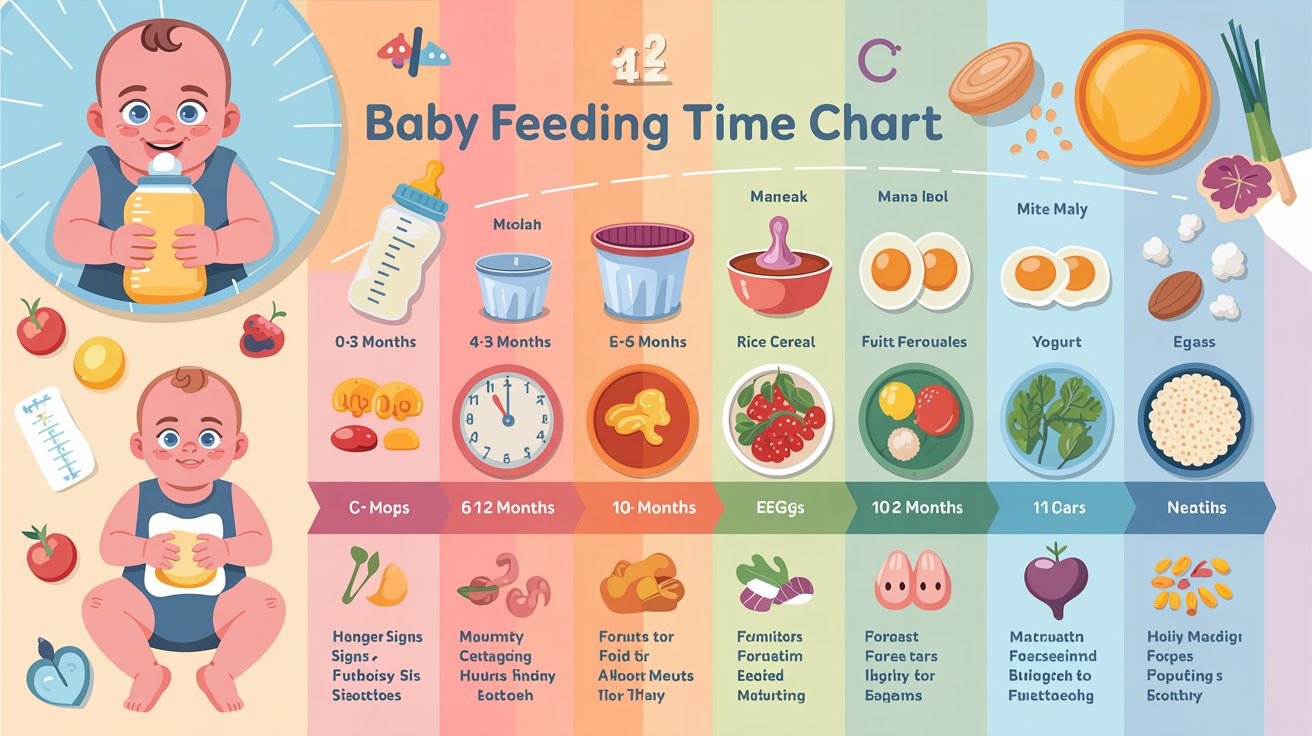
A proper baby feeding schedule is important for healthy growth, digestion, sleep, and brain development. Babies need different feeding times and portion sizes based on their age. This feeding time chart is based on general pediatric nutrition recommendations for infants and toddlers.
Newborn Feeding Chart (0–3 Months)
Newborn babies usually feed every 2–3 hours because their stomachs are very small.
| Time | Feeding |
|---|---|
| 6:00 AM | Breast milk or formula |
| 8:30 AM | Breast milk or formula |
| 11:00 AM | Breast milk or formula |
| 1:30 PM | Breast milk or formula |
| 4:00 PM | Breast milk or formula |
| 6:30 PM | Breast milk or formula |
| 9:00 PM | Breast milk or formula |
| Night Feedings | As needed |
Daily Feeding Amount
- Breastfeeding: On demand
- Formula: About 2–4 ounces per feeding
Baby Feeding Chart (4–6 Months)
Babies may still mainly drink milk, but some babies begin trying small amounts of soft foods around 6 months.
| Time | Feeding |
|---|---|
| 7:00 AM | Breast milk or formula |
| 9:30 AM | Milk feeding |
| 12:00 PM | Milk feeding |
| 2:30 PM | Milk feeding |
| 5:00 PM | Milk feeding |
| 7:30 PM | Milk feeding |
| Before Bed | Breast milk or formula |
Feeding Notes
- Continue breast milk or formula as the main nutrition source
- Small amounts of pureed foods may be introduced near 6 months
Feeding Time Chart for 6–8 Month Babies
At this stage, babies usually start solid foods while continuing milk feeding.
| Time | Meal |
|---|---|
| 7:00 AM | Breast milk or formula |
| 8:30 AM | Oatmeal or rice cereal |
| 11:00 AM | Fruit puree |
| 1:00 PM | Milk feeding |
| 3:00 PM | Vegetable puree |
| 5:30 PM | Milk feeding |
| 7:00 PM | Soft mashed dinner |
| Before Bed | Breast milk or formula |
Recommended Foods
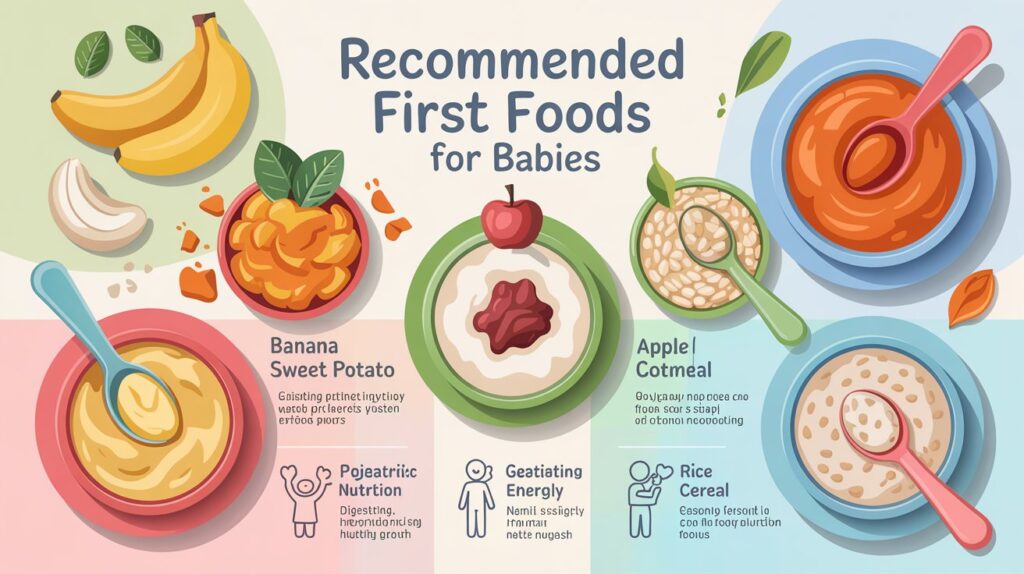
- Banana puree
- Sweet potato
- Apple puree
- Oatmeal
- Rice cereal
Feeding Time Chart for 8–10 Month Babies
Babies can eat thicker foods and healthy snacks during this stage.
| Time | Meal |
|---|---|
| 7:00 AM | Milk feeding |
| 8:00 AM | Scrambled egg or oatmeal |
| 10:30 AM | Fruit snack |
| 1:00 PM | Rice with vegetables |
| 3:30 PM | Yogurt or soft fruit |
| 6:00 PM | Mashed chicken or lentils |
| Before Bed | Breast milk or formula |
Healthy Snacks
- Yogurt
- Banana slices
- Soft vegetables
- Avocado mash
Feeding Time Chart for 10–12 Month Babies
Older babies can begin eating more family foods with proper texture.
| Time | Meal |
|---|---|
| 7:00 AM | Milk |
| 8:00 AM | Egg, toast, or oatmeal |
| 10:30 AM | Healthy snack |
| 1:00 PM | Rice, vegetables, protein |
| 3:30 PM | Fruit or yogurt |
| 6:30 PM | Family-style dinner |
| Before Bed | Milk feeding |
Toddler Feeding Chart (1–2 Years)
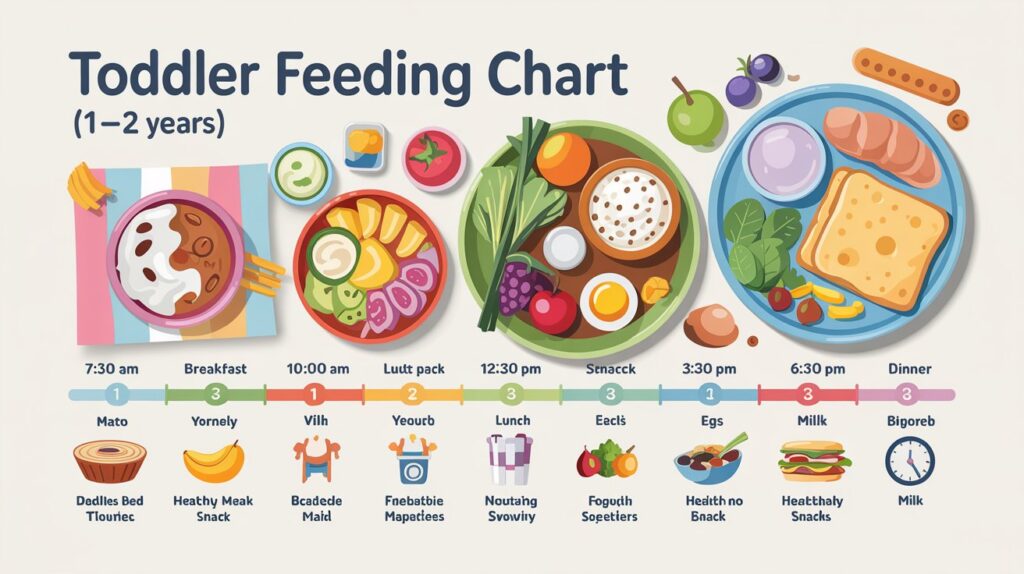
Toddlers need balanced meals and healthy snacks every day.
| Time | Meal |
|---|---|
| 7:30 AM | Breakfast |
| 10:00 AM | Healthy snack |
| 12:30 PM | Lunch |
| 3:30 PM | Snack |
| 6:30 PM | Dinner |
| Before Bed | Milk |
Important Baby Feeding Tips
- Feed babies slowly and patiently
- Introduce one new food at a time
- Avoid force-feeding
- Watch for food allergies
- Use soft textures for younger babies
- Continue breast milk or formula during the first year
Foods to Avoid for Babies
| Food | Reason |
|---|---|
| Honey | Risk of botulism |
| Whole nuts | Choking hazard |
| Popcorn | Choking risk |
| Sugary drinks | Poor nutrition |
| Raw seafood | Risk of bacteria |
| Excess salt | Harmful for kidneys |
Signs Your Baby Is Hungry
- Crying
- Sucking fingers
- Opening mouth
- Moving toward food
- Increased alertness
Signs Your Baby Is Full
- Turning head away
- Closing mouth
- Playing with food
- Slowing down feeding
Frequently Asked Questions
How often should newborn babies eat?
Newborns usually eat every 2–3 hours throughout the day and night.
When should babies start solid foods?
Most babies are ready for solids around 6 months of age.
How much should a 6-month-old baby eat?
A 6-month-old baby usually eats milk several times daily plus 2–3 small solid meals.
Can babies eat family food?
Soft family foods can usually be introduced around 10–12 months.
Conclusion
A healthy baby feeding time chart helps parents create proper feeding routines for every stage of development. Following age-appropriate schedules and offering nutritious foods supports healthy growth, better sleep, brain development, and strong immunity.
Parents should focus on balanced nutrition, safe food textures, and regular feeding times to build healthy eating habits from an early age.
