
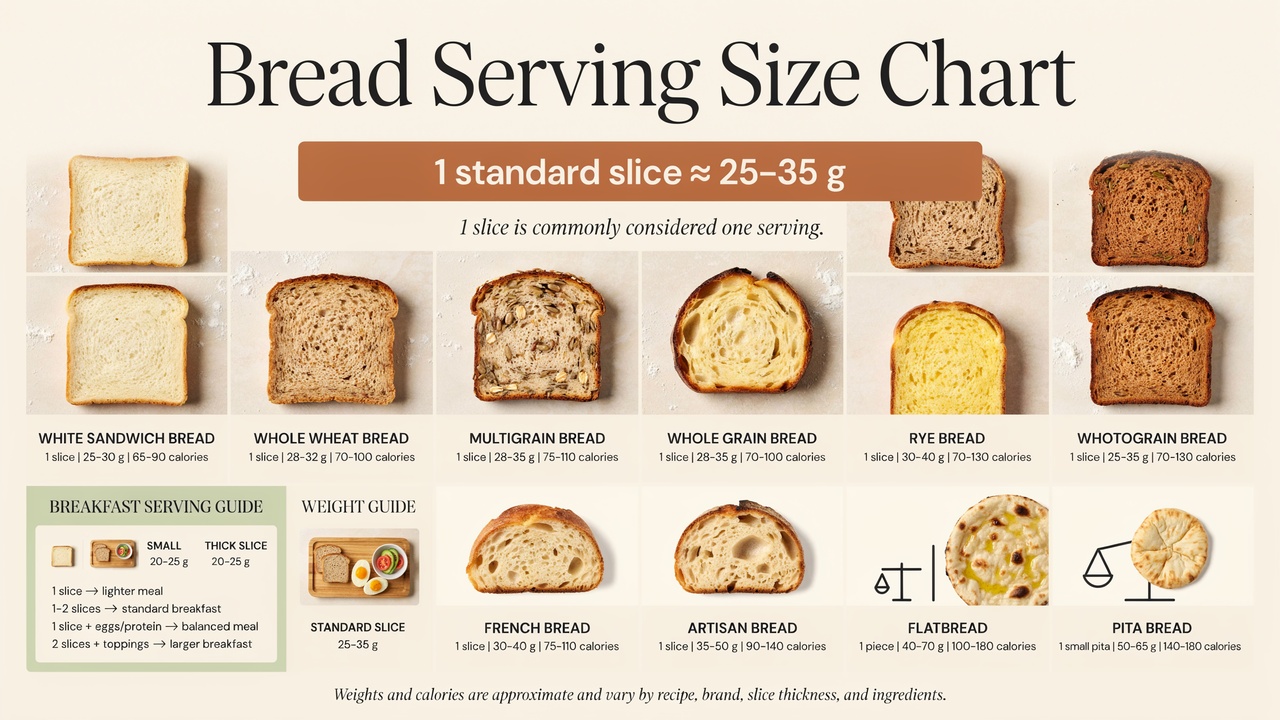
Bread is one of the most common foods served at breakfast, lunch, dinner, and snacks. However, serving sizes can vary significantly depending on the type of bread, slice thickness, loaf size, and how the bread is being served.
A standard serving of sliced bread is often one slice, but some types of bread are much denser or larger than a typical sandwich slice. This bread serving size chart explains common serving portions, weights, calories, and serving recommendations for different types of bread.
Why Bread Serving Size Matters
Understanding bread serving sizes makes it easier to plan meals, estimate portions, and compare different types of bread.
The appropriate serving depends on:
- Type of bread
- Slice thickness
- Slice weight
- Meal type
- Number of toppings or fillings
- Individual dietary needs
- Whether the bread is served alone or as part of a meal
A thin slice of light sandwich bread and a thick slice of artisan sourdough may look very different even though both are considered one slice.
Standard Bread Serving Size Chart
| Bread Type | Typical Serving | Approx. Weight | Approx. Calories |
|---|---|---|---|
| White Sandwich Bread | 1 slice | 25–30 g | 65–90 |
| Whole Wheat Bread | 1 slice | 28–32 g | 70–100 |
| Multigrain Bread | 1 slice | 28–35 g | 75–110 |
| Sourdough Bread | 1 slice | 30–40 g | 75–110 |
| Rye Bread | 1 slice | 30–40 g | 70–100 |
| Whole Grain Bread | 1 slice | 28–35 g | 70–105 |
| Brioche Bread | 1 slice | 30–40 g | 90–130 |
| Potato Bread | 1 slice | 25–35 g | 70–100 |
| French Bread | 1 slice | 30–40 g | 75–110 |
| Artisan Bread | 1 slice | 35–50 g | 90–140 |
| Flatbread | 1 piece | 40–70 g | 100–180 |
| Pita Bread | 1 small pita | 50–65 g | 140–180 |
Weights and calories are approximate. Actual values vary by recipe, brand, slice thickness, and ingredients.
Bread Serving Size by Weight
Weight is a useful way to compare bread portions because slice sizes can vary considerably.
| Bread Portion | Approx. Weight |
|---|---|
| Small slice | 20–25 g |
| Standard slice | 25–35 g |
| Thick slice | 35–50 g |
| Very thick artisan slice | 50–70 g |
| Small roll | 40–60 g |
| Medium roll | 60–90 g |
| Large roll | 90–120+ g |
| Small pita | 50–65 g |
| Large pita | 70–100 g |
For packaged bread, the nutrition label is usually the best source for the exact serving weight.
Bread Serving Size in Slices
For many meals, bread is measured by the number of slices.
| Meal or Use | Typical Portion |
|---|---|
| Light breakfast | 1 slice |
| Standard breakfast | 1–2 slices |
| Toast snack | 1 slice |
| Sandwich | 2 slices |
| Open-faced sandwich | 1 slice |
| Soup accompaniment | 1–2 slices |
| Dinner side | 1–2 slices |
| French toast | 2 slices |
| Bread with eggs | 1–2 slices |
These are general serving suggestions rather than strict requirements.
How Many Slices of Bread Is a Serving?
For many standard packaged breads, one slice is commonly considered one serving.
However, some breads are much larger or thicker than standard sandwich bread. A large artisan slice may contain substantially more bread than a thin packaged slice.
For this reason, checking the weight per serving is often more useful than simply counting slices.
Bread Calories per Serving
Bread calories depend on the type and size of the serving.
| Portion | Approx. Calories |
|---|---|
| Small slice | 50–75 |
| Standard slice | 65–100 |
| Thick slice | 90–140 |
| Large artisan slice | 120–180 |
| Small roll | 100–160 |
| Medium roll | 150–230 |
| Large roll | 220–320+ |
| Small pita | 140–180 |
| Large pita | 180–250+ |
Bread made with added butter, sugar, oil, eggs, or other enriched ingredients may contain more calories.
Bread Serving Size for Breakfast
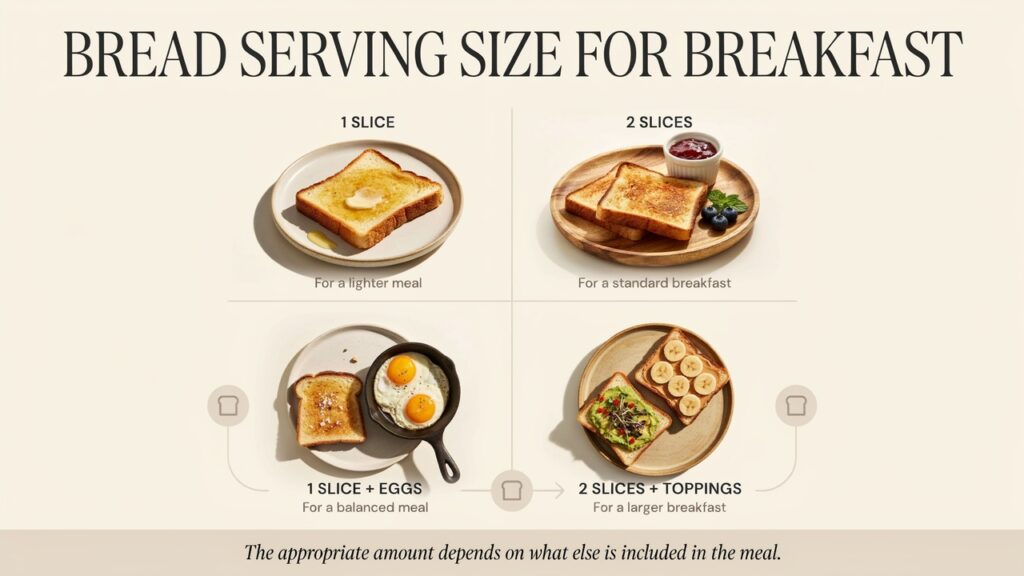
Bread is commonly served as toast, alongside eggs, or with spreads at breakfast.
A typical breakfast portion might include:
- 1 slice for a lighter meal
- 2 slices for a standard breakfast
- 1 slice plus eggs or another protein for a balanced meal
- 2 slices with toppings for a larger breakfast
The appropriate amount depends on what else is included in the meal.
Bread Serving Size for Sandwiches
A standard sandwich generally uses 2 slices of bread.
| Sandwich Type | Bread Portion |
|---|---|
| Small sandwich | 2 small slices |
| Standard sandwich | 2 regular slices |
| Large sandwich | 2 large slices |
| Open-faced sandwich | 1 slice |
| Double sandwich | 4 slices |
For large fillings, sturdy bread such as sourdough, multigrain, or artisan bread may be easier to handle.
Bread Serving Size for Dinner
Bread is often served as a side with soup, salad, pasta, roasted meat, or other main dishes.
A typical portion is:
- 1 slice for a small side
- 1–2 slices for a standard meal
- 2+ slices for a larger bread-based portion
When bread is served with a carbohydrate-heavy main dish, smaller portions may be preferred.
Bread Serving Size for Children
Children generally need smaller portions than adults, although needs vary by age and appetite.
| Age Group | General Bread Portion |
|---|---|
| Young child | ½–1 small slice |
| School-age child | 1 slice |
| Older child | 1–2 slices |
| Teenager | 1–2+ slices |
These are broad serving guidelines rather than nutritional prescriptions.
Bread Serving Size for Toast
Toast does not usually change the amount of bread being consumed. Toasting mainly changes the texture and removes some moisture.
| Toast Serving | Bread Used |
|---|---|
| Light snack | 1 slice |
| Standard breakfast | 1–2 slices |
| Large breakfast | 2 slices |
| Open-faced toast | 1 slice |
Butter, jam, peanut butter, cheese, or other toppings should be considered separately when estimating the total meal.
Bread Serving Size for French Toast
French toast commonly uses thicker slices because they absorb the egg mixture well.
| Serving | Bread |
|---|---|
| Small serving | 1 slice |
| Standard serving | 2 slices |
| Large serving | 2–3 slices |
Thick brioche, challah, or similar enriched breads are popular choices for French toast.
Bread Serving Size for Garlic Bread
Garlic bread is usually served in smaller portions because it often contains butter or oil.
| Garlic Bread Style | Typical Portion |
|---|---|
| Small piece | 20–30 g |
| Standard piece | 30–50 g |
| Large piece | 50–70 g |
| Garlic breadstick | 1 piece |
When garlic bread accompanies pasta or another main carbohydrate, one or two pieces may be enough for a typical serving.
Bread Serving Size for Bread Rolls
Bread rolls vary greatly in size.
| Roll Size | Approx. Weight | Typical Use |
|---|---|---|
| Small roll | 40–60 g | Light meal |
| Medium roll | 60–90 g | Standard meal |
| Large roll | 90–120 g | Large sandwich |
| Extra-large roll | 120 g+ | Large meal or specialty sandwich |
For sandwiches, the roll should be large enough to hold the filling without splitting apart.
Bread Serving Size for Different Bread Types
White Bread
Usually light and soft, with standard slices around 25–30 g.
Whole Wheat Bread
Often slightly denser than white bread and commonly weighs around 28–32 g per slice.
Sourdough
Sourdough slices can be considerably larger and heavier, especially when cut from an artisan loaf.
Rye Bread
Rye bread can be dense and filling, so slice weight is useful when determining the portion.
Brioche
Brioche is rich and soft, with calories varying according to the amount of butter, eggs, and sugar used.
Multigrain Bread
Multigrain bread can vary greatly in density and ingredients, so the nutrition label is important for exact serving information.
Bread Serving Size Conversion Chart
| Measurement | Approximate Bread Amount |
|---|---|
| 1 thin slice | 20–25 g |
| 1 standard slice | 25–35 g |
| 1 thick slice | 35–50 g |
| 2 standard slices | 50–70 g |
| 3 standard slices | 75–105 g |
| 1 small roll | 40–60 g |
| 1 medium roll | 60–90 g |
| 1 small pita | 50–65 g |
Because bread density differs, these conversions should be treated as approximate.
How Much Bread Should You Serve Per Person?
For a meal where bread is a side dish, 1–2 slices per person is a practical starting point.
For a sandwich, plan for:
- 2 slices per person for standard sandwiches
- 1 slice for open-faced sandwiches
- 1 roll per person for roll-based sandwiches
For parties, buffets, and large gatherings, it is useful to provide a little extra because bread portions vary between guests.
How Many Slices Are in a Loaf of Bread?
A standard packaged loaf may contain roughly 18–24 slices, although this varies depending on loaf size and slice thickness.
| Loaf Type | Approx. Slices |
|---|---|
| Small loaf | 12–18 |
| Standard loaf | 18–24 |
| Large loaf | 24–30+ |
| Artisan loaf | 10–18 thick slices |
Artisan loaves usually produce fewer slices because they are often cut much thicker.
Bread Serving Size and Nutrition
Bread can provide carbohydrates, calories, fiber, protein, and various micronutrients.
Whole-grain breads generally provide more fiber than refined white bread, although the exact nutritional profile varies by product.
When comparing breads, look at:
- Serving weight
- Calories
- Total carbohydrates
- Dietary fiber
- Protein
- Added sugar
- Sodium
- Whole-grain content
Two slices of different breads can have very different nutritional values.
How to Measure a Bread Serving
For the most accurate portion:
- Check the package serving size.
- Look at the weight listed per serving.
- Compare the actual slice size.
- Use a kitchen scale if precise measurement is important.
- Consider toppings separately.
A kitchen scale is especially helpful with homemade or artisan bread because slice thickness can vary considerably.
Common Bread Serving Size Mistakes
Assuming Every Slice Is the Same
A thin sandwich slice and a thick sourdough slice are not equivalent portions.
Ignoring Toppings
Butter, spreads, cheese, and other toppings add calories and nutrients beyond the bread itself.
Counting Only Slices
Weight can provide a more accurate comparison than slice count.
Using Large Artisan Slices as Standard Slices
Artisan bread is often cut much thicker than packaged sandwich bread.
Forgetting Bread in Mixed Meals
Bread served with pasta, rice, potatoes, or other carbohydrate-rich foods can significantly increase the total carbohydrate portion.
Tips for Choosing the Right Bread Serving Size
Consider the Meal
Bread may be a main component of the meal or simply a side.
Look at the Slice Size
Large slices should generally be considered separately from thin slices.
Check the Nutrition Label
For packaged bread, the label provides the most accurate serving information.
Consider the Toppings
A plain slice and a heavily topped slice are very different meals.
Adjust for Appetite
Serving sizes are guidelines, not rigid requirements. Individual hunger and dietary needs vary.
Frequently Asked Questions
What is a standard serving size of bread?
For many standard packaged breads, one slice is considered a serving.
How many grams is one serving of bread?
A typical slice may weigh around 25–35 grams, although some breads are significantly lighter or heavier.
How many slices of bread should I serve per person?
For bread served as a side, 1–2 slices per person is a reasonable general starting point. A standard sandwich usually requires 2 slices.
How many calories are in one slice of bread?
A typical slice contains approximately 65–100 calories, although the amount varies significantly by bread type and size.
Is one slice of bread enough for breakfast?
It can be, especially when paired with eggs, fruit, yogurt, or another filling food. Larger breakfasts may use two slices.
How many slices of bread are in a loaf?
A typical packaged loaf may contain approximately 18–24 slices, but the number varies by loaf size and slice thickness.
Is a thick slice of bread one serving?
Not necessarily. A thick slice may weigh substantially more than a standard serving, so checking the weight is a better way to determine the portion.
How much bread should I serve with dinner?
A common portion is 1–2 slices per person when bread is served as a side.
What is the serving size of a bread roll?
A small-to-medium bread roll is often around 40–90 grams, depending on its size and style.
Does toasting bread change its serving size?
Toasting removes moisture but does not substantially change the amount of bread itself. The calories from the bread remain approximately the same.
Final Thoughts
Bread serving sizes vary widely depending on the type, thickness, weight, and purpose of the bread. For many standard packaged breads, one slice weighing roughly 25–35 grams is a common serving, while sandwiches typically use two slices.
For larger artisan breads, rolls, pita, and specialty breads, measuring by weight can provide a more accurate idea of portion size. By considering the bread type, meal, toppings, and individual appetite, you can choose a serving that fits the occasion without relying solely on slice count.
