
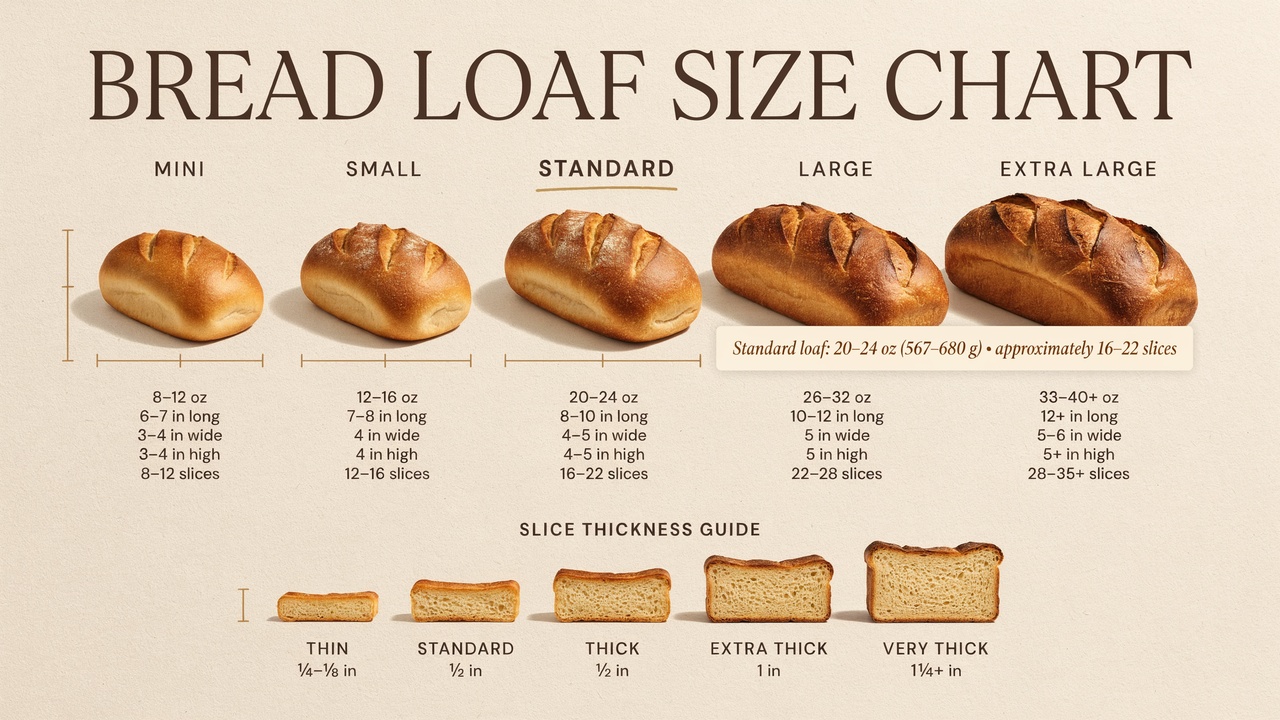
Bread loaves come in many shapes and sizes, from small personal loaves to large family-sized loaves. The size can vary depending on the type of bread, ingredients, baking pan, and whether the loaf is homemade or commercially produced.
Understanding the bread loaf size chart helps you choose the right loaf for sandwiches, breakfast, toast, family meals, baking, or large gatherings.
Standard Bread Loaf Size Chart
| Bread Loaf Size | Weight | Length | Width | Height | Approx. Slices |
|---|---|---|---|---|---|
| Mini | 8–12 oz | 6–7 in | 3–4 in | 3–4 in | 8–12 |
| Small | 12–16 oz | 7–8 in | 4 in | 4 in | 12–16 |
| Standard | 20–24 oz | 8–10 in | 4–5 in | 4–5 in | 16–22 |
| Large | 26–32 oz | 10–12 in | 5 in | 5 in | 22–28 |
| Extra Large | 33–40+ oz | 12+ in | 5–6 in | 5+ in | 28–35+ |
Exact dimensions vary significantly by bread type and baking pan.
Bread Loaf Weight Chart
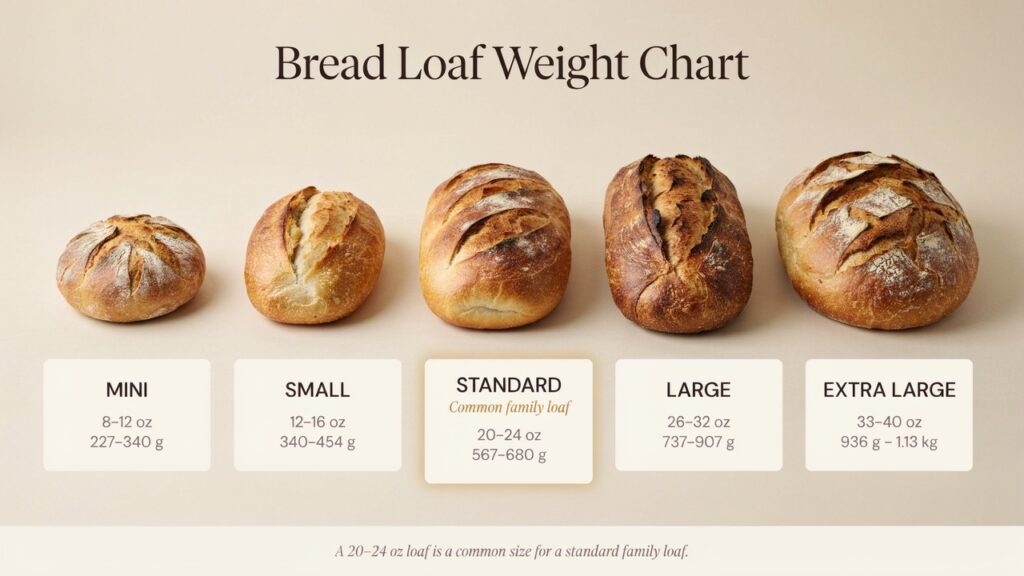
| Loaf Size | Weight | Approx. Grams |
|---|---|---|
| Mini | 8–12 oz | 227–340 g |
| Small | 12–16 oz | 340–454 g |
| Standard | 20–24 oz | 567–680 g |
| Large | 26–32 oz | 737–907 g |
| Extra Large | 33–40 oz | 936 g–1.13 kg |
A 20–24 oz loaf is a common size for a standard family loaf.
Bread Loaf Dimensions Chart
| Loaf Type | Approx. Length | Width | Height |
|---|---|---|---|
| Mini | 6–7 in | 3–4 in | 3–4 in |
| Small | 7–8 in | 4 in | 4 in |
| Standard | 8–10 in | 4–5 in | 4–5 in |
| Large | 10–12 in | 5 in | 5 in |
| Extra Large | 12+ in | 5–6 in | 5+ in |
The shape can differ substantially between sandwich bread, artisan bread, sourdough, and specialty loaves.
Bread Slice Size Chart
| Slice Type | Approx. Thickness | Best For |
|---|---|---|
| Thin | ¼–⅜ in | Sandwiches |
| Standard | ½ in | Everyday use |
| Thick | ¾ in | Toast |
| Extra Thick | 1 in | French toast |
| Very Thick | 1¼+ in | Artisan toast |
A standard sandwich slice is often around ½ inch thick.
Bread Loaf Slice Count
The number of slices depends on loaf length and how thickly it is cut.
| Loaf Size | Approx. Slices |
|---|---|
| Mini | 8–12 |
| Small | 12–16 |
| Standard | 16–22 |
| Large | 22–28 |
| Extra Large | 28–35+ |
Homemade loaves may produce fewer slices if cut thickly.
Bread Loaf Serving Size Chart
| Serving | Approx. Amount |
|---|---|
| Light Serving | 1 slice |
| Standard Serving | 1–2 slices |
| Sandwich | 2 slices |
| Toast | 1–2 slices |
| Hearty Breakfast | 2–3 slices |
| Sharing | 4+ slices |
For most meals, 1–2 slices per person is a practical starting point.
Bread Calories by Slice
Calories depend on the type of bread and slice thickness.
| Slice Size | Approx. Calories* |
|---|---|
| Thin Slice | 50–70 |
| Standard Slice | 70–100 |
| Thick Slice | 100–140 |
| Extra Thick | 130–180 |
*Approximate values. Enriched, whole-grain, sweet, nut-filled, and specialty breads can differ significantly.
Bread Loaf Calories by Weight
| Bread Weight | Approx. Calories* |
|---|---|
| 8 oz | 550–750 |
| 12 oz | 825–1,125 |
| 16 oz | 1,100–1,500 |
| 20 oz | 1,375–1,875 |
| 24 oz | 1,650–2,250 |
| 32 oz | 2,200–3,000 |
*Broad estimates for typical bread; exact calories depend on ingredients and recipe.
Bread Loaf Carbohydrate Chart
| Serving | Approx. Carbohydrates* |
|---|---|
| Thin Slice | 10–14 g |
| Standard Slice | 13–20 g |
| Thick Slice | 20–28 g |
| 2 Standard Slices | 26–40 g |
*Values vary according to bread type and ingredients.
Bread Loaf Protein Chart
| Serving | Approx. Protein* |
|---|---|
| Thin Slice | 2–3 g |
| Standard Slice | 3–5 g |
| Thick Slice | 4–7 g |
| 2 Standard Slices | 6–10 g |
Whole-grain and high-protein breads may contain more protein.
Bread Loaf Size by Bread Type
| Bread Type | Typical Size | Common Use |
|---|---|---|
| Sandwich Bread | 20–24 oz | Sandwiches |
| White Bread | 20–24 oz | Toast & sandwiches |
| Whole Wheat | 20–24 oz | Everyday meals |
| Sourdough | 18–32 oz | Artisan bread |
| Rye Bread | 16–24 oz | Sandwiches |
| Brioche | 16–24 oz | Toast & French toast |
| Banana Bread | 16–24 oz | Breakfast & dessert |
| Multigrain | 20–28 oz | Healthy-style meals |
Bread size varies considerably by recipe and bakery.
Bread Loaf Pan Size Chart
For homemade bread, pan size affects the final loaf dimensions.
| Pan Size | Typical Use |
|---|---|
| 8 × 4 in | Small loaf |
| 8.5 × 4.5 in | Standard small loaf |
| 9 × 5 in | Standard large loaf |
| 10 × 5 in | Large loaf |
| Pullman Pan | Square sandwich loaf |
Always match the dough quantity to the pan to prevent underfilled or overflowing loaves.
Bread Loaf Size for Sandwiches
| Sandwich Type | Bread Amount |
|---|---|
| Small Sandwich | 2 small slices |
| Standard Sandwich | 2 standard slices |
| Large Sandwich | 2 thick slices |
| Double Sandwich | 3–4 slices |
A standard 20–24 oz loaf can commonly provide around 8–11 two-slice sandwiches, depending on the slice count.
Bread Loaf for a Family
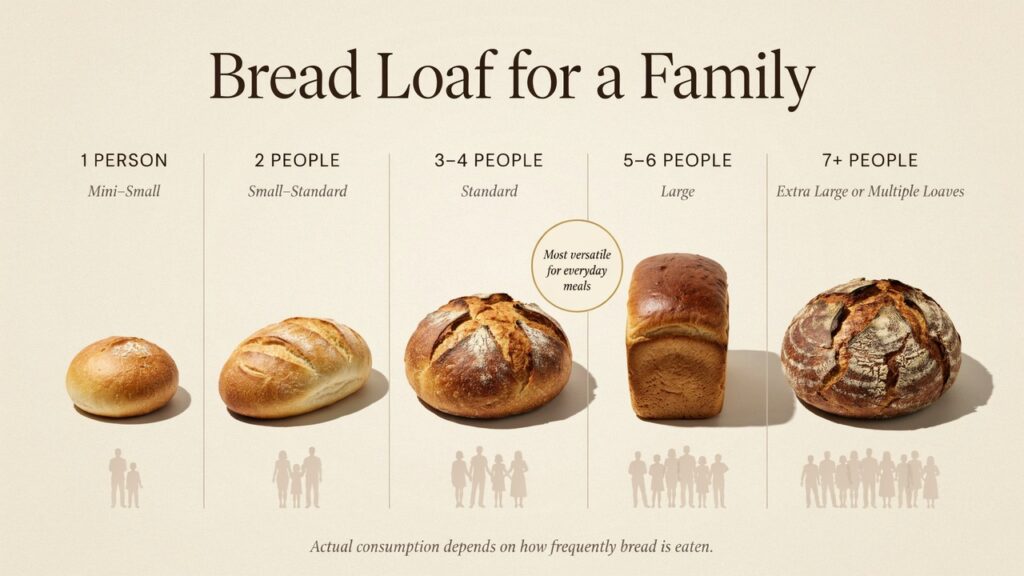
For everyday meals, a standard loaf is usually the most versatile choice.
| Household Size | Suggested Loaf |
|---|---|
| 1 person | Mini–Small |
| 2 people | Small–Standard |
| 3–4 people | Standard |
| 5–6 people | Large |
| 7+ people | Extra Large or multiple loaves |
Actual consumption depends on how frequently bread is eaten.
Bread Loaf Party Size Chart
For bread served as a side, plan approximately 1–2 slices per person.
| Guests | Approx. Slices |
|---|---|
| 5 | 5–10 |
| 10 | 10–20 |
| 20 | 20–40 |
| 25 | 25–50 |
| 50 | 50–100 |
| 100 | 100–200 |
For a buffet where bread is an important component, plan toward the higher end.
Bread Loaf Size for French Toast
Thicker slices generally work well for French toast because they can absorb the egg mixture without becoming too fragile.
| Bread Style | Suggested Slice |
|---|---|
| Regular Bread | ½–¾ in |
| Brioche | ¾–1 in |
| Sourdough | ¾–1 in |
| Thick Artisan Bread | 1–1¼ in |
Slightly stale bread can also work particularly well for French toast.
Bread Loaf Size for Toast
| Toast Type | Slice Thickness |
|---|---|
| Light Toast | ¼–½ in |
| Regular Toast | ½ in |
| Thick Toast | ¾ in |
| Artisan Toast | ¾–1 in |
Thicker slices provide a softer center and substantial crust.
Bread Loaf vs Baguette
| Feature | Bread Loaf | Baguette |
|---|---|---|
| Shape | Rectangular/oval | Long & narrow |
| Slice | Square/oval | Round/diagonal |
| Texture | Often softer | Crisp crust |
| Sandwiches | Excellent | Excellent |
| Toast | Excellent | Excellent |
| Storage | Often easier | Shorter freshness window |
Bread Loaf Weight After Baking
Bread dough loses water during baking, so the finished loaf weighs less than the dough.
A rough planning estimate is that a loaf can lose around 10–20% of its dough weight during baking, although the exact amount varies.
| Dough Weight | Approx. Baked Loaf |
|---|---|
| 1 lb | 13–14.5 oz |
| 1.5 lb | 19–22 oz |
| 2 lb | 26–29 oz |
| 2.5 lb | 32–36 oz |
| 3 lb | 38–43 oz |
Bread Loaf Size for Different Occasions
| Occasion | Recommended Loaf |
|---|---|
| Individual Breakfast | Mini |
| Couple | Small |
| Family Dinner | Standard |
| Sandwich Prep | Standard–Large |
| Holiday Meal | Large |
| Party Buffet | Large/Extra Large |
| Catering | Multiple Large Loaves |
Common Bread Loaf Size Mistakes
1. Choosing the Wrong Pan
A pan that is too large can produce a short, flat loaf, while a pan that is too small can cause the dough to overflow.
2. Cutting Slices Too Thick
Very thick slices can quickly reduce the number of servings.
3. Ignoring Bread Type
A dense rye loaf and a light white loaf of the same weight may have very different volumes.
4. Overestimating Servings
A loaf’s slice count depends heavily on how it is cut.
5. Storing Bread Incorrectly
Excess moisture, heat, and poor packaging can affect freshness and texture.
Tips for Choosing the Right Bread Loaf Size
Choose a mini loaf: for one person or small portions.
Choose a small loaf: for couples or occasional bread use.
Choose a standard 20–24 oz loaf: for everyday family use.
Choose a large loaf: for large households or frequent sandwiches.
Choose multiple loaves: when serving large parties or events.
Frequently Asked Questions
What Is a Standard Bread Loaf Size?
A common standard loaf weighs around 20–24 ounces (567–680 grams) and may provide approximately 16–22 slices.
How Many Slices Are in a Loaf of Bread?
A standard loaf commonly contains around 16–22 slices, although some loaves may contain more or fewer.
How Much Does a Loaf of Bread Weigh?
Commercial loaves often weigh around 20–24 ounces, while homemade and artisan loaves can range from less than 1 pound to 2 pounds or more.
How Many Sandwiches Can One Loaf Make?
If a loaf contains 20 slices, it can make approximately 10 two-slice sandwiches.
What Is the Best Bread Loaf Size for a Family?
A 20–24 ounce standard loaf is a versatile choice for many families.
How Many Calories Are in a Loaf of Bread?
A 20–24 ounce loaf may contain approximately 1,375–2,250 calories, depending on the type and ingredients.
What Size Bread Pan Is Best for a Standard Loaf?
A 9 × 5-inch loaf pan is a common size for many standard homemade bread recipes, although the correct pan depends on the recipe and dough quantity.
How Thick Should Bread Slices Be?
Around ½ inch is a versatile thickness for sandwiches and everyday toast, while ¾–1 inch works well for French toast and thick artisan toast.
Final Bread Loaf Size Guide
A standard bread loaf commonly weighs around 20–24 ounces (567–680 grams) and provides approximately 16–22 slices. Small loaves are useful for individuals and couples, while large loaves are better suited to big families, meal preparation, and gatherings.
For everyday use, a 20–24 oz loaf with ½-inch slices offers a good balance of servings and versatility. For French toast and artisan-style dishes, thicker ¾–1 inch slices can provide a more substantial texture.
Whether you’re buying bread, baking at home, preparing sandwiches, making toast, or planning food for a gathering, the bread loaf size chart makes it easier to estimate weight, dimensions, slices, calories, and servings.
