
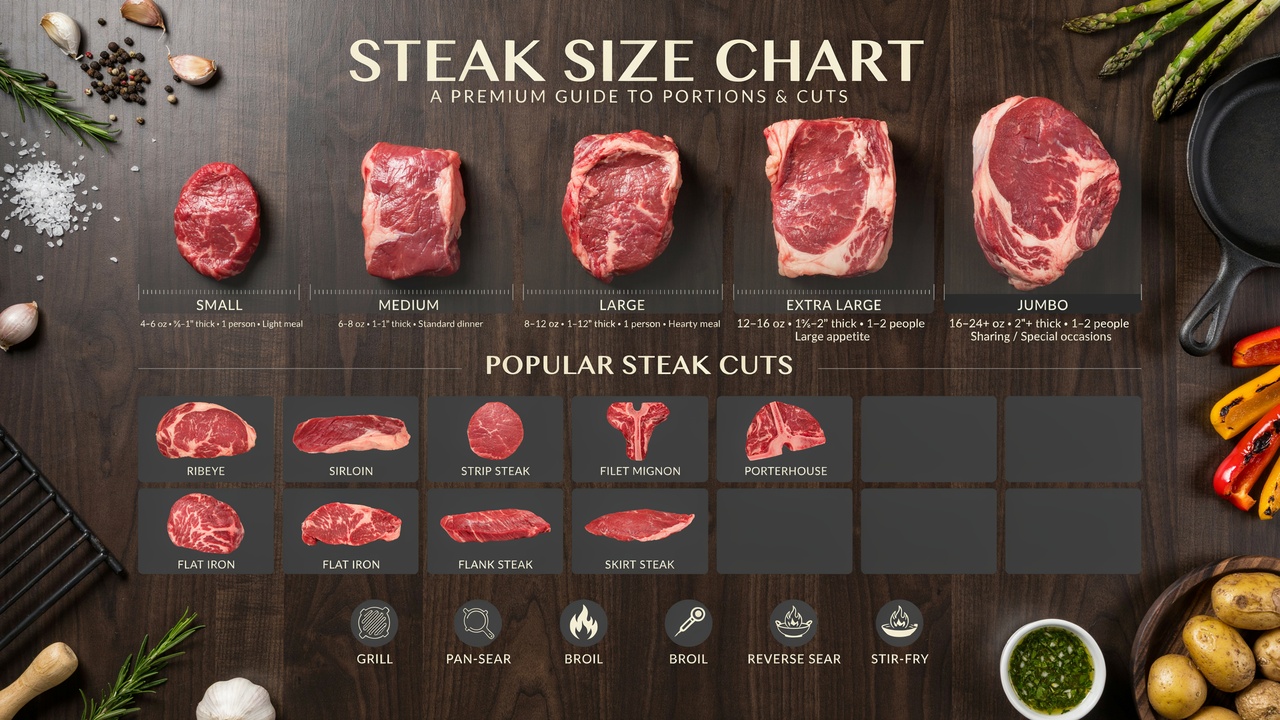
Steak is more than just a piece of beef—it can be a centerpiece for a special dinner, a hearty restaurant meal, or a simple weeknight dish. But steaks come in many different cuts, weights, and thicknesses. Understanding the steak size chart helps you choose the right steak for your appetite, cooking method, budget, and occasion.
Why Steak Size Matters
Steak size affects cooking time, portion size, calories, and how easily you can achieve the desired level of doneness. A thin steak cooks quickly, while a thick steak gives you more control over developing a browned crust while keeping the center juicy.
The cut also matters. A ribeye is generally rich and highly marbled, while filet mignon is known for its tenderness and relatively lean character. T-bone and porterhouse steaks combine two different muscles in one steak.
Standard Steak Size Chart
| Steak Size | Approx. Weight | Thickness | Typical Serving | Best For |
|---|---|---|---|---|
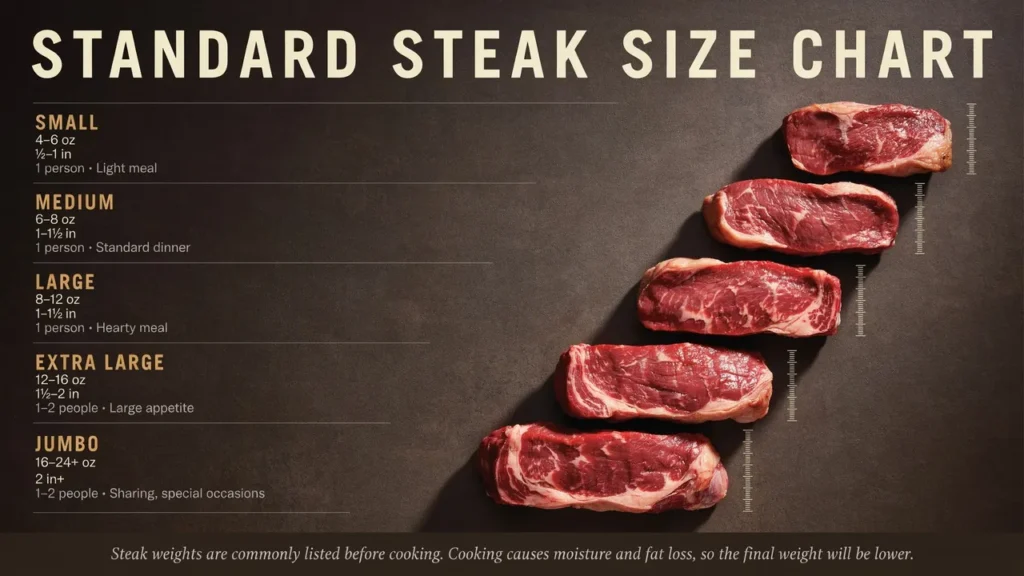
| Small | 4–6 oz | ¾–1 in | 1 person | Light meal |
| Medium | 6–8 oz | 1–1¼ in | 1 person | Standard dinner |
| Large | 8–12 oz | 1–1½ in | 1 person | Hearty meal |
| Extra Large | 12–16 oz | 1½–2 in | 1–2 people | Large appetite |
| Jumbo | 16–24+ oz | 2 in+ | 1–2 people | Sharing, special occasions |
Steak weights are commonly listed before cooking. Cooking causes moisture and fat loss, so the final weight will be lower.
Popular Steak Cuts Chart
| Steak Cut | Typical Weight | Texture | Flavor | Best Cooking Method |
|---|---|---|---|---|
| Ribeye | 8–16 oz | Tender | Rich & beefy | Grilling, pan-searing |
| Strip Steak | 8–14 oz | Tender | Beefy & savory | Grilling, pan-searing |
| Filet Mignon | 5–10 oz | Very tender | Mild & delicate | Pan-searing, grilling |
| Sirloin | 6–12 oz | Moderately tender | Beefy | Grilling, broiling |
| T-Bone | 12–20 oz | Tender | Rich & beefy | Grilling |
| Porterhouse | 16–24+ oz | Very tender | Rich & beefy | Grilling |
| Flat Iron | 6–10 oz | Tender | Beefy | Grilling, pan-searing |
| Flank Steak | 1–2 lb | Firm | Strong beef flavor | Grilling, broiling |
| Skirt Steak | 8–16 oz | Fibrous | Intense & beefy | High-heat grilling |
Weights vary by butcher, restaurant, and individual steak.
Steak Thickness Chart
Thickness can be just as important as weight.
| Thickness | Cooking Character | Best For |
|---|---|---|
| ½ inch | Very fast cooking | Quick pan-searing |
| ¾ inch | Fast cooking | Pan or grill |
| 1 inch | Moderate | Grill or skillet |
| 1½ inch | More control | Steakhouse-style cooking |
| 2 inch+ | Slow interior cooking | Reverse sear, grilling |
Thicker steaks generally give you more time to develop a crust before the center becomes overcooked.
Steak Weight Chart
| Weight | Approx. Size | Serving |
|---|---|---|
| 4 oz | Small | 1 light serving |
| 6 oz | Small–Medium | 1 serving |
| 8 oz | Medium | 1 standard serving |
| 10 oz | Medium–Large | 1 hearty serving |
| 12 oz | Large | 1 large serving |
| 16 oz | Extra Large | 1–2 servings |
| 20 oz+ | Jumbo | 1–2 servings |
A bone-in steak can weigh significantly more than the amount of edible meat because the bone contributes to the total weight.
Steak Serving Size Chart
A typical steak serving can vary depending on the meal and whether sides are included.
| Serving Style | Approx. Raw Steak Amount |
|---|---|
| Light | 4–6 oz |
| Standard | 6–8 oz |
| Hearty | 8–12 oz |
| Large | 12–16 oz |
| Sharing | 16–24+ oz |
Restaurant steaks can be much larger than a typical home-cooked portion.
Steak Size For One Person
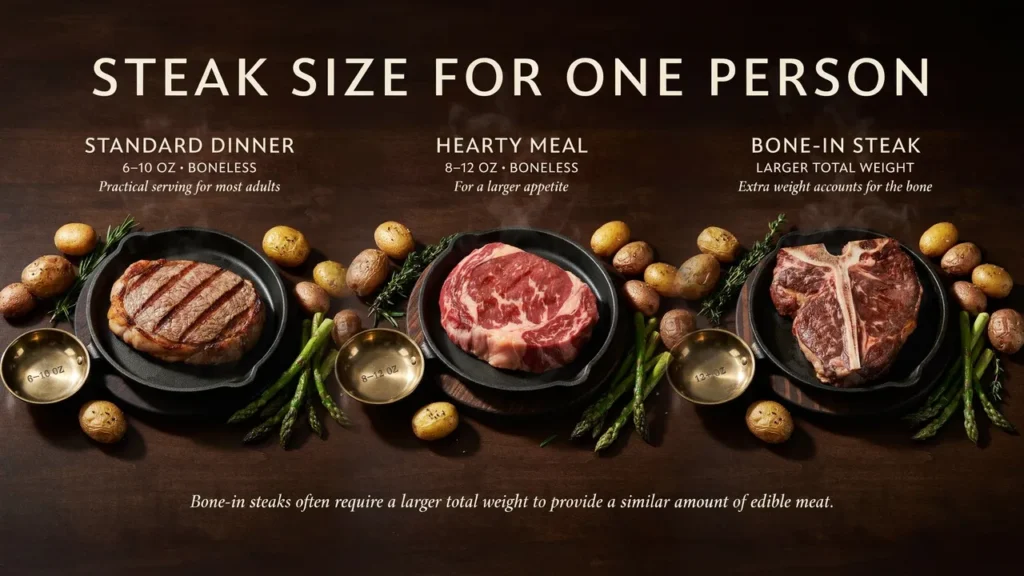
For a standard dinner, a 6–10 oz boneless steak can be a practical range for many adults.
For a particularly hearty meal, an 8–12 oz steak may be preferred.
Bone-in steaks often require a larger total weight to provide a similar amount of edible meat.
Steak Size For Two People
Large bone-in steaks are often suitable for sharing.
| Steak | Suggested Sharing |
|---|---|
| 16 oz Ribeye | 2 people |
| 18–20 oz T-Bone | 2 people |
| 20–24 oz Porterhouse | 2 people |
| 24 oz+ Specialty Steak | 2–3 people |
The amount needed depends on the number of side dishes and individual appetites.
Ribeye Size Chart
Ribeye is known for its marbling and rich flavor.
| Ribeye Size | Weight | Best Use |
|---|---|---|
| Small | 6–8 oz | Light meal |
| Standard | 8–12 oz | Dinner |
| Large | 12–16 oz | Hearty meal |
| Bone-In | 16–24+ oz | Sharing |
Ribeye can be cooked on a grill, cast-iron skillet, or other high-heat cooking surface.
Filet Mignon Size Chart
Filet mignon is cut from the tenderloin and is prized for its tenderness.
| Filet Size | Weight | Serving |
|---|---|---|
| Petite | 3–4 oz | Light serving |
| Small | 4–6 oz | Standard light meal |
| Medium | 6–8 oz | Standard dinner |
| Large | 8–10 oz | Hearty meal |
Because filet mignon is relatively lean, it is often paired with sauces, butter, or rich side dishes.
Sirloin Steak Size Chart
Sirloin offers a balance of beefy flavor and moderate tenderness.
| Sirloin Size | Weight | Best Use |
|---|---|---|
| Small | 5–6 oz | Light meal |
| Standard | 6–8 oz | Everyday dinner |
| Large | 8–12 oz | Hearty meal |
| Extra Large | 12–16 oz | Sharing or large appetite |
Sirloin is versatile and works well on the grill or in a skillet.
T-Bone Vs Porterhouse Size Chart
Both cuts contain a T-shaped bone and include strip steak and tenderloin.
| Feature | T-Bone | Porterhouse |
|---|---|---|
| Bone | T-shaped | T-shaped |
| Strip Section | Yes | Yes |
| Tenderloin | Yes | Larger |
| Typical Size | Large | Very Large |
| Best For | 1 person or sharing | Sharing |
| Cooking | Grill, high heat | Grill, high heat |
The main distinction is the size of the tenderloin portion.
Steak Cut Flavor Chart
| Flavor Level | Steak Examples |
|---|---|
| Mild | Filet Mignon |
| Balanced | Sirloin |
| Beefy | Strip Steak |
| Rich | Ribeye |
| Very Beefy | Skirt Steak |
| Rich & Marbled | Porterhouse |
Marbling, aging, and cooking method all contribute to perceived flavor.
Steak Tenderness Chart
| Tenderness | Steak Cuts |
|---|---|
| Very Tender | Filet Mignon |
| Highly Tender | Ribeye, Strip |
| Tender | Flat Iron, Sirloin |
| Moderately Firm | Flank |
| Firm/Fibrous | Skirt |
Cuts with more connective tissue often benefit from appropriate slicing and cooking techniques.
Steak Marbling Chart
Marbling refers to the small streaks of intramuscular fat distributed through the meat.
| Marbling | Typical Character |
|---|---|
| Low | Leaner, less rich |
| Moderate | Balanced |
| High | Rich & juicy |
| Very High | Extremely rich |
Ribeye is particularly well known for its marbling.
Steak Doneness Chart
| Doneness | Approx. Internal Temperature* | General Appearance |
|---|---|---|
| Rare | 120–125°F / 49–52°C | Cool red center |
| Medium Rare | 130–135°F / 54–57°C | Warm red-pink center |
| Medium | 140–145°F / 60–63°C | Pink center |
| Medium Well | 150–155°F / 66–68°C | Slightly pink |
| Well Done | 160°F+ / 71°C+ | Little or no pink |
*These are commonly used culinary ranges. For food safety, use a reliable thermometer and follow applicable food-safety guidance.
Steak Cooking Method Chart
| Cooking Method | Best Steak Types |
|---|---|
| Grilling | Ribeye, Strip, T-Bone |
| Pan-Searing | Filet, Ribeye, Strip |
| Broiling | Sirloin, Strip |
| Reverse Searing | Thick Ribeye, Porterhouse |
| Sous Vide + Sear | Thick steaks |
| Stir-Frying | Flank, Skirt |
| Fajitas | Skirt, Flank |
The thickness and fat content of the steak should also influence the cooking method.
Steak Size Vs Cooking Time
There is no single cooking time for a steak because starting temperature, thickness, cooking surface, heat level, and desired doneness all matter.
| Steak Thickness | General Cooking Character |
|---|---|
| ½–¾ inch | Cooks very quickly |
| 1 inch | Moderate cooking time |
| 1½ inch | Longer cooking time |
| 2 inch+ | Often benefits from indirect cooking or reverse searing |
A thermometer is more reliable than cooking time alone.
Steak Calories Chart
Steak calories vary significantly depending on the cut, fat content, and serving size.
| Steak Cut | General Calorie Level |
|---|---|
| Filet Mignon | Moderate |
| Sirloin | Moderate |
| Strip Steak | Moderate–High |
| Ribeye | High |
| Porterhouse | High |
| Flank Steak | Moderate |
| Skirt Steak | Moderate–High |
Adding butter, oil, sauces, or compound butter increases the total calorie content.
Steak Protein Chart
Steak is a concentrated source of protein.
| Steak Serving | General Protein |
|---|---|
| 4 oz cooked | ~25–30 g |
| 6 oz cooked | ~38–45 g |
| 8 oz cooked | ~50–60 g |
| 10 oz cooked | ~60–70 g |
Exact protein content varies by cut and cooking method.
Steak Vs Chicken Breast
| Feature | Steak | Chicken Breast |
|---|---|---|
| Protein | High | High |
| Fat | Varies widely | Generally Lower |
| Flavor | Rich & Beefy | Mild |
| Iron | Good Source | Moderate |
| Cooking | Grill, pan, broil | Grill, bake, pan |
| Texture | Firm & juicy | Lean & tender |
The nutritional differences depend heavily on the specific cut and preparation.
Steak Side Dish Chart
| Steak | Suggested Side |
|---|---|
| Ribeye | Roasted potatoes |
| Filet Mignon | Asparagus |
| Sirloin | Grilled vegetables |
| Strip Steak | Fries or salad |
| T-Bone | Baked potato |
| Porterhouse | Creamed spinach |
| Flank Steak | Rice, vegetables |
| Skirt Steak | Beans, tortillas |
Balancing a rich steak with vegetables or lighter sides can create a more complete meal.
Steak Sauce Pairing Chart
| Steak | Sauce |
|---|---|
| Ribeye | Chimichurri |
| Filet Mignon | Peppercorn sauce |
| Sirloin | Mushroom sauce |
| Strip Steak | Béarnaise |
| Flank Steak | Chimichurri |
| T-Bone | Herb butter |
| Porterhouse | Red wine-style sauce |
Sauce choice is mostly a matter of personal preference.
Steak Seasoning Chart
Simple seasoning can highlight the natural beef flavor.
| Seasoning | Best With |
|---|---|
| Salt & Black Pepper | Any steak |
| Garlic | Ribeye, Sirloin |
| Rosemary | Filet, Strip |
| Thyme | Filet, Sirloin |
| Smoked Paprika | Flank, Skirt |
| Chili | Skirt, Flank |
| Garlic Butter | Ribeye, Filet |
Seasoning should complement rather than overpower the steak.
Bone-In Vs Boneless Steak
| Feature | Bone-In | Boneless |
|---|---|---|
| Weight | Higher | Lower |
| Cooking | Can be slower | More uniform |
| Flavor | Rich perception | Direct meat-to-pan contact |
| Portion Calculation | More complex | Easier |
| Sharing | Popular | Convenient |
The bone contributes to the total weight but is not edible meat.
Steak Size For Grilling
For grilling, steaks around 1–1½ inches thick are often convenient because they provide enough thickness to develop a good sear while allowing the center to cook gradually.
Very thick steaks can benefit from indirect heat or reverse searing.
Steak Size For Pan-Searing
A 1–1½ inch steak works particularly well for pan-searing because it provides enough time to develop a crust without the interior cooking too quickly.
Very thin steaks can be cooked quickly but offer less room for a distinct crust and interior doneness contrast.
Steak Size For Meal Prep
For meal prep, smaller portions can be easier to divide.
| Portion | Raw Steak Amount |
|---|---|
| Light | 4–5 oz |
| Standard | 5–7 oz |
| High-Protein Meal | 7–9 oz |
| Large | 9–12 oz |
Pair steak with vegetables, grains, potatoes, or legumes to create a complete meal.
Tips For Buying Steak
Check thickness: Thickness is often more useful than length when planning cooking.
Look for even thickness: Uniform steaks cook more consistently.
Consider marbling: Intramuscular fat contributes richness and juiciness.
Choose the cut for your goal: Filet for tenderness, ribeye for richness, sirloin for versatility.
Consider bone weight: Bone-in steaks weigh more than their edible meat portion.
Buy according to appetite: A huge steak isn’t necessary for a satisfying meal.
Common Mistakes When Choosing Steak Size
Buying by weight alone: A bone-in steak can have a lot of non-edible weight.
Choosing too thin a steak: Thin steaks can quickly become overcooked.
Ignoring thickness: Two steaks with the same weight can cook very differently.
Overestimating portion needs: Large restaurant-style steaks may be more than one person needs.
Using cooking time instead of temperature: Steak thickness and starting temperature can vary significantly.
Cutting immediately: Allowing a steak to rest briefly after cooking helps the juices redistribute.
Steak Storage Chart
| Storage Method | General Guidance |
|---|---|
| Refrigerator | Keep properly chilled |
| Original Packaging | Suitable for short-term storage |
| Airtight Wrap | Helps prevent exposure |
| Freezer | Useful for longer storage |
| Vacuum-Sealed | Good for freezer storage |
Always follow appropriate food-safety practices for raw beef.
The History Behind Steak Cuts
Different steak cuts developed from the way butchers divide beef carcasses into useful portions. As beef became increasingly popular around the world, regional butchering traditions created different names and preparations for similar cuts.
Today, cuts such as ribeye, sirloin, filet mignon, T-bone, porterhouse, flank, and strip steak are widely recognized, although names and exact cutting specifications can vary between countries.
Frequently Asked Questions
What Is A Standard Steak Size?
A common individual steak is around 6–10 ounces, although restaurant portions can be considerably larger.
How Much Steak Should One Person Eat?
A raw portion of approximately 6–8 ounces can be a practical starting point for many adults, depending on appetite and side dishes.
What Size Steak Is Best For Two People?
A 16–24 ounce bone-in steak can often work well for sharing, depending on the amount of edible meat and accompanying dishes.
What Is The Best Steak Thickness?
Around 1–1½ inches is a versatile thickness for grilling or pan-searing. Thicker steaks can also work well with techniques such as reverse searing.
Which Steak Is The Most Tender?
Filet mignon is widely regarded as one of the most tender steak cuts.
Which Steak Has The Most Flavor?
Ribeye is particularly famous for its rich flavor and abundant marbling.
What Is The Difference Between T-Bone And Porterhouse?
Both contain a T-shaped bone and strip steak plus tenderloin. A porterhouse has a larger tenderloin portion than a typical T-bone.
How Many Calories Are In An 8-Ounce Steak?
The calorie content varies greatly by cut and fat level. An 8-ounce steak can range from several hundred calories upward, with fattier cuts such as ribeye generally providing more calories.
Is A Bone-In Steak Better?
Bone-in steaks are popular for their presentation and cooking experience, but the bone does not automatically make a steak higher quality. Boneless steaks can also be excellent.
What Steak Is Best For Grilling?
Ribeye, strip steak, sirloin, T-bone, and porterhouse are all popular grilling choices.
What Steak Is Best For A Steak Sandwich?
Sirloin, strip steak, flank steak, and skirt steak can all work well when thinly sliced.
What Is The Best Steak For Beginners?
Sirloin or strip steak can be good starting choices because they offer a balance of flavor, tenderness, and versatility.
Choosing the right steak is about more than picking the biggest piece. Cut, weight, thickness, marbling, and serving size all affect the final meal. Whether you want a tender filet mignon, a richly marbled ribeye, a versatile sirloin, or a large porterhouse for sharing, understanding the steak size chart makes it easier to choose the right steak for any occasion.
