
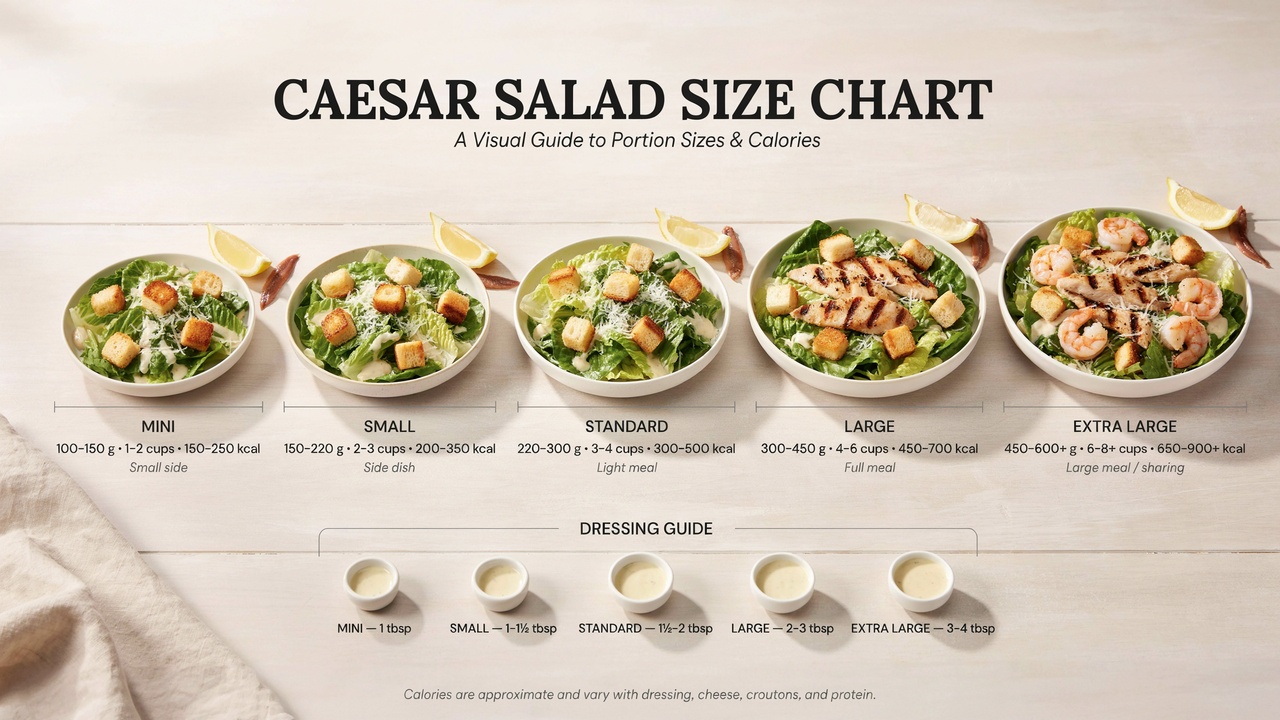
Caesar salad is a classic salad made with crisp romaine lettuce, Parmesan cheese, croutons, and a creamy Caesar dressing. It can be served as a light side dish, a lunch-sized salad, or a hearty meal topped with chicken, shrimp, or other proteins. Understanding the Caesar salad size chart helps you choose the right portion, bowl size, dressing amount, and toppings for any occasion.
Why Caesar Salad Size Matters
The size of a Caesar salad affects how filling it is, how much dressing is needed, and whether it works as a side dish or a complete meal.
A small Caesar salad may be enough to accompany pasta or steak, while a large chicken Caesar salad can serve as a complete lunch or dinner. The amount of dressing and toppings can also dramatically change the calories and overall portion.
Standard Caesar Salad Size Chart
| Caesar Salad Size | Approx. Weight | Bowl Capacity | Calories* | Best For |
|---|---|---|---|---|
| Mini | 100–150 g | 1–2 cups | 150–250 | Small side |
| Small | 150–220 g | 2–3 cups | 200–350 | Side dish |
| Standard | 220–300 g | 3–4 cups | 300–500 | Light meal |
| Large | 300–450 g | 4–6 cups | 450–700 | Full meal |
| Extra Large | 450–600+ g | 6–8+ cups | 650–900+ | Large meal/sharing |
*Approximate values for salads with dressing and basic toppings. Actual calories vary significantly with dressing, cheese, croutons, and protein.
Caesar Salad Serving Size Chart
| Serving | Approx. Lettuce | Best Use |
|---|---|---|
| Mini | 1–1½ cups | Small appetizer |
| Side | 2 cups | With a main dish |
| Standard | 2½–3 cups | Light lunch |
| Large | 3–4 cups | Full meal |
| Extra Large | 4+ cups | Large appetite or sharing |
Romaine lettuce is bulky, so the volume can look large even when the salad weighs relatively little.
Caesar Salad Bowl Size Chart
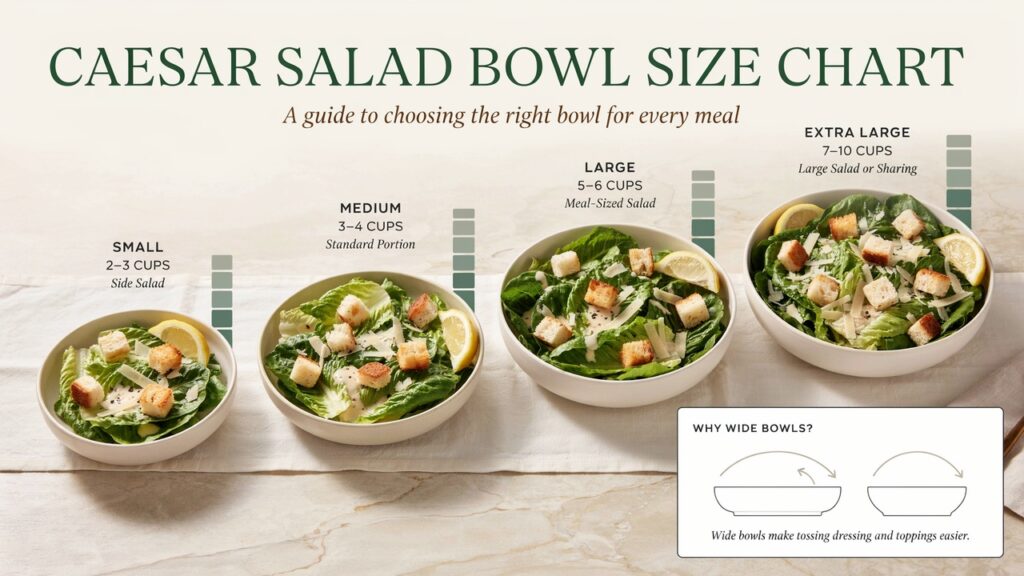
| Bowl Size | Approx. Capacity | Best For |
|---|---|---|
| Small | 2–3 cups | Side salad |
| Medium | 3–4 cups | Standard portion |
| Large | 5–6 cups | Meal-sized salad |
| Extra Large | 7–10 cups | Large salad or sharing |
A wide bowl is often more convenient than a deep bowl because it makes tossing the dressing and toppings easier.
Caesar Salad Ingredient Chart
| Ingredient | Typical Role |
|---|---|
| Romaine Lettuce | Main base |
| Parmesan Cheese | Salty, savory flavor |
| Croutons | Crunch |
| Caesar Dressing | Creaminess & flavor |
| Lemon Juice | Acidity |
| Garlic | Aroma |
| Black Pepper | Spice |
| Anchovies | Umami |
| Chicken | Protein |
| Shrimp | Protein |
Traditional recipes vary, and some modern versions omit anchovies or use different dressing ingredients.
Basic Caesar Salad Ratio
A simple Caesar salad can be balanced around four major components:
| Component | General Amount |
|---|---|
| Romaine | Largest portion |
| Dressing | Light-to-moderate coating |
| Parmesan | Small topping |
| Croutons | Small-to-moderate topping |
The goal is to coat the lettuce without making it soggy or overwhelmingly salty.
Caesar Salad Dressing Chart
Dressing is one of the most important parts of the salad.
| Salad Size | Approx. Dressing |
|---|---|
| Mini | 1 tbsp |
| Small | 1–1½ tbsp |
| Standard | 1½–2 tbsp |
| Large | 2–3 tbsp |
| Extra Large | 3–4 tbsp |
These are general amounts. Creamy commercial dressings can vary considerably in calories and thickness.
Caesar Salad Calories Chart
| Salad Type | Approx. Calories |
|---|---|
| Small Side Caesar | 200–350 |
| Standard Caesar | 300–500 |
| Large Caesar | 450–700 |
| Chicken Caesar | 500–750 |
| Shrimp Caesar | 450–700 |
| Extra-Large Caesar | 650–900+ |
The dressing often contributes a substantial share of the calories.
Caesar Dressing Calories Chart
| Dressing Amount | Approx. Calories* |
|---|---|
| 1 tbsp | 60–100 |
| 2 tbsp | 120–200 |
| 3 tbsp | 180–300 |
| 4 tbsp | 240–400 |
*Values vary significantly by recipe and brand.
Using less dressing or serving it on the side can reduce the calorie content of the overall salad.
Caesar Salad With Chicken Chart
Chicken turns a basic Caesar salad into a more substantial meal.
| Size | Chicken Amount | Best For |
|---|---|---|
| Small | 50–75 g | Side + protein |
| Standard | 75–100 g | Light meal |
| Large | 100–150 g | Full meal |
| Extra Large | 150–200 g | High-protein meal |
The amount of chicken can vary according to preference and the rest of the meal.
Caesar Salad With Shrimp Chart
| Size | Approx. Shrimp | Serving |
|---|---|---|
| Small | 50–75 g | Side |
| Standard | 75–100 g | Light meal |
| Large | 100–150 g | Full meal |
| Extra Large | 150–200 g | Large meal |
Shrimp provides a lighter seafood alternative to chicken.
Caesar Salad Protein Chart
| Protein | Typical Portion | Best For |
|---|---|---|
| Grilled Chicken | 100–150 g | Classic meal salad |
| Shrimp | 100–150 g | Seafood option |
| Salmon | 100–150 g | Richer meal |
| Hard-Boiled Egg | 1–2 eggs | Simple protein |
| Tofu | 100–150 g | Plant-based option |
| Chickpeas | ½–1 cup | Plant-based salad |
Protein can make the salad considerably more filling.
Caesar Salad Topping Chart
| Topping | Main Benefit |
|---|---|
| Parmesan | Salty & savory |
| Croutons | Crunch |
| Chicken | Protein |
| Shrimp | Seafood flavor |
| Bacon | Smoky & salty |
| Egg | Protein & richness |
| Avocado | Creamy texture |
| Cherry Tomatoes | Freshness |
| Roasted Chickpeas | Crunch & plant protein |
Not all toppings are traditional, but many modern Caesar salads include additional ingredients.
Crouton Size Chart
Croutons can vary from tiny cubes to large rustic pieces.
| Crouton Size | Texture | Best Use |
|---|---|---|
| Small | Crisp throughout | Light topping |
| Medium | Crunchy | Standard Caesar |
| Large | Crunchy outside, firm inside | Hearty salad |
| Rustic | Irregular & chunky | Gourmet style |
Larger croutons provide more noticeable crunch but can make the salad harder to eat.
Parmesan Cheese Chart
| Parmesan Amount | Salad Style |
|---|---|
| 1 tbsp | Light |
| 2 tbsp | Standard |
| 3 tbsp | Rich |
| ¼ cup+ | Cheese-heavy |
Freshly grated Parmesan can provide a stronger flavor than finely powdered cheese.
Caesar Salad Texture Chart
| Texture | Ingredient |
|---|---|
| Crisp | Romaine |
| Crunchy | Croutons |
| Creamy | Dressing |
| Firm | Parmesan |
| Tender | Chicken or shrimp |
| Creamy | Optional avocado |
The contrast between crisp lettuce, crunchy croutons, and creamy dressing is a key feature of Caesar salad.
Caesar Salad Flavor Chart
| Flavor | Main Source |
|---|---|
| Savory | Parmesan, anchovies |
| Creamy | Dressing |
| Tangy | Lemon |
| Garlicky | Garlic |
| Peppery | Black pepper |
| Salty | Parmesan, anchovies |
| Toasty | Croutons |
A balanced Caesar salad combines salty, tangy, creamy, savory, and crunchy elements.
Caesar Salad Vs Garden Salad
| Feature | Caesar Salad | Garden Salad |
|---|---|---|
| Main Lettuce | Romaine | Mixed greens |
| Dressing | Creamy Caesar | Vinaigrette or other |
| Parmesan | Traditional | Optional |
| Croutons | Common | Optional |
| Anchovies | Traditional-style dressing | Rare |
| Flavor | Savory & creamy | Fresh & light |
Caesar salad tends to be richer because of its creamy dressing and cheese.
Caesar Salad Vs Greek Salad
| Feature | Caesar Salad | Greek Salad |
|---|---|---|
| Lettuce | Romaine | Often mixed greens/lettuce |
| Cheese | Parmesan | Feta |
| Dressing | Creamy Caesar | Olive oil-based |
| Olives | Usually No | Common |
| Cucumber | Usually No | Common |
| Croutons | Common | Usually No |
Both can be served as sides or full meals depending on toppings.
Caesar Salad For Lunch
A lunch-sized Caesar salad can include:
- 2½–4 cups romaine
- Grilled chicken or another protein
- Parmesan
- Croutons
- Moderate dressing
- Lemon or other fresh ingredients
A 3–5 cup bowl is often practical for a meal-sized salad.
Caesar Salad For Dinner
For dinner, the salad can be made more substantial by adding:
- Chicken
- Shrimp
- Salmon
- Eggs
- Chickpeas
- Avocado
- Whole-grain croutons
A larger serving works especially well when the Caesar salad is the main course.
Caesar Salad For Parties
For a party or buffet, smaller portions are usually easier to serve.
| Event | Suggested Portion |
|---|---|
| Appetizer | 1–1½ cups |
| Side Dish | 1½–2 cups |
| Buffet | 1½–2½ cups |
| Full Meal | 3–4+ cups |
Keep dressing separate when possible so the lettuce remains crisp.
Caesar Salad Meal Prep Chart
| Component | Meal Prep Recommendation |
|---|---|
| Romaine | Store dry & chilled |
| Chicken | Cook separately |
| Dressing | Keep separate |
| Croutons | Keep dry |
| Parmesan | Store separately |
| Lemon | Add before serving |
Keeping dressing and croutons separate helps preserve the salad’s texture.
How To Keep Caesar Salad Crisp
Dry the lettuce well: Excess water dilutes the dressing.
Add dressing just before serving: This prevents the romaine from becoming soggy.
Store croutons separately: Moisture can make them soft.
Keep ingredients chilled: Romaine stays crisp when properly refrigerated.
Toss gently: Overmixing can damage delicate ingredients.
Caesar Salad Dressing Ratio
A traditional-style Caesar dressing combines ingredients that provide fat, acidity, saltiness, and umami.
Common components include:
- Olive oil
- Egg yolk
- Lemon juice
- Garlic
- Parmesan
- Anchovies
- Mustard
- Black pepper
Recipes differ, and some modern versions use mayonnaise or other ingredients for convenience and consistency.
Healthy Caesar Salad Options
A Caesar salad can be adjusted to make it lighter or more nutrient-dense.
| Change | Result |
|---|---|
| More Romaine | More volume |
| Less Dressing | Lower calories |
| Dressing On Side | Better portion control |
| Grilled Chicken | More protein |
| Whole-Grain Croutons | More fiber |
| Extra Vegetables | More variety |
| Less Cheese | Lower sodium/fat |
| Greek Yogurt Dressing | Creamy alternative |
“Healthy” depends on the overall meal and individual dietary needs.
Common Mistakes When Making Caesar Salad
Using too much dressing: It can overpower the lettuce.
Adding dressing too early: The romaine can become soggy.
Using stale croutons: Fresh, crisp croutons provide better texture.
Overloading with Parmesan: Too much cheese can make the salad overly salty.
Using wet lettuce: Water can dilute the dressing.
Making the portion too large: A salad can become calorie-dense when loaded with dressing, cheese, croutons, and rich toppings.
Tips For A Better Caesar Salad
Use fresh romaine: Crisp lettuce makes a major difference.
Grate Parmesan freshly: It adds stronger aroma and flavor.
Toast croutons properly: Aim for crispness without burning.
Add dressing gradually: Start with a small amount and add more if needed.
Use fresh lemon: Acidity helps balance the richness.
Add protein when serving as a meal: Chicken, shrimp, eggs, or legumes can make the salad more filling.
Caesar Salad Nutrition Chart
| Nutrient | General Character |
|---|---|
| Protein | Moderate; higher with chicken |
| Carbohydrates | Mainly from croutons |
| Fat | Can be high from dressing and cheese |
| Fiber | Mainly from romaine and vegetables |
| Sodium | Can be high |
| Calories | Highly dependent on dressing & toppings |
The nutritional profile changes dramatically between a simple side Caesar and a loaded chicken Caesar.
Caesar Salad Serving Size For Restaurants
Restaurant Caesar salads are often much larger than home side portions.
| Restaurant Style | Approx. Portion |
|---|---|
| Side Caesar | 1½–2½ cups |
| Standard Entrée Caesar | 3–5 cups |
| Chicken Caesar | 4–6 cups |
| Large Specialty Caesar | 5–8+ cups |
Restaurant portions can contain significantly more dressing, cheese, and croutons than homemade versions.
Caesar Salad Storage Chart
| Component | Storage |
|---|---|
| Undressed Romaine | Refrigerated |
| Dressing | Refrigerated |
| Chicken | Refrigerated |
| Parmesan | Refrigerated |
| Croutons | Cool & dry |
| Fully Dressed Salad | Best eaten immediately |
Once dressed, Caesar salad generally loses its crisp texture over time.
The History Behind Caesar Salad
Despite its name, Caesar salad is not named after the Roman emperor Julius Caesar. The salad is generally credited to Caesar Cardini, an Italian restaurateur who operated restaurants in Mexico and the United States.
The classic preparation became known for romaine lettuce, Parmesan, croutons, lemon, garlic, and a savory dressing. Over time, chicken, shrimp, bacon, and other ingredients became common additions.
Frequently Asked Questions
What Is The Standard Size Of A Caesar Salad?
A standard Caesar salad is often around 2½–4 cups and may weigh approximately 220–300 grams, depending on the ingredients.
How Many Calories Are In A Caesar Salad?
A basic Caesar salad can contain around 200–500 calories, while larger salads with chicken and generous dressing can exceed 700 calories.
How Much Caesar Dressing Should I Use?
A standard serving often uses around 1½–2 tablespoons of dressing, although the ideal amount depends on the salad size and dressing recipe.
How Much Chicken Goes In A Chicken Caesar Salad?
A meal-sized chicken Caesar often contains around 100–150 grams of cooked chicken, depending on the recipe.
Is Caesar Salad Healthy?
It can be part of a nutritious meal, especially when made with plenty of romaine and a reasonable amount of dressing. However, creamy dressing, cheese, croutons, and large portions can significantly increase calories and sodium.
Why Is Caesar Salad High In Calories?
The main contributors are usually Caesar dressing, Parmesan cheese, croutons, and added proteins or oils.
What Lettuce Is Used In Caesar Salad?
Romaine lettuce is the classic choice because its crisp leaves hold up well to creamy dressing.
Does Traditional Caesar Dressing Contain Anchovies?
Many traditional-style Caesar dressings contain anchovies or anchovy-based ingredients, although recipes vary.
What Size Bowl Is Best For Caesar Salad?
A 3–5 cup bowl is practical for many individual Caesar salads, while a larger 5–8 cup bowl works well for entrée-sized portions.
How Do I Keep Caesar Salad From Getting Soggy?
Keep the lettuce dry, store the dressing separately, and dress the salad immediately before serving.
Can Caesar Salad Be A Full Meal?
Yes. Adding chicken, shrimp, salmon, eggs, chickpeas, or another protein can turn Caesar salad into a satisfying main course.
Caesar salad can range from a small side dish to a large, protein-packed meal, and its size affects everything from calories and dressing requirements to portion and presentation. Understanding the Caesar salad size chart helps you choose the right amount of romaine, dressing, cheese, croutons, and protein for school lunches, restaurant meals, family dinners, parties, or meal prep.
