
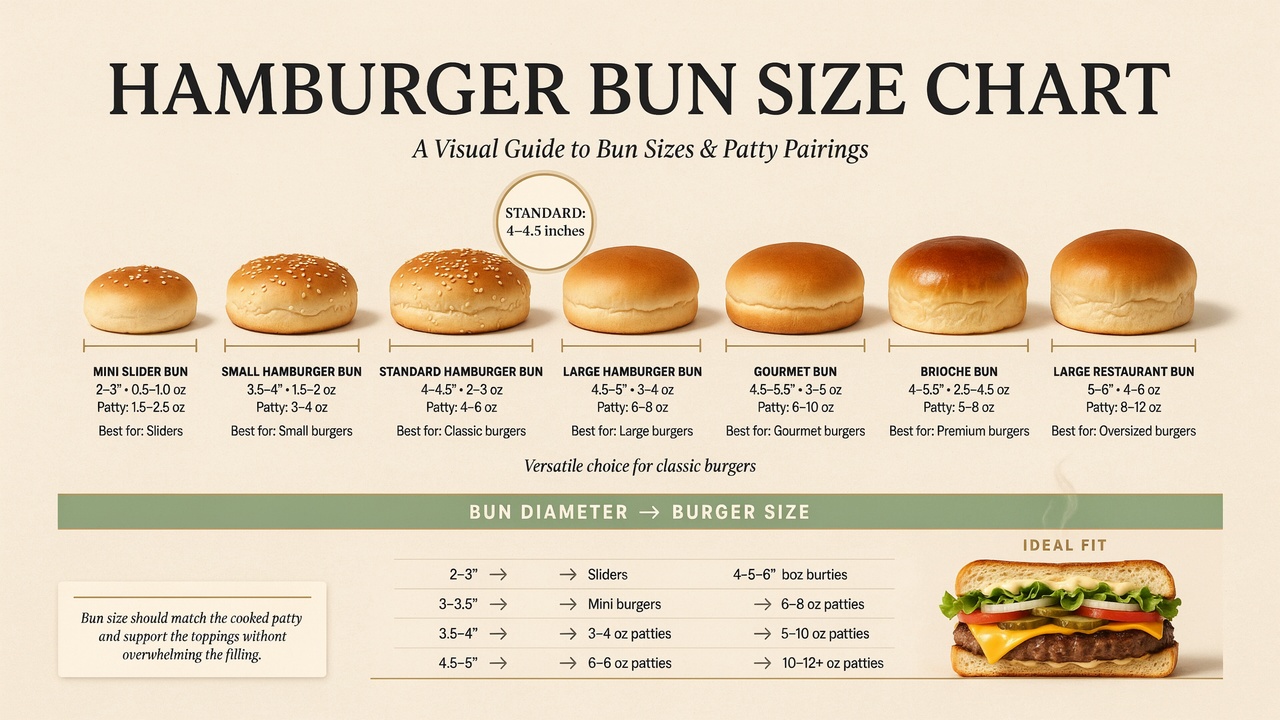
Hamburger buns come in a wide range of sizes, from small slider buns to large gourmet and brioche buns. Choosing the right bun size is important because the bun should properly support the burger patty, toppings, and sauces without becoming too small or overwhelming the filling.
This hamburger bun size chart explains common bun diameters, weights, patty sizes, serving recommendations, and the best uses for each size. Whether you are making sliders, classic hamburgers, smash burgers, or large restaurant-style burgers, this guide can help you select the right bun.
Why Hamburger Bun Size Matters
The size of a hamburger bun affects both the appearance and eating experience of a burger. A bun that is too small may not hold the patty and toppings properly, while an oversized bun can make the burger feel unbalanced.
The right bun size should:
- Match the diameter of the burger patty
- Hold toppings without collapsing
- Provide enough bread without overpowering the meat
- Make the burger easier to hold and eat
- Create a balanced bun-to-patty ratio
For most burgers, the bun should be approximately the same diameter as the cooked patty or slightly larger.
Standard Hamburger Bun Size Chart
| Bun Type | Approx. Diameter | Approx. Weight | Typical Patty Size | Best Use |
|---|---|---|---|---|
| Mini Slider Bun | 2–3 inches | 0.5–1.0 oz | 1.5–2.5 oz | Sliders |
| Small Hamburger Bun | 3.5–4 inches | 1.5–2 oz | 3–4 oz | Small burgers |
| Standard Hamburger Bun | 4–4.5 inches | 2–3 oz | 4–6 oz | Classic burgers |
| Large Hamburger Bun | 4.5–5 inches | 3–4 oz | 6–8 oz | Large burgers |
| Gourmet Bun | 4.5–5.5 inches | 3–5 oz | 6–10 oz | Gourmet burgers |
| Brioche Bun | 4–5.5 inches | 2.5–4.5 oz | 5–8 oz | Premium burgers |
| Large Restaurant Bun | 5–6 inches | 4–6 oz | 8–12 oz | Oversized burgers |
Measurements are approximate because bun sizes vary by bakery, brand, and recipe.
Hamburger Bun Diameter Chart
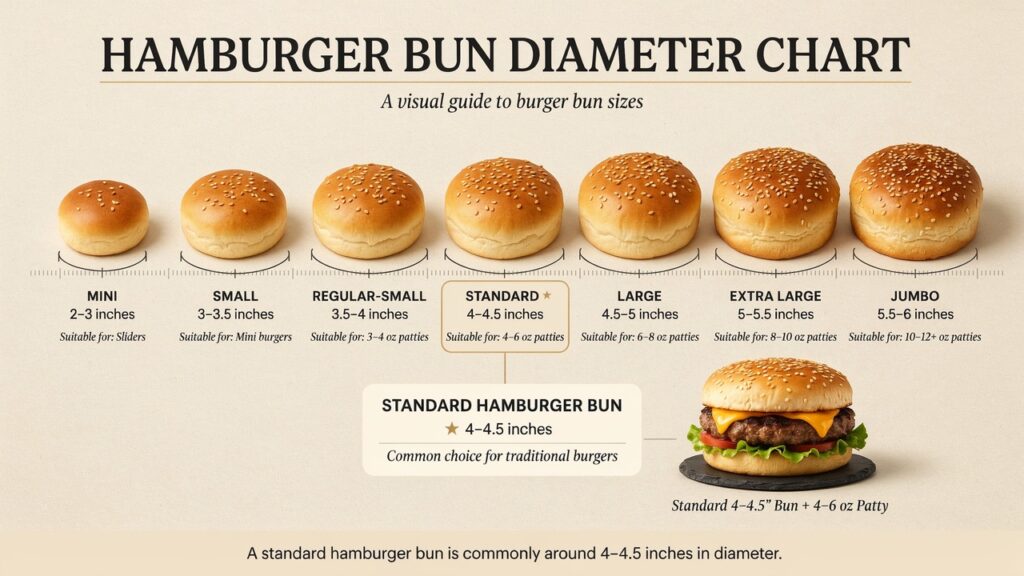
Diameter is one of the easiest ways to determine whether a bun will fit your burger.
| Bun Diameter | Size Category | Suitable Burger |
|---|---|---|
| 2–3 inches | Mini | Sliders |
| 3–3.5 inches | Small | Mini burgers |
| 3.5–4 inches | Regular-small | 3–4 oz patties |
| 4–4.5 inches | Standard | 4–6 oz patties |
| 4.5–5 inches | Large | 6–8 oz patties |
| 5–5.5 inches | Extra large | 8–10 oz patties |
| 5.5–6 inches | Jumbo | 10–12+ oz patties |
A standard hamburger bun is commonly around 4 to 4.5 inches in diameter, making it suitable for many traditional homemade and restaurant-style burgers.
Hamburger Bun Weight Chart
The weight of a bun can vary significantly depending on ingredients, density, and whether it is enriched with butter, eggs, or milk.
| Bun Size | Approx. Weight |
|---|---|
| Slider Bun | 0.5–1 oz |
| Small Bun | 1.5–2 oz |
| Standard Bun | 2–3 oz |
| Large Bun | 3–4 oz |
| Brioche Bun | 2.5–4.5 oz |
| Gourmet Bun | 3–5 oz |
| Jumbo Bun | 4–6 oz |
A heavier bun is not necessarily better. The best choice depends on the size and style of the burger.
Hamburger Bun Size vs Patty Size
One of the most important considerations is matching the bun to the patty.
| Patty Weight | Recommended Bun Diameter |
|---|---|
| 1.5–2.5 oz | 2.5–3 inches |
| 3–4 oz | 3.5–4 inches |
| 4–5 oz | 4–4.5 inches |
| 5–6 oz | 4–4.5 inches |
| 6–8 oz | 4.5–5 inches |
| 8–10 oz | 5–5.5 inches |
| 10–12+ oz | 5.5–6 inches |
Keep in mind that burger patties shrink during cooking. For that reason, raw patties are often shaped slightly wider than the bun.
What Size Bun for a 4 oz Burger?
A 3.5- to 4.5-inch bun is generally a good match for a 4 oz burger patty.
A standard hamburger bun works particularly well because it provides enough surface area for lettuce, tomato, onions, cheese, pickles, and sauces without making the burger too bulky.
What Size Bun for a 6 oz Burger?
A 4.5- to 5-inch bun is usually a good choice for a 6 oz burger.
A slightly larger bun provides better support for a thicker patty and additional toppings. Brioche and potato buns are also popular choices for burgers in this size range.
What Size Bun for an 8 oz Burger?
For an 8 oz burger, consider a 5- to 5.5-inch bun.
A large brioche, sesame, potato, or gourmet-style bun can work especially well. A small standard bun may become compressed under the weight of the patty and toppings.
Hamburger Slider Bun Size
Slider buns are much smaller than standard hamburger buns.
Most slider buns measure approximately 2 to 3 inches in diameter and are designed for small patties.
| Slider Type | Bun Size | Patty Size |
|---|---|---|
| Mini Slider | 2–2.5 inches | 1.5–2 oz |
| Standard Slider | 2.5–3 inches | 2–2.5 oz |
| Large Slider | 3–3.5 inches | 2.5–3 oz |
Sliders are ideal for parties, appetizers, tasting menus, and meals where several small burgers are served together.
Hamburger Bun Size for Smash Burgers
Smash burgers are usually made with thin patties that spread across a relatively wide surface.
A 4- to 5-inch bun is commonly suitable for a smash burger. The bun should be large enough to hold the flattened patty while still providing a good bread-to-meat balance.
Because smash burgers are thin, a soft bun is often preferred over a very dense bun.
Hamburger Bun Size for Double Burgers
Double burgers require a bun with enough structure to support two patties.
| Burger Style | Recommended Bun |
|---|---|
| Small double | 4–4.5 inches |
| Standard double | 4.5–5 inches |
| Large double | 5–5.5 inches |
| Gourmet double | 5–6 inches |
A sturdy potato, brioche, sesame, or gourmet bun can work well for double burgers.
Hamburger Bun Height
Diameter is usually more important than height, but bun thickness also affects the overall burger.
| Bun Style | Approx. Height |
|---|---|
| Slider Bun | 1–1.5 inches |
| Standard Bun | 1.5–2 inches |
| Large Bun | 1.75–2.25 inches |
| Brioche Bun | 1.5–2.25 inches |
| Gourmet Bun | 2–2.5+ inches |
A very tall bun can make a burger difficult to bite, especially when combined with a thick patty and many toppings.
Hamburger Bun Calories by Size
Calories vary considerably according to ingredients and brand. Brioche and enriched buns generally contain more calories than very simple bread buns.
| Bun Size | Approx. Calories |
|---|---|
| Slider Bun | 60–100 |
| Small Bun | 100–140 |
| Standard Bun | 120–180 |
| Large Bun | 160–220 |
| Brioche Bun | 180–250 |
| Gourmet Bun | 180–280 |
| Jumbo Bun | 220–320+ |
These are general estimates rather than fixed nutritional values. Always check the nutrition label when exact calorie information is important.
Hamburger Bun Size Conversion Chart
| Size | Diameter | Approx. Weight |
|---|---|---|
| Mini | 2–3 in | 0.5–1 oz |
| Small | 3–4 in | 1–2 oz |
| Standard | 4–4.5 in | 2–3 oz |
| Large | 4.5–5 in | 3–4 oz |
| Extra Large | 5–5.5 in | 4–5 oz |
| Jumbo | 5.5–6+ in | 4–6+ oz |
Best Hamburger Bun Size for Different Burgers
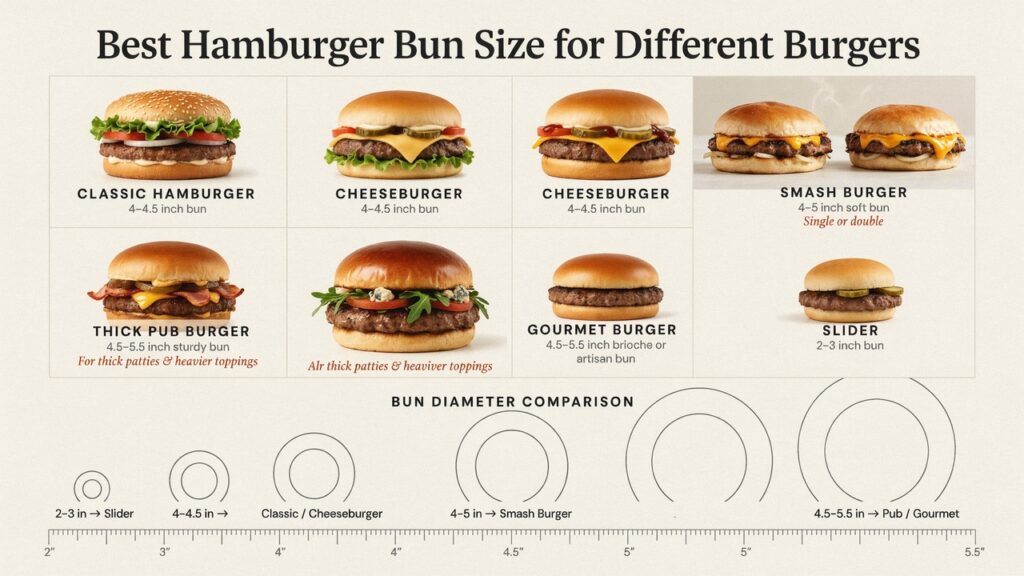
Different burgers benefit from different bun sizes.
Classic Hamburger
A 4- to 4.5-inch bun is an excellent all-purpose choice for a traditional burger.
Cheeseburger
A 4- to 4.5-inch bun works well for most cheeseburgers.
Smash Burger
A 4- to 5-inch soft bun is a good option for a single or double smash burger.
Thick Pub Burger
A 4.5- to 5.5-inch sturdy bun can better support a thick patty and heavier toppings.
Gourmet Burger
A 4.5- to 5.5-inch brioche or artisan bun is often suitable.
Slider
A 2- to 3-inch bun is generally appropriate.
How Many Hamburger Buns Per Person?
The number of buns needed depends on the type of burger and appetite.
| Serving Style | Buns Per Person |
|---|---|
| Small burger | 1 |
| Standard burger | 1 |
| Large burger | 1 |
| Double burger | 1 |
| Sliders | 2–3 |
| Party sliders | 2–4 |
For a typical cookout, planning one hamburger bun per person is a good starting point, with a few extras to account for larger appetites or damaged buns.
Hamburger Bun Size for Parties
When preparing burgers for a large gathering, choosing a moderate bun size can make serving easier.
For most guests, a 4- to 4.5-inch standard bun is a practical choice. It works with common 4–6 oz patties and leaves enough room for toppings.
If serving sliders, 2- to 3-inch buns allow guests to try multiple flavors.
Hamburger Bun Size and Toppings
The more toppings you add, the more important bun structure becomes.
For burgers with:
- Lettuce
- Tomato
- Onion
- Pickles
- Cheese
- Bacon
- Fried eggs
- Mushrooms
- Multiple sauces
a slightly larger and sturdier bun may be preferable.
A soft bun can provide a pleasant texture, but it should still have enough structure to prevent the burger from falling apart.
How to Choose the Right Hamburger Bun
Use these factors when choosing a bun:
1. Match the Diameter
The bun should be close to the diameter of the cooked patty.
2. Consider Patty Thickness
Thicker burgers generally benefit from larger, sturdier buns.
3. Think About Toppings
A burger loaded with toppings may require a larger bun.
4. Consider Bun Texture
Soft buns are excellent for smash burgers, while firmer buns can work better for very thick burgers.
5. Match the Bun to the Burger Style
A classic sesame bun, brioche bun, potato bun, and artisan bun can each create a different burger experience.
Common Hamburger Bun Size Mistakes
Using a Bun That Is Too Small
A small bun can become overwhelmed by the patty and toppings.
Using a Bun That Is Too Large
An oversized bun can create an excessive bread-to-meat ratio.
Ignoring Patty Shrinkage
Raw patties generally shrink as they cook, so shaping them slightly wider than the bun helps produce a better final fit.
Choosing a Weak Bun for a Heavy Burger
A delicate bun may fall apart under a large patty, cheese, sauces, and toppings.
Adding Too Many Toppings
Even a properly sized bun can become difficult to handle if it is overloaded.
Homemade Hamburger Bun Size
If making hamburger buns from scratch, divide the dough according to the desired final size.
| Bun Style | Approx. Dough Weight |
|---|---|
| Mini Slider | 25–35 g |
| Small | 45–55 g |
| Standard | 65–85 g |
| Large | 85–110 g |
| Extra Large | 110–140 g |
These weights are starting points rather than strict rules because dough recipes vary in hydration and density.
Buns usually expand significantly during proofing and baking, so the dough ball should be smaller than the desired finished bun.
Hamburger Bun Size for Freezing and Storage
Hamburger buns freeze well when properly packaged.
For best results:
- Allow freshly baked buns to cool completely.
- Place them in an airtight freezer bag or container.
- Remove as much excess air as practical.
- Freeze for longer-term storage.
- Thaw at room temperature before serving.
- Toast the cut sides if desired.
If buying buns in bulk, separating them into smaller portions before freezing can make them easier to use.
Frequently Asked Questions
What is the standard hamburger bun size?
A standard hamburger bun is usually around 4 to 4.5 inches in diameter.
What size bun is best for a 4 oz burger?
A 3.5- to 4.5-inch bun is generally a good match for a 4 oz burger.
What size bun is best for an 8 oz burger?
A 5- to 5.5-inch bun can provide a better balance for an 8 oz burger.
How big are slider buns?
Slider buns are commonly around 2 to 3 inches in diameter.
How many ounces is a hamburger bun?
A standard hamburger bun often weighs approximately 2 to 3 ounces, although smaller and larger buns can vary considerably.
Are brioche buns bigger than regular buns?
Not necessarily. Brioche buns are available in many sizes, but they are often richer, softer, and slightly heavier than basic hamburger buns of a similar diameter.
Should the bun be bigger than the patty?
Ideally, the cooked patty should fit comfortably within the bun. Since patties shrink during cooking, the raw patty is often made slightly larger than the bun.
What bun size is best for a smash burger?
A 4- to 5-inch soft bun is generally a good choice for a smash burger.
What bun size is best for sliders?
A 2- to 3-inch bun is usually suitable for sliders.
Can I use a regular hamburger bun for a large burger?
Yes, but the burger may extend beyond the bun. For large 6–10 oz patties, a larger bun can provide a better balance and more stability.
Final Thoughts
The right hamburger bun size depends mainly on the patty size, burger style, and amount of toppings. For everyday burgers, a 4- to 4.5-inch standard bun is a versatile choice. Smaller 2- to 3-inch buns are ideal for sliders, while 4.5- to 5.5-inch buns work well for larger and gourmet burgers.
Matching the bun and patty properly creates a better balance of bread, meat, cheese, vegetables, and sauces. Whether you are preparing a simple cheeseburger, a double smash burger, or a large gourmet burger, using the right bun size can make the entire meal easier to assemble and enjoy.
