
Pasta is one of the most popular comfort foods in the world. It’s affordable, versatile, and easy to prepare for quick dinners or large family meals. But measuring dry pasta correctly can be surprisingly confusing. A small handful may not be enough, while too much pasta can quickly lead to oversized portions. Understanding a dry pasta serving size chart helps with meal planning, nutrition, and cooking the perfect amount every time. Whether you’re preparing spaghetti, penne, or macaroni, knowing proper serving sizes makes a big difference.
Why Dry Pasta Serving Size Matters
Dry pasta expands significantly during cooking, which makes portion control difficult if you’re estimating by eye. Cooking too much pasta often leads to food waste or overly heavy meals.
Serving size also affects nutrition. Pasta is rich in carbohydrates, and large portions can quickly increase calorie intake. Proper portions help create balanced meals when paired with vegetables, proteins, and sauces.
For families and restaurants, consistent serving sizes improve meal planning and reduce waste. Understanding dry pasta measurements helps ensure everyone gets enough without overcooking.
Standard Dry Pasta Serving Sizes
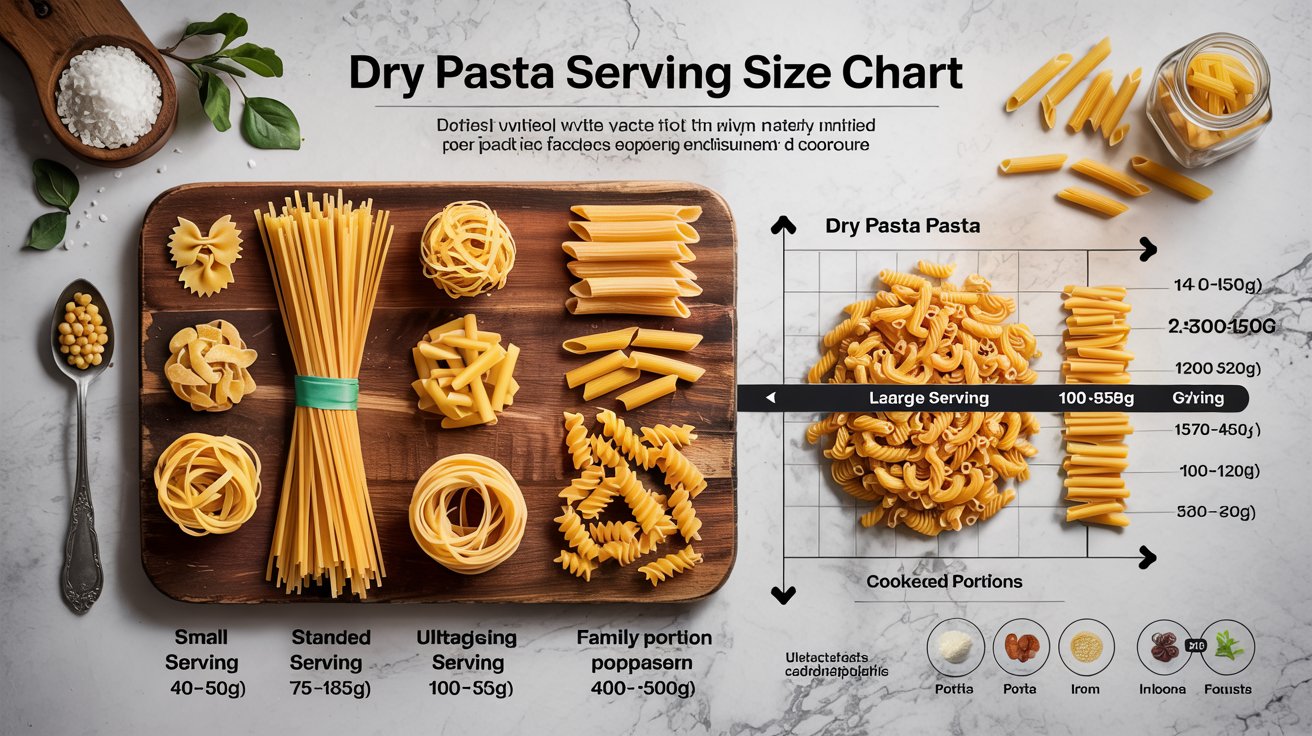
Dry pasta is usually measured by weight before cooking. Here are the most common serving sizes used in nutrition guides and recipes.
Dry Pasta Serving Size Chart
| Serving Type | Dry Weight (Approx.) | Cooked Amount | Calories (Approx.) |
|---|---|---|---|
| Small Serving | 40–50g | 1 cup cooked | 140–180 |
| Standard Serving | 75–85g | 1.5–2 cups | 280–320 |
| Large Serving | 100–120g | 2.5 cups | 350–450 |
| Family Portion | 400–500g | 8–10 cups | Varies |
These values may vary slightly depending on pasta shape and brand.
Choosing The Right Pasta Portion
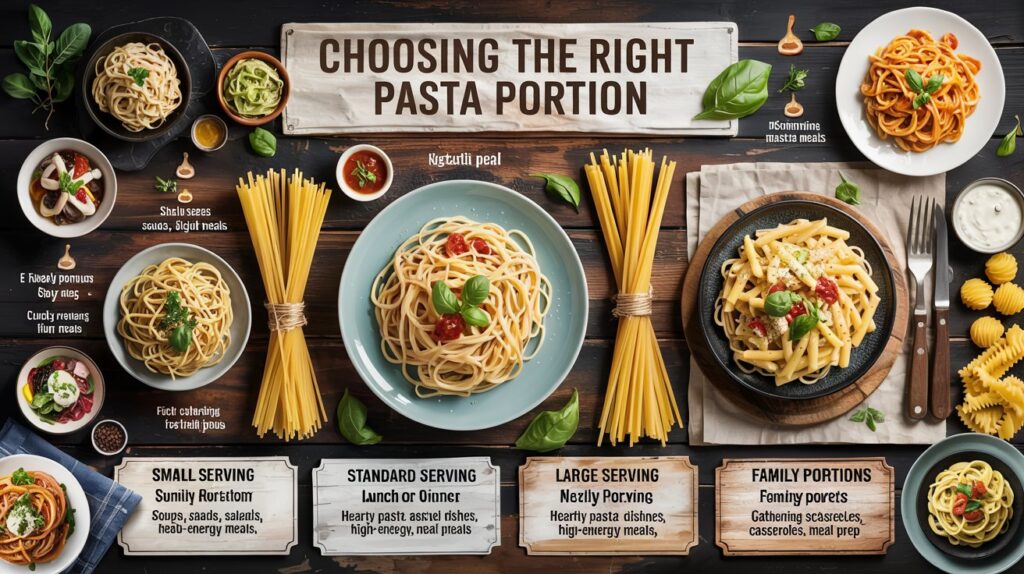
The best serving size depends on the type of meal and whether pasta is the main dish or a side.
- Small Serving: Ideal for soups, salads, or light meals.
- Standard Serving: The most common amount for lunch or dinner.
- Large Serving: Suitable for hearty pasta dishes or high-energy meals.
- Family Portions: Great for gatherings, casseroles, or meal prep.
If you’re serving rich sauces, garlic bread, or multiple side dishes, smaller pasta portions often feel more balanced.
Dry Pasta Serving Size Comparison: Different Pasta Shapes
Not all pasta shapes measure the same way. Some shapes are denser, while others take up more space.
Pasta Shape Portion Comparison
| Pasta Type | Standard Dry Serving | Cooked Texture | Portion Appearance |
|---|---|---|---|
| Spaghetti | 75–85g | Long, expanded | Looks larger |
| Penne | 75g | Dense, compact | Looks smaller |
| Macaroni | 70–80g | Light, curved | Moderate volume |
| Fusilli | 75g | Twisted, airy | Larger appearance |
Different shapes may appear larger or smaller even at the same weight.
Dry Pasta And Nutrition
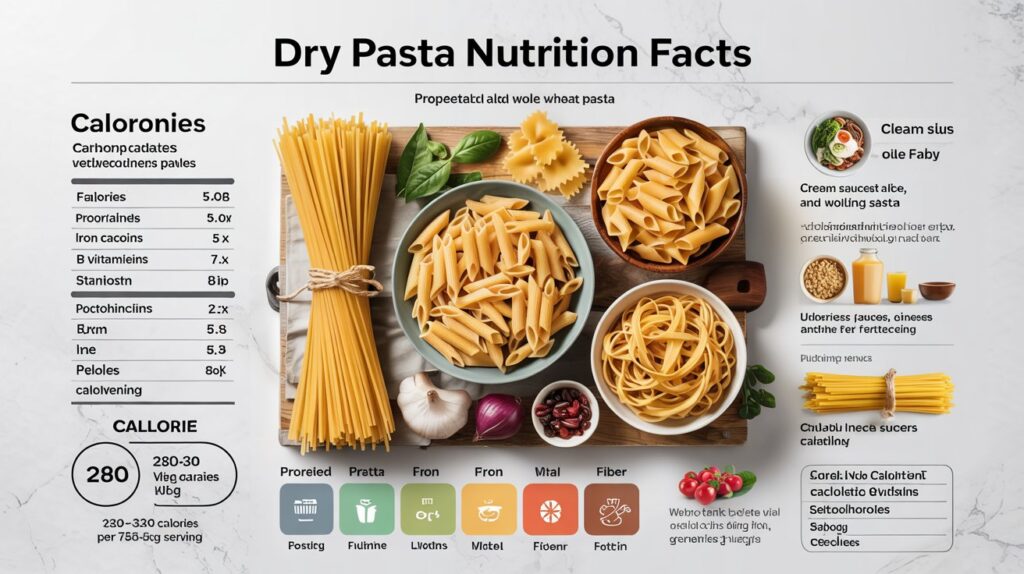
Dry pasta provides several important nutrients, including:
- Carbohydrates
- Protein
- Iron
- B vitamins
- Fiber (especially whole wheat pasta)
A standard 75–85g dry serving usually contains around 280–320 calories before sauce or toppings. Cream sauces, cheese, and oils can increase calories significantly.
Pairing pasta with vegetables and lean proteins creates more balanced meals.
Visual Guide: Dry Pasta Serving Sizes
Visual estimates can make measuring pasta easier when you don’t have a scale.
Dry Pasta Portion Guide
| Pasta Type | Standard Serving Visual |
|---|---|
| Spaghetti | Diameter of a coin-sized bundle |
| Penne | About 3/4 cup dry |
| Macaroni | About 3/4 cup dry |
| Fusilli | About 1 cup dry |
Tips For Measuring Dry Pasta
- Use a kitchen scale: The most accurate way to measure pasta.
- Measure before cooking: Pasta absorbs water and expands significantly.
- Use portion tools: Spaghetti measurers can simplify serving sizes.
- Cook slightly less for sides: Smaller portions work well with rich sauces or multiple dishes.
- Store dry pasta properly: Keep pasta sealed in a cool, dry place.
Accurate measurements improve both meal balance and cooking efficiency.
Common Mistakes When Measuring Dry Pasta
- Eyeballing portions: Dry pasta often looks smaller than it becomes after cooking.
- Cooking too much: Oversized batches lead to waste or overeating.
- Ignoring sauce calories: Rich sauces can double the calorie content.
- Using oversized bowls: Larger bowls encourage larger servings.
Proper portions help keep pasta meals satisfying without becoming overly heavy.
How Dry Pasta Serving Size Affects Meals
The amount of pasta you serve changes the balance of the meal. Smaller portions allow proteins and vegetables to stand out, while larger portions create more filling, carb-heavy meals.
Too much pasta may make meals feel overly dense, while too little can leave diners unsatisfied. Finding the right portion creates better texture, flavor balance, and nutrition.
The History Of Pasta Portions
Traditionally, pasta was served in moderate portions as part of balanced meals in Italy and other Mediterranean countries. Modern restaurant portions, however, are often much larger than standard serving recommendations.
Today, pasta remains one of the world’s most beloved foods, available in countless shapes, flavors, and preparation styles.
Frequently Asked Questions
What Is A Standard Dry Pasta Serving Size?
A standard serving is about 75–85g of dry pasta per person.
How Much Does Dry Pasta Expand After Cooking?
Dry pasta typically doubles or triples in size after cooking.
How Many Calories Are In Dry Pasta?
A standard serving usually contains around 280–320 calories before sauce.
Should I Measure Pasta Before Or After Cooking?
Dry pasta should always be measured before cooking for accuracy.
How Much Dry Pasta Should I Cook Per Person?
For most adults, 75–85g of dry pasta is a standard meal portion.
Dry pasta serving size may seem like a small detail, but it can greatly affect meal balance, nutrition, and cooking success. Whether you’re preparing a simple dinner or a large family feast, understanding dry pasta serving sizes helps you cook the perfect amount every time.
