
Cookie cutters are more than just baking tools—they help shape cookies for holidays, parties, and special occasions. But have you ever noticed how cookie cutters come in many different sizes? Some create tiny bite-sized treats, while others make oversized bakery-style cookies. Understanding a cookie cutter size chart helps bakers choose the right cutter for decorating, baking consistency, and serving needs. Whether you’re making sugar cookies, biscuits, or themed desserts, the right cookie cutter size can make a big difference in both appearance and baking results.
Why Cookie Cutter Size Matters
Cookie cutter size affects more than just the shape of your cookies. It changes baking time, texture, and portion size. Smaller cookies bake faster and become crispier, while larger cookies often stay softer in the center.
For bakers and businesses, consistent cookie sizes help with packaging, pricing, and decorating. Home bakers benefit because evenly sized cookies bake more uniformly and look more professional.
Choosing the right size also matters for decorating. Tiny cookies have limited space for icing details, while larger cookies provide more room for creative designs.
Standard Cookie Cutter Sizes
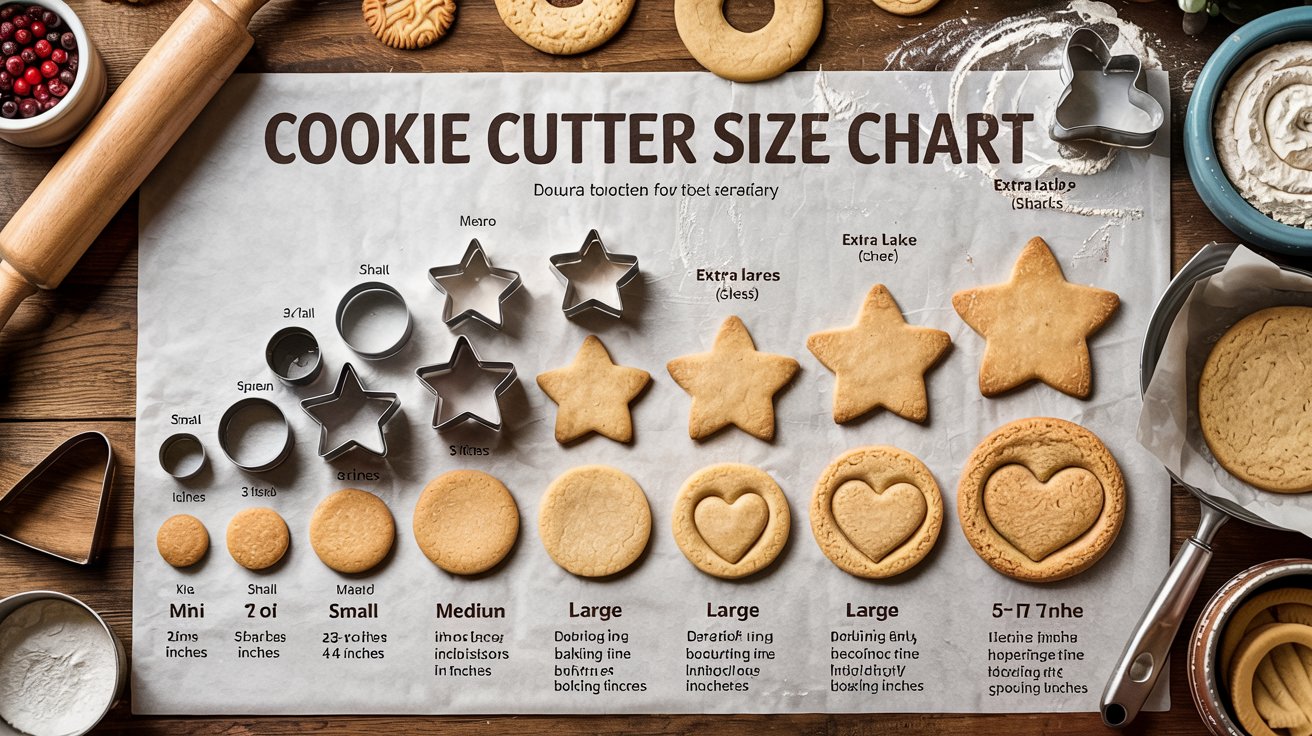
Cookie cutters are usually measured by width or height in inches. Here are the most common cookie cutter sizes used in baking.
Cookie Cutter Size Chart
| Cookie Cutter Size | Approximate Diameter/Width | Best Use |
|---|---|---|
| Mini | 1–2 inches | Bite-sized cookies, cake toppers |
| Small | 2–3 inches | Party cookies, kids’ treats |
| Medium | 3–4 inches | Standard decorated cookies |
| Large | 4–5 inches | Bakery-style cookies |
| Extra Large | 5–7 inches | Giant cookies, themed desserts |
These measurements may vary slightly depending on shape and manufacturer.
Choosing The Right Cookie Cutter Size
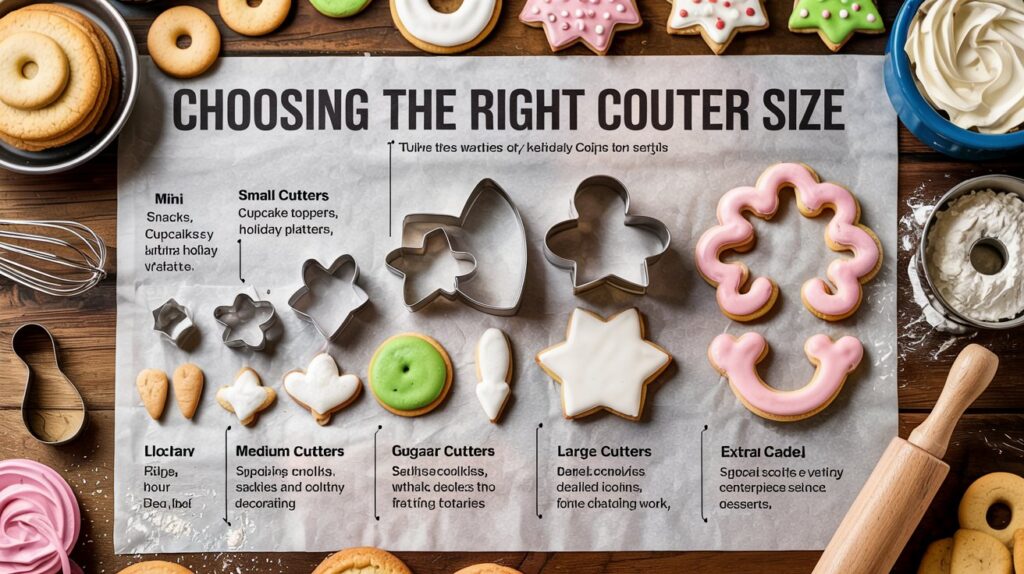
The best cookie cutter size depends on the occasion and baking style. Here are some common uses:
- Mini Cutters: Great for snacks, cupcake toppers, or holiday cookie platters.
- Small Cutters: Ideal for children’s parties or lunchbox treats.
- Medium Cutters: The most common size for sugar cookies and decorating.
- Large Cutters: Perfect for bakery-style cookies and detailed icing work.
- Extra Large Cutters: Often used for special events or centerpiece desserts.
If you plan to decorate cookies with royal icing, medium and large cutters usually provide the best surface area.
Cookie Cutter Size Comparison: Metal Vs. Plastic
Cookie cutters are made from different materials, which can affect performance.
Metal vs Plastic Cookie Cutters
| Material | Typical Thickness | Durability | Best For |
|---|---|---|---|
| Metal | Thin edges | High | Sharp, clean cuts |
| Plastic | Thicker edges | Moderate | Kids and simple shapes |
Metal cutters generally create cleaner edges, while plastic cutters are often safer for children.
Cookie Cutter Size And Baking Time
Cookie size directly affects baking time. Smaller cookies bake faster, while larger cookies require more time in the oven.
Cookie Size And Baking Guide
| Cookie Size | Average Baking Time |
|---|---|
| Mini | 5–7 minutes |
| Small | 7–9 minutes |
| Medium | 8–12 minutes |
| Large | 10–14 minutes |
| Extra Large | 12–18 minutes |
Baking times also depend on dough thickness and oven temperature.
Visual Guide: Cookie Cutter Sizes
Visual comparisons can make it easier to understand cookie cutter dimensions.
Cookie Cutter Portion Guide
| Size Category | Visual Comparison | Typical Use |
|---|---|---|
| Mini | Bottle cap size | Tiny treats |
| Small | Credit card width | Snack cookies |
| Medium | Palm of your hand | Standard cookies |
| Large | Large smartphone size | Bakery cookies |
| Extra Large | Dessert plate size | Giant cookies |
Credit: www.wilton.com
Tips For Using Cookie Cutters
- Chill dough first: Cold dough holds shapes better during cutting.
- Flour the cutter lightly: Prevents sticking and tearing.
- Use even dough thickness: Helps cookies bake consistently.
- Avoid overcrowding trays: Larger cookies spread more while baking.
- Clean cutters carefully: Dry metal cutters completely to prevent rust.
Proper preparation improves both cookie appearance and baking consistency.
Common Mistakes When Choosing Cookie Cutter Sizes
- Using oversized cutters for thin dough: Large cookies may break easily.
- Ignoring baking time changes: Bigger cookies need longer baking.
- Choosing tiny cutters for detailed decorating: Small cookies leave little room for designs.
- Cutting dough too thick: Thick cookies may lose their shape.
Matching the cutter size to your recipe creates better baking results.
How Cookie Cutter Size Affects Decorating
Smaller cookies are cute and easy to serve, but they can be difficult to decorate with detailed icing work. Medium and large cookies provide more room for lettering, patterns, and designs.
Oversized cookies are popular for custom bakery orders and themed parties because they create a dramatic presentation.
The History Of Cookie Cutters
Cookie cutters have been used for centuries and became especially popular in Europe during the Middle Ages. Early cutters were often handmade from metal and used for gingerbread and holiday cookies.
Over time, cookie cutters evolved into countless shapes and sizes, from simple circles to detailed holiday characters and custom designs.
Frequently Asked Questions
What Is The Most Common Cookie Cutter Size?
Medium cookie cutters measuring 3–4 inches are the most common for decorated cookies.
Are Metal Cookie Cutters Better Than Plastic?
Metal cutters usually create sharper edges, while plastic cutters are safer for children.
How Thick Should Cookie Dough Be?
Most cookie dough is rolled to about 1/4 inch thick for even baking.
Do Larger Cookie Cutters Need Longer Baking Times?
Yes, larger cookies generally require more baking time than smaller ones.
What Size Cookie Cutter Is Best For Decorating?
Medium and large cookie cutters provide the best space for icing and detailed designs.
Cookie cutter size may seem like a small detail, but it can greatly affect baking results, decorating, and serving presentation. Whether you’re baking holiday treats or professional sugar cookies, understanding cookie cutter sizes helps you choose the perfect cutter every time.
