
Understanding how much to eat is just as important as knowing what to eat. A nutrition serving size chart helps you manage portions, balance nutrients, and maintain a healthy diet without guesswork. Whether you’re planning meals, tracking calories, or simply trying to eat better, knowing proper serving sizes makes healthy eating easier and more effective.
Why Nutrition Serving Sizes Matter
Serving sizes are designed to help you get the right amount of nutrients your body needs. Eating too much or too little of certain food groups can lead to imbalances in energy, vitamins, and minerals.
Proper portion control helps:
- Maintain a healthy weight
- Balance carbohydrates, proteins, and fats
- Prevent overeating
- Support overall health and energy
It also makes it easier to follow dietary guidelines and build consistent eating habits.
Standard Nutrition Serving Size Chart
Different food groups have recommended serving sizes based on nutritional needs.
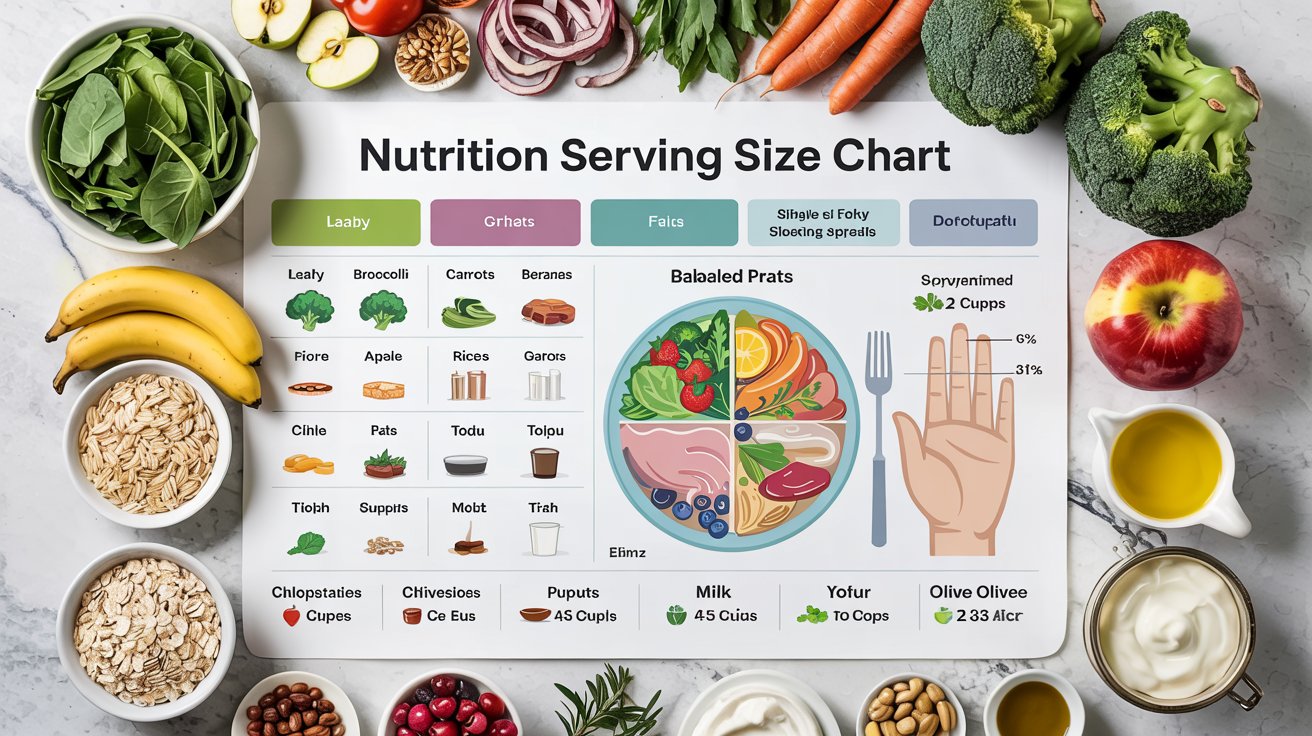
Nutrition Serving Size Chart
| Food Group | Serving Size | Calories (Approx.) | Key Nutrients |
|---|---|---|---|
| Vegetables | 1 cup raw / 1/2 cup cooked | 25–50 kcal | Fiber, vitamins |
| Fruits | 1 medium / 1 cup | 60–100 kcal | Vitamins, natural sugars |
| Grains | 1/2 cup cooked | 100–150 kcal | Carbohydrates, fiber |
| Protein | 75–100g cooked | 150–250 kcal | Protein, iron |
| Dairy | 1 cup (240 ml) | 100–150 kcal | Calcium, protein |
| Healthy Fats | 1–2 tbsp | 100–200 kcal | Healthy fats, omega-3 |
These values are general guidelines and may vary depending on the specific food.
Choosing The Right Serving Sizes
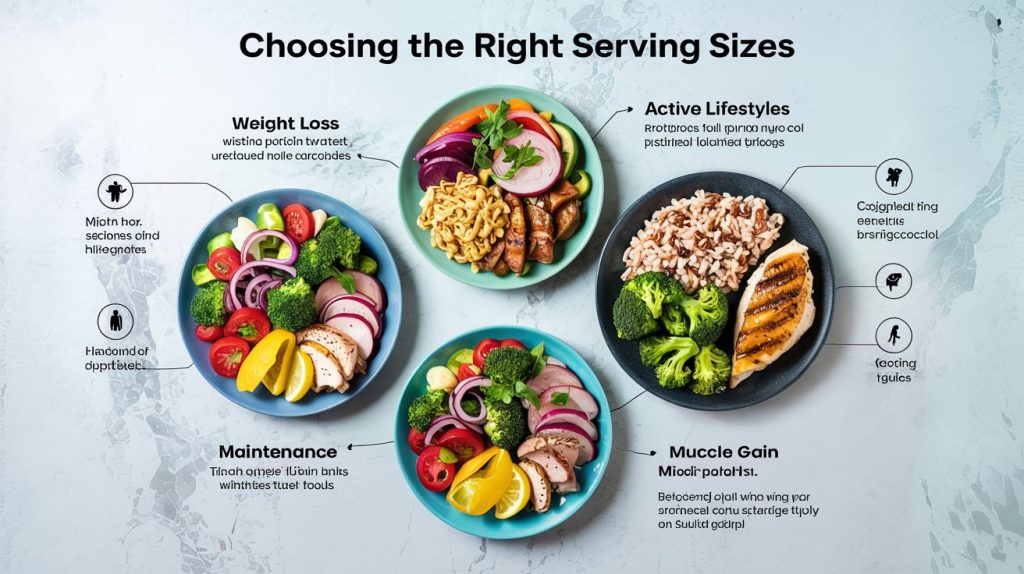
Serving sizes should match your lifestyle and health goals:
- For weight loss: Smaller portions, especially of carbs and fats
- For active individuals: Slightly larger portions for energy
- For maintenance: Balanced portions from all food groups
- For muscle gain: Higher protein intake
Adjust portions based on your daily activity and nutritional needs.
The Balanced Plate Method
A simple way to apply serving sizes is by using the plate method:
- Half your plate: Vegetables and fruits
- One-quarter: Protein
- One-quarter: Whole grains
This visual approach ensures proper nutrition without needing precise measurements.
Nutrition Serving Sizes And Daily Intake
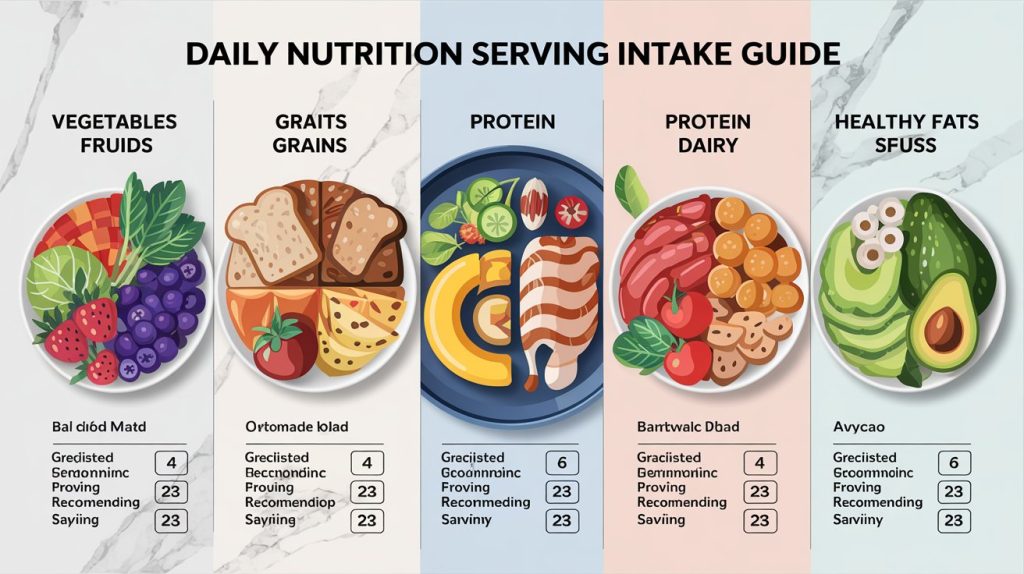
Your daily intake includes multiple servings from each food group.
Daily Serving Recommendations
| Food Group | Servings Per Day (Approx.) |
|---|---|
| Vegetables | 3–5 servings |
| Fruits | 2–4 servings |
| Grains | 4–6 servings |
| Protein | 2–3 servings |
| Dairy | 2–3 servings |
| Fats | 2–3 servings |
These recommendations can vary based on age, gender, and activity level.
Visual Guide: Nutrition Serving Sizes
Here’s a quick way to estimate portions:
| Food Type | Visual Guide |
|---|---|
| Protein | Palm of your hand |
| Carbs | Cupped hand |
| Fats | Thumb |
| Vegetables | Two handfuls |
This makes portion control easier in everyday situations.
Tips For Following Serving Sizes
- Measure portions initially: Learn what servings look like
- Read nutrition labels: Check serving size information
- Use smaller plates: Helps reduce overeating
- Balance meals: Include all food groups
- Plan ahead: Prepare meals with proper portions
Consistency helps build long-term healthy habits.
Common Mistakes With Serving Sizes
- Oversized portions: Especially with calorie-dense foods
- Ignoring snacks: Extra calories can add up
- Skipping meals: Leads to overeating later
- Not reading labels: Misunderstanding serving sizes
Avoiding these mistakes improves your overall nutrition.
How Serving Sizes Affect Your Health
Proper serving sizes support:
- Weight management
- Stable blood sugar levels
- Better digestion
- Consistent energy
Poor portion control can lead to weight gain and nutrient imbalances over time.
Nutrition Serving Sizes In Different Diets
Serving sizes may vary depending on dietary preferences:
- Low-carb diets: Reduced grain portions
- High-protein diets: Increased protein servings
- Plant-based diets: More vegetables and legumes
- Balanced diets: Even distribution across food groups
Adjust your portions based on your goals and lifestyle.
Frequently Asked Questions
What Is A Nutrition Serving Size?
It’s the recommended amount of food that provides a specific level of nutrients.
Are Serving Sizes The Same For Everyone?
No, they vary based on age, activity level, and health goals.
How Can I Measure Serving Sizes Without Tools?
Use visual guides like your hand or common objects.
Why Are Serving Sizes Important On Labels?
They help you understand calorie and nutrient intake.
Can I Eat More Healthy Foods Without Limits?
Even healthy foods should be eaten in balanced portions.
A nutrition serving size chart is a powerful tool for building healthier eating habits. By understanding and applying proper portions, you can create balanced meals, improve your health, and enjoy food without overcomplicating your diet.
