
Introducing solid foods is an exciting milestone for babies, but knowing how much to serve can feel confusing for new parents. A baby food serving size chart helps guide portions based on age, appetite, and developmental stage—while keeping meals balanced and safe.
Why Baby Food Serving Sizes Matter
Babies grow quickly, and their nutritional needs change month by month. Proper serving sizes help:
- Support healthy growth and development
- Avoid overfeeding or underfeeding
- Introduce balanced nutrition
- Build healthy eating habits early
Every baby is different, so these amounts are general guidelines—not strict rules.
Baby Food Serving Size Chart By Age
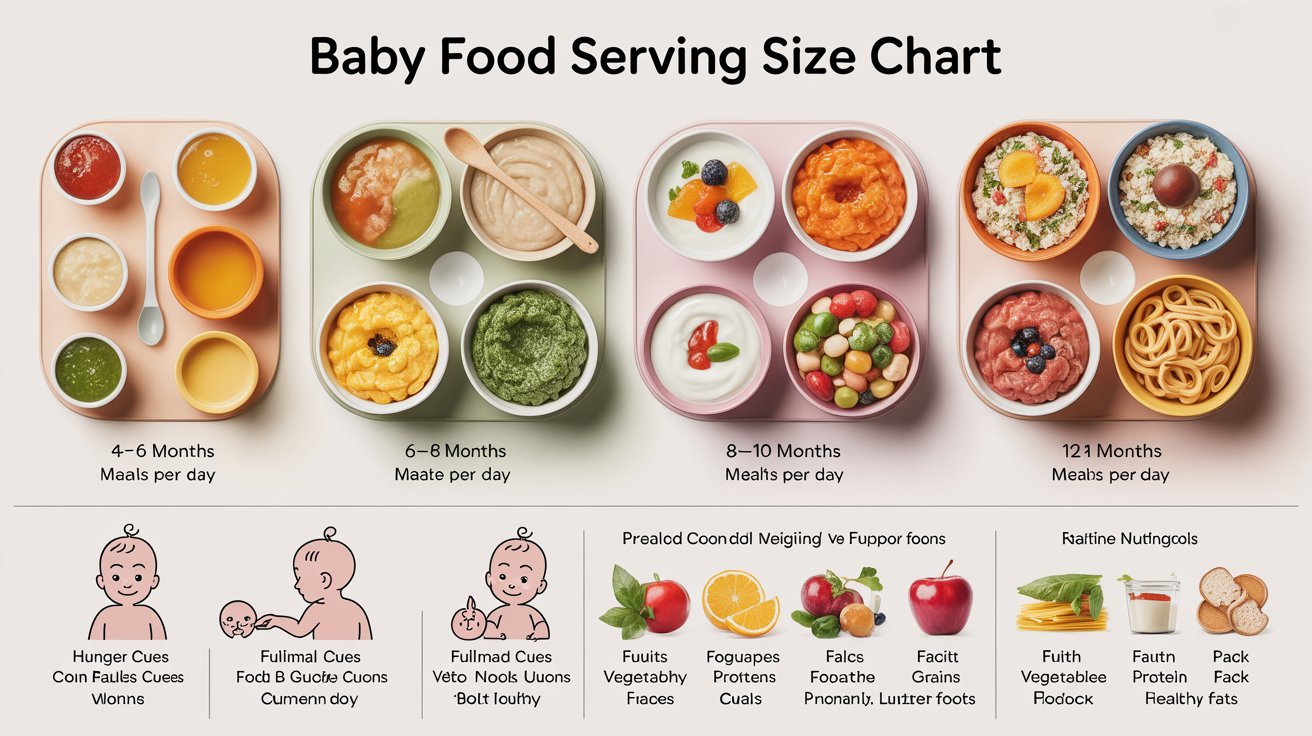
Baby Food Serving Size Chart
| Baby Age | Food Amount Per Meal | Meals Per Day |
|---|---|---|
| 4–6 Months | 1–2 tbsp pureed food | 1–2 meals |
| 6–8 Months | 2–4 tbsp food | 2–3 meals |
| 8–10 Months | 1/4–1/2 cup food | 3 meals + snacks |
| 10–12 Months | 1/2–3/4 cup food | 3 meals + snacks |
| 12+ Months | 3/4–1 cup food | 3 meals + snacks |
Milk or formula still remains important during the first year.
Serving Sizes By Food Type
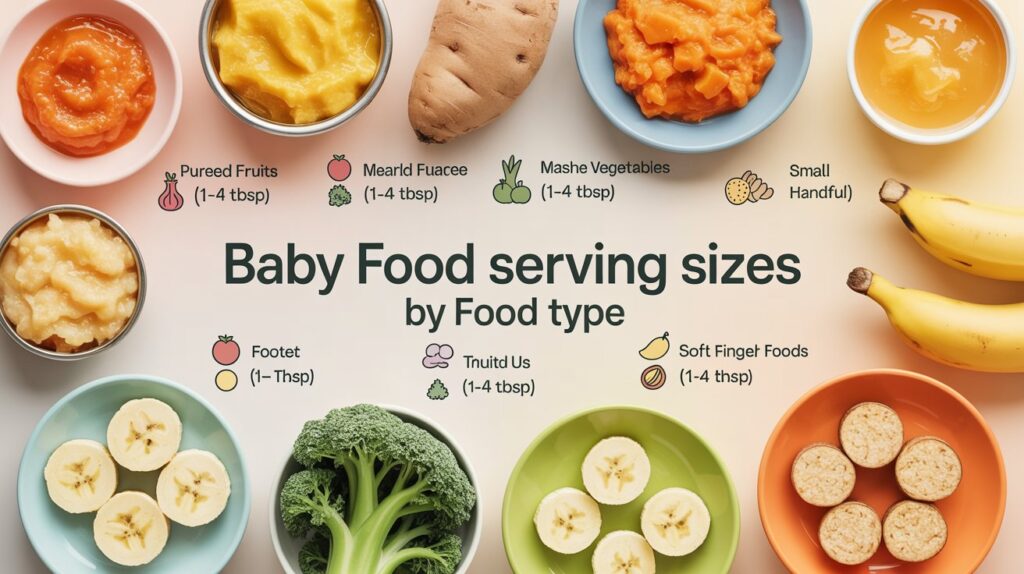
Different foods have different portion recommendations.
Fruit & Vegetable Portions
| Food Type | Serving Size |
|---|---|
| Pureed Fruits | 1–4 tbsp |
| Mashed Vegetables | 1–4 tbsp |
| Soft Finger Foods | Small handful |
Protein Portions
| Food Type | Serving Size |
|---|---|
| Pureed Meat | 1–2 tbsp |
| Yogurt | 2–4 tbsp |
| Eggs | 1/4–1 egg |
Grain Portions
| Food Type | Serving Size |
|---|---|
| Baby Cereal | 1–4 tbsp |
| Oatmeal | 2–4 tbsp |
| Pasta/Rice | 1/4 cup |
Portions increase gradually as babies grow.
Signs Your Baby Is Hungry Or Full
Hunger Signs
- Opening mouth for food
- Reaching for spoon
- Excited during feeding
Fullness Signs
- Turning head away
- Closing mouth
- Playing with food instead of eating
Babies are usually good at self-regulating intake.
Tips For Feeding Proper Portions
- Start small: Babies can always have more
- Introduce one food at a time
- Follow hunger cues
- Avoid forcing bites
- Offer variety gradually
Feeding should be relaxed and flexible.
Common Mistakes With Baby Portions
- Serving adult-sized portions
- Forcing babies to finish meals
- Introducing too many foods at once
- Ignoring hunger/fullness cues
Patience and consistency are important.
How Serving Sizes Change With Growth
As babies grow:
- Portion sizes increase
- Food textures become more complex
- Meals become more structured
By age one, many babies eat modified versions of family meals.
Baby Food And Nutrition Balance
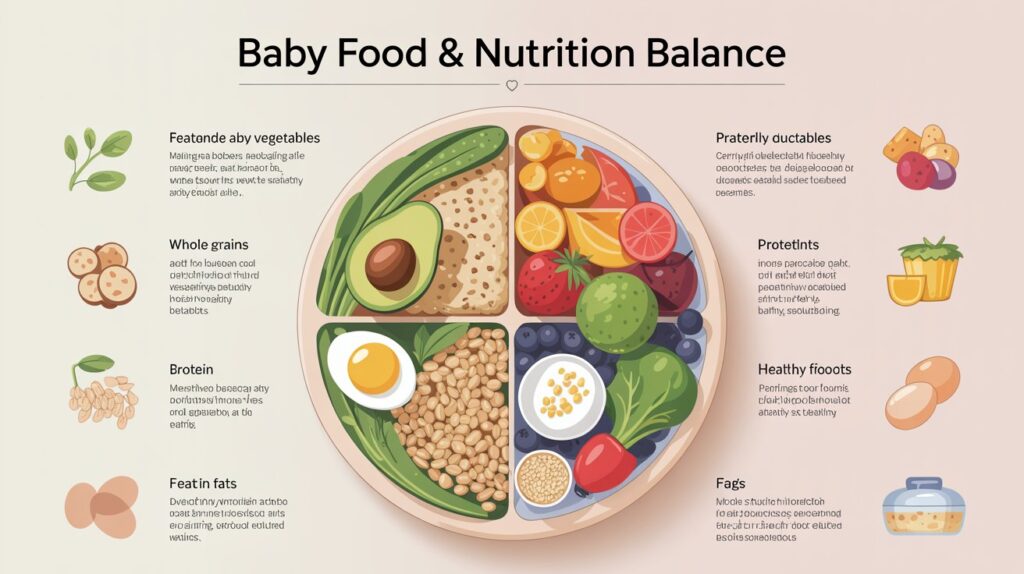
Balanced meals should include:
- Fruits and vegetables
- Whole grains
- Protein sources
- Healthy fats
Variety supports healthy growth and development.
Frequently Asked Questions
How Much Baby Food Should A 6-Month-Old Eat?
Usually 2–4 tablespoons per meal.
Should Babies Finish Every Meal?
No, babies naturally regulate appetite.
When Can Babies Eat Finger Foods?
Around 8–10 months, depending on readiness.
Is Baby Cereal Necessary?
Not always, but it can provide iron.
How Often Should Babies Eat Solids?
Typically 2–3 meals daily after 6 months.
A baby food serving size chart helps parents understand appropriate portions during each stage of development. By following hunger cues and offering balanced meals, you can support healthy eating habits from the very beginning.
