
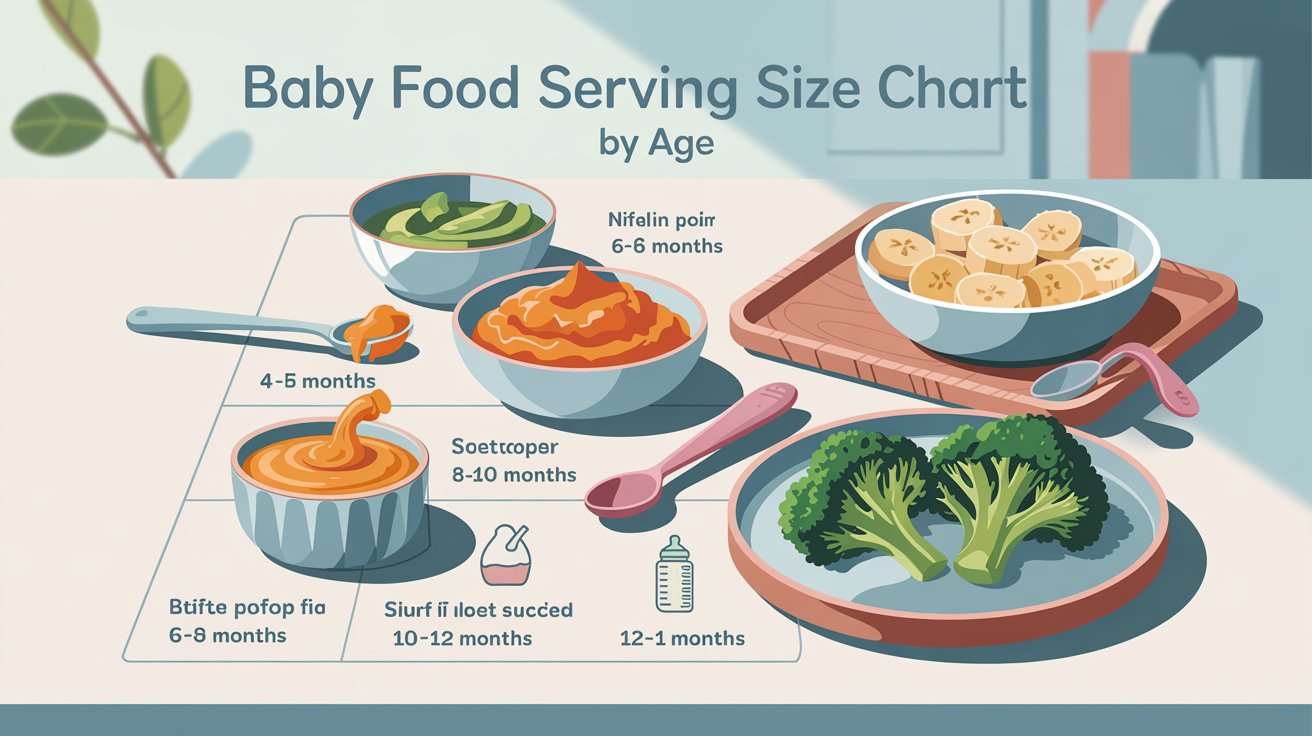
Feeding a baby can feel confusing—how much is enough, and how much is too much? Babies grow quickly, and their nutritional needs change with age. Understanding a baby food serving size chart helps parents provide the right portions for healthy growth and development.
Why Baby Food Serving Size Matters
Babies have small stomachs, so portion sizes need to be appropriate for their age and stage.
Knowing the right serving size helps you:
- Support healthy growth
- Avoid overfeeding or underfeeding
- Introduce balanced nutrition
Every baby is different, but general guidelines are helpful.
Baby Food Serving Sizes By Age
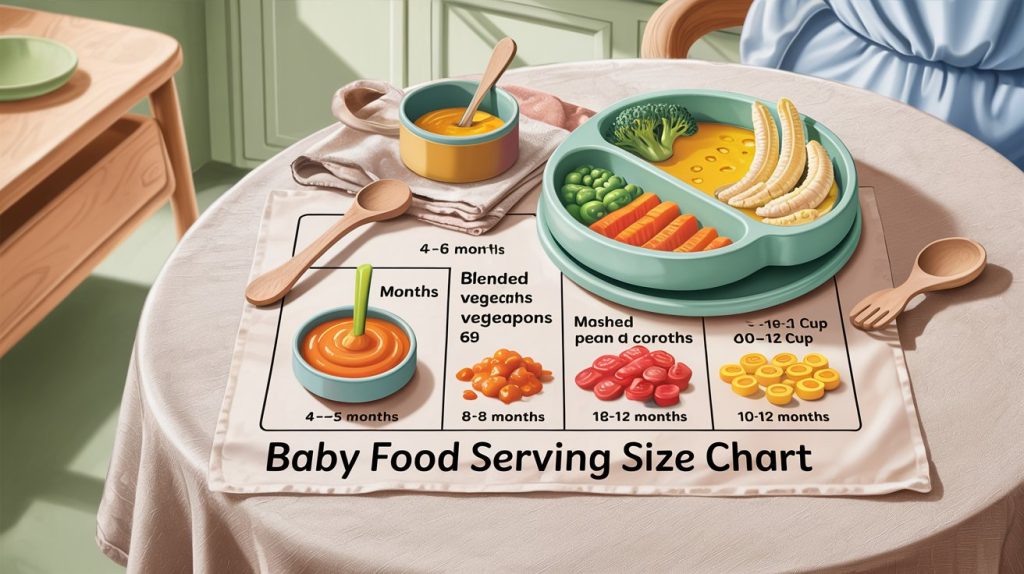
Baby feeding changes as your child grows—from milk to solids.
Baby Food Serving Size Chart
| Age Group | Food Type | Serving Size (Per Meal) |
|---|---|---|
| 4–6 months | Purees | 1–2 tablespoons |
| 6–8 months | Purees + soft foods | 2–4 tablespoons |
| 8–10 months | Mashed/chopped | 4–6 tablespoons (½ cup) |
| 10–12 months | Finger foods | ½–1 cup |
| 12+ months | Family foods | ¾–1 cup |
👉 Start small and gradually increase portions as your baby grows.
Milk vs Solid Food Portions
Milk remains important, especially in early months.
Milk Feeding Guide
| Age | Milk Intake (Per Day) |
|---|---|
| 0–6 months | Breast milk/formula only |
| 6–12 months | 24–32 oz + solids |
| 12+ months | 16–24 oz + solid foods |
Milk should remain a key part of your baby’s diet.
Types Of Baby Food And Portions
Different foods have different serving sizes.
Food Type Guide
| Food Type | Serving Size | Notes |
|---|---|---|
| Purees | 1–4 tbsp | First foods |
| Cereals | 1–3 tbsp | Iron-fortified preferred |
| Fruits | 2–4 tbsp | Mashed or soft |
| Vegetables | 2–4 tbsp | Start with mild flavors |
| Protein Foods | 1–3 tbsp | Beans, eggs, soft meats |
Introduce new foods gradually.
Baby Food Serving Size And Nutrition
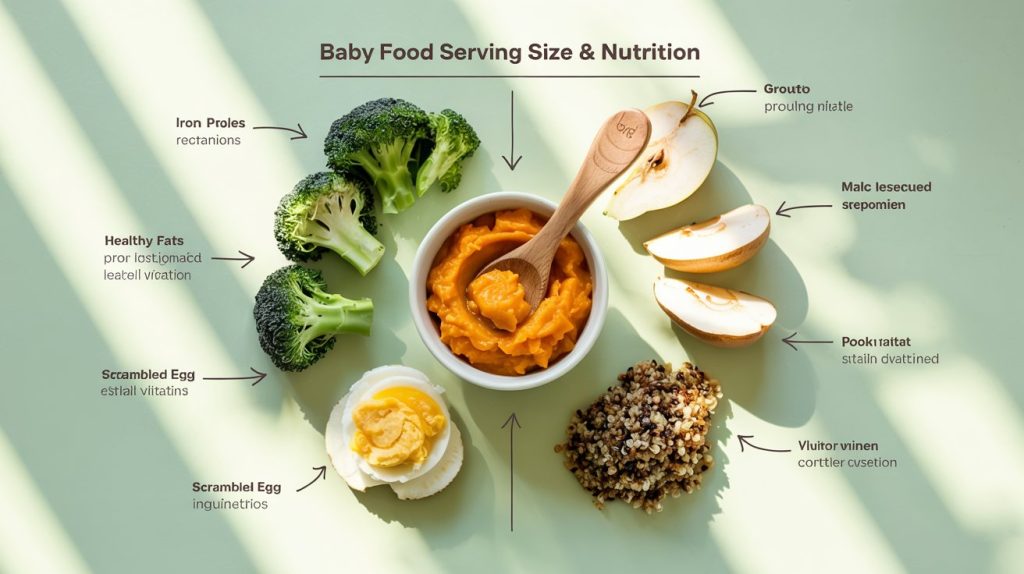
Babies need:
- Iron
- Healthy fats
- Protein
- Vitamins and minerals
Balanced portions help ensure proper development.
Visual Guide: Baby Food Portions
Here’s a simple way to estimate portions:
| Portion Size | Visual Comparison | Best Use |
|---|---|---|
| 1 tbsp | Small spoon | First foods |
| ¼ cup | Small bowl | Growing babies |
| ½ cup | Half bowl | Older babies |
Visual cues help parents serve appropriate amounts.
Tips For Feeding Your Baby
- Start small: Increase gradually
- Follow hunger cues: Babies know when they’re full
- Introduce one food at a time: Watch for allergies
- Keep textures appropriate: Smooth to chunky
- Be patient: Babies may need time to accept new foods
Every baby develops at their own pace.
Common Mistakes With Baby Serving Sizes
- Overfeeding: Babies don’t need large portions
- Forcing food: Can create negative habits
- Skipping variety: Limits nutrition
- Ignoring hunger cues: Important for development
Responsive feeding is key.
How Baby Food Serving Size Affects Growth
The right portion sizes support healthy weight gain, brain development, and overall growth. Too little or too much can affect nutrition balance.
Consistency and variety are important.
The Importance Of Feeding Stages
As babies grow, their feeding needs change from liquids to solids and eventually to family foods. Adjusting portion sizes at each stage ensures proper development.
Frequently Asked Questions
How Much Should a 6-Month-Old Eat?
About 2–4 tablespoons per meal plus milk.
Can I Overfeed My Baby?
Yes, so watch for fullness cues.
When Should I Increase Portions?
As your baby shows hunger and grows.
How Many Meals Should a Baby Eat?
2–3 meals plus milk, increasing with age.
How Do I Measure Baby Food Without Tools?
Use a small spoon or bowl as a guide.
Baby food serving sizes may seem small, but they play a big role in growth and development. By understanding the baby food serving size chart, you can feed your baby confidently while supporting healthy eating habits from the start.
