
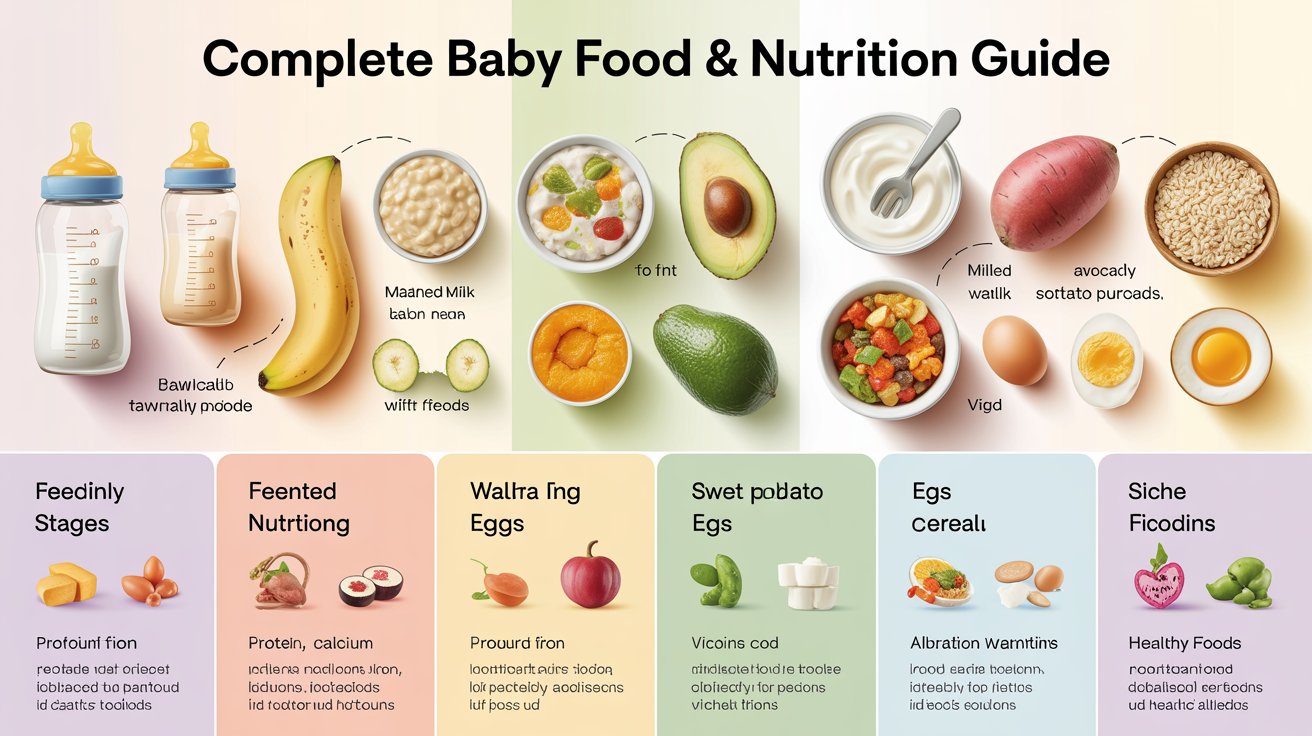
Proper nutrition during infancy and toddlerhood is one of the most important factors for a child’s healthy growth and development. Babies need a balanced diet filled with essential vitamins, minerals, proteins, healthy fats, and carbohydrates to support brain development, strong bones, and a healthy immune system.
This complete baby food and nutrition guide will help parents understand what foods babies need, when to introduce solid foods, and how to create healthy eating habits from the beginning.
Why Baby Nutrition Is Important
Good nutrition in the early years helps babies:
- Build strong bones and muscles
- Develop brain function and memory
- Improve immunity against illness
- Maintain healthy weight gain
- Support digestion and gut health
- Increase energy and activity levels
Poor nutrition during infancy may affect growth, learning ability, and long-term health.
Baby Feeding Stages by Age
| Baby Age | Recommended Food | Feeding Frequency |
|---|---|---|
| 0–6 Months | Breast milk or formula only | Every 2–4 hours |
| 6–8 Months | Pureed fruits, vegetables, cereals | 2–3 meals daily |
| 8–10 Months | Mashed foods, soft proteins | 3–4 meals daily |
| 10–12 Months | Finger foods, soft family meals | 3 meals + snacks |
| 1–2 Years | Balanced toddler diet | 3 meals + 2 snacks |
Essential Nutrients for Babies
Protein
Protein helps build muscles, tissues, and organs.
Best Protein Sources
- Eggs
- Chicken
- Fish
- Lentils
- Yogurt
- Beans
Calcium
Calcium is essential for strong bones and teeth.
Calcium-Rich Foods
- Milk
- Cheese
- Yogurt
- Broccoli
- Tofu
Iron
Iron supports brain development and healthy blood production.
Iron-Rich Baby Foods
- Iron-fortified cereal
- Spinach
- Red meat
- Lentils
- Beans
Healthy Fats
Healthy fats support brain and nervous system development.
Healthy Fat Sources
- Avocado
- Peanut butter (age appropriate)
- Salmon
- Olive oil
- Full-fat yogurt
Vitamins and Minerals
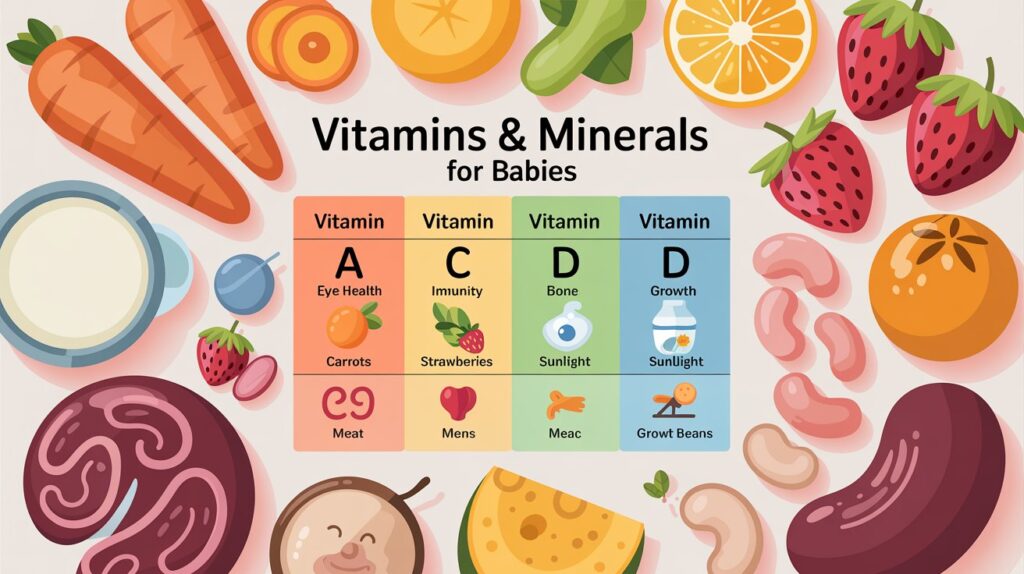
Vitamins help strengthen immunity and support healthy growth.
| Vitamin | Benefits | Food Sources |
|---|---|---|
| Vitamin A | Eye health | Carrots, sweet potatoes |
| Vitamin C | Immunity | Oranges, strawberries |
| Vitamin D | Bone growth | Milk, sunlight |
| Zinc | Growth support | Meat, beans |
Best First Foods for Babies
When babies reach around 6 months, parents can begin introducing solid foods slowly.
Recommended First Foods
Fruits
- Banana
- Apple puree
- Pear
- Avocado
Vegetables
- Sweet potato
- Carrot
- Pumpkin
- Peas
Grains
- Oatmeal
- Rice cereal
- Soft cooked rice
Protein Foods
- Egg yolk
- Lentils
- Chicken puree
Foods to Avoid for Babies
Some foods may be dangerous or difficult for babies to digest.
Avoid These Foods Before Age 1
- Honey
- Whole nuts
- Popcorn
- Excess salt
- Sugary drinks
- Raw seafood
- Unpasteurized milk
Healthy Baby Meal Plan Example
Breakfast
- Oatmeal with mashed banana
Lunch
- Mashed sweet potato with chicken puree
Snack
- Yogurt with fruit puree
Dinner
- Soft rice with mashed vegetables
Signs Your Baby Is Ready for Solid Foods
Your baby may be ready for solids if they:
- Can sit with support
- Show interest in food
- Open mouth when food approaches
- Have good head control
- Can swallow food instead of pushing it out
Benefits of Homemade Baby Food
Homemade baby food is becoming more popular among parents because it offers several advantages.
Advantages
- Fresh ingredients
- No artificial preservatives
- Better nutrition control
- Cost-effective
- Custom flavors for babies
Store-Bought vs Homemade Baby Food
| Feature | Homemade Baby Food | Store-Bought Baby Food |
|---|---|---|
| Freshness | High | Moderate |
| Convenience | Moderate | High |
| Additives | Minimal | Sometimes present |
| Cost | Lower | Higher |
| Nutrition Control | Better | Limited |
Baby Hydration Guide
Babies also need proper hydration for healthy digestion and body function.
Recommended Drinks
- Breast milk
- Formula milk
- Small amounts of water after 6 months
Avoid
- Soda
- Energy drinks
- Sugary juice
Common Baby Feeding Mistakes
Parents should avoid these common mistakes:
- Starting solids too early
- Adding sugar or salt
- Force-feeding the baby
- Ignoring food allergies
- Giving choking hazard foods
Food Allergy Warning Signs
Watch carefully when introducing new foods.
Symptoms of Food Allergy
- Rash
- Vomiting
- Swelling
- Difficulty breathing
- Diarrhea
If severe symptoms occur, contact a doctor immediately.
Nutrition Chart for Popular Baby Foods
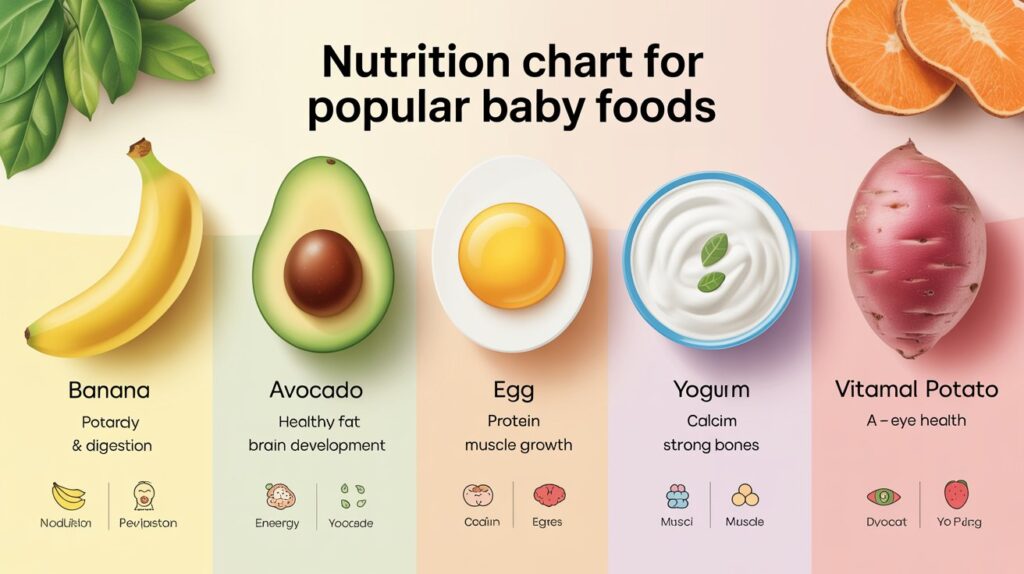
| Food | Main Nutrient | Benefit |
|---|---|---|
| Banana | Potassium | Energy & digestion |
| Avocado | Healthy fat | Brain development |
| Egg | Protein | Muscle growth |
| Yogurt | Calcium | Strong bones |
| Sweet Potato | Vitamin A | Eye health |
Tips for Healthy Baby Eating Habits
- Introduce one new food at a time
- Maintain regular meal schedules
- Encourage self-feeding
- Offer colorful foods
- Avoid processed snacks
- Be patient with picky eating
Frequently Asked Questions (FAQ)
When should babies start solid foods?
Most babies can start solid foods around 6 months of age.
Is homemade baby food healthier?
Homemade baby food can be healthier because it contains fresh ingredients and fewer additives.
Can babies eat eggs?
Yes, fully cooked eggs are safe for most babies after around 6 months.
How much water should babies drink?
Babies under 6 months usually do not need water unless advised by a doctor.
Conclusion
Providing proper nutrition during infancy is essential for healthy growth, brain development, and strong immunity. A balanced baby diet filled with fruits, vegetables, proteins, healthy fats, and essential vitamins helps children develop lifelong healthy eating habits.
Parents should introduce foods gradually, monitor allergies, and focus on fresh, nutrient-rich meals. Whether using homemade or store-bought baby food, the key is maintaining a safe, balanced, and age-appropriate diet.
Healthy nutrition today builds a stronger future for your baby.
