
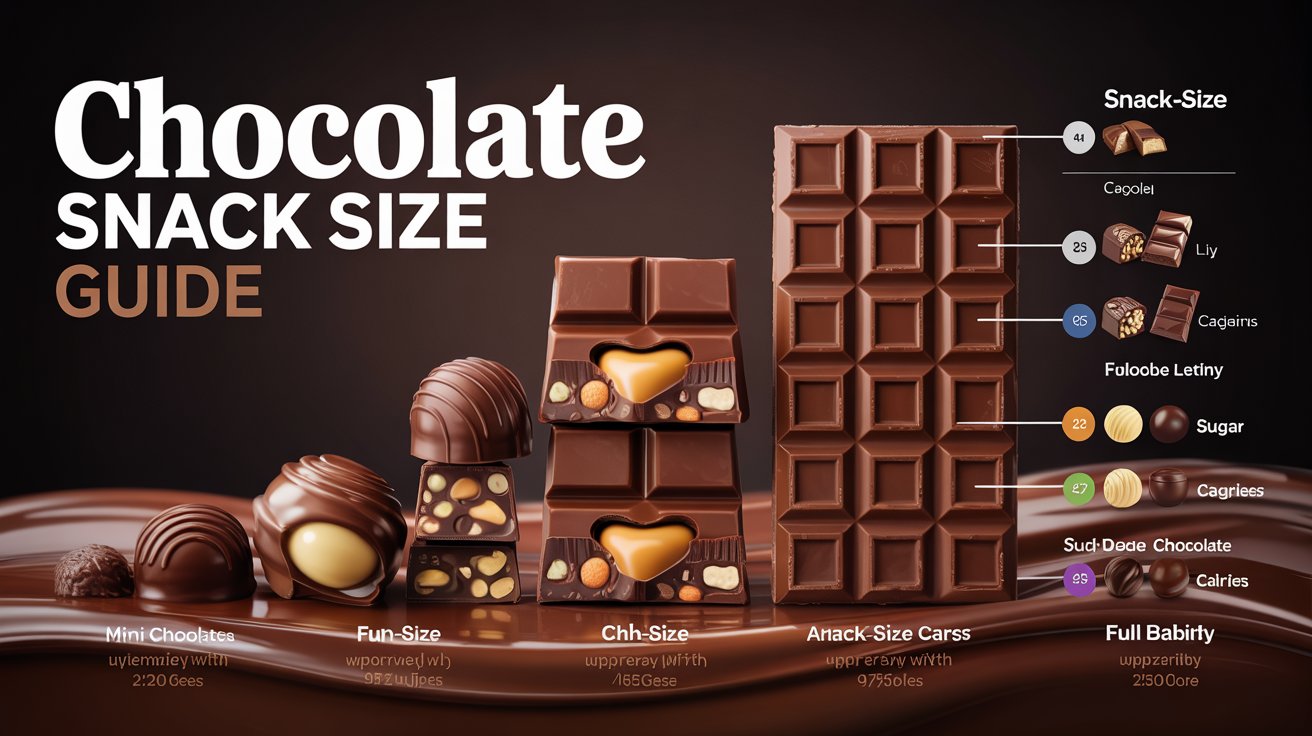
Chocolate snack-size candies are popular treats for parties, lunchboxes, holidays, and quick desserts. They’re smaller than full-size candy bars, making them convenient for portion control and sharing. But many people are unsure how snack-size chocolates compare to regular candy bars in calories, weight, and serving size. Understanding chocolate snack sizes helps with meal planning, nutrition awareness, and smart snacking. Whether you’re enjoying Halloween candy or stocking up for movie night, knowing these portion sizes can make a big difference.
Why Chocolate Snack Size Matters
Snack-size chocolates are designed to provide smaller portions of popular candy bars. Because they’re individually wrapped, they may seem harmless, but calories and sugar can add up quickly when eating multiple pieces.
Portion size matters for both nutrition and satisfaction. Small chocolates can satisfy sweet cravings without the heaviness of full-size candy bars. For parents, snack-size candies also make portion control easier for children.
Understanding snack-size portions helps prevent overeating while still allowing room for treats in a balanced diet.
Standard Chocolate Snack Sizes
Snack-size chocolates are usually measured by weight and calories per piece. Here are the most common snack-size candy portions.
Chocolate Snack Size Chart
| Chocolate Type | Weight (Approx.) | Calories (Approx.) | Typical Length |
|---|---|---|---|
| Mini Chocolate | 5–8g | 25–45 | 1–2 inches |
| Snack Size Candy Bar | 15–20g | 70–110 | 2–3 inches |
| Fun Size Candy | 10–18g | 50–90 | 2 inches |
| Full Size Candy Bar | 40–60g | 200–300 | 4–6 inches |
These numbers vary depending on the chocolate brand and fillings like caramel, nuts, or wafers.
Choosing The Right Chocolate Snack Size
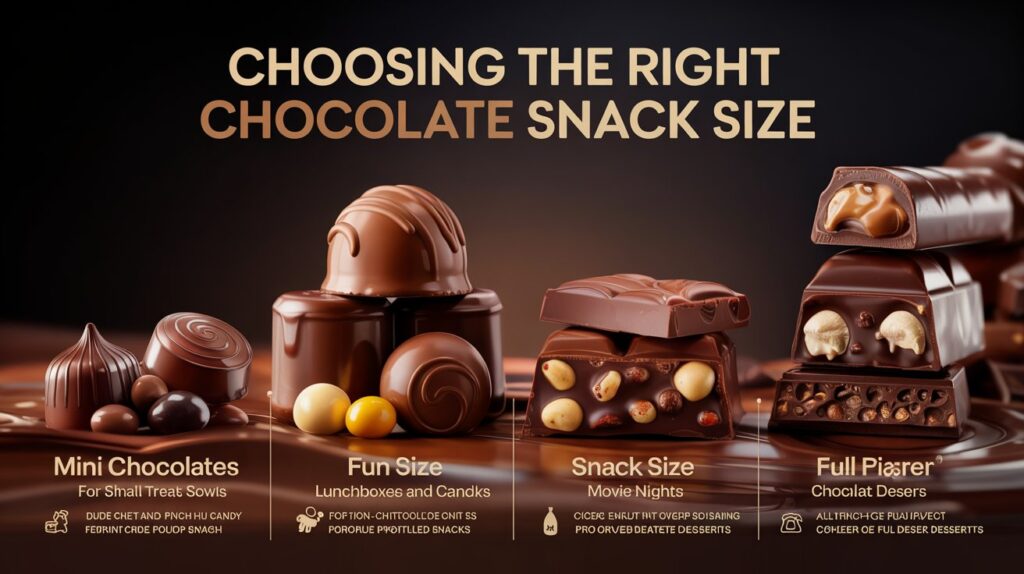
The best portion size depends on your snack goals and occasion. Here are some common uses:
- Mini Chocolates: Great for tasting, candy bowls, or small treats.
- Fun Size Candies: Ideal for lunchboxes or portion-controlled snacks.
- Snack Size Bars: Popular for movie nights or moderate desserts.
- Full Size Bars: Better for larger desserts or sharing.
Smaller portions often provide enough sweetness without becoming overwhelming.
Chocolate Snack Size Comparison: Snack Size Vs. Full Size
Snack-size chocolates are much smaller than traditional candy bars, but people often eat multiple pieces at once.
Snack Size vs Full Size Chocolate
| Type | Typical Serving | Sugar Content | Calories |
|---|---|---|---|
| Snack Size | 1 piece | Moderate | Lower |
| Full Size Bar | 1 bar | High | Higher |
Eating three or four snack-size candies can equal the calories of one full-size candy bar.
Chocolate Snack Size And Nutrition
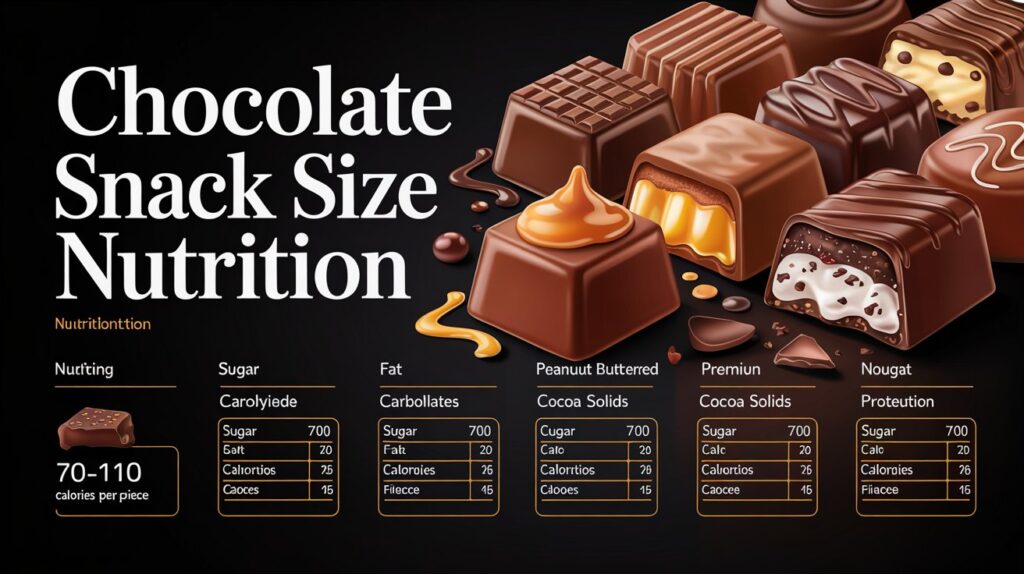
Chocolate snack-size candies usually contain:
- Sugar
- Fat
- Carbohydrates
- Cocoa solids
- Small amounts of protein
Depending on the type, one snack-size candy may contain 70–110 calories. Chocolates with caramel, peanut butter, or nougat often contain more sugar and calories than plain chocolate pieces.
Checking labels is helpful because serving sizes vary widely between brands.
Visual Guide: Chocolate Snack Sizes
Visual comparisons make candy portions easier to understand.
Chocolate Portion Guide
| Portion Type | Best Use | Visual Comparison |
|---|---|---|
| Mini Chocolate | Small sweet cravings | Coin-sized |
| Fun Size Candy | Lunchbox treats | Finger-length |
| Snack Size Bar | Moderate dessert | Half a candy bar |
| Full Size Bar | Full dessert | Smartphone length |
Tips For Managing Chocolate Snack Portions
- Count servings first: Avoid eating directly from large candy bags.
- Pair with healthier snacks: Nuts or fruit create better balance.
- Store candy out of sight: Visibility often increases snacking.
- Choose individually wrapped pieces: Helps with portion awareness.
- Enjoy slowly: Slower eating improves satisfaction with smaller amounts.
Mindful snacking makes treats feel more enjoyable and balanced.
Common Mistakes When Eating Snack-Size Chocolates
- Eating multiple pieces mindlessly: Small candies add up quickly.
- Assuming snack-size means healthy: They still contain sugar and calories.
- Ignoring serving labels: Packaging often lists multiple candies per serving.
- Overestimating portion control: Individually wrapped pieces can encourage repeated snacking.
Understanding serving sizes helps prevent accidental overeating.
How Chocolate Snack Sizes Affect Eating Habits
Smaller chocolates can help satisfy cravings with fewer calories, but they can also encourage mindless snacking if portions aren’t monitored. Because snack-size candies feel smaller, people often eat several without noticing the total intake.
Balanced portions allow you to enjoy sweets without making them the focus of your diet.
The Rise Of Snack-Size Chocolates
Snack-size candies became especially popular through Halloween and holiday assortments. Over time, candy companies expanded these smaller portions into everyday products for convenience and portion control.
Today, snack-size chocolates are commonly sold in multipacks, lunchbox snacks, and sharing bags worldwide.
Frequently Asked Questions
What Is A Snack-Size Chocolate?
A snack-size chocolate is a smaller version of a full-size candy bar, usually individually wrapped.
How Many Calories Are In Snack-Size Chocolate?
Most snack-size chocolates contain around 70–110 calories each.
Are Fun Size And Snack Size The Same?
They are similar, but fun-size candies are often slightly smaller than snack-size bars.
How Many Snack-Size Candies Equal A Full Candy Bar?
Usually about 3–4 snack-size pieces equal one full-size candy bar.
Can Snack-Size Chocolates Help With Portion Control?
Yes, smaller individually wrapped portions can help manage serving sizes when eaten mindfully.
Chocolate snack sizes may seem like a small detail, but they can significantly affect calorie intake, portion control, and snacking habits. Whether you’re enjoying holiday treats or keeping candy for occasional desserts, understanding chocolate snack sizes helps you enjoy sweets in a more balanced way.
