
Wraps are a convenient and versatile food choice for lunches, dinners, snacks, and meal prep. Their size can vary considerably depending on the type of wrap, tortilla, filling, and intended serving. A small wrap may be perfect for a light snack, while a large wrap can hold a complete meal with meat, vegetables, cheese, and sauce.
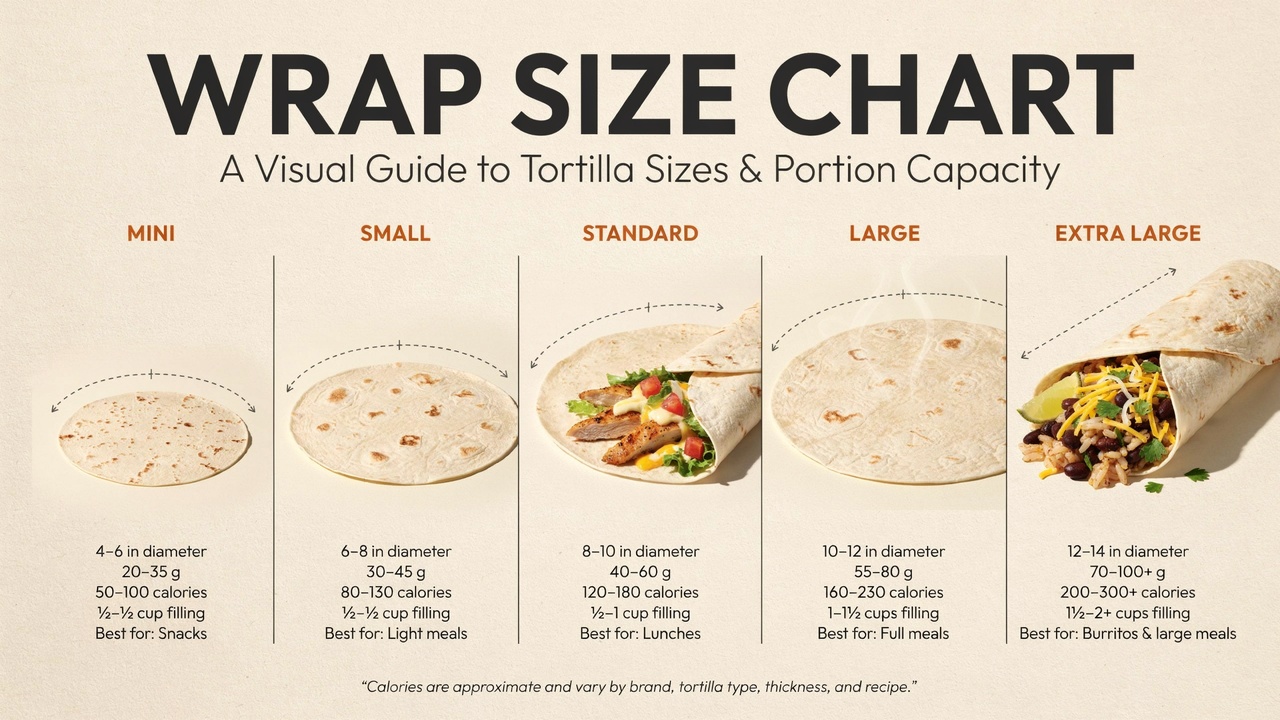
This wrap size chart explains common wrap sizes, diameters, weights, calories, filling capacity, and serving recommendations. Whether you are making chicken wraps, burritos, breakfast wraps, veggie wraps, or sandwich-style wraps, understanding the size helps you choose the right portion.
Why Wrap Size Matters
Wrap size affects much more than appearance. A larger tortilla can hold more ingredients, while a smaller wrap is easier to portion and eat.
Choosing the right wrap size helps with:
- Controlling portion sizes
- Balancing fillings and tortilla
- Preventing tearing
- Making wraps easier to roll
- Planning meals
- Estimating calories
- Preparing party platters
- Choosing suitable containers
- Managing food costs
The ideal size depends on whether you are making a snack, lunch, dinner, breakfast wrap, or large burrito-style meal.
Standard Wrap Size Chart
| Wrap Size | Diameter | Approx. Weight | Typical Calories* | Filling Capacity | Best For |
|---|---|---|---|---|---|
| Mini | 4–6 in | 20–35 g | 50–100 | ¼–½ cup | Snacks |
| Small | 6–8 in | 30–45 g | 80–130 | ½–¾ cup | Light meals |
| Standard | 8–10 in | 40–60 g | 120–180 | ¾–1 cup | Lunches |
| Large | 10–12 in | 55–80 g | 160–230 | 1–1½ cups | Full meals |
| Extra Large | 12–14 in | 70–100+ g | 200–300+ | 1½–2+ cups | Burritos & large meals |
*Calories are approximate and vary by brand, flour/corn type, thickness, and recipe.
Mini Wrap Size
Mini wraps are generally around 4–6 inches in diameter. They are designed for small portions rather than full meals.
Mini Wrap Uses
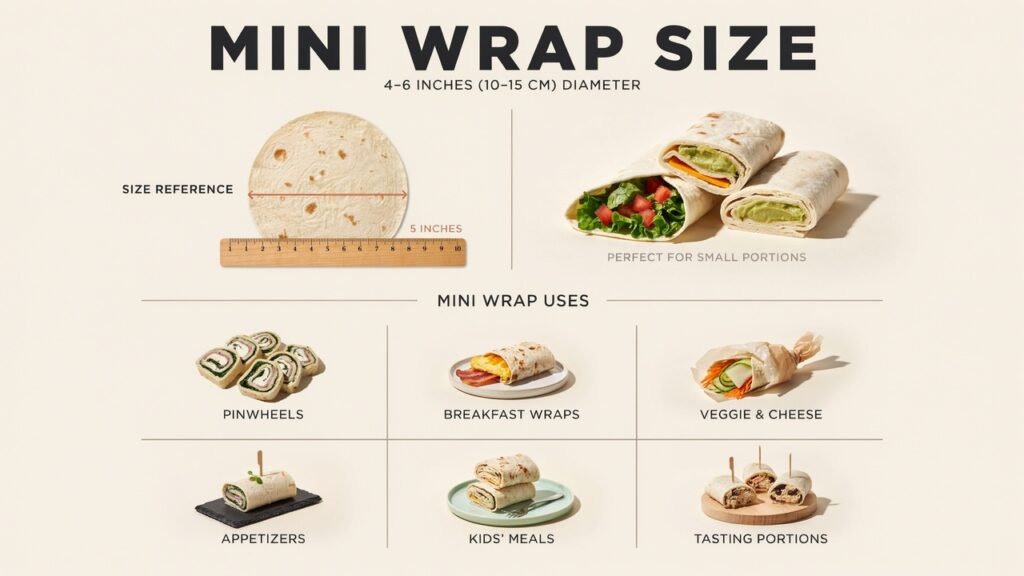
Mini wraps work well for:
- Appetizers
- Kids’ meals
- Small snacks
- Party food
- Pinwheel wraps
- Small breakfast wraps
- Tasting portions
Because of their small size, they should not be overloaded. A few tablespoons of filling is usually enough.
Small Wrap Size
Small wraps are typically 6–8 inches across. They offer more room than mini wraps while remaining relatively easy to handle.
A small wrap is suitable for:
- Light lunches
- Chicken salad
- Vegetable wraps
- Breakfast wraps
- Cheese and turkey wraps
- Children’s meals
They are particularly useful when you want a moderate portion without the bulk of a large burrito.
Standard Wrap Size
The standard wrap is commonly around 8–10 inches in diameter.
This size provides a good balance between filling capacity and ease of rolling. It is one of the most practical choices for everyday lunches.
Typical Standard Wrap Filling
A standard wrap can usually accommodate:
- 2–3 oz cooked meat
- ½ cup vegetables
- 1–2 tbsp cheese
- 1–2 tbsp sauce
- Greens or salad ingredients
The exact capacity depends on how densely the ingredients are packed.
Large Wrap Size
Large wraps usually measure 10–12 inches in diameter.
They are popular for substantial lunches and dinners because they can accommodate several ingredients without becoming difficult to roll.
Large wraps are ideal for:
- Chicken burritos
- Steak wraps
- Large veggie wraps
- Breakfast burritos
- Grilled chicken wraps
- Loaded salad wraps
- Meal-prep wraps
Extra-Large Wrap Size
Extra-large wraps can measure approximately 12–14 inches or more.
They are commonly used for oversized burritos and heavily filled meals. Their larger surface area allows ingredients to be distributed across the tortilla while still leaving enough space to fold the edges.
Because extra-large wraps can become heavy, using a sturdy tortilla is important.
Wrap Diameter Comparison Chart
| Wrap Type | Typical Diameter | Portion Style |
|---|---|---|
| Mini | 4–6 in | Bite-size |
| Small | 6–8 in | Light |
| Standard | 8–10 in | Regular meal |
| Large | 10–12 in | Full meal |
| Extra Large | 12–14+ in | Oversized meal |
Wrap Weight Chart
| Wrap Size | Approx. Tortilla Weight | Approx. Filled Weight |
|---|---|---|
| Mini | 20–35 g | 60–100 g |
| Small | 30–45 g | 100–160 g |
| Standard | 40–60 g | 160–250 g |
| Large | 55–80 g | 220–350 g |
| Extra Large | 70–100+ g | 300–450+ g |
Filled weights vary greatly depending on meat, vegetables, cheese, sauces, and other ingredients.
Wrap Calories by Size
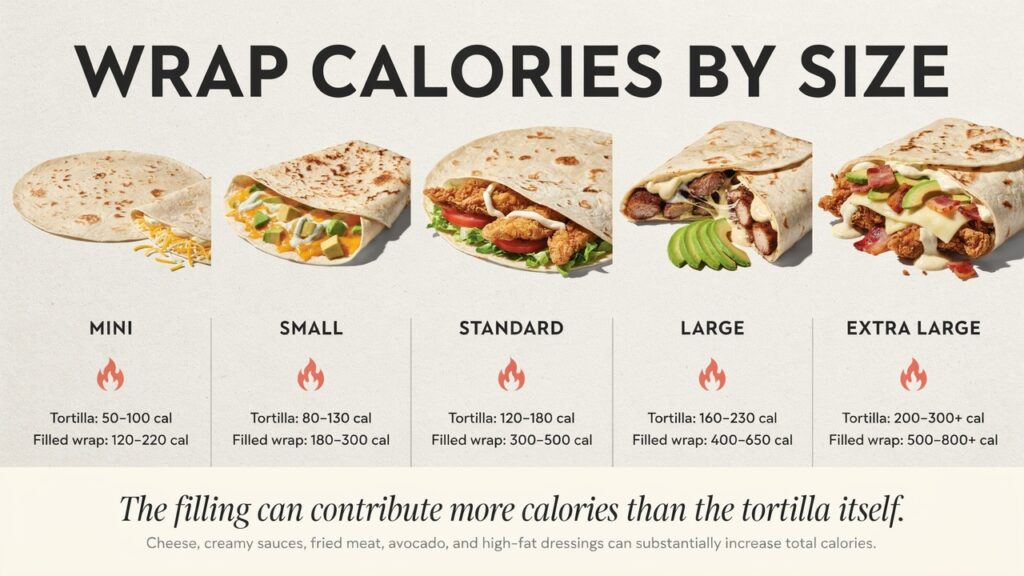
| Wrap Size | Approx. Tortilla Calories | Approx. Filled Wrap Calories |
|---|---|---|
| Mini | 50–100 | 120–220 |
| Small | 80–130 | 180–300 |
| Standard | 120–180 | 300–500 |
| Large | 160–230 | 400–650 |
| Extra Large | 200–300+ | 500–800+ |
The filling can contribute more calories than the tortilla itself. Cheese, creamy sauces, fried meat, avocado, and high-fat dressings can increase the total substantially.
Wrap Size by Meal Type
| Meal | Recommended Wrap Size | Typical Filling |
|---|---|---|
| Snack | Mini | Cheese, vegetables |
| Kids’ Lunch | Small | Chicken, cheese |
| Light Lunch | Small–Standard | Turkey, salad |
| Regular Lunch | Standard | Chicken, vegetables |
| Dinner | Large | Meat, rice, beans |
| Breakfast Burrito | Standard–Large | Eggs, potatoes, cheese |
| Large Burrito | Large–Extra Large | Meat, rice, beans, toppings |
| Party Appetizer | Mini | Small portions |
Wrap Size for Different Fillings
Different fillings work better with different tortilla sizes.
Chicken Wrap
A 8–10 inch wrap is generally suitable for a standard chicken wrap. Use a 10–12 inch tortilla if adding rice, beans, cheese, and several vegetables.
Steak Wrap
Steak wraps benefit from a 10–12 inch tortilla because sliced steak can take up considerable space.
Vegetable Wrap
A 8–10 inch tortilla usually works well for vegetables, greens, hummus, and cheese.
Breakfast Wrap
For eggs, cheese, potatoes, and breakfast meat, choose a 10–12 inch tortilla for a hearty meal.
Burrito-Style Wrap
Large or extra-large tortillas are preferable when using rice, beans, meat, salsa, cheese, and other fillings.
Flour vs. Corn Wrap Size
Flour and corn tortillas differ in flexibility, texture, and typical applications.
| Feature | Flour Wrap | Corn Tortilla |
|---|---|---|
| Flexibility | High | Moderate |
| Large Sizes | Common | Less common |
| Best For | Wraps & burritos | Tacos & smaller wraps |
| Texture | Soft and chewy | Firm and slightly grainy |
| Rolling | Easy | Can crack if dry |
| Heavy Fillings | Excellent | Better for lighter fillings |
Flour tortillas are generally easier to use for large wraps because they stretch and fold more easily.
Whole Wheat Wrap Size
Whole-wheat wraps are available in many of the same sizes as regular flour wraps.
A standard 8–10 inch whole-wheat tortilla works well for an everyday lunch. Larger versions are useful for meal-sized wraps.
When choosing a whole-wheat wrap, check the package because calorie and fiber content can vary considerably between products.
Low-Carb Wrap Size
Low-carb wraps often come in standard and large diameters. A larger wrap may have fewer net carbohydrates than expected because of added fiber, but nutrition varies by brand.
For a balanced low-carb wrap, combine the tortilla with:
- Lean protein
- Leafy greens
- Non-starchy vegetables
- Moderate cheese
- A controlled amount of sauce
Wrap Filling Quantity Chart
| Wrap Size | Recommended Filling |
|---|---|
| Mini | 2–4 tbsp |
| Small | ¼–½ cup |
| Standard | ½–1 cup |
| Large | 1–1½ cups |
| Extra Large | 1½–2+ cups |
These are practical estimates rather than strict standards. Ingredients with different shapes and densities can occupy very different amounts of space.
How Much Meat Fits in a Wrap?
| Wrap Size | Approx. Cooked Meat |
|---|---|
| Mini | 1–2 oz |
| Small | 2–3 oz |
| Standard | 2–4 oz |
| Large | 3–5 oz |
| Extra Large | 4–6+ oz |
Chicken, beef, turkey, steak, and other proteins can be used depending on the recipe.
Wrap Size and Protein Portions
For a balanced meal, protein should be combined with vegetables, carbohydrates, and healthy fats rather than filling the entire tortilla with meat.
A standard wrap might contain:
- 2–4 oz cooked protein
- ½–1 cup vegetables
- 1–2 tbsp cheese
- 1–2 tbsp sauce
- Optional grains or beans
This creates a filling meal without making the wrap too difficult to close.
How to Roll a Wrap Properly
The right size is only part of making a good wrap. Rolling technique matters too.
- Warm the tortilla slightly.
- Place the filling slightly below the center.
- Leave space around the edges.
- Fold the bottom edge upward.
- Fold both sides inward.
- Roll firmly toward the top.
- Place the seam underneath.
Avoid putting too much filling in the center. An overloaded tortilla can split while rolling.
Wrap Size vs. Burrito Size
Wraps and burritos often overlap in size, but burritos are generally designed to hold more substantial fillings.
| Feature | Regular Wrap | Burrito |
|---|---|---|
| Typical Size | 8–12 in | 10–14+ in |
| Filling | Moderate | Heavy |
| Rice | Optional | Common |
| Beans | Optional | Common |
| Sauces | Moderate | Moderate–High |
| Meal Size | Light–Full | Full meal |
The terms can vary depending on cuisine and restaurant, so there is no single universal size standard.
Wrap Size for Meal Prep
For meal prep, 8–10 inch wraps are often convenient because they provide enough room for a balanced filling while remaining easy to package.
Good meal-prep fillings include:
- Grilled chicken
- Turkey
- Roasted vegetables
- Hummus
- Rice
- Beans
- Lettuce
- Cheese
Keep wet sauces separate when possible to reduce sogginess.
Wrap Size for Kids
Children generally need smaller portions than adults. A 6–8 inch wrap can provide a manageable serving.
For younger children, consider:
- Smaller tortillas
- Thin layers of filling
- Mild flavors
- Soft vegetables
- Small amounts of cheese
- Easy-to-hold portions
You can also cut a standard wrap into smaller pieces.
Wrap Size for Parties
Mini wraps are excellent for parties because guests can sample several varieties.
For a party platter, consider:
- Mini chicken wraps
- Mini veggie wraps
- Turkey and cheese wraps
- Hummus wraps
- Small breakfast-style wraps
Cutting standard wraps into pinwheels can also create attractive bite-size servings.
How Many Wraps Per Person?
| Situation | Suggested Amount |
|---|---|
| Light snack | ½–1 mini |
| Appetizer | 1–2 mini |
| Light lunch | 1 small |
| Regular lunch | 1 standard |
| Large meal | 1 large |
| Very hungry adult | 1 large or extra-large |
Appetite and filling composition can change these amounts considerably.
Common Wrap Size Mistakes
1. Choosing a Tortilla That Is Too Small
If you have several fillings, a small tortilla can quickly become impossible to roll.
2. Overfilling
More filling does not always make a better wrap. Too much food can cause tearing and messy eating.
3. Using a Dry Tortilla
Dry tortillas are more likely to crack when folded.
4. Ignoring Filling Moisture
Wet ingredients can make the tortilla soggy, especially during storage.
5. Choosing the Wrong Container
A large wrap may be crushed if stored in a container that is too narrow.
How to Choose the Right Wrap Size
Use this simple guide:
For snacks: choose a 4–6 inch mini wrap.
For light meals: choose a 6–8 inch wrap.
For everyday lunches: choose an 8–10 inch standard wrap.
For large meals: choose a 10–12 inch tortilla.
For oversized burritos: choose a 12–14+ inch tortilla.
Nutrition of a Typical Wrap
The nutritional value of a wrap depends heavily on both the tortilla and filling.
A meal-sized wrap may contain:
- Carbohydrates from the tortilla and grains
- Protein from meat, eggs, beans, or cheese
- Fiber from vegetables and whole grains
- Fat from cheese, avocado, oils, and sauces
For a lighter wrap, emphasize vegetables and lean protein while controlling high-calorie sauces and cheese.
How to Make a Healthier Wrap
To make a more balanced wrap:
- Choose a whole-grain tortilla when desired
- Add plenty of vegetables
- Use lean protein
- Include beans for fiber
- Use moderate cheese
- Limit heavy creamy sauces
- Add fresh herbs and spices for flavor
- Avoid overfilling
The healthiest size is not necessarily the smallest size. A properly portioned standard wrap can be more satisfying than a tiny wrap that leaves you hungry.
Wrap Storage Guide
| Storage Method | Approx. Best Quality |
|---|---|
| Room Temperature | Short-term only |
| Refrigerator | About 1–3 days for prepared wraps |
| Freezer | Several weeks to a few months depending on ingredients |
Prepared wraps containing meat, dairy, or other perishable ingredients should be refrigerated promptly.
For freezing, wrap tightly and use ingredients that freeze well. Fresh lettuce and watery vegetables may lose texture after thawing.
Wrap Size History and Popularity
Flatbreads and tortillas have been used in different forms across many cultures for centuries. Modern wraps became especially popular as convenient handheld meals because they combine bread or flatbread with a variety of fillings.
Today, wraps can be found in countless styles, including Mexican-inspired burritos, Mediterranean wraps, chicken wraps, breakfast wraps, vegetable wraps, and sandwich-style tortillas.
Frequently Asked Questions
What is the standard wrap size?
A standard everyday wrap is usually around 8–10 inches in diameter.
What size wrap is best for lunch?
An 8–10 inch wrap is a practical choice for most lunches.
What size tortilla is best for a burrito?
A 10–14 inch tortilla is generally suitable for burritos, depending on how much filling you plan to use.
How many calories are in a wrap?
The tortilla alone may contain roughly 50–300+ calories, depending on size and ingredients. A filled wrap can range from about 150 to 800+ calories.
What size wrap is best for kids?
A 6–8 inch wrap is generally easier for children to handle and provides a smaller portion.
How much filling should I put in a wrap?
A standard 8–10 inch wrap can usually hold around ½–1 cup of filling, depending on the ingredients and how tightly it is packed.
Why does my wrap tear?
The tortilla may be too small, too dry, too cold, or overloaded. Warming it slightly and reducing the filling can make rolling easier.
Are larger wraps healthier?
Not necessarily. A larger tortilla generally provides more space for food, but total nutrition depends on the ingredients and portion size.
Final Wrap Size Guide
Wrap size is an important part of creating a convenient, balanced, and easy-to-eat meal. Mini wraps are ideal for snacks and appetizers, small wraps work well for lighter portions, standard 8–10 inch wraps are excellent for everyday lunches, and large or extra-large wraps are better for hearty meals and burrito-style preparations.
When choosing a wrap, consider not only diameter but also tortilla weight, flexibility, filling capacity, ingredients, calories, and how the finished wrap will be served. With the right size and a balanced amount of filling, you can create wraps that are easier to roll, easier to eat, and better suited to any occasion.
