
Pulled pork is a popular slow-cooked dish made by cooking pork until it becomes tender enough to shred easily. Because pork loses moisture and fat during cooking, the amount of raw meat needed can be considerably larger than the final cooked amount.
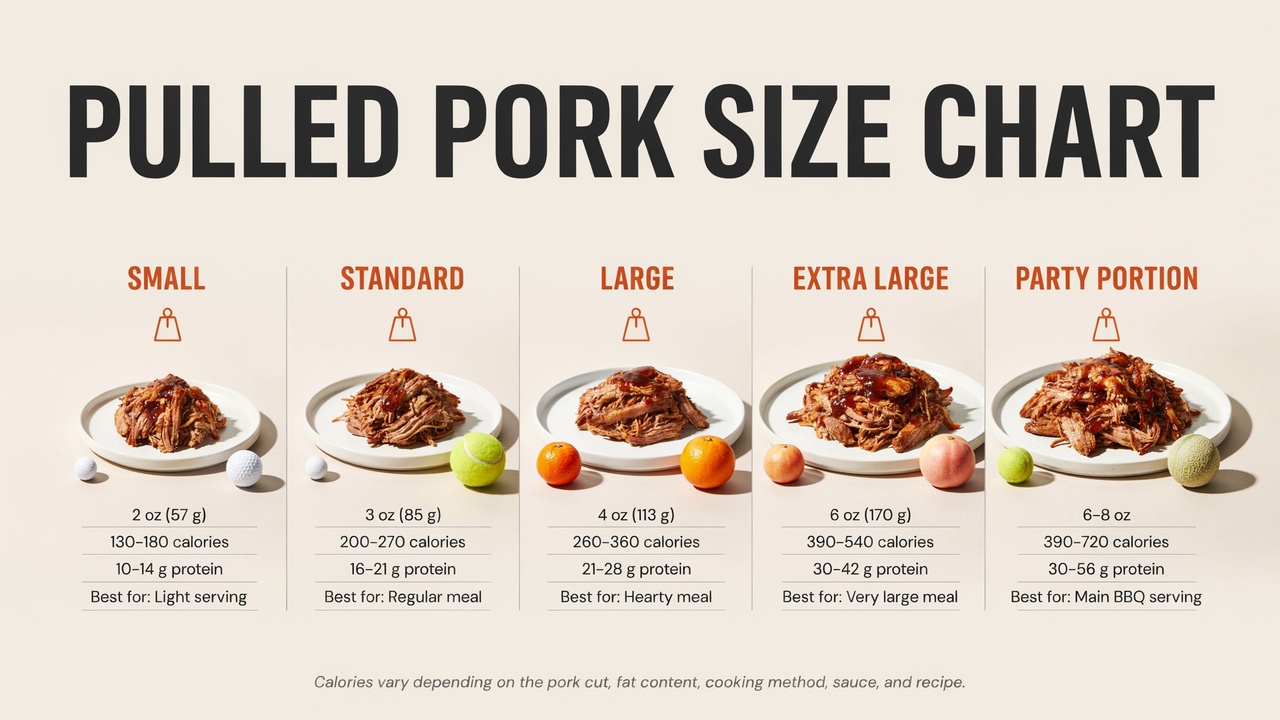
This pulled pork size chart explains common portion sizes, raw-to-cooked weight conversions, calories, protein, sandwich portions, party quantities, and serving recommendations. Whether you are preparing pulled pork for a family dinner, barbecue, sandwiches, or a large gathering, understanding portion sizes makes planning much easier.
Why Pulled Pork Size Matters
Choosing the right amount of pulled pork helps you:
- Plan meals accurately
- Avoid running out of food
- Reduce unnecessary leftovers
- Estimate grocery quantities
- Prepare sandwiches consistently
- Calculate calories and protein
- Plan barbecue parties
- Determine how much pork to cook
The ideal amount depends on whether pulled pork is the main dish, part of a larger barbecue meal, or served inside sandwiches.
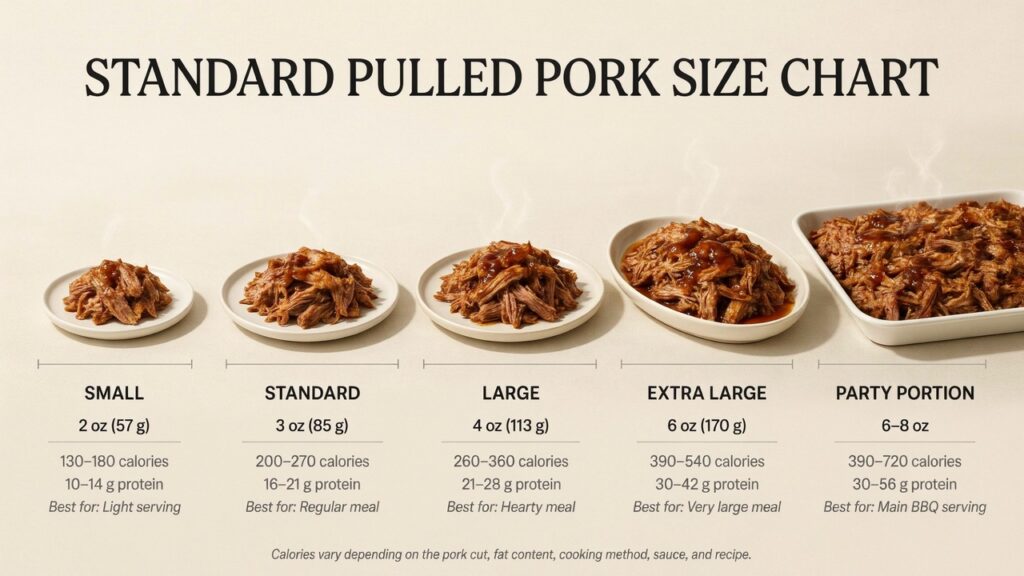
Standard Pulled Pork Size Chart
| Portion Size | Cooked Pulled Pork | Approx. Calories* | Approx. Protein | Best For |
|---|---|---|---|---|
| Small | 2 oz (57 g) | 130–180 | 10–14 g | Light serving |
| Standard | 3 oz (85 g) | 200–270 | 16–21 g | Regular meal |
| Large | 4 oz (113 g) | 260–360 | 21–28 g | Hearty meal |
| Extra Large | 6 oz (170 g) | 390–540 | 30–42 g | Very large meal |
| Party Portion | 6–8 oz | 390–720 | 30–56 g | Main BBQ serving |
*Calories vary depending on the pork cut, fat content, cooking method, sauce, and recipe.
Raw Pork to Cooked Pulled Pork Chart
Pork shoulder and similar cuts lose significant weight during cooking because of moisture and rendered fat.
| Raw Pork Weight | Approx. Cooked Pulled Pork | Approx. Servings |
|---|---|---|
| 1 lb | 8–12 oz | 2–4 |
| 2 lb | 1–1½ lb | 4–6 |
| 3 lb | 1½–2¼ lb | 6–8 |
| 5 lb | 2½–3¾ lb | 10–15 |
| 8 lb | 4–6 lb | 16–24 |
| 10 lb | 5–7½ lb | 20–30 |
| 15 lb | 7½–11¼ lb | 30–45 |
| 20 lb | 10–15 lb | 40–60 |
Actual yield depends on the cut, fat content, trimming, cooking temperature, and how much moisture is lost.
How Much Pulled Pork Per Person?
For a main meal, a practical starting point is approximately 4–6 oz of cooked pulled pork per adult.
For lighter meals or when several side dishes are served, 3–4 oz may be enough. For very hungry guests or barbecue-focused meals, 6 oz or more may be appropriate.
Basic Serving Guide
| Guests | Cooked Pulled Pork Needed | Raw Pork to Buy* |
|---|---|---|
| 2 | ½–¾ lb | 1–1½ lb |
| 4 | 1–1½ lb | 2–3 lb |
| 6 | 1½–2¼ lb | 3–4½ lb |
| 8 | 2–3 lb | 4–6 lb |
| 10 | 2½–3¾ lb | 5–7½ lb |
| 15 | 3¾–5½ lb | 7½–11 lb |
| 20 | 5–7½ lb | 10–15 lb |
| 30 | 7½–11¼ lb | 15–22½ lb |
*Raw quantities are estimates based on typical cooking loss.
Pulled Pork Sandwich Size Chart
Pulled pork sandwiches can vary considerably depending on the bun and amount of meat.
| Sandwich Size | Pulled Pork | Typical Use |
|---|---|---|
| Mini Slider | 1–2 oz | Appetizer |
| Small | 2–3 oz | Light meal |
| Standard | 3–4 oz | Regular lunch |
| Large | 4–6 oz | Hearty meal |
| Loaded | 6–8 oz | Large BBQ meal |
A standard sandwich generally works well with around 3–4 oz of cooked pulled pork.
Pulled Pork Slider Size
Sliders are smaller than standard sandwiches and are excellent for parties.
A typical slider can contain:
- 1–2 oz pulled pork
- Small slider bun
- 1–2 tbsp barbecue sauce
- Pickles or coleslaw
- Optional cheese
For a party, preparing several smaller sliders can make portioning easier than serving large sandwiches.
Pulled Pork by Serving Style
| Serving Style | Typical Pork Portion |
|---|---|
| Appetizer | 1–2 oz |
| Slider | 1–2 oz |
| Small Sandwich | 2–3 oz |
| Standard Sandwich | 3–4 oz |
| Dinner Plate | 4–6 oz |
| BBQ Platter | 5–8 oz |
| Very Large Serving | 8+ oz |
Pulled Pork Calories by Portion
Calories depend heavily on the pork’s fat content and whether barbecue sauce is included.
| Cooked Pork Portion | Approx. Calories |
|---|---|
| 2 oz | 130–180 |
| 3 oz | 200–270 |
| 4 oz | 260–360 |
| 5 oz | 325–450 |
| 6 oz | 390–540 |
| 8 oz | 520–720 |
Adding barbecue sauce, cheese, mayonnaise-based coleslaw, or a buttery bun can significantly increase the total calories of the finished meal.
Pulled Pork Protein Chart
Pulled pork is a good source of protein, although the amount varies according to the cut and preparation.
| Cooked Portion | Approx. Protein |
|---|---|
| 2 oz | 10–14 g |
| 3 oz | 16–21 g |
| 4 oz | 21–28 g |
| 5 oz | 25–35 g |
| 6 oz | 30–42 g |
| 8 oz | 40–56 g |
These figures are approximate because lean and fatty pork can have different protein densities.
Pulled Pork for a BBQ Party
When pulled pork is one of several barbecue meats, you may need less per person because guests can choose multiple proteins.
If pulled pork is the main meat, plan around:
- 4–6 oz cooked per adult
- 2–4 oz cooked per child
- Additional food for especially hungry guests
If pulled pork is served alongside brisket, chicken, ribs, or sausage, a smaller amount of each meat may be sufficient.
Pulled Pork Party Quantity Chart
| Guests | Light BBQ | Main Meat |
|---|---|---|
| 10 | 2–3 lb cooked | 3–4 lb cooked |
| 20 | 4–6 lb cooked | 5–8 lb cooked |
| 30 | 6–9 lb cooked | 8–11 lb cooked |
| 40 | 8–12 lb cooked | 10–15 lb cooked |
| 50 | 10–15 lb cooked | 13–19 lb cooked |
| 75 | 15–22 lb cooked | 19–28 lb cooked |
| 100 | 20–30 lb cooked | 25–38 lb cooked |
These quantities are planning estimates rather than fixed catering standards.
Pulled Pork Serving Size With Side Dishes
Side dishes can influence how much pork people eat.
Popular sides include:
- Coleslaw
- Baked beans
- Cornbread
- Potato salad
- Mac and cheese
- French fries
- Corn
- Green salad
- Pickles
If you serve several substantial sides, around 4 oz of cooked pork per adult may be sufficient for many guests.
If pulled pork is the main attraction with lighter sides, plan closer to 5–6 oz per person.
Pulled Pork and Bun Size
The bun should be large enough to hold the pork without falling apart.
| Bun Size | Recommended Pork |
|---|---|
| Mini Slider Bun | 1–2 oz |
| Small Bun | 2–3 oz |
| Standard Hamburger Bun | 3–4 oz |
| Large Brioche Bun | 4–6 oz |
| Oversized Bun | 5–7+ oz |
Soft brioche buns are popular, but sturdy sandwich rolls can be better when using very wet or heavily sauced pulled pork.
Best Pork Cut for Pulled Pork
Pork shoulder is one of the most common choices because it contains enough fat and connective tissue to remain tender during long cooking.
Common options include:
| Cut | Characteristics | Best Use |
|---|---|---|
| Pork Shoulder | Rich and tender | Classic pulled pork |
| Boston Butt | Well-marbled | BBQ & smoking |
| Picnic Shoulder | Flavorful | Large batches |
| Leaner Pork Cuts | Less fatty | Lighter preparations |
A well-marbled shoulder generally produces moist, flavorful pulled pork after slow cooking.
Pulled Pork Cooking Yield
Cooking yield depends on several factors:
- Initial fat content
- Amount of trimming
- Cooking temperature
- Cooking duration
- Moisture loss
- Bone-in vs. boneless cut
A useful planning assumption is that the final cooked meat may be around 50–75% of the original trimmed raw weight, although actual yield can fall outside this range.
For large events, it is safer to prepare a little extra rather than relying on the highest possible yield.
Bone-In vs. Boneless Pork
Bone-in pork contains weight that will not become shredded meat.
| Pork Type | Planning Consideration |
|---|---|
| Boneless | More predictable meat yield |
| Bone-In | Lower usable-meat percentage |
| Heavily Trimmed | Less cooking loss from fat |
| Well-Marbled | More flavorful but more rendered fat |
When buying bone-in pork, allow additional raw weight to compensate for the bone.
How Much Pork for Sandwiches?
For standard pulled pork sandwiches, approximately 3–4 oz cooked pork per sandwich is a useful starting point.
Example
If you are making 25 standard sandwiches:
25 × 4 oz = 100 oz
That equals approximately 6.25 lb of cooked pulled pork.
Because cooking reduces the original weight, you would need considerably more raw pork than the final serving weight.
How Much Pulled Pork for Sliders?
For sliders, approximately 1–2 oz of cooked pork per slider is common.
For example:
| Sliders | Cooked Pork Needed |
|---|---|
| 10 | 10–20 oz |
| 20 | 1¼–2½ lb |
| 30 | 1⅞–3¾ lb |
| 50 | 3–6¼ lb |
| 100 | 6¼–12½ lb |
The exact amount depends on how generously each slider is filled.
How to Keep Pulled Pork Moist
Pulled pork can dry out after shredding because more surface area is exposed.
To maintain moisture:
- Reserve some cooking juices
- Mix in a small amount of sauce
- Keep the pork covered
- Avoid excessive reheating
- Use a slow cooker or covered pan for holding
- Do not leave shredded pork uncovered for long periods
Pulled Pork Storage Guide
| Storage Method | Recommended Time |
|---|---|
| Refrigerator | About 3–4 days |
| Freezer | Around 2–3 months for best quality |
| Room Temperature | Avoid extended storage |
Cool leftovers promptly and store them in airtight containers.
For freezing, divide the pork into meal-sized portions so you can thaw only what you need.
Reheating Pulled Pork
Pulled pork can be reheated using:
- Oven
- Stovetop
- Microwave
- Slow cooker
- Covered skillet
Adding a little cooking liquid or barbecue sauce can help prevent dryness.
For food safety, leftovers should be reheated thoroughly rather than simply warmed until lukewarm.
Common Pulled Pork Portion Mistakes
1. Calculating From Raw Weight Alone
Raw pork contains moisture and fat that are lost during cooking, so raw and cooked weights are not interchangeable.
2. Forgetting the Bone
Bone-in pork weighs more than the amount of meat you will ultimately serve.
3. Ignoring Side Dishes
Guests usually eat less pork when several filling sides are available.
4. Underestimating Sandwich Fillings
A sandwich also needs space for sauce, slaw, pickles, and other toppings.
5. Making Every Portion Too Large
Large portions can create excessive leftovers, especially at events with multiple meats.
How to Choose the Right Pulled Pork Amount
Use this simple guide:
For a light meal: plan around 3 oz cooked pork per person.
For a regular meal: plan around 4 oz.
For a hearty BBQ meal: plan around 5–6 oz.
For very large appetites: allow 6–8 oz or more.
For sliders: plan approximately 1–2 oz per slider.
Frequently Asked Questions
How much pulled pork is one serving?
A typical serving is around 3–6 oz of cooked pulled pork, depending on appetite and the rest of the meal.
How much raw pork do I need for 10 people?
For a main-meat barbecue, approximately 5–7½ lb of raw pork is a reasonable starting range, depending on cooking yield and portion size.
How much pulled pork goes on a sandwich?
A standard sandwich commonly uses about 3–4 oz of cooked pulled pork.
How much pulled pork goes in a slider?
A typical slider uses around 1–2 oz of cooked pulled pork.
Does pulled pork lose weight when cooked?
Yes. Pork loses water and renders fat during cooking, so the cooked weight is significantly lower than the raw weight.
Is pork shoulder good for pulled pork?
Yes. Pork shoulder and Boston butt are especially popular because their fat and connective tissue help produce tender shredded meat during slow cooking.
How much pulled pork should I prepare for a party?
For pulled pork as the main meat, plan roughly 4–6 oz cooked per adult, then increase the total if you want generous portions or leftovers.
Can pulled pork be frozen?
Yes. Properly packaged pulled pork freezes well and can be divided into individual or family-sized portions for easier reheating.
Final Pulled Pork Size Guide
Pulled pork portions can range from 1–2 oz for sliders to 6–8 oz or more for large BBQ servings. For most everyday meals, 3–6 oz of cooked pulled pork per person is a practical range.
When planning a large batch, remember that raw pork loses weight during cooking and that bone-in cuts provide less usable meat than boneless cuts. For sandwiches, around 3–4 oz makes a satisfying standard portion, while sliders usually need only 1–2 oz.
By considering cooked yield, serving style, bun size, side dishes, and guest appetite, you can estimate the right amount of pulled pork for everything from a family dinner to a large barbecue gathering.
