
Chocolate chips are one of the most popular baking ingredients in the world. They’re used in cookies, brownies, muffins, pancakes, cakes, and countless desserts. But not all chocolate chips are the same size. Some are tiny mini chips, while others are large chunks designed for gooey bakery-style treats. Understanding a chocolate chip size chart helps bakers choose the right chip for texture, melting, and appearance. Whether you’re baking classic cookies or gourmet desserts, the size of your chocolate chips can completely change the final result.
Why Chocolate Chip Size Matters
Chocolate chip size affects texture, flavor distribution, and melting behavior in baked goods. Smaller chips spread evenly throughout batter, while larger chips create pockets of melted chocolate.
Mini chips work well in delicate desserts because they distribute chocolate more evenly. Larger chips or chunks provide stronger bursts of chocolate flavor and are often used in bakery-style cookies.
Choosing the right chip size also affects presentation. Tiny chips blend into recipes, while jumbo chips stand out visually in cookies and muffins.
Standard Chocolate Chip Sizes
Chocolate chips are usually categorized by diameter and weight. Here are the most common chip sizes used in baking.
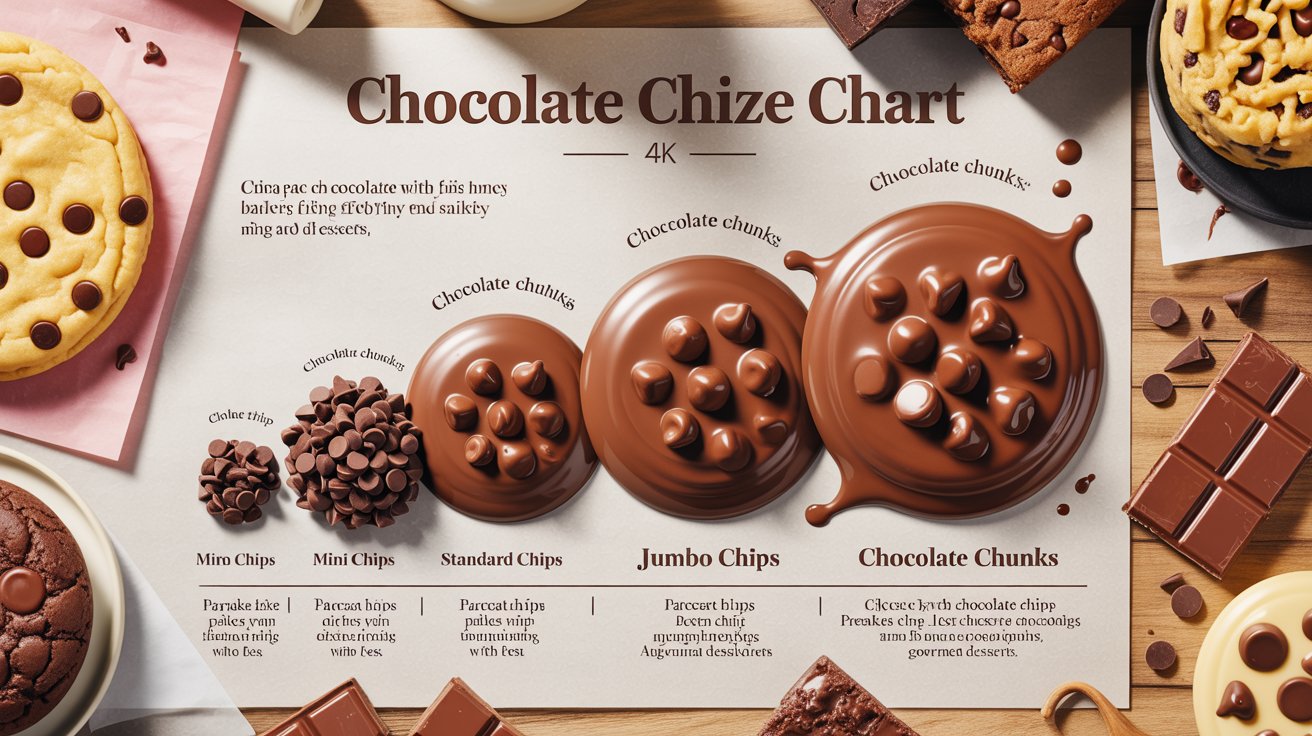
Chocolate Chip Size Chart
| Chocolate Chip Type | Approximate Size | Best Use |
|---|---|---|
| Micro Chips | 2–3 mm | Pancakes, ice cream toppings |
| Mini Chips | 4–5 mm | Muffins, cookies, cakes |
| Standard Chips | 6–8 mm | Classic chocolate chip cookies |
| Jumbo Chips | 9–12 mm | Bakery-style desserts |
| Chocolate Chunks | 12 mm+ | Gourmet cookies and brownies |
Sizes may vary slightly depending on the brand and chocolate type.
Choosing The Right Chocolate Chip Size
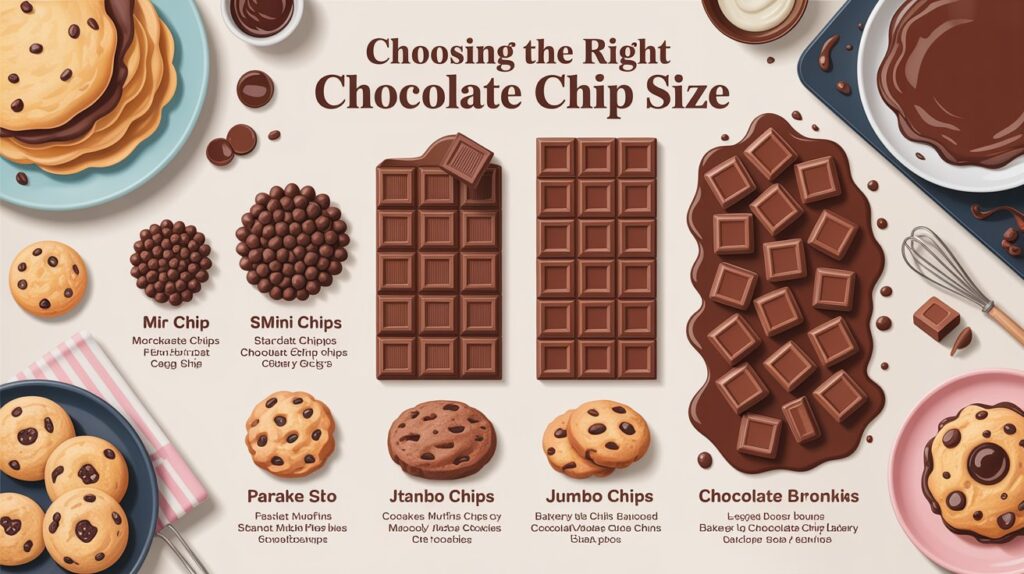
The best chocolate chip size depends on the dessert you’re making. Here are some common uses:
- Micro Chips: Great for toppings and evenly mixed batters.
- Mini Chips: Perfect for muffins, pancakes, and small cookies.
- Standard Chips: The classic choice for homemade cookies.
- Jumbo Chips: Ideal for thick bakery-style cookies.
- Chocolate Chunks: Best for gooey desserts with large melted chocolate pockets.
Larger chips create stronger chocolate flavor in every bite, while smaller chips provide more even distribution.
Chocolate Chip Size Comparison: Chips Vs. Chunks
Chocolate chunks and chips behave differently during baking.
Chocolate Chips vs Chunks
| Type | Shape | Melting Style | Best For |
|---|---|---|---|
| Chocolate Chips | Uniform, rounded | Hold shape better | Traditional cookies |
| Chocolate Chunks | Irregular pieces | Melt more dramatically | Gourmet baked goods |
Chunks often create richer and more rustic-looking desserts.
Chocolate Chip Size And Baking Results
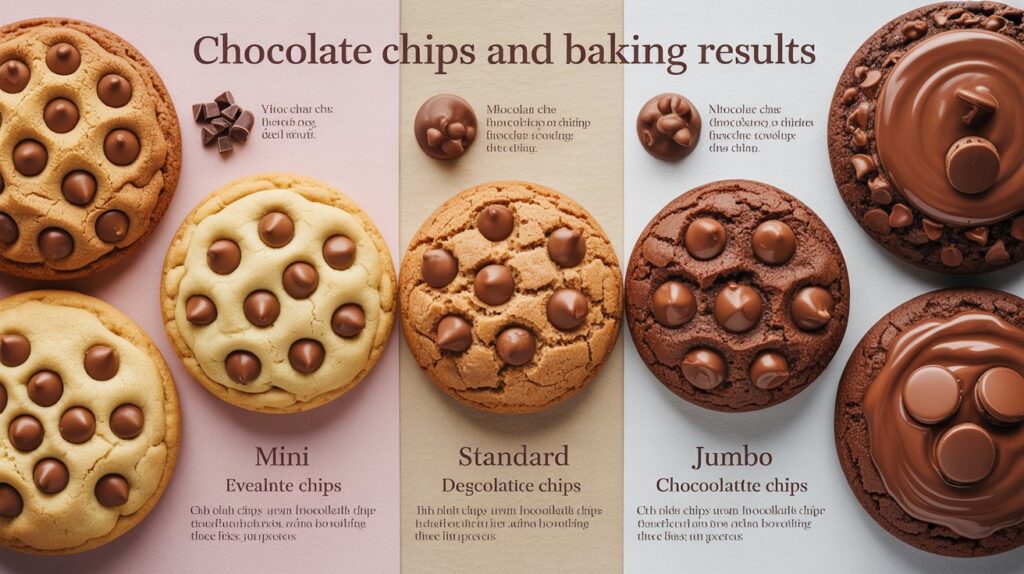
Chocolate chip size affects both appearance and texture.
Baking Impact By Chip Size
| Chip Size | Texture Result | Chocolate Distribution |
|---|---|---|
| Mini Chips | More even bites | High distribution |
| Standard Chips | Balanced texture | Moderate distribution |
| Jumbo Chips | Gooey chocolate pockets | Lower distribution |
Smaller chips blend into dough more evenly, while larger chips stand out visually and texturally.
Visual Guide: Chocolate Chip Sizes
Visual comparisons make chip sizes easier to understand.
Chocolate Chip Visual Comparison
| Chip Type | Visual Comparison | Typical Use |
|---|---|---|
| Micro Chips | Sprinkle size | Ice cream toppings |
| Mini Chips | Pencil eraser size | Muffins and pancakes |
| Standard Chips | Pea-sized | Traditional cookies |
| Jumbo Chips | Marble-sized | Bakery-style cookies |
| Chocolate Chunks | Dice-like pieces | Gourmet desserts |
Tips For Choosing Chocolate Chips
- Use mini chips for small baked goods: Better distribution in muffins and mini cookies.
- Choose larger chips for dramatic texture: Bakery-style desserts benefit from jumbo chips.
- Mix chip sizes: Combining mini and jumbo chips creates layered texture.
- Use high-quality chocolate: Better chocolate improves flavor and melting.
- Freeze chips before baking: Helps chips hold shape in warm dough.
Proper chip selection improves both taste and appearance.
Common Mistakes When Using Chocolate Chips
- Using oversized chips in thin cookies: Large chips may overpower delicate dough.
- Adding too many chips: Can make cookies spread unevenly.
- Ignoring melting behavior: Chunks melt differently from chips.
- Choosing low-quality chocolate: Poor-quality chips may taste waxy or overly sweet.
Matching chip size to the recipe creates better baking results.
How Chocolate Chip Size Affects Cookies
Chocolate chip size dramatically changes cookie texture. Mini chips create softer, evenly flavored cookies, while jumbo chips and chunks create gooey pockets of melted chocolate.
Bakery-style cookies often use large chunks because they create more dramatic appearance and richer flavor.
The History Of Chocolate Chips
Chocolate chips became popular after the invention of the chocolate chip cookie in the 1930s. Originally, bakers chopped chocolate bars into chunks, but manufacturers later created specially shaped chips designed to hold their form during baking.
Today, chocolate chips are available in countless sizes, flavors, and cocoa percentages for every type of dessert.
Frequently Asked Questions
What Is The Most Common Chocolate Chip Size?
Standard chocolate chips measuring around 6–8 mm are the most common.
Are Mini Chocolate Chips Better For Baking?
Mini chips distribute more evenly, making them great for muffins and smaller desserts.
What Are Chocolate Chunks Used For?
Chocolate chunks are popular in bakery-style cookies and brownies because they create large melted chocolate pockets.
Do Larger Chocolate Chips Melt Differently?
Yes, larger chips and chunks melt more slowly and create gooier textures.
Can I Mix Different Chocolate Chip Sizes?
Yes, combining chip sizes creates more varied texture and flavor in baked goods.
Chocolate chip sizes may seem like a small detail, but they can completely change the texture, appearance, and flavor of your baked goods. Whether you’re baking classic cookies or gourmet desserts, understanding chocolate chip sizes helps you choose the perfect chocolate for every recipe.
