
Chocolate bars are one of the world’s most popular sweet treats. From small snack-size bars to giant sharing bars, chocolate comes in many different shapes and sizes. But have you ever wondered how chocolate bar sizes compare in weight, calories, and serving portions? Understanding a chocolate bars size chart helps with portion control, nutrition tracking, and choosing the right size for snacks, desserts, or sharing. Whether you enjoy dark chocolate, milk chocolate, or candy-filled bars, knowing the different chocolate bar sizes can make your snacking experience more balanced and enjoyable.
Why Chocolate Bar Size Matters
Chocolate bar size affects more than just how much you eat. Larger bars contain significantly more sugar, calories, and fat than smaller portions. Some oversized bars may contain multiple servings, even though many people eat the entire bar at once.
Smaller bars are often better for portion control and quick snacks, while larger bars are designed for sharing or indulgent desserts. For parents, understanding candy bar sizes also helps manage children’s treats and sugar intake.
Knowing standard chocolate bar sizes makes it easier to compare brands and nutrition labels.
Standard Chocolate Bar Sizes
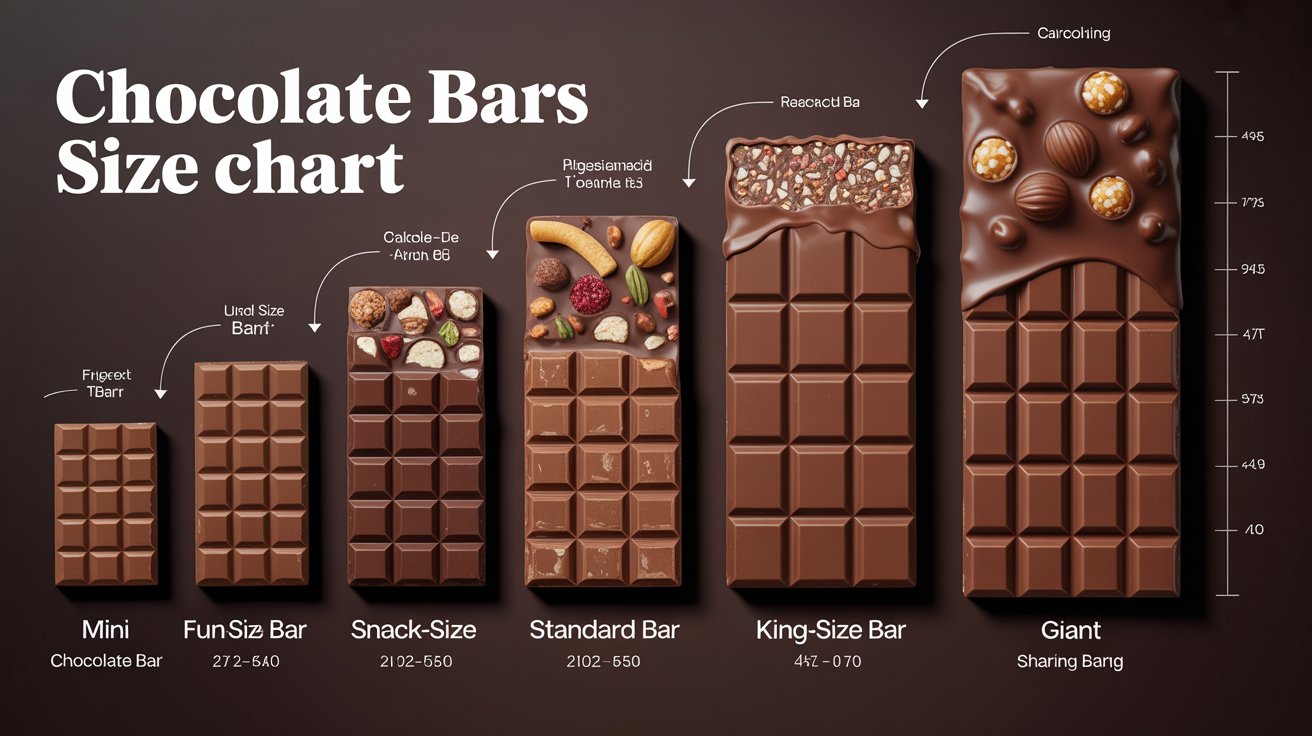
Chocolate bars are usually measured by weight and length. Here are the most common candy bar sizes available in stores.
Chocolate Bars Size Chart
| Chocolate Bar Type | Weight (Approx.) | Length (Approx.) | Calories (Approx.) |
|---|---|---|---|
| Mini Chocolate Bar | 5–10g | 1–2 inches | 25–60 |
| Fun Size Bar | 10–18g | 2 inches | 50–90 |
| Snack Size Bar | 15–25g | 2–3 inches | 70–130 |
| Standard Candy Bar | 40–60g | 4–6 inches | 180–300 |
| King Size Bar | 70–100g | 6–8 inches | 350–600 |
| Giant Sharing Bar | 150–300g | 8–12 inches | 700–1,500+ |
These numbers vary depending on ingredients such as caramel, nuts, wafers, or nougat.
Choosing The Right Chocolate Bar Size
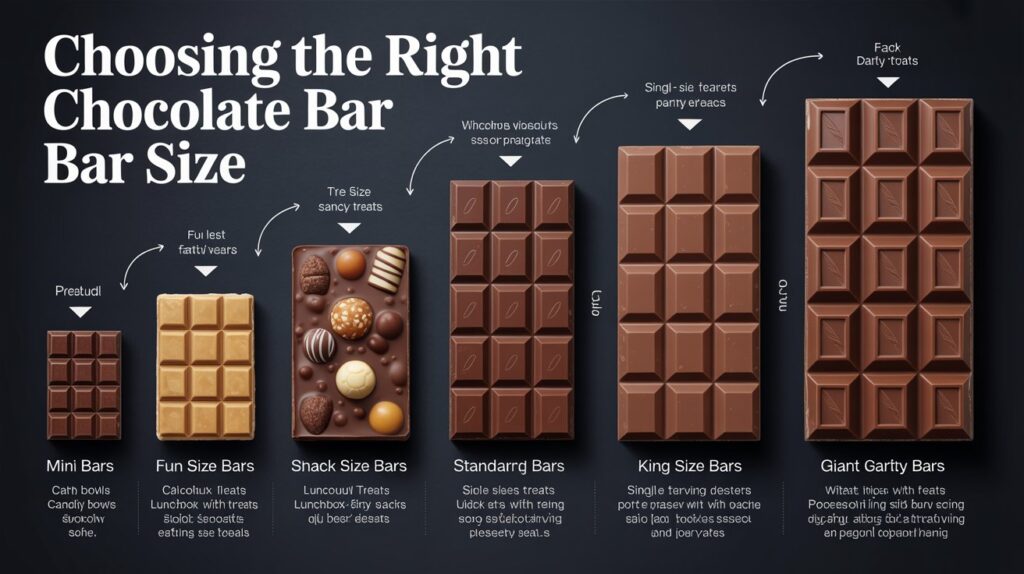
The best chocolate bar size depends on your occasion and portion needs. Here are some common uses:
- Mini Bars: Great for candy bowls or small cravings.
- Fun Size Bars: Popular for Halloween and lunchbox treats.
- Snack Size Bars: Ideal for moderate desserts or quick snacks.
- Standard Bars: The most common single-serving candy bar size.
- King Size Bars: Better for sharing or larger appetites.
- Giant Bars: Often used for parties, gifts, or novelty treats.
Smaller bars are usually easier to fit into balanced eating habits.
Chocolate Bar Size Comparison: Standard Vs. King Size
King-size candy bars contain much more chocolate and often multiple servings.
Standard vs King Size Chocolate Bars
| Type | Typical Serving | Calories | Best Use |
|---|---|---|---|
| Standard Bar | 1 bar | Moderate | Single dessert |
| King Size Bar | 1–2 servings | Higher | Sharing or indulgence |
Many king-size bars contain nearly double the calories of regular candy bars.
Chocolate Bars And Nutrition
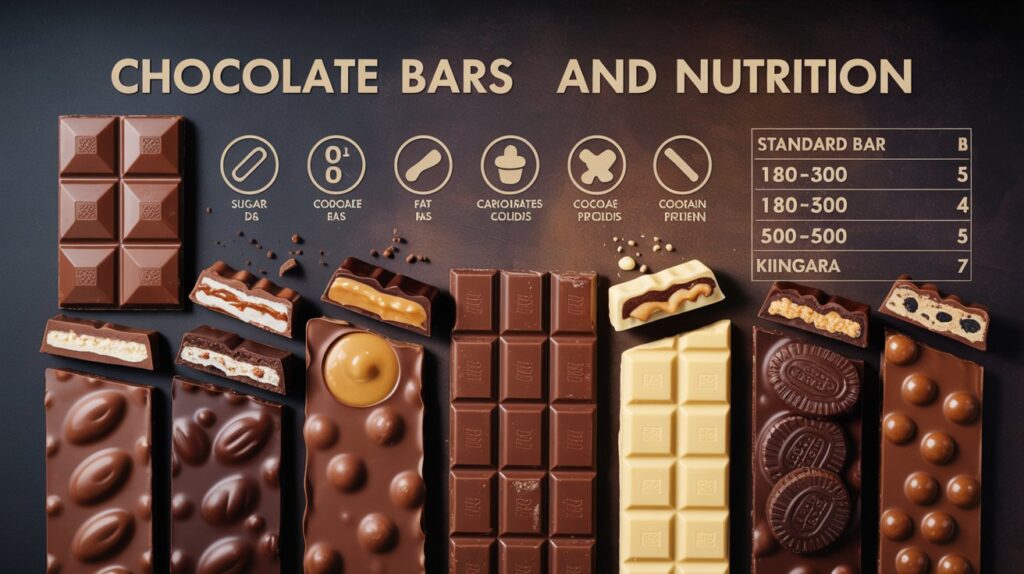
Chocolate bars typically contain:
- Sugar
- Fat
- Carbohydrates
- Cocoa solids
- Small amounts of protein
A standard candy bar usually contains around 180–300 calories, while king-size bars may exceed 500 calories. Chocolate bars with caramel, peanut butter, or cookie fillings tend to be more calorie-dense.
Dark chocolate bars often contain less sugar and more cocoa than milk chocolate bars.
Visual Guide: Chocolate Bar Sizes
Visual comparisons can make candy sizes easier to understand.
Chocolate Bar Portion Guide
| Bar Size | Best Use | Visual Comparison |
|---|---|---|
| Mini Bar | Tiny treat | Thumb size |
| Fun Size | Lunchbox snack | Finger length |
| Standard Bar | Regular dessert | Smartphone width |
| King Size Bar | Sharing portion | TV remote size |
| Giant Sharing Bar | Party dessert | Tablet length |
Tips For Managing Chocolate Bar Portions
- Read serving labels carefully: Large bars often contain multiple servings.
- Break bars into smaller pieces: Helps avoid overeating.
- Choose mini bars for portion control: Smaller treats can satisfy cravings.
- Store chocolate properly: Keep bars cool and dry for best texture.
- Pair with healthier foods: Fruit or nuts can balance sweetness.
Mindful portions help make chocolate more enjoyable without excess.
Common Mistakes When Eating Chocolate Bars
- Assuming one bar equals one serving: Larger bars may contain several servings.
- Eating directly from giant bars: Makes portion control difficult.
- Ignoring calorie differences: King-size bars can contain twice the calories of regular bars.
- Overestimating hunger: Large candy bars may feel heavier than expected.
Understanding sizes helps prevent accidental overeating.
How Chocolate Bar Size Affects Snacking
Smaller chocolate bars work well for quick sweet cravings, while larger bars often become full desserts. Oversized bars may encourage mindless eating because they appear as a single package even when they contain multiple servings.
Balanced portions allow you to enjoy chocolate without making it the main source of calories in your diet.
The Evolution Of Chocolate Bar Sizes
Chocolate bars have changed significantly over time. Early chocolate bars were smaller and simpler, while modern candy bars often include layers of caramel, wafers, nuts, and fillings.
As snack culture grew, companies introduced fun-size and snack-size options for portion control and convenience. Today, candy bars range from tiny miniatures to giant novelty bars designed for sharing.
Frequently Asked Questions
What Is A Standard Chocolate Bar Size?
A standard chocolate bar usually weighs 40–60g.
How Many Calories Are In A Chocolate Bar?
Most standard candy bars contain around 180–300 calories.
What Is The Difference Between Fun Size And Snack Size?
Fun-size bars are generally smaller and lighter than snack-size bars.
Are King Size Bars Multiple Servings?
Yes, many king-size bars contain two or more servings.
Which Chocolate Bar Size Is Best For Portion Control?
Mini or fun-size bars are usually best for smaller portions and calorie control.
Chocolate bar sizes may seem like a small detail, but they can greatly affect calorie intake, portion control, and snacking habits. Whether you prefer mini treats or giant sharing bars, understanding chocolate bar sizes helps you enjoy your favorite sweets in a more balanced and mindful way.
