
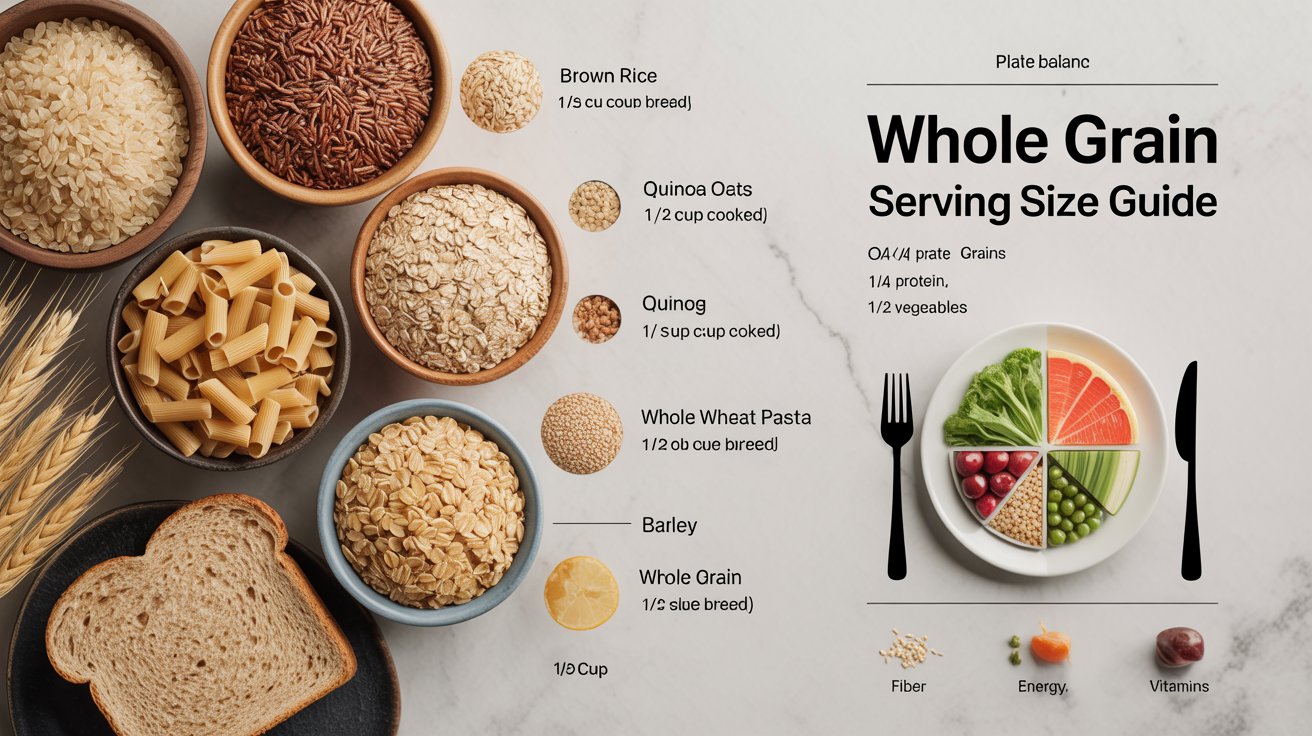
Whole grains are a key part of a healthy diet—providing fiber, energy, and essential nutrients. But how much should you actually eat in one serving? Understanding the whole grain serving size helps you build balanced meals, manage portions, and get the most health benefits without overeating.
Why Whole Grain Serving Size Matters
Whole grains like oats, brown rice, and whole wheat bread are rich in carbohydrates and fiber. While they’re healthier than refined grains, portion size still matters.
Proper serving sizes help:
- Maintain steady energy levels
- Support digestion with fiber
- Control calorie intake
- Balance meals with protein and vegetables
Even healthy grains should be eaten in the right amounts.
Standard Whole Grain Serving Size
Whole grains are usually measured cooked (cups) or by weight (grams).
Whole Grain Serving Size Chart
| Grain Type | Serving Size (Cooked) | Equivalent (Dry) | Calories (Approx.) |
|---|---|---|---|
| Brown Rice | 1/2 cup | ~1/4 cup uncooked | 100–120 kcal |
| Quinoa | 1/2 cup | ~1/4 cup uncooked | 110–120 kcal |
| Oats | 1/2 cup cooked | ~1/4 cup dry | 70–100 kcal |
| Whole Wheat Pasta | 1/2 cup | ~1/4 cup dry | 90–110 kcal |
| Barley | 1/2 cup | ~1/4 cup dry | 95–110 kcal |
| Whole Grain Bread | 1 slice | — | 70–100 kcal |
A standard serving is typically 1/2 cup cooked grains or 1 slice of whole grain bread.
Choosing The Right Serving Size
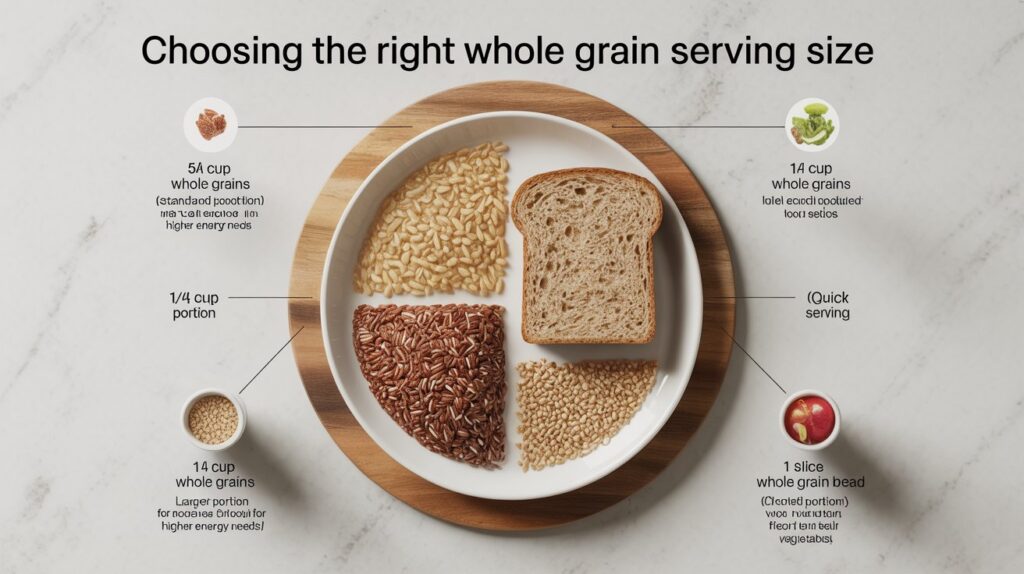
The ideal portion depends on your meal and activity level:
- 1/2 cup (standard): Balanced portion for most meals
- 1 cup: Larger portion for higher energy needs
- 1 slice bread: Quick serving for sandwiches
Whole grains should usually make up about one-quarter of your plate.
Whole Grain Vs. Refined Grain Portions
Whole grains are more filling due to fiber, so you may need slightly less compared to refined grains.
Comparison Chart
| Type | Fiber Content | Fullness Level | Portion Tip |
|---|---|---|---|
| Whole Grains | High | More filling | Moderate portions |
| Refined Grains | Low | Less filling | Easy to overeat |
Choosing whole grains helps with portion control naturally.
Whole Grain Serving Size And Nutrition
Whole grains provide essential nutrients:
- High in fiber (supports digestion)
- Rich in B vitamins
- Provide long-lasting energy
- Help regulate blood sugar
For example:
- 1/2 cup cooked brown rice: ~100–120 calories
They are an important part of a balanced diet.
Tips For Managing Whole Grain Portions
- Measure cooked portions: Use 1/2 cup as a guide
- Balance your plate: Combine with protein and vegetables
- Choose whole over refined: More nutrients and fiber
- Avoid oversized servings: Especially with rice or pasta
- Plan meals ahead: Helps control portions
Consistency helps maintain a healthy diet.
Common Mistakes When Eating Whole Grains
- Eating too much: Large portions add extra calories
- Ignoring balance: Too many grains, not enough vegetables
- Confusing refined grains with whole grains: Not all grains are equal
- Oversized bowls: Leads to overeating
Being mindful helps you get the most benefit.
How Whole Grain Serving Size Affects Meals
The amount of grains you eat can change your meal balance. Too much can make meals heavy, while the right portion provides steady energy.
A balanced meal includes:
- Whole grains (1/4 plate)
- Protein
- Vegetables
This combination supports both nutrition and satisfaction.
Whole Grains In Different Diets
Serving sizes may vary depending on your goals:
- Weight loss: Smaller portions (1/2 cup)
- Active lifestyle: Larger portions (up to 1 cup)
- Balanced diet: Moderate intake
- Low-carb diets: Reduced grain portions
Adjust based on your needs.
Frequently Asked Questions
What Is A Standard Whole Grain Serving Size?
About 1/2 cup cooked grains or 1 slice of whole grain bread.
How Many Servings Of Whole Grains Per Day?
Typically 3–6 servings, depending on your diet.
Are Whole Grains Better Than Refined Grains?
Yes, they contain more fiber and nutrients.
Can I Eat Whole Grains Every Day?
Yes, as part of a balanced diet.
Is 1 Cup Of Rice Too Much?
It can be a large portion unless you have higher energy needs.
Whole grain serving size may seem simple, but it plays a big role in nutrition and portion control. By understanding the right amount, you can enjoy healthy grains while keeping your meals balanced and satisfying every day.
