
Bulgur is a wholesome whole grain made from cracked wheat—quick to cook, light in texture, and commonly used in dishes like Tabbouleh. While it’s healthy and filling, understanding the bulgur serving size helps you keep portions balanced and meals satisfying.
Why Bulgur Serving Size Matters
Bulgur is rich in fiber and carbohydrates, making it a great energy source—but portion control is still important.
Proper serving sizes help:
- Maintain balanced calorie intake
- Support digestion with fiber
- Provide steady energy
- Balance meals with protein and vegetables
Because bulgur expands during cooking, it’s easy to prepare more than needed.
Standard Bulgur Serving Size
Bulgur is measured dry (before cooking) or cooked (after preparation).
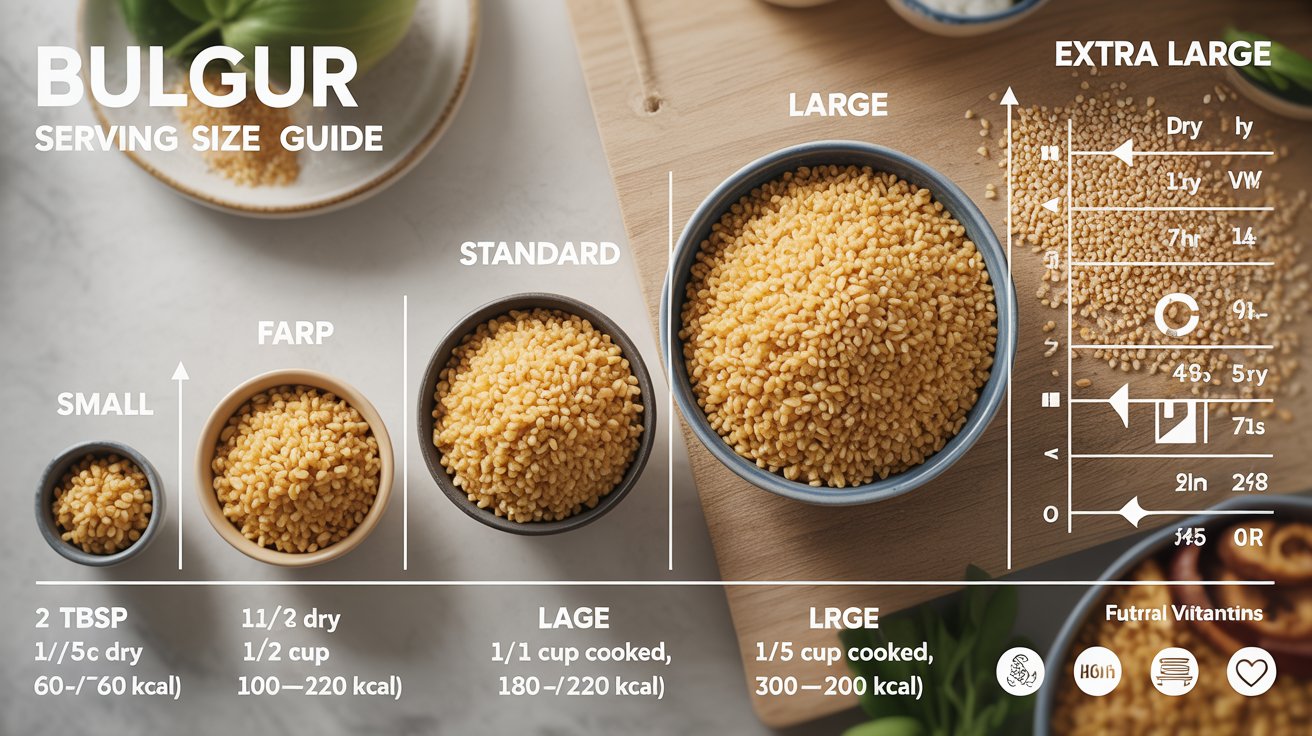
Bulgur Serving Size Chart
| Serving Type | Dry Bulgur | Cooked Bulgur | Calories (Approx.) |
|---|---|---|---|
| Small Serving | 2 tbsp | 1/3 cup | 60–80 kcal |
| Standard Serving | 1/4 cup | 1/2 cup | 100–120 kcal |
| Large Serving | 1/2 cup | 1 cup | 180–220 kcal |
| Extra Large | 3/4 cup+ | 1.5 cups+ | 300+ kcal |
A standard serving is about 1/2 cup cooked bulgur.
Bulgur Cooking Conversion
Bulgur absorbs water and expands during cooking:
Conversion Chart
| Dry Bulgur | Cooked Bulgur |
|---|---|
| 1/4 cup | ~1/2–3/4 cup |
| 1/2 cup | ~1–1.5 cups |
| 1 cup | ~2–3 cups |
This helps you measure portions accurately.
Choosing The Right Bulgur Serving Size
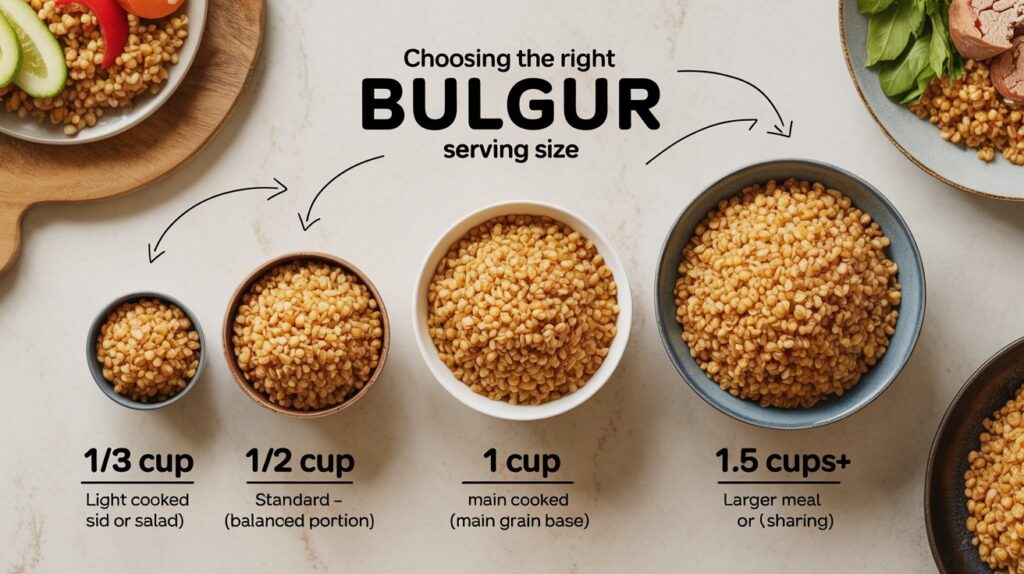
The ideal portion depends on your meal:
- 1/3 cup cooked: Light side or salad
- 1/2 cup cooked (standard): Balanced portion
- 1 cup cooked: Main grain base
- 1.5 cups+: Larger meals or sharing
Pair bulgur with protein and vegetables for a complete dish.
Bulgur Serving Size And Nutrition
Bulgur is highly nutritious:
- High in fiber
- Provides complex carbohydrates
- Contains vitamins and minerals
- Supports digestion and heart health
For example:
- 1/2 cup cooked bulgur: ~100–120 calories
It’s a great option for healthy, balanced eating.
Tips For Measuring Bulgur Portions
- Measure dry bulgur before cooking
- Use a measuring cup for cooked portions
- Cook in batches for meal prep
- Avoid oversized servings in bowls
- Balance with other food groups
Consistency helps maintain portion control.
Common Mistakes When Eating Bulgur
- Over-serving: Easy to cook too much
- Ignoring portion size: Healthy but still calorie-containing
- Not balancing meals: Missing protein or vegetables
- Using large bowls: Leads to overeating
Being mindful helps you get the most benefit.
How Serving Size Affects Meals
The amount of bulgur you eat can change your meal balance. Too much can make meals heavy, while the right portion provides steady energy and keeps you satisfied.
A balanced plate includes:
- Bulgur (grain portion)
- Protein
- Vegetables
Bulgur In Different Diets
Serving sizes may vary depending on your goals:
- Weight loss: 1/3–1/2 cup cooked
- Balanced diet: 1/2 cup
- Active lifestyle: 1 cup
- High-fiber diet: Standard serving works well
Adjust portions based on your needs.
Frequently Asked Questions
What Is A Standard Serving Size Of Bulgur?
About 1/2 cup cooked or 1/4 cup dry.
Is Bulgur Healthier Than Rice?
It often has more fiber and nutrients.
Can I Eat Bulgur Every Day?
Yes, as part of a balanced diet.
How Much Dry Bulgur Makes One Serving?
About 1/4 cup dry equals one serving cooked.
Is Bulgur Good For Weight Loss?
Yes, due to its fiber and filling nature.
The serving size of bulgur may seem small, but it provides lasting energy and strong nutrition. By understanding proper portions, you can enjoy bulgur in a healthy, balanced, and satisfying way every day.
