
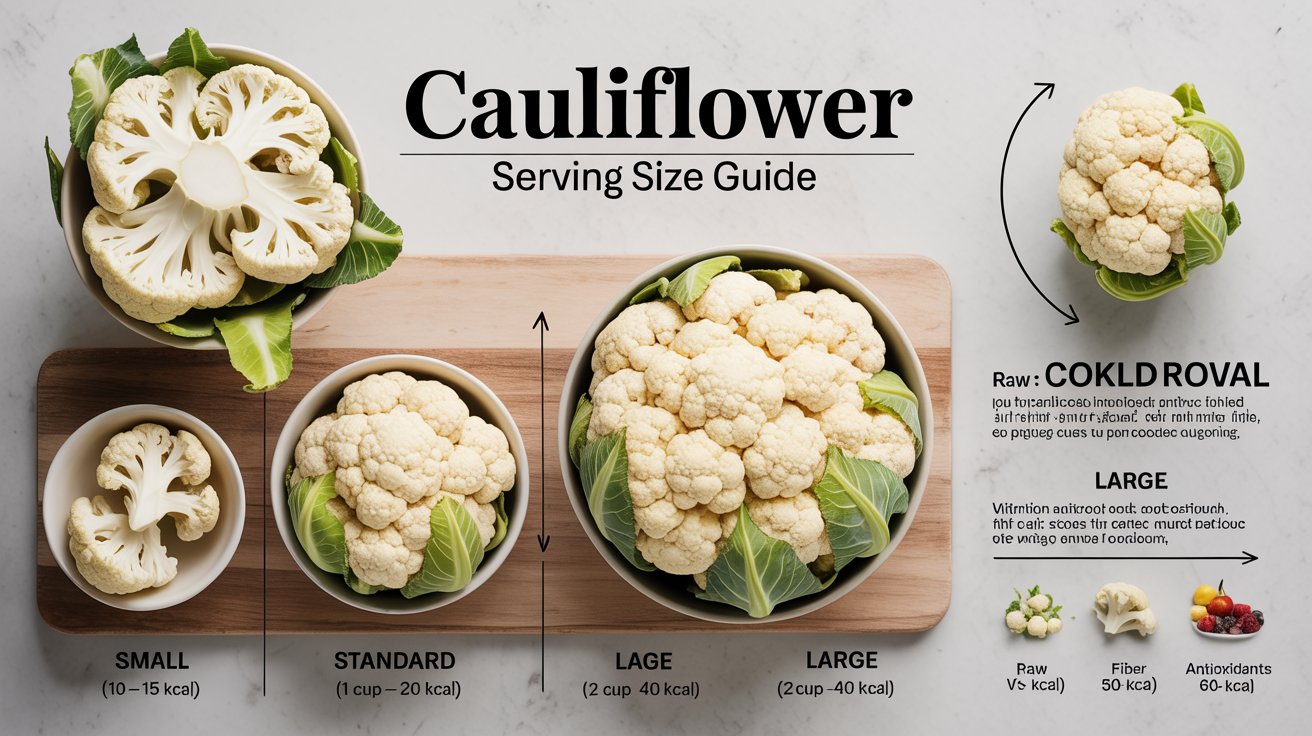
Cauliflower is a versatile, low-calorie vegetable used in everything from curries to rice substitutes and roasted dishes. Because it’s so light and adaptable, it’s easy to eat large amounts without realizing the portion. Understanding the cauliflower serving size helps you balance meals while enjoying its health benefits.
Why Cauliflower Serving Size Matters
Cauliflower is low in calories but high in fiber and nutrients. While generous portions are generally fine, knowing standard serving sizes helps with meal planning and nutrition tracking.
Proper serving sizes help:
- Balance meals with other food groups
- Track fiber and nutrient intake
- Avoid under- or over-serving
- Maintain portion consistency
It’s one of the easiest vegetables to include in larger portions.
Standard Cauliflower Serving Size
Cauliflower is usually measured raw (cups or florets) or cooked.
Cauliflower Serving Size Chart
| Serving Type | Raw Cauliflower | Cooked Cauliflower | Calories (Approx.) |
|---|---|---|---|
| Small Serving | 1/2 cup | 1/2 cup | 10–15 kcal |
| Standard Serving | 1 cup | 1 cup | 20–30 kcal |
| Large Serving | 2 cups | 1.5–2 cups | 40–60 kcal |
| Extra Large | 3+ cups | 2+ cups | 60+ kcal |
A standard serving is about 1 cup of cauliflower (raw or cooked).
Raw vs Cooked Cauliflower Portions
Unlike leafy greens, cauliflower doesn’t shrink as much when cooked:
- 1 cup raw ≈ 1 cup cooked (slight reduction)
This makes it easier to estimate portions.
Choosing The Right Cauliflower Serving Size
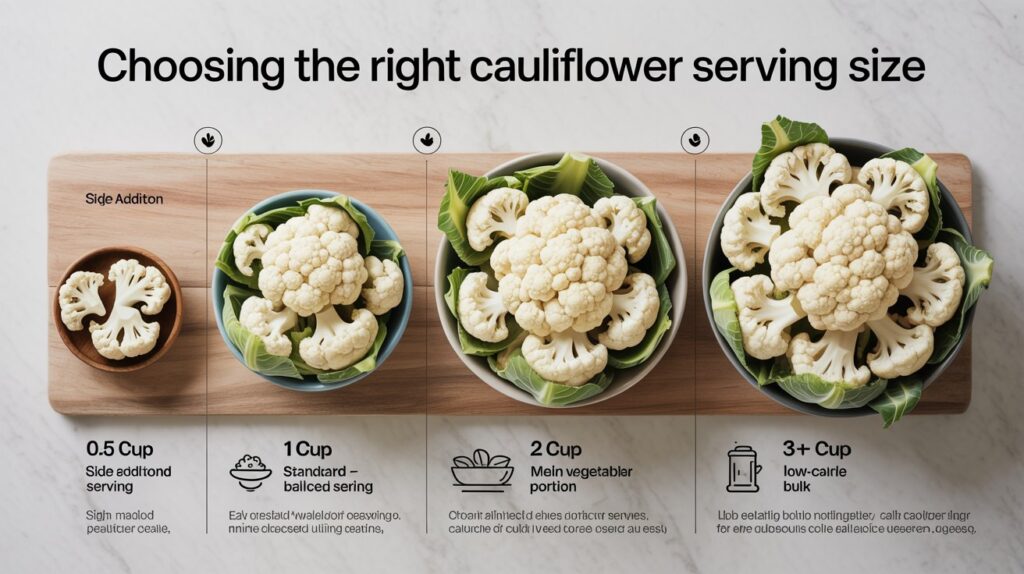
The best portion depends on your meal:
- 1/2 cup: Side addition
- 1 cup (standard): Balanced serving
- 2 cups: Main vegetable portion
- 3+ cups: Low-calorie bulk for meals
Because it’s low in calories, larger servings are usually acceptable.
Cauliflower Serving Size And Nutrition
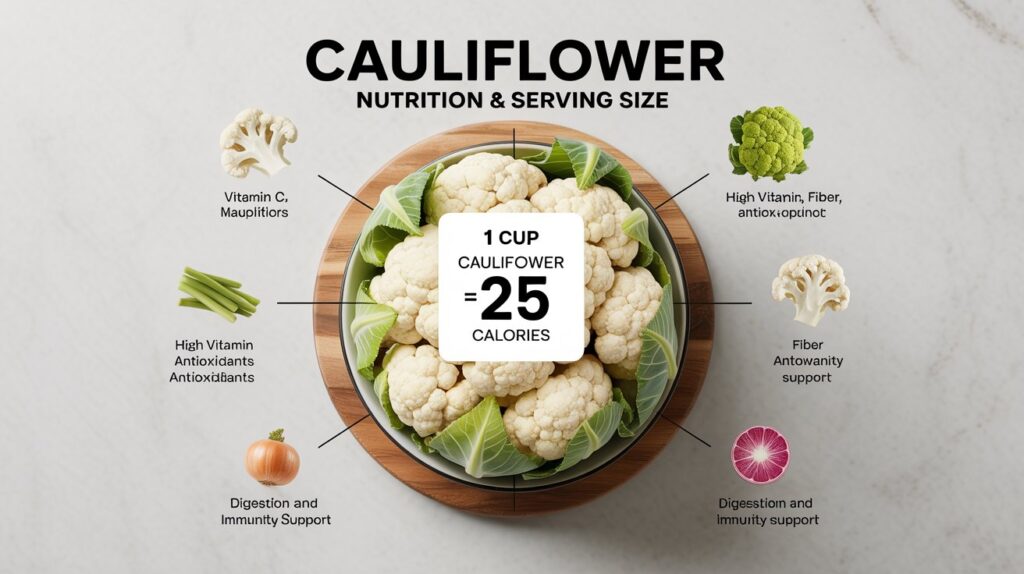
Cauliflower is packed with nutrients:
- High in vitamin C
- Good source of fiber
- Contains antioxidants
- Supports digestion and immunity
For example:
- 1 cup cauliflower: ~25 calories
It’s an excellent choice for healthy eating.
Tips For Measuring Cauliflower Portions
- Use a measuring cup for florets
- Cut evenly sized pieces for consistency
- Roast or steam in batches for meal prep
- Use as a substitute (rice, mash) to control calories
- Combine with other vegetables for variety
Cauliflower is easy to portion and prepare.
Common Mistakes When Eating Cauliflower
- Adding too much oil or sauce: Increases calories
- Overcooking: Reduces texture and nutrients
- Ignoring portion balance: Pair with protein and carbs
- Not seasoning properly: Can taste bland
Proper preparation enhances both taste and nutrition.
How Serving Size Affects Meals
Cauliflower can be used to increase meal volume without adding many calories. Larger portions help you feel full while keeping meals light and healthy.
It’s especially useful for weight management.
Cauliflower In Different Diets
Serving sizes may vary depending on your goals:
- Weight loss: Larger portions (low calorie)
- Balanced diet: 1–2 cups
- Low-carb diets: Often used as a substitute
- Plant-based diet: Important vegetable source
Adjust portions based on your needs.
Frequently Asked Questions
What Is A Standard Serving Size Of Cauliflower?
About 1 cup raw or cooked.
Can I Eat Cauliflower Every Day?
Yes, it’s healthy and low in calories.
Is Cauliflower Good For Weight Loss?
Yes, it’s low in calories and high in fiber.
Does Cauliflower Lose Nutrients When Cooked?
Some nutrients may reduce slightly, but it remains very healthy.
Can I Eat Large Portions Of Cauliflower?
Yes, within a balanced diet.
The serving size of cauliflower is flexible and easy to manage. By understanding proper portions, you can enjoy this nutritious vegetable in a variety of meals while keeping your diet balanced and healthy.
