
Cod is a mild, flaky white fish that’s popular for its lean protein and light flavor. Whether baked, grilled, or pan-seared, understanding the cod serving size helps you build balanced meals while getting the nutritional benefits of seafood.
Why Cod Serving Size Matters
Cod is low in fat and high in protein, making it a healthy choice. Still, portion size matters for balancing calories, protein, and meal planning.
Proper serving sizes help:
- Maintain balanced nutrition
- Support healthy protein intake
- Control calories
- Build satisfying meals
Seafood portions are often larger than needed, especially in restaurants.
Standard Cod Serving Size
Cod is usually measured by weight (ounces/grams) after cooking.
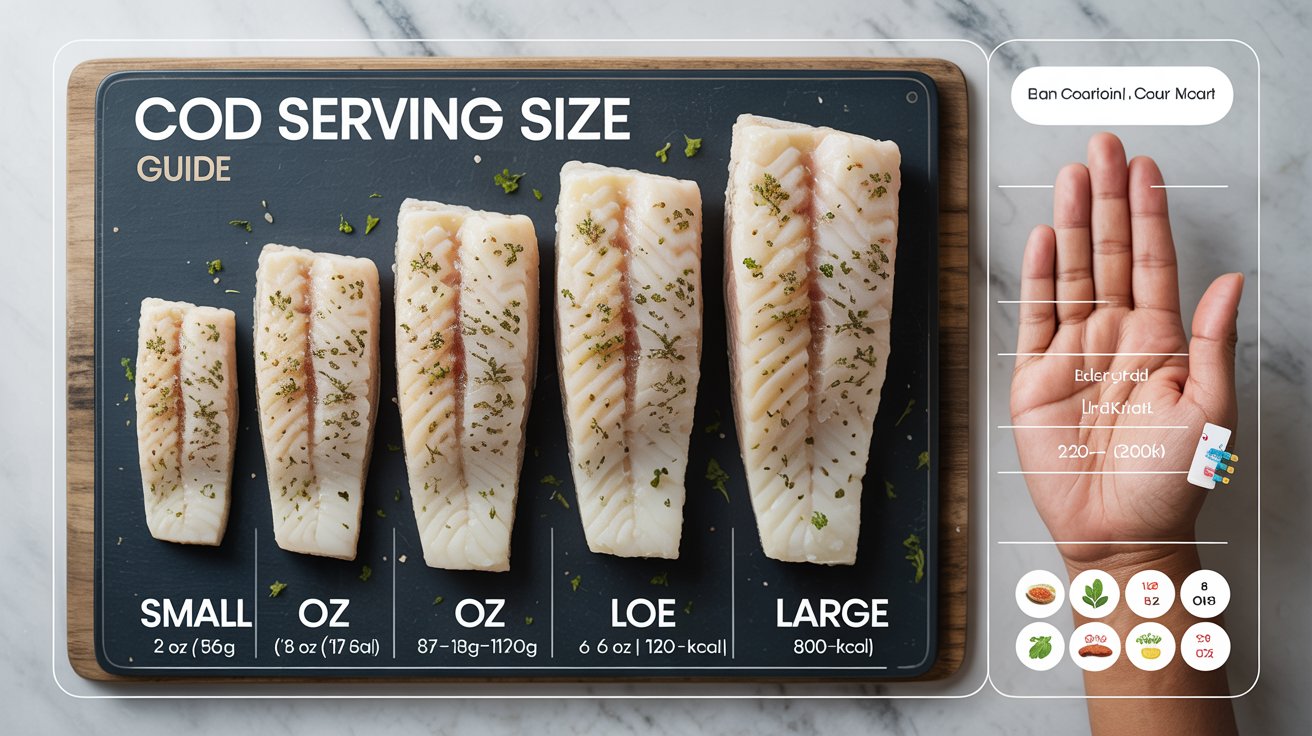
Cod Serving Size Chart
| Serving Type | Weight (Cooked) | Portion Description | Calories (Approx.) |
|---|---|---|---|
| Small Serving | 2 oz (56g) | Light portion | 50–60 kcal |
| Standard Serving | 3–4 oz (85–113g) | Average meal serving | 80–120 kcal |
| Large Serving | 6 oz (170g) | High-protein portion | 150–180 kcal |
| Extra Large | 8 oz+ (225g+) | Restaurant-style serving | 200+ kcal |
A standard serving is about 3–4 oz of cooked cod.
Visual Guide To Cod Portion Size
A standard cod serving is about:
- The size of your palm
- Roughly the size of a deck of cards
This makes portioning easier without a scale.
Choosing The Right Cod Portion
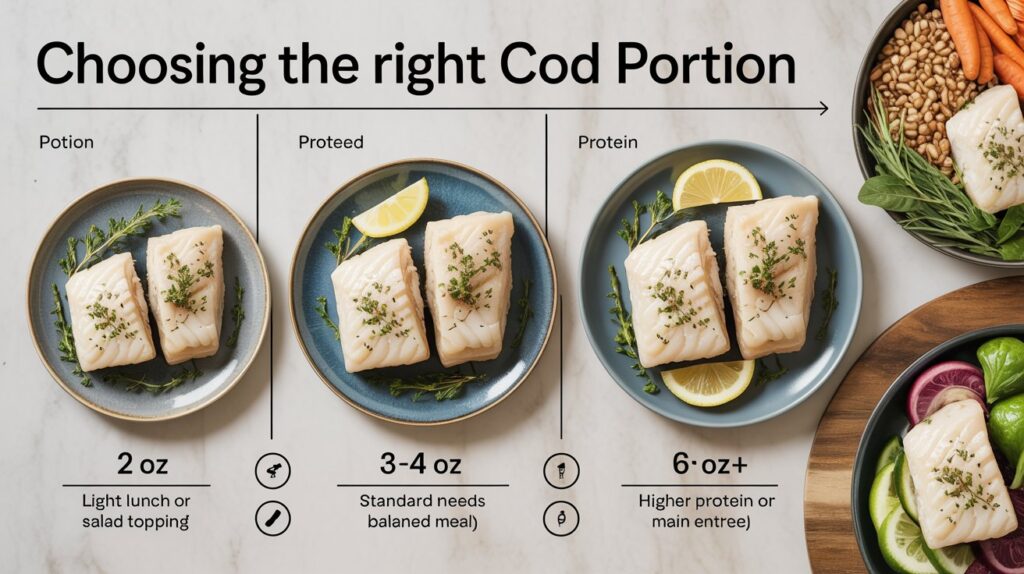
The ideal portion depends on your meal:
- 2 oz: Light lunch or salad topping
- 3–4 oz (standard): Balanced meal
- 6 oz+: Higher protein needs or main entrée
Pair cod with vegetables and grains for a complete meal.
Cod Serving Size And Nutrition
Cod is packed with nutrients:
- High in lean protein
- Low in fat
- Contains vitamin B12 and selenium
- Supports heart and muscle health
For example:
- 4 oz cooked cod: ~90–120 calories, ~20g protein
It’s one of the leanest fish options available.
Tips For Managing Cod Portions
- Use a kitchen scale for accuracy
- Avoid oversized fillets when possible
- Bake or grill instead of frying
- Pair with vegetables and whole grains
- Watch added sauces and butter
Healthy preparation keeps cod light and nutritious.
Common Mistakes When Eating Cod
- Overeating restaurant portions: Often much larger than standard
- Adding heavy sauces: Increases calories quickly
- Frying the fish: Adds extra fat
- Ignoring side portions: Meal calories can rise fast
Being mindful helps maintain balance.
How Serving Size Affects Meals
The amount of cod you eat impacts protein intake and meal balance. A moderate serving provides enough protein without making the meal too heavy.
Balanced portions help create satisfying, healthy meals.
Cod In Different Diets
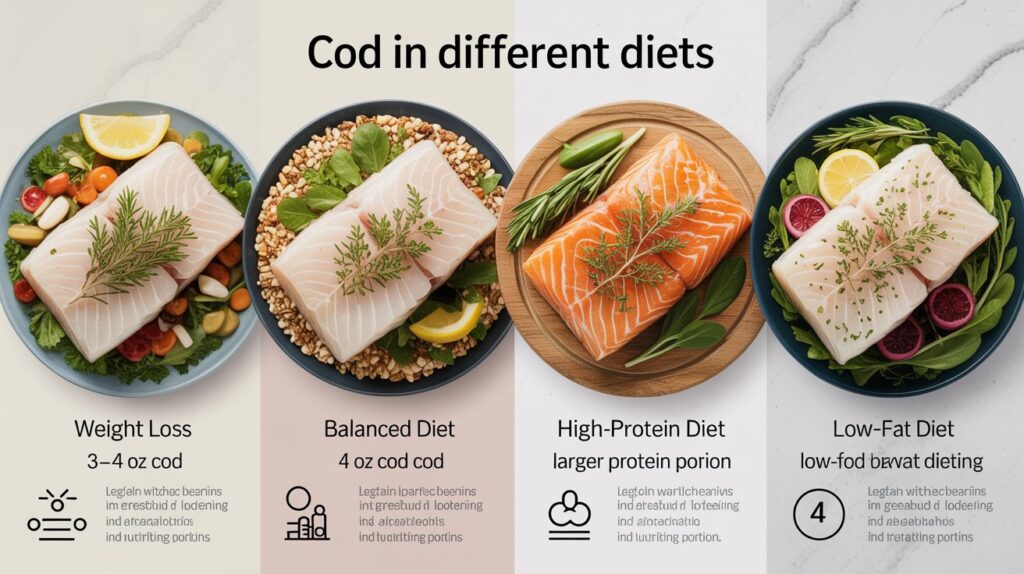
Serving sizes may vary depending on your goals:
- Weight loss: 3–4 oz
- Balanced diet: 4 oz
- High-protein diet: 6 oz
- Low-fat diet: Cod is an excellent choice
Adjust portions based on your needs.
Frequently Asked Questions
What Is A Standard Serving Size Of Cod?
About 3–4 oz cooked cod.
How Much Protein Is In A Serving Of Cod?
Around 20 grams in a 4 oz serving.
Is Cod Good For Weight Loss?
Yes, it’s low in calories and high in protein.
Can I Eat Cod Every Day?
Yes, in moderation as part of a balanced diet.
Is Baked Cod Healthier Than Fried Cod?
Yes, baking keeps calories and fat lower.
The cod serving size may seem smaller than restaurant portions, but it provides excellent nutrition and satisfying protein. By understanding proper portions, you can enjoy cod as part of a healthy, balanced, and delicious diet.
