
Herbs can completely transform a dish. A simple tomato salad becomes brighter with basil, roasted potatoes become more aromatic with rosemary, and grilled fish can taste fresher with dill and lemon. But not every herb works equally well with every ingredient. Understanding the herb pairing chart makes it easier to choose the right herbs for vegetables, meats, seafood, grains, sauces, soups, and other foods. Let’s explore popular herbs, their flavor profiles, and the ingredients they pair with best.
Why Herb Pairing Matters
Herbs add aroma, freshness, depth, and complexity to food without needing to dominate the main ingredients. Some herbs have delicate flavors, while others are bold and earthy.
Fresh herbs are often added toward the end of cooking to preserve their aroma, while sturdier herbs such as rosemary and thyme can withstand longer cooking times.
Choosing the right herb can also help balance a dish. Bright herbs such as parsley and cilantro can freshen rich foods, while earthy herbs such as rosemary and sage work especially well with hearty ingredients.
Standard Herb Pairing Chart
There are many culinary herbs, but several are especially versatile in everyday cooking.
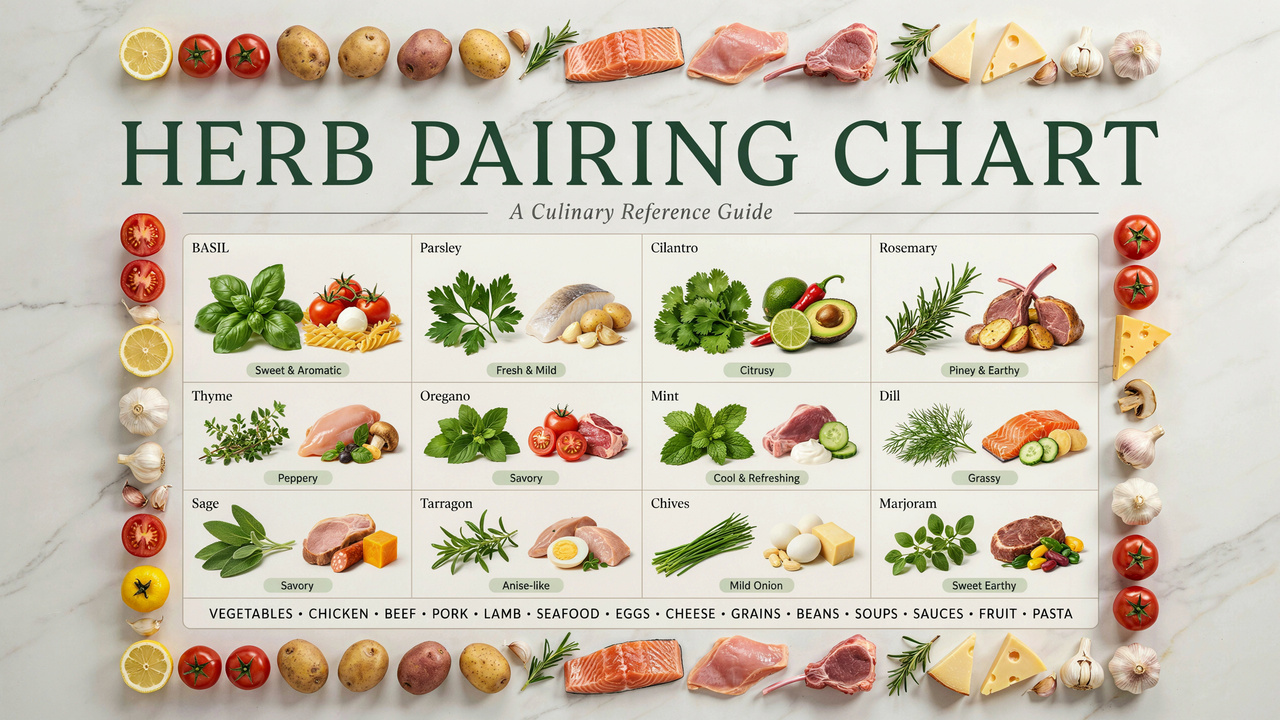
Herb Pairing Chart
| Herb | Flavor Profile | Best Food Pairings | Common Uses |
|---|---|---|---|
| Basil | Sweet, fresh, aromatic | Tomato, mozzarella, pasta | Sauces, salads |
| Parsley | Fresh, mild, slightly peppery | Fish, potatoes, garlic | Garnish, salads |
| Cilantro | Bright, citrusy, herbal | Lime, chili, avocado | Salsas, curries |
| Rosemary | Piney, earthy | Potato, lamb, chicken | Roasting, grilling |
| Thyme | Earthy, minty | Chicken, mushrooms, vegetables | Soups, roasting |
| Oregano | Peppery, earthy | Tomato, chicken, lamb | Sauces, salads |
| Mint | Cool, sweet, refreshing | Lamb, cucumber, yogurt | Salads, sauces |
| Dill | Fresh, grassy | Salmon, cucumber, potato | Seafood, sauces |
| Sage | Earthy, savory | Pork, sausage, pumpkin | Stuffing, butter sauces |
| Tarragon | Sweet, anise-like | Chicken, eggs, fish | Sauces |
| Chives | Mild onion flavor | Eggs, potatoes, cheese | Garnish, salads |
| Marjoram | Sweet, earthy | Meat, vegetables, beans | Soups, stews |
These pairings are flexible, and the best combination can depend on the recipe, cooking method, and amount of herb used.
Choosing The Right Herb
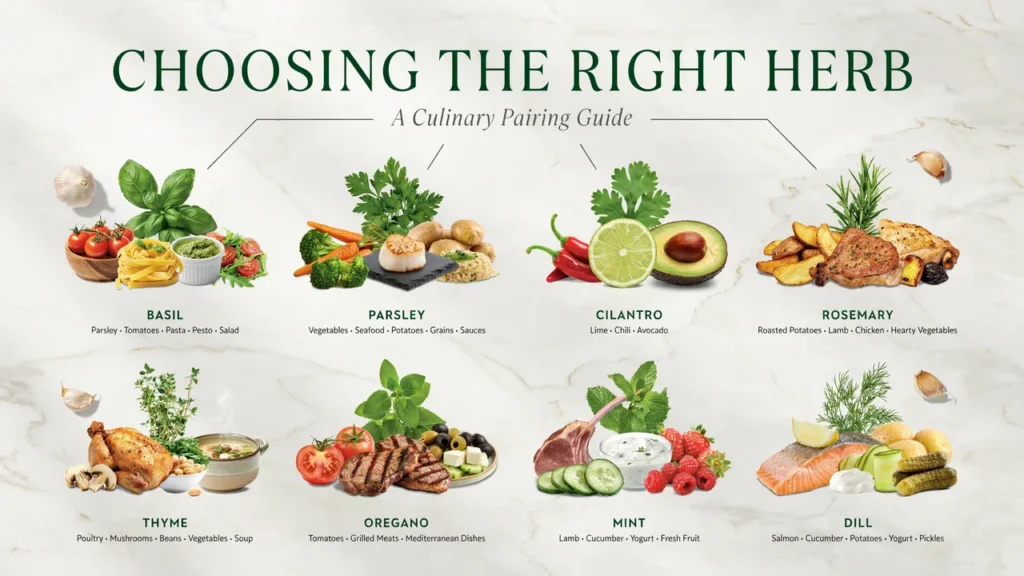
The best herb depends on the food and the flavor you want to create.
Basil: Excellent for fresh dishes, especially tomato-based recipes, pasta, pesto, and salads.
Parsley: One of the most versatile herbs and works with vegetables, seafood, potatoes, grains, and sauces.
Cilantro: Ideal for foods with bright, spicy, and citrusy flavors. It is commonly used with lime, chili, avocado, and many Asian and Latin American dishes.
Rosemary: Strong and aromatic, making it particularly good for roasted potatoes, lamb, chicken, and hearty vegetables.
Thyme: A versatile herb that works well with poultry, mushrooms, beans, vegetables, and soups.
Oregano: Especially useful with tomatoes, grilled meats, Mediterranean dishes, and sauces.
Mint: Adds a refreshing contrast to rich foods and works beautifully with lamb, cucumber, yogurt, and fruit.
Dill: Its fresh flavor makes it particularly good with salmon, cucumber, potatoes, yogurt, and pickles.
Fresh Herb Vs Dried Herb Pairing
Fresh and dried herbs can often be used in the same types of dishes, but their flavor intensity and texture are different.
| Herb Form | Characteristics | Best Use |
|---|---|---|
| Fresh Basil | Bright & aromatic | Salads, pasta, sauces |
| Dried Basil | More concentrated | Sauces & cooked dishes |
| Fresh Oregano | Strong & herbal | Salads, grilled foods |
| Dried Oregano | Concentrated & earthy | Pizza, sauces |
| Fresh Rosemary | Aromatic & piney | Roasting & grilling |
| Dried Rosemary | Strong & concentrated | Roasted dishes |
| Fresh Thyme | Delicate & earthy | Soups, meats |
| Dried Thyme | Concentrated | Stews & sauces |
| Fresh Parsley | Bright & fresh | Garnishes, salads |
| Dried Parsley | Mild | Seasoning & cooked dishes |
A common cooking guideline is that 1 teaspoon of dried herbs can replace about 1 tablespoon of fresh herbs, although the exact conversion depends on the herb and recipe.
Herb Pairing With Vegetables
Herbs are an easy way to make simple vegetables more flavorful.
Vegetable Herb Pairing Chart
| Vegetable | Best Herbs | Flavor Combination |
|---|---|---|
| Tomato | Basil, oregano, parsley | Fresh & savory |
| Potato | Rosemary, thyme, parsley | Earthy & aromatic |
| Carrot | Thyme, parsley, dill | Sweet & herbal |
| Mushroom | Thyme, rosemary, parsley | Earthy & savory |
| Zucchini | Basil, mint, oregano | Fresh & light |
| Eggplant | Basil, oregano, parsley | Rich & herbal |
| Spinach | Parsley, dill, chives | Fresh & savory |
| Peas | Mint, parsley, dill | Sweet & refreshing |
| Green Beans | Dill, parsley, thyme | Fresh & earthy |
| Corn | Cilantro, basil, parsley | Sweet & aromatic |
| Cucumber | Dill, mint, cilantro | Cool & refreshing |
| Bell Pepper | Oregano, basil, parsley | Sweet & savory |
Fresh herbs can be added after cooking, while sturdier herbs can be cooked with the vegetables.
Herb Pairing With Chicken
Chicken has a mild flavor, which makes it suitable for many herbs.
| Herb | Chicken Pairings | Best Cooking Method |
|---|---|---|
| Rosemary | Garlic, lemon | Roasting & grilling |
| Thyme | Lemon, butter | Roasting & sautéing |
| Oregano | Lemon, tomato | Grilling |
| Basil | Tomato, mozzarella | Baking & pasta |
| Sage | Butter, garlic | Roasting |
| Tarragon | Cream, mustard | Sauces |
| Parsley | Lemon, garlic | Grilling & finishing |
| Cilantro | Lime, chili | Grilling & marinades |
Chicken also pairs particularly well with combinations of herbs rather than a single herb.
Herb Pairing With Beef
Beef has a richer flavor, so stronger herbs can work particularly well.
| Herb | Best Pairings With Beef | Common Uses |
|---|---|---|
| Rosemary | Garlic, black pepper | Steak, roasting |
| Thyme | Mushroom, onion | Stews & steak |
| Oregano | Tomato, garlic | Ground beef & sauces |
| Parsley | Garlic, lemon | Sauces & finishing |
| Sage | Butter, onion | Rich dishes |
| Tarragon | Mustard, cream | Sauces |
Herbs should complement the natural richness of beef rather than completely cover it.
Herb Pairing With Pork
Pork works particularly well with earthy, aromatic, and slightly sweet herbs.
| Herb | Best Pairings |
|---|---|
| Sage | Pork, sausage, apple |
| Rosemary | Pork, garlic, lemon |
| Thyme | Pork, mustard, onion |
| Marjoram | Pork, garlic, beans |
| Parsley | Pork, lemon, garlic |
| Oregano | Pork, tomato, garlic |
Sage and pork are a particularly classic combination, especially in sausages and stuffing.
Herb Pairing With Lamb
Lamb has a distinctive flavor that works beautifully with aromatic herbs.
Lamb Herb Pairing Chart
| Herb | Best Pairings |
|---|---|
| Mint | Yogurt, cucumber, lemon |
| Rosemary | Garlic, lemon |
| Thyme | Garlic, vegetables |
| Oregano | Lemon, olive oil |
| Parsley | Garlic, lemon |
| Dill | Yogurt, cucumber |
| Marjoram | Garlic, onion |
Mint can provide a refreshing contrast to the richness of lamb.
Herb Pairing With Seafood
Fresh herbs can make seafood taste brighter without overwhelming its natural flavor.
| Seafood | Best Herbs | Additional Pairings |
|---|---|---|
| Salmon | Dill, parsley | Lemon, cucumber |
| Shrimp | Cilantro, parsley | Garlic, lime |
| Cod | Parsley, thyme | Lemon, butter |
| Tuna | Cilantro, basil | Sesame, citrus |
| Crab | Parsley, dill | Lemon, butter |
| Lobster | Tarragon, parsley | Butter, lemon |
| White Fish | Dill, parsley | Lemon, herbs |
| Scallops | Chives, thyme | Butter, lemon |
Dill, parsley, and chives are especially versatile for delicate seafood dishes.
Herb Pairing With Eggs
Eggs have a mild, rich flavor that allows many herbs to stand out.
| Herb | Egg Pairings | Common Uses |
|---|---|---|
| Chives | Cheese, potato | Omelets |
| Parsley | Garlic, vegetables | Scrambled eggs |
| Dill | Cheese, spinach | Omelets |
| Basil | Tomato, mozzarella | Frittatas |
| Tarragon | Cream, mushrooms | Omelets |
| Thyme | Mushroom, cheese | Baked eggs |
| Cilantro | Chili, avocado | Breakfast dishes |
| Sage | Butter, sausage | Egg breakfasts |
Fresh herbs can be particularly effective in omelets, frittatas, scrambled eggs, and egg salads.
Herb Pairing With Cheese
Cheese and herbs can create excellent combinations for appetizers, salads, pasta, and sandwiches.
| Cheese | Best Herbs |
|---|---|
| Mozzarella | Basil, oregano |
| Feta | Oregano, mint, parsley |
| Goat Cheese | Thyme, rosemary, basil |
| Cheddar | Chives, parsley, thyme |
| Parmesan | Basil, parsley, oregano |
| Cream Cheese | Chives, dill, parsley |
| Ricotta | Basil, mint, parsley |
| Halloumi | Mint, oregano, thyme |
The saltiness and richness of cheese often work well with fresh, aromatic herbs.
Herb Pairing With Grains
Herbs can make simple grains much more flavorful.
| Grain | Best Herbs | Common Pairings |
|---|---|---|
| Rice | Parsley, cilantro, dill | Vegetables, chicken |
| Couscous | Mint, parsley, cilantro | Vegetables, chickpeas |
| Bulgur | Parsley, mint | Tomato, cucumber |
| Quinoa | Parsley, cilantro, mint | Vegetables, lemon |
| Farro | Rosemary, thyme | Mushrooms, vegetables |
| Barley | Thyme, parsley | Soup, mushrooms |
| Pasta | Basil, oregano, parsley | Tomato, cheese |
Fresh herbs are particularly useful in grain salads because they add brightness and aroma.
Herb Pairing With Beans And Legumes
Herbs can add freshness to hearty beans and legumes.
| Legume | Best Herbs | Common Pairings |
|---|---|---|
| Chickpeas | Parsley, cilantro, mint | Lemon, tahini |
| Lentils | Thyme, parsley, rosemary | Carrot, onion |
| Black Beans | Cilantro, oregano | Lime, chili |
| White Beans | Rosemary, sage, parsley | Garlic, tomato |
| Green Peas | Mint, dill, parsley | Butter, lemon |
| Kidney Beans | Cilantro, oregano | Tomato, chili |
Earthy legumes often benefit from bright herbs and acidic ingredients such as lemon or lime.
Herb Pairing With Soups And Stews
Herbs can be used during cooking or added at the end for a fresh finish.
Soup Herb Pairing Chart
| Soup/Stew | Best Herbs |
|---|---|
| Tomato Soup | Basil, oregano |
| Chicken Soup | Thyme, parsley, rosemary |
| Lentil Soup | Thyme, parsley, cilantro |
| Potato Soup | Chives, thyme, parsley |
| Mushroom Soup | Thyme, parsley |
| Vegetable Soup | Parsley, thyme, oregano |
| Beef Stew | Thyme, rosemary |
| Bean Soup | Rosemary, sage, parsley |
| Seafood Soup | Dill, parsley, thyme |
Sturdy herbs can simmer with the soup, while delicate herbs are often best added just before serving.
Herb Pairing With Sauces
Different herbs are closely associated with particular sauces.
| Sauce | Best Herbs | Main Ingredients |
|---|---|---|
| Pesto | Basil | Basil, nuts, cheese |
| Tomato Sauce | Oregano, basil | Tomato, garlic |
| Cream Sauce | Parsley, thyme | Cream, butter |
| Salsa | Cilantro | Tomato, lime, chili |
| Tzatziki | Dill, mint | Yogurt, cucumber |
| Chimichurri | Parsley, cilantro | Herbs, garlic, vinegar |
| Herb Butter | Parsley, chives, thyme | Butter, herbs |
Herbs can be blended into sauces or simply used as a finishing ingredient.
Herb Pairing With Fruits
Herbs aren’t limited to savory food. Many can be paired beautifully with fruit.
| Fruit | Best Herbs | Flavor Effect |
|---|---|---|
| Strawberry | Basil, mint | Sweet & fresh |
| Watermelon | Mint, basil | Cool & refreshing |
| Peach | Basil, thyme | Sweet & aromatic |
| Apple | Mint, rosemary | Fresh & earthy |
| Pineapple | Mint, cilantro | Tropical & bright |
| Mango | Cilantro, mint | Sweet & citrusy |
| Raspberry | Mint, basil | Fruity & fresh |
| Lemon | Thyme, rosemary | Citrus & aromatic |
| Orange | Mint, basil | Bright & refreshing |
| Blueberry | Mint, basil | Sweet & herbal |
Fruit and herbs work particularly well in salads, drinks, desserts, and summer dishes.
Herb Pairing With Pasta
Pasta is one of the easiest foods to pair with herbs.
| Pasta Dish | Best Herbs |
|---|---|
| Tomato Pasta | Basil, oregano |
| Pesto Pasta | Basil |
| Mushroom Pasta | Thyme, parsley |
| Seafood Pasta | Parsley, dill, basil |
| Creamy Pasta | Parsley, thyme |
| Lemon Pasta | Parsley, basil |
| Sausage Pasta | Sage, oregano |
| Vegetable Pasta | Basil, parsley, oregano |
The herbs should complement the sauce rather than compete with it.
Herb Pairing By Flavor Profile
Another useful way to choose herbs is by their overall flavor character.
| Herb | Flavor Character | Works Well With |
|---|---|---|
| Basil | Sweet & aromatic | Tomato, cheese |
| Mint | Cool & refreshing | Yogurt, fruit |
| Rosemary | Strong & piney | Meat, potatoes |
| Thyme | Earthy & subtle | Chicken, mushrooms |
| Oregano | Peppery & earthy | Tomato, meat |
| Dill | Fresh & grassy | Fish, cucumber |
| Parsley | Clean & fresh | Almost everything |
| Cilantro | Citrus-like & herbal | Chili, lime |
| Sage | Earthy & savory | Pork, butter |
| Tarragon | Sweet & anise-like | Chicken, eggs |
| Chives | Mild onion | Eggs, cheese |
| Marjoram | Sweet & earthy | Meat, beans |
Understanding these flavor profiles makes it easier to experiment with unfamiliar herbs.
Fresh Herbs For Salads
Fresh herbs can turn a basic salad into a much more flavorful dish.
Basil: Tomato, mozzarella, olive oil.
Mint: Cucumber, watermelon, feta.
Parsley: Bulgur, tomato, lemon.
Cilantro: Avocado, corn, lime.
Dill: Cucumber, yogurt, potato.
Chives: Eggs, potato, cheese.
The key is to use enough herbs to provide aroma without overwhelming the vegetables.
Herbs For Roasting
Some herbs are especially suitable for long cooking and high-heat roasting.
| Food | Best Herbs |
|---|---|
| Potatoes | Rosemary, thyme |
| Chicken | Rosemary, thyme, sage |
| Lamb | Rosemary, oregano |
| Pork | Sage, rosemary, thyme |
| Carrots | Thyme, rosemary |
| Pumpkin | Sage, thyme |
| Mushrooms | Thyme, rosemary |
| Root Vegetables | Rosemary, thyme |
Robust herbs such as rosemary and thyme can tolerate longer cooking times better than delicate herbs such as basil or cilantro.
Tips For Using Herbs
Add delicate herbs late: Basil, parsley, cilantro, and dill often retain more freshness when added near the end.
Use sturdy herbs during cooking: Rosemary, thyme, and sage can handle longer cooking.
Don’t use too much: Strong herbs can easily overpower delicate foods.
Combine complementary herbs: Parsley and dill, basil and oregano, or rosemary and thyme can work well together.
Consider acidity: Lemon or vinegar can make fresh herbs taste brighter.
Use stems wisely: Some herb stems are tender and edible, while tougher stems are better removed before serving.
Common Mistakes When Pairing Herbs
Using strong herbs with delicate foods: Rosemary can overpower delicate fish if used too heavily.
Adding delicate herbs too early: Long cooking can reduce the fresh character of basil, cilantro, and parsley.
Using too many herbs: A dish can become muddled when several strong herbs are combined.
Ignoring the main ingredient: The herb should support the food rather than completely hide its natural flavor.
Confusing fresh and dried quantities: Dried herbs are generally more concentrated than fresh herbs.
Forgetting texture: Large pieces of woody herbs can be unpleasant to eat, so tough stems should be removed.
Classic Herb Combinations
Some herb combinations are especially useful in everyday cooking.
Herb Combination Chart
| Herb Combination | Best Foods |
|---|---|
| Basil + Oregano | Tomato, pizza, pasta |
| Rosemary + Thyme | Potatoes, chicken, vegetables |
| Parsley + Dill | Fish, salads, yogurt |
| Mint + Parsley | Lamb, grains, salads |
| Cilantro + Mint | Curries, salads, grilled foods |
| Sage + Thyme | Pork, stuffing, roasted vegetables |
| Basil + Parsley | Pasta, salads, vegetables |
| Oregano + Thyme | Chicken, vegetables, tomato sauces |
Using two complementary herbs can create more depth than relying on a single herb.
The History Behind Herb Pairing
Herbs have been used in cooking for thousands of years. Different regions developed their own combinations based on local plants, climate, agriculture, and culinary traditions.
Mediterranean cooking commonly features basil, oregano, rosemary, thyme, parsley, and mint. South Asian cuisines use herbs such as cilantro and mint extensively. French cooking developed classic combinations such as the herb blend known as fines herbes, while other culinary traditions have their own distinctive herb mixtures.
Modern cooking continues to combine traditional pairings with new ingredients and techniques.
Frequently Asked Questions
What Herbs Pair Well Together?
Popular combinations include basil and oregano, rosemary and thyme, parsley and dill, mint and parsley, and sage and thyme.
What Herbs Go Best With Chicken?
Chicken pairs particularly well with rosemary, thyme, oregano, basil, sage, parsley, and tarragon.
What Herbs Go Best With Fish?
Popular choices include dill, parsley, thyme, basil, chives, and tarragon, especially when combined with lemon.
What Herbs Go Best With Potatoes?
Rosemary, thyme, parsley, dill, chives, and sage all pair well with potatoes.
What Herbs Go Well With Tomatoes?
Basil and oregano are classic choices, while parsley, thyme, and rosemary can also work well.
What Herbs Pair With Lamb?
Lamb is commonly paired with mint, rosemary, thyme, oregano, parsley, and marjoram.
What Herbs Pair With Eggs?
Eggs work well with chives, parsley, dill, basil, tarragon, thyme, and cilantro.
Should Fresh Herbs Be Added Before Or After Cooking?
It depends on the herb. Delicate herbs such as basil, parsley, cilantro, and dill are often added near the end, while sturdier herbs such as rosemary, thyme, and sage can be cooked for longer periods.
How Much Dried Herb Replaces Fresh Herb?
A common guideline is about 1 teaspoon of dried herbs for every 1 tablespoon of fresh herbs, although the ideal amount depends on the herb and recipe.
Herbs may be small, but they can make a huge difference in the flavor of a meal. From basil with tomatoes and rosemary with potatoes to dill with salmon and mint with lamb, classic herb pairings are based on complementary flavors, aromas, and textures. Understanding the herb pairing chart gives you an easy reference for choosing the right herb for almost any dish and makes experimenting in the kitchen much easier.
