
Lasagna is a rich and comforting dish layered with pasta, cheese, sauce, and meat or vegetables. Because it’s hearty and filling, portion sizes can quickly become larger than needed. Understanding the lasagna serving size helps you enjoy this classic meal while keeping portions balanced.
Why Lasagna Serving Size Matters
Lasagna is calorie-dense due to pasta, cheese, and sauce. Proper portions help you:
- Control calorie intake
- Balance carbohydrates and protein
- Avoid overeating heavy meals
- Plan meals more accurately
Restaurant and homemade portions are often much larger than standard servings.
Standard Lasagna Serving Size
Lasagna is usually measured by piece size or weight.
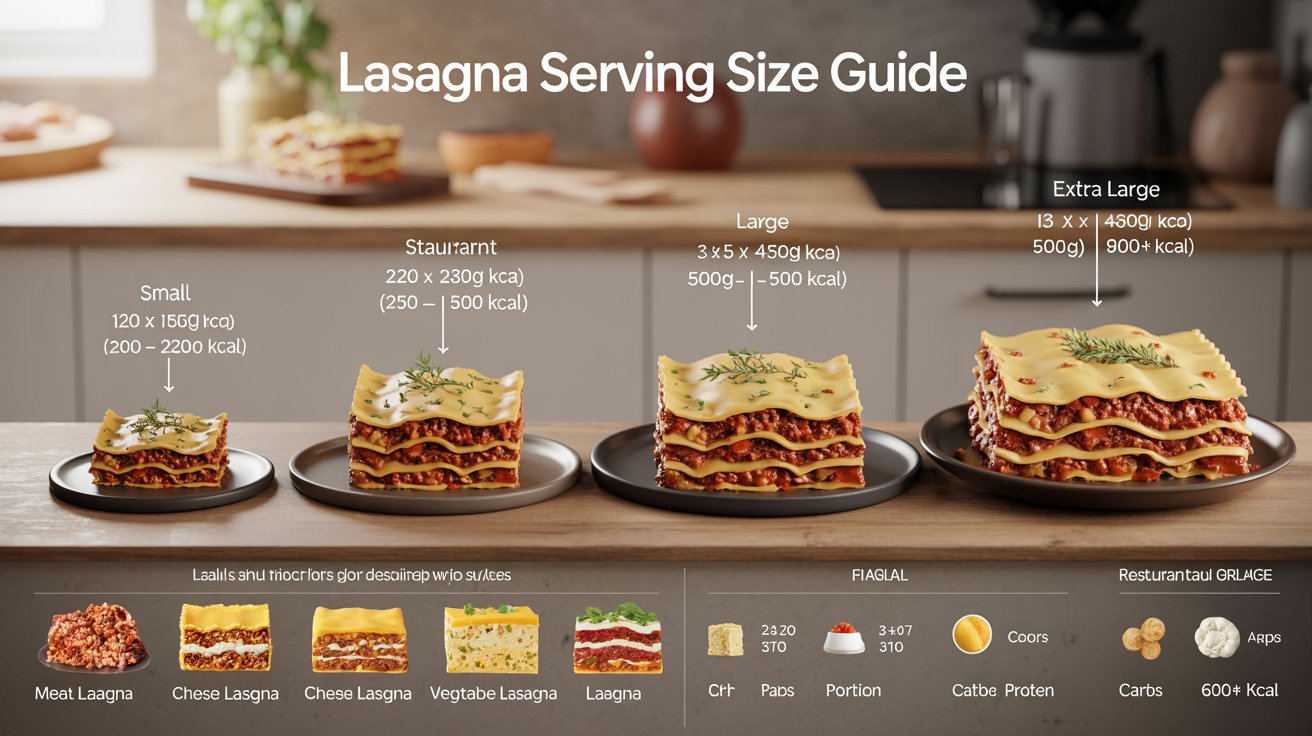
Lasagna Serving Size Chart
| Serving Type | Portion Size | Weight (Approx.) | Calories (Approx.) |
|---|---|---|---|
| Small Serving | 2 x 2 inch piece | 120–150g | 180–250 kcal |
| Standard Serving | 3 x 3 inch piece | 220–280g | 350–500 kcal |
| Large Serving | 4 x 4 inch piece | 350–450g | 600–800 kcal |
| Extra Large | Restaurant-style portion | 500g+ | 900+ kcal |
A standard serving is about a 3 x 3 inch square of lasagna.
Lasagna Serving Size By Type
Different styles of lasagna vary in calories:
Lasagna Type Comparison
| Lasagna Type | Calories (Standard Serving) | Notes |
|---|---|---|
| Meat Lasagna | 400–500 kcal | Higher protein and fat |
| Cheese Lasagna | 350–450 kcal | Rich in dairy |
| Vegetable Lasagna | 250–400 kcal | Often lighter |
| White Sauce Lasagna | 450–600 kcal | Creamier and heavier |
Ingredients and cheese amount make a big difference.
Choosing The Right Lasagna Portion
The ideal portion depends on your meal:
- Small serving: Light lunch or side portion
- Standard serving: Balanced dinner portion
- Large serving: Bigger appetite or special occasions
Pair lasagna with salad or vegetables instead of extra bread for balance.
Lasagna Serving Size And Nutrition
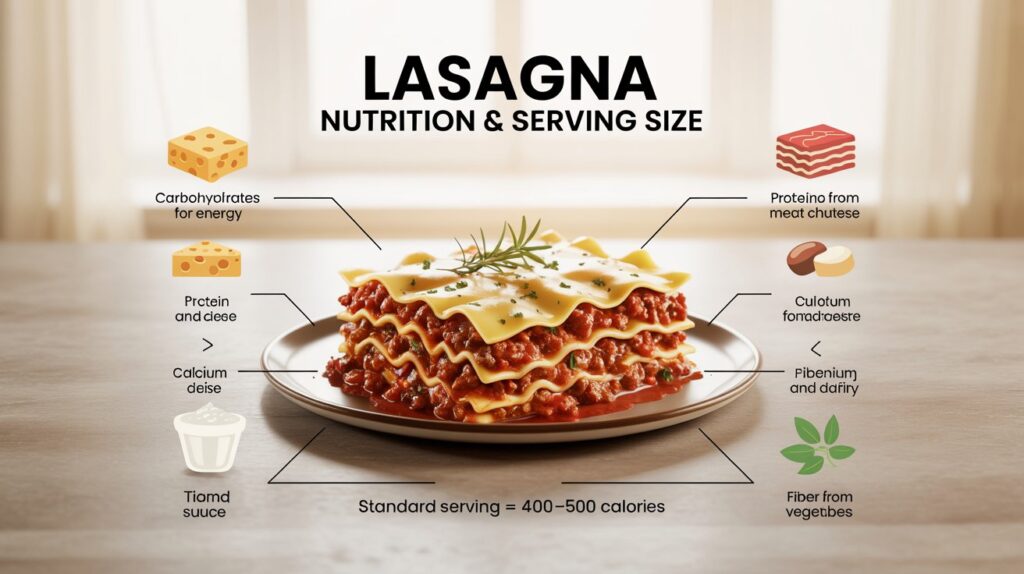
Lasagna provides:
- Carbohydrates for energy
- Protein from meat and cheese
- Calcium from dairy
- Fiber (if vegetables are included)
For example:
- Standard meat lasagna serving: ~400–500 calories
It’s satisfying but best enjoyed in moderate portions.
Tips For Managing Lasagna Portions
- Cut equal-sized squares for consistency
- Use smaller plates to control portions
- Pair with vegetables or salad
- Avoid oversized second servings
- Choose lighter recipes when possible
Balanced portions make the meal more enjoyable.
Common Mistakes When Eating Lasagna
- Serving oversized slices: Easy to exceed calories
- Adding garlic bread and heavy sides: Increases intake quickly
- Ignoring cheese and sauce calories
- Restaurant portions: Often much larger than standard
Being mindful helps maintain balance.
How Serving Size Affects Meals
The amount of lasagna you eat affects both fullness and calorie intake. Moderate portions provide comfort and satisfaction, while large portions can feel overly heavy.
Balanced servings help create healthier meals.
Lasagna In Different Diets
Serving sizes may vary depending on your goals:
- Weight loss: Small to standard serving
- Balanced diet: Standard serving
- High-protein diet: Meat-based lasagna with vegetables
- Lower-carb diet: Vegetable lasagna options
Adjust portions based on your needs.
Frequently Asked Questions
What Is A Standard Serving Size Of Lasagna?
About a 3 x 3 inch piece.
How Many Calories Are In Lasagna?
Typically 350–500 calories per standard serving.
Is Lasagna Healthy?
It can be part of a balanced diet in moderation.
Why Are Restaurant Portions So Large?
Restaurants often serve double-sized portions.
How Can I Make Lasagna Healthier?
Use lean meat, more vegetables, and moderate cheese.
The lasagna serving size may be smaller than many people expect, but it’s usually enough to create a satisfying meal. By understanding proper portions, you can enjoy lasagna while keeping your meals balanced and comfortable.
