
Macaroni is one of the most popular pasta types—used in everything from classic macaroni and cheese to pasta salads and baked dishes. But because pasta expands during cooking, it’s easy to prepare and eat more than intended. Understanding the macaroni serving size helps you keep meals balanced and satisfying.
Why Macaroni Serving Size Matters
Macaroni is a carbohydrate-rich food that provides energy, but portion size plays a major role in calorie intake.
Proper serving sizes help:
- Control calories and carbs
- Balance meals with protein and vegetables
- Prevent overeating
- Improve meal planning
Restaurant and homemade portions are often much larger than standard recommendations.
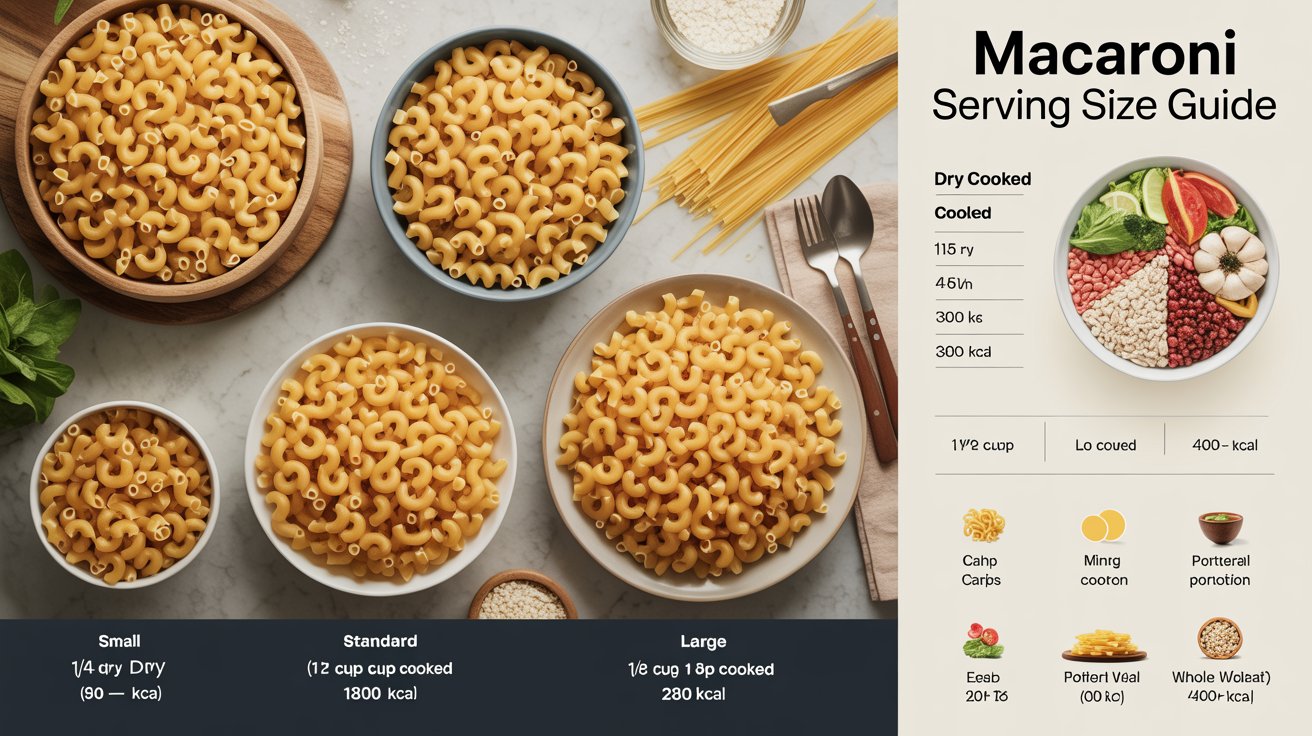
Standard Macaroni Serving Size
Macaroni is measured dry (before cooking) or cooked.
Macaroni Serving Size Chart
| Serving Type | Dry Macaroni | Cooked Macaroni | Calories (Approx.) |
|---|---|---|---|
| Small Serving | 1/4 cup | 1/2 cup | 90–110 kcal |
| Standard Serving | 1/2 cup | 1 cup | 180–220 kcal |
| Large Serving | 3/4 cup | 1.5 cups | 280–330 kcal |
| Extra Large | 1 cup+ | 2+ cups | 400+ kcal |
A standard serving is about 1/2 cup dry macaroni, which becomes about 1 cup cooked.
Macaroni Cooking Conversion
Macaroni expands significantly during cooking.
Conversion Chart
| Dry Macaroni | Cooked Macaroni |
|---|---|
| 1/4 cup | ~1/2 cup |
| 1/2 cup | ~1 cup |
| 1 cup | ~2 cups |
This helps you estimate portions more accurately.
Choosing The Right Macaroni Portion
The ideal portion depends on your meal:
- 1/2 cup cooked: Side dish
- 1 cup cooked (standard): Balanced serving
- 1.5–2 cups: Main pasta-heavy meal
Pair macaroni with vegetables and protein for better balance.
Macaroni Serving Size And Nutrition
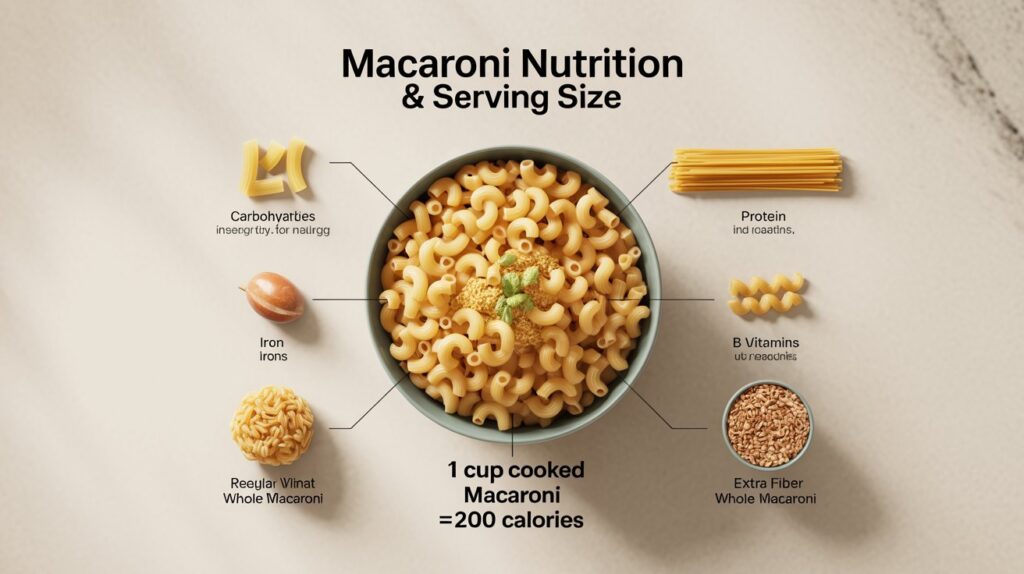
Macaroni provides:
- Carbohydrates for energy
- Some protein
- Iron and B vitamins (fortified pasta)
For example:
- 1 cup cooked macaroni: ~200 calories
Whole wheat macaroni offers more fiber and nutrients.
Tips For Managing Macaroni Portions
- Measure dry pasta before cooking
- Use smaller bowls or plates
- Add vegetables to increase volume
- Avoid oversized cheese sauces
- Choose whole grain pasta when possible
Balanced portions make pasta meals healthier.
Common Mistakes When Eating Macaroni
- Cooking too much pasta: Easy to overeat leftovers
- Ignoring sauce calories: Cheese and cream add up quickly
- Oversized restaurant portions
- Not balancing with protein or vegetables
Being mindful improves meal quality.
How Serving Size Affects Meals
The amount of macaroni you eat affects both fullness and calorie intake. Moderate portions provide satisfying energy, while oversized servings can feel heavy and calorie-dense.
Balanced servings help maintain healthier meals.
Macaroni In Different Diets
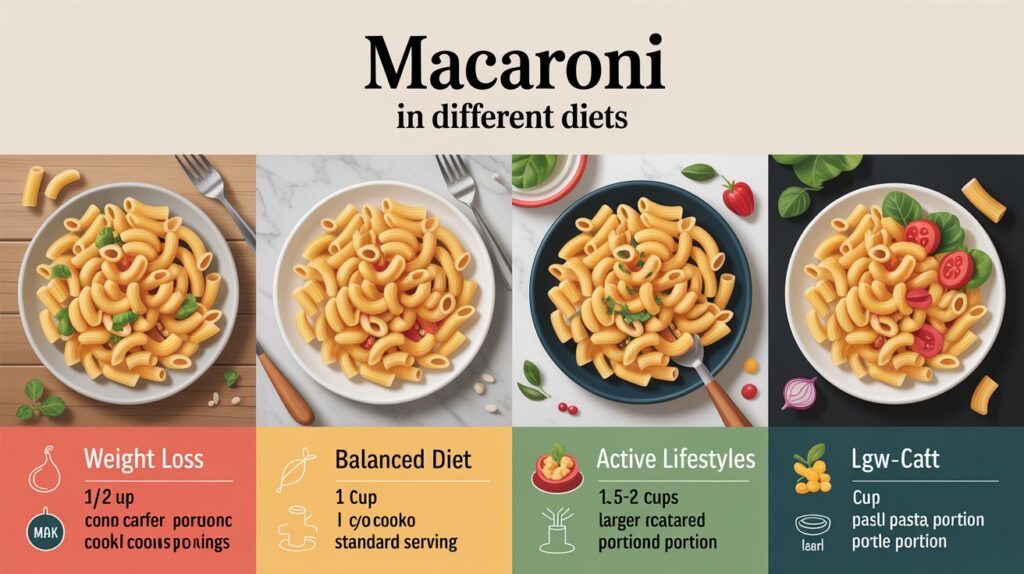
Serving sizes may vary depending on your goals:
- Weight loss: 1/2–1 cup cooked
- Balanced diet: 1 cup cooked
- Active lifestyle: 1.5–2 cups
- Low-carb diet: Smaller portions or alternatives
Adjust portions based on your needs.
Frequently Asked Questions
What Is A Standard Serving Size Of Macaroni?
About 1/2 cup dry or 1 cup cooked.
How Many Calories Are In One Cup Of Macaroni?
Around 180–220 calories, depending on the type.
Does Pasta Double In Size When Cooked?
Yes, macaroni usually doubles in volume.
Is Whole Wheat Macaroni Better?
It contains more fiber and nutrients.
How Can I Make Macaroni Healthier?
Add vegetables, lean protein, and lighter sauces.
The macaroni serving size may be smaller than typical restaurant portions, but it’s usually enough for a balanced meal. By understanding proper portions, you can enjoy macaroni while keeping your meals healthier and more satisfying.
