
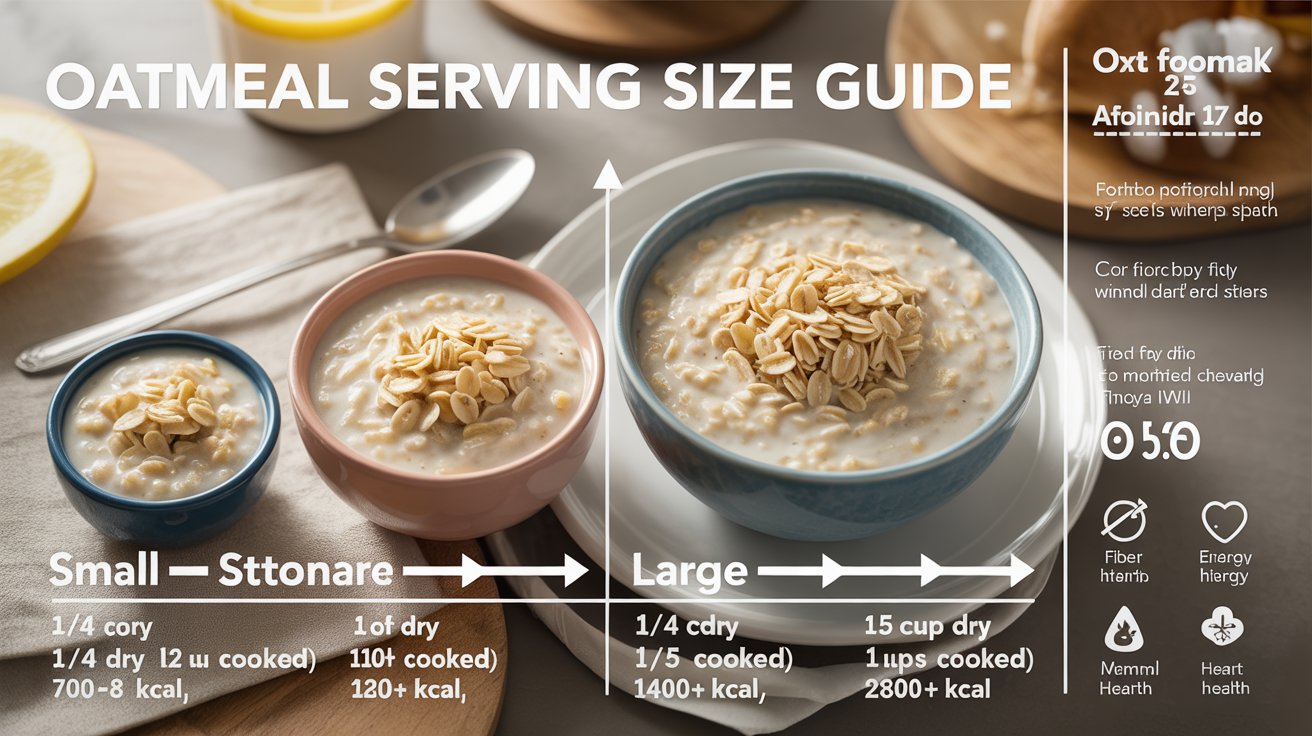
Oatmeal is a warm, filling, and nutritious breakfast choice—but it’s easy to serve more than you actually need. Whether you’re making it from rolled oats, instant oats, or steel-cut oats, understanding the oatmeal serving size helps you keep your meals balanced and satisfying.
Why Oatmeal Serving Size Matters
Oatmeal is rich in fiber and carbohydrates, making it very filling. But large portions—especially with added sugar or toppings—can increase calories quickly.
Proper serving sizes help:
- Control calorie intake
- Maintain steady energy levels
- Support digestion
- Prevent overeating
Even a moderate portion can keep you full for hours.
Standard Oatmeal Serving Size
Oatmeal is usually measured dry (before cooking) and expands when cooked.
Oatmeal Serving Size Chart
| Serving Type | Dry Oats | Cooked Oatmeal | Calories (Approx.) |
|---|---|---|---|
| Small Serving | 1/4 cup | 1/2 cup | 70–80 kcal |
| Standard Serving | 1/2 cup | 1 cup | 140–160 kcal |
| Large Serving | 3/4 cup | 1.5 cups | 200–240 kcal |
| Extra Large | 1 cup+ | 2 cups+ | 280+ kcal |
A standard serving is 1/2 cup dry oats, which makes about 1 cup cooked oatmeal.
Oatmeal Cooking Conversion
Oats absorb liquid and expand during cooking.
Conversion Chart
| Dry Oats | Cooked Oatmeal |
|---|---|
| 1/4 cup | ~1/2 cup |
| 1/2 cup | ~1 cup |
| 1 cup | ~2 cups |
This helps you measure portions more accurately.
Choosing The Right Oatmeal Serving Size
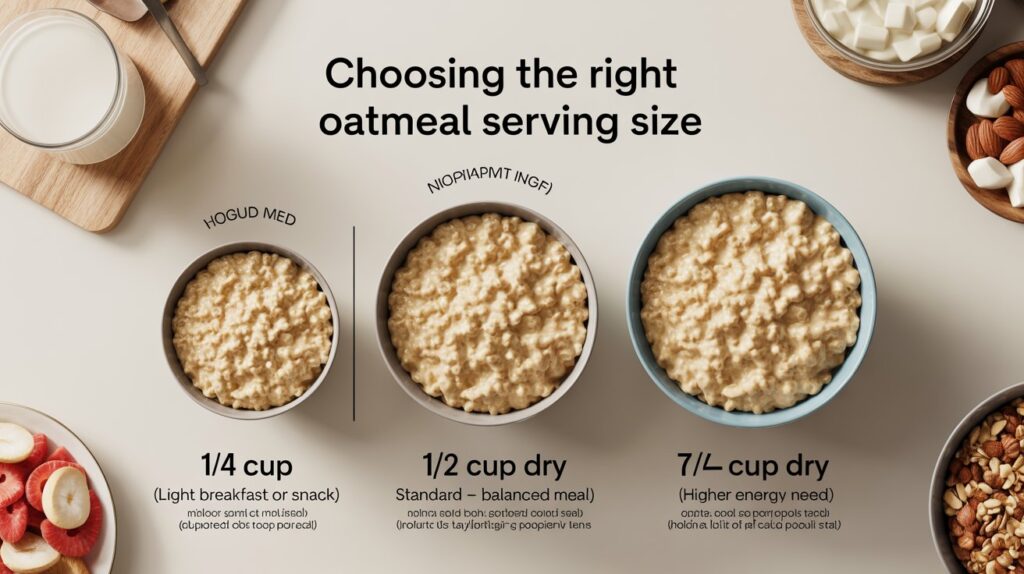
Your ideal portion depends on your needs:
- 1/4 cup dry: Light breakfast or snack
- 1/2 cup dry (standard): Balanced meal
- 3/4–1 cup dry: Higher energy needs
Pair oatmeal with protein (milk, yogurt, nuts) for better balance.
Oatmeal Serving Size And Nutrition
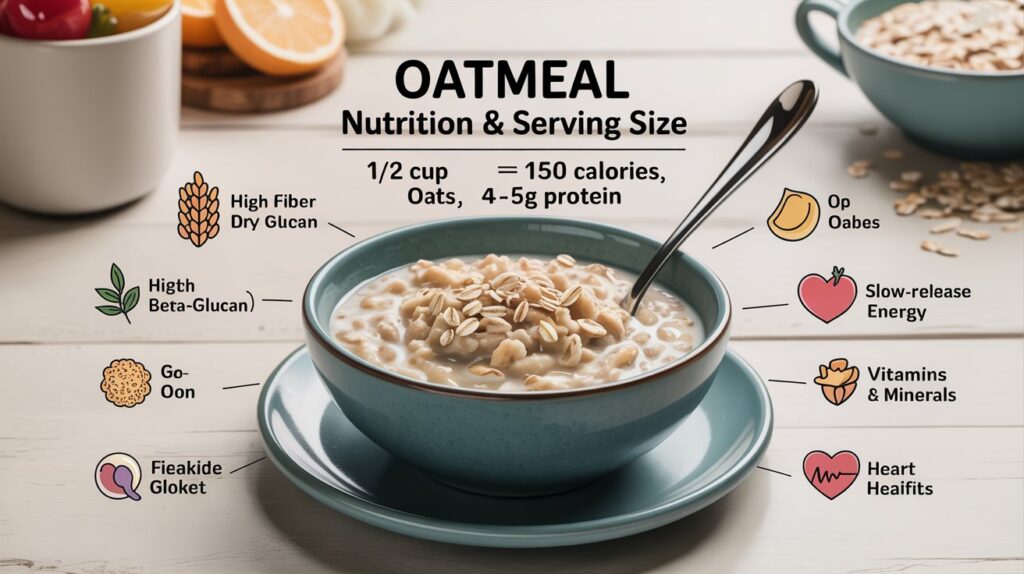
Oatmeal is highly nutritious:
- High in fiber (especially beta-glucan)
- Provides slow-release energy
- Contains vitamins and minerals
- Supports heart health
For example:
- 1/2 cup dry oats: ~150 calories, 4–5g protein
It’s one of the healthiest breakfast options available.
Tips For Managing Oatmeal Portions
- Measure dry oats before cooking
- Use water or low-fat milk to control calories
- Limit sugary toppings like syrup or brown sugar
- Add protein (nuts, seeds, yogurt)
- Prep ahead with overnight oats
These tips help keep your meal balanced.
Common Mistakes When Eating Oatmeal
- Overfilling the bowl: Easy to exceed serving size
- Too many toppings: Adds extra calories
- Not measuring oats: Leads to large portions
- Assuming it’s unlimited: Healthy but still calorie-dense
Being mindful helps you get the most benefit.
How Serving Size Affects Breakfast
The amount of oatmeal you eat affects your energy and fullness. A standard portion keeps you satisfied without feeling heavy, while oversized servings may add unnecessary calories.
Balanced portions support a better start to your day.
Oatmeal In Different Diets
Serving sizes may vary based on your goals:
- Weight loss: 1/4–1/2 cup dry
- Balanced diet: 1/2 cup
- Active lifestyle: 3/4–1 cup
- High-fiber diet: Standard serving works well
Adjust portions to match your needs.
Frequently Asked Questions
What Is A Standard Serving Size Of Oatmeal?
About 1/2 cup dry oats (1 cup cooked).
Is 1 Cup Of Oatmeal Too Much?
It can be a large portion unless you need extra calories.
Can I Eat Oatmeal Every Day?
Yes, it’s a healthy daily option.
Is Oatmeal Good For Weight Loss?
Yes, due to its fiber and filling nature.
How Can I Make Oatmeal Healthier?
Reduce sugar and add protein-rich toppings.
Oatmeal serving size may seem small, but it delivers strong nutrition and lasting energy. By understanding proper portions, you can enjoy a healthy, satisfying breakfast every day without overdoing it.
