
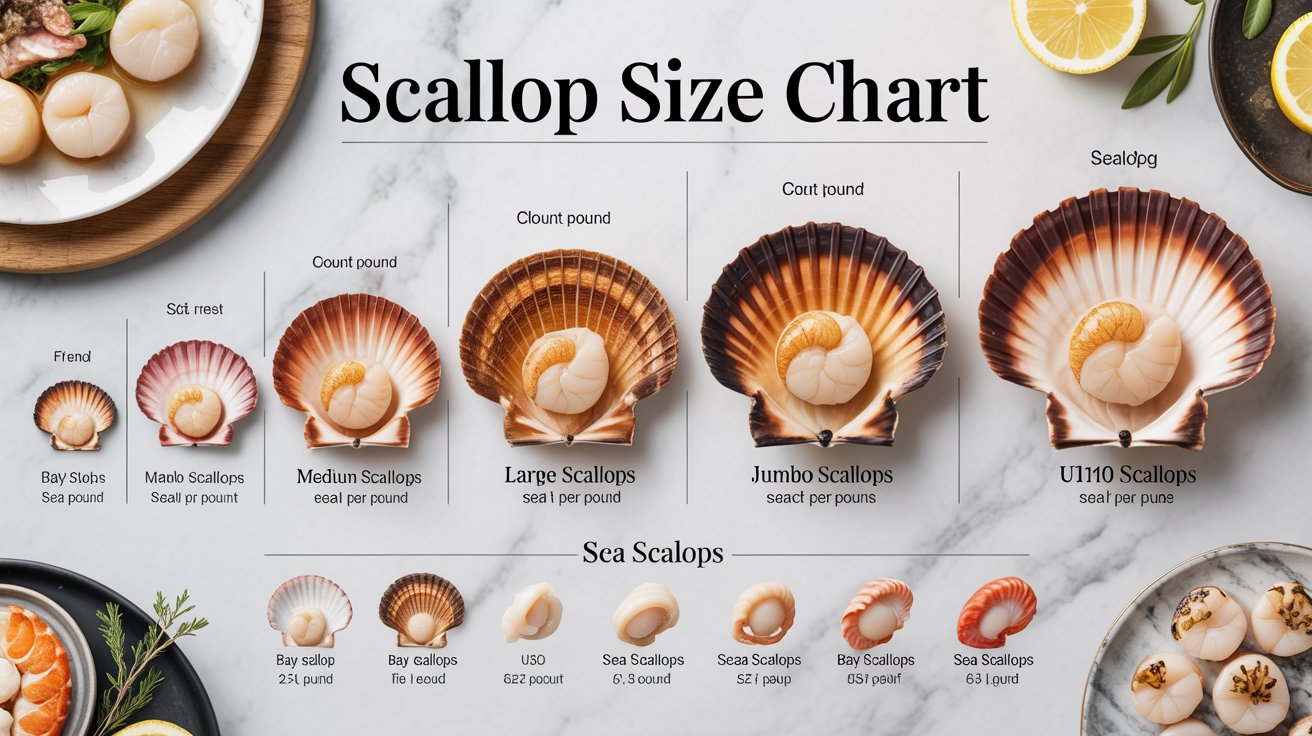
Scallops are one of the most prized seafood delicacies in the world. Known for their sweet flavor, tender texture, and elegant appearance, scallops are popular in fine dining, seafood platters, pasta dishes, and grilling recipes. But many people are confused by scallop sizing because scallops are usually sold by count per pound instead of exact dimensions. Understanding a scallop size chart helps home cooks, seafood buyers, and restaurant chefs choose the right scallops for different recipes and serving styles.
Why Scallop Size Matters
Scallop size affects cooking time, presentation, texture, and serving portions. Small scallops cook very quickly and work well in soups or pasta, while larger sea scallops are ideal for pan-searing and elegant restaurant dishes.
Choosing the correct scallop size also helps avoid overcooking. Large scallops develop a golden crust more easily, while tiny scallops can become rubbery in seconds.
Understanding scallop sizing is especially important when following seafood recipes because cooking times vary greatly by size.
How Scallop Sizes Are Measured
Scallops are commonly sized by the number of scallops per pound.
For example:
- U10 scallops means there are fewer than 10 scallops per pound.
- 10/20 scallops means approximately 10–20 scallops per pound.
- Smaller count numbers indicate larger scallops.
This system is similar to shrimp sizing used in seafood markets.
Standard Scallop Size Chart
Here are the most common scallop size categories used in seafood stores and restaurants.
Scallop Size Chart
| Scallop Size Name | Count Per Pound | Approximate Diameter | Best Use |
|---|---|---|---|
| Colossal | U10 | 2+ inches | Fine dining, searing |
| Jumbo | 10/20 | 1.5–2 inches | Grilling, pan-searing |
| Large | 20/30 | 1–1.5 inches | Pasta, seafood platters |
| Medium | 30/40 | 0.75–1 inch | Stir-fries, soups |
| Small/Bay Scallops | 40+ | Under 0.75 inch | Chowders and stuffing |
Sizes may vary slightly depending on species and harvest region.
Choosing The Right Scallop Size
The best scallop size depends on the recipe and cooking style. Here are some common recommendations:
- Colossal Scallops: Best for restaurant-style pan-searing.
- Jumbo Scallops: Great for grilling and seafood platters.
- Large Scallops: Ideal for pasta and sautéed dishes.
- Bay Scallops: Common in soups, chowders, and casseroles.
Large sea scallops are especially popular because they develop beautiful caramelization when seared.
Scallop Size Comparison: Sea Scallops Vs. Bay Scallops
Sea scallops and bay scallops differ greatly in size and texture.
Sea vs Bay Scallops
| Type | Typical Size | Flavor Profile |
|---|---|---|
| Sea Scallops | Larger | Rich, meaty texture |
| Bay Scallops | Smaller | Sweeter, delicate |
Bay scallops are naturally sweeter but much smaller.
Scallop Size And Cooking Time
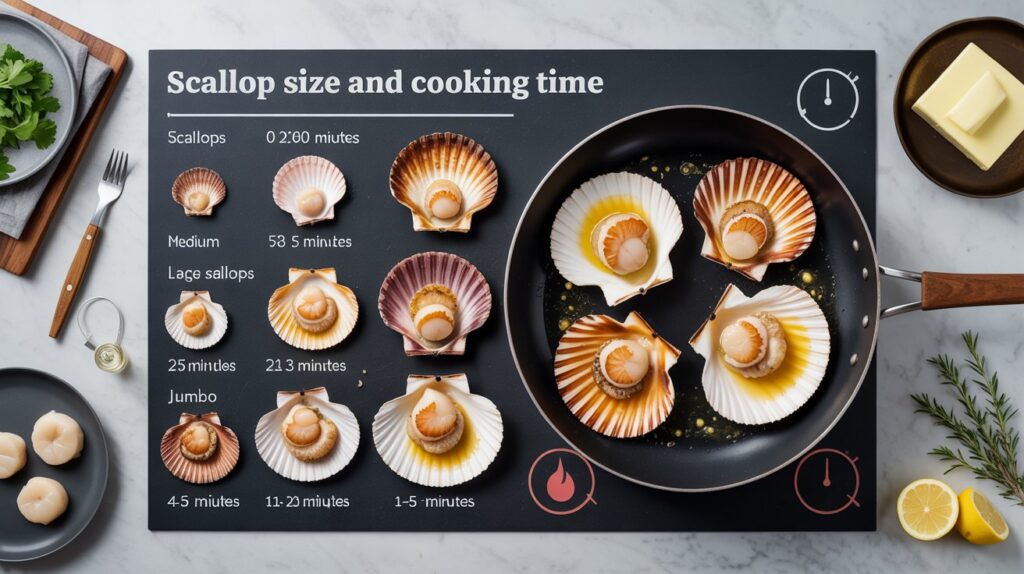
Scallops cook extremely quickly, and size greatly affects timing.
Scallop Cooking Time Chart
| Scallop Size | Approximate Cooking Time |
|---|---|
| Small Scallops | 1–2 minutes |
| Medium Scallops | 2–3 minutes |
| Large Scallops | 3–4 minutes |
| Jumbo Scallops | 4–5 minutes |
Properly cooked scallops should remain slightly translucent in the center.
Visual Guide: Scallop Sizes
Visual comparisons help make scallop sizes easier to understand.
Scallop Size Visual Chart
| Scallop Size | Visual Comparison | Typical Use |
|---|---|---|
| Bay Scallops | Coin-sized | Chowders and soups |
| Medium Scallops | Walnut-sized | Pasta dishes |
| Jumbo Scallops | Golf-ball sized | Fine dining entrées |
Tips For Choosing Scallops
- Choose dry-packed scallops: They sear better and taste sweeter.
- Pat scallops dry before cooking: Helps create golden crusts.
- Avoid overcrowding pans: Scallops steam instead of sear.
- Use high heat: Essential for proper caramelization.
- Cook briefly: Overcooked scallops become rubbery.
Proper sizing and preparation dramatically improve scallop texture and flavor.
Common Mistakes When Buying Scallops
- Confusing count labels: Smaller numbers mean larger scallops.
- Buying wet-packed scallops unknowingly: Added moisture prevents browning.
- Overcooking: The most common scallop mistake.
- Using tiny scallops for searing: Small scallops cook too quickly.
Understanding scallop sizes makes seafood preparation much easier.
How Scallop Size Affects Flavor And Texture
Large sea scallops are meatier and richer, making them ideal for pan-searing and grilling. Smaller bay scallops are sweeter and more delicate, blending well into soups and pasta dishes.
Different scallop species may also vary slightly in sweetness and firmness.
The Popularity Of Scallops
Scallops are harvested in oceans around the world and are especially popular in North America, Europe, and Asia. Their delicate flavor and elegant appearance make them one of the most valued shellfish in fine dining.
Today, scallops are commonly featured in seafood platters, sushi, pasta dishes, and gourmet restaurant entrées.
Frequently Asked Questions
What Does U10 Scallops Mean?
U10 means there are fewer than 10 scallops per pound, indicating very large scallops.
What Are The Best Scallops For Searing?
Large sea scallops are best for pan-searing.
Are Bay Scallops Sweeter Than Sea Scallops?
Yes, bay scallops usually have a sweeter and more delicate flavor.
Why Are Dry-Packed Scallops Better?
Dry-packed scallops sear more easily and contain no added water.
How Long Should Scallops Be Cooked?
Most scallops cook in about 2–5 minutes depending on size.
Scallop size charts may seem confusing at first, but they are extremely helpful for seafood shopping, cooking, and portion planning. Whether you’re preparing jumbo sea scallops or sweet bay scallops, understanding scallop sizes helps you create perfectly cooked seafood dishes every time.
