
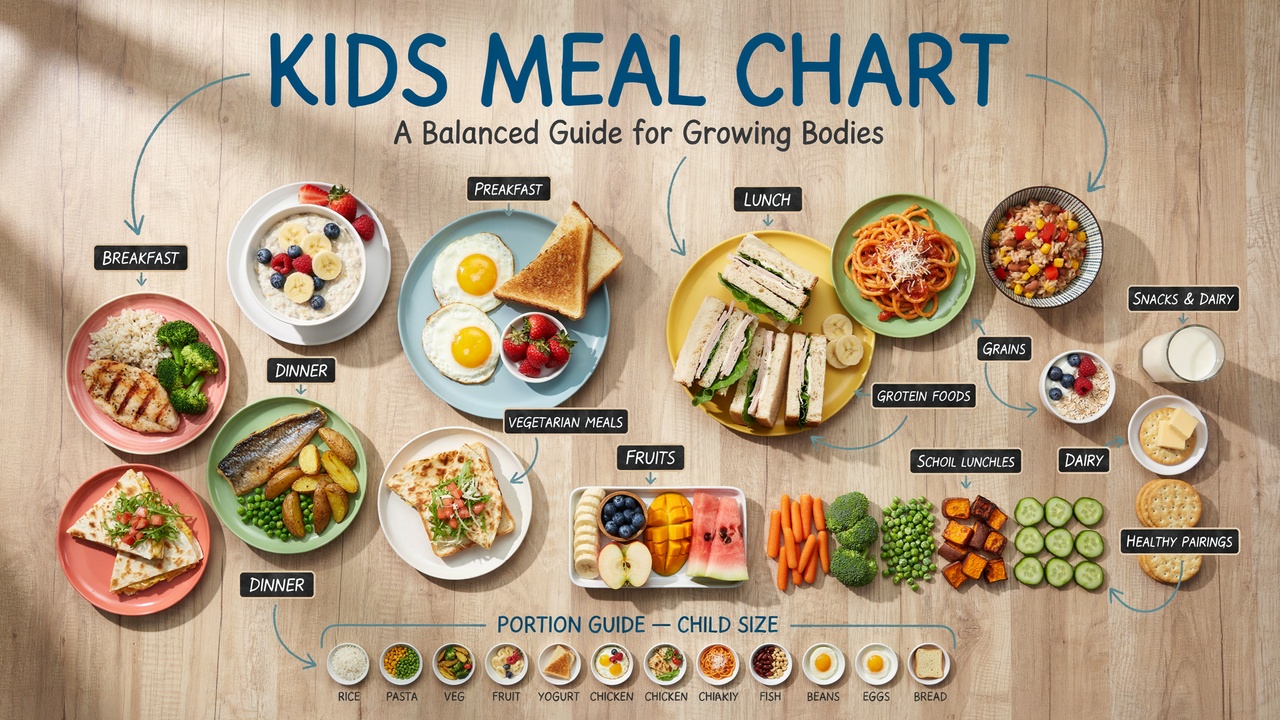
Kids’ meals should be colorful, varied, satisfying, and easy to eat. From eggs and oatmeal at breakfast to chicken, rice, pasta, vegetables, fruit, and yogurt throughout the day, there are many simple ways to create balanced meals for children. Understanding the kids meal chart can help parents and caregivers compare meal ideas, portion sizes, food groups, and snack options without making mealtimes unnecessarily complicated.
Why Kids Meal Size Matters
Children generally need smaller portions than adults, but their nutritional needs are still important because they are growing and developing. A child’s appetite can also change from one meal to another.
Instead of expecting children to finish a large plate, offering small portions and allowing them to ask for more can make meals more comfortable. A balanced plate can include a protein food, a grain or other carbohydrate, fruits or vegetables, and a suitable dairy or dairy alternative.
Portion needs vary considerably with age, appetite, activity level, and individual growth.
Standard Kids Meal Chart
Here are some simple meal ideas suitable for different parts of the day.
Kids Meal Chart
| Meal | Main Foods | General Meal Style |
|---|---|---|
| Oatmeal & Fruit | Oats, milk, banana, berries | Breakfast |
| Eggs & Toast | Egg, toast, fruit | Breakfast |
| Yogurt Bowl | Yogurt, fruit, oats | Breakfast/Snack |
| Chicken & Rice | Chicken, rice, vegetables | Lunch/Dinner |
| Turkey Sandwich | Turkey, bread, vegetables | Lunch |
| Pasta & Tomato Sauce | Pasta, tomato sauce, cheese | Lunch/Dinner |
| Bean & Rice Bowl | Beans, rice, vegetables | Lunch/Dinner |
| Fish & Potatoes | Fish, potatoes, vegetables | Dinner |
| Vegetable Omelet | Egg, vegetables, toast | Breakfast |
| Cheese Quesadilla | Tortilla, cheese, vegetables | Lunch/Snack |
Recipes and portion sizes should be adjusted according to the child’s age and individual needs.
Choosing The Right Kids Meal
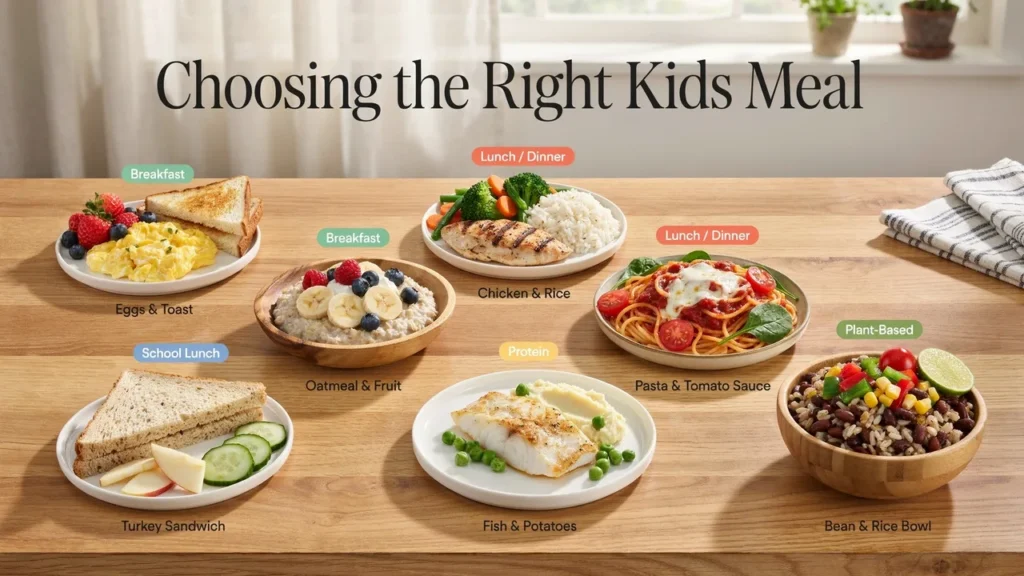
The best meal depends on the child’s age, preferences, appetite, and dietary needs.
Eggs & Toast: An easy breakfast that provides protein and carbohydrates.
Oatmeal & Fruit: A warm option that can be topped with fruit and yogurt.
Chicken & Rice: A simple lunch or dinner combination that is easy to customize.
Pasta & Tomato Sauce: A familiar option that can include vegetables and cheese.
Turkey Sandwich: Convenient for school lunches or quick meals.
Fish & Potatoes: A useful way to introduce fish alongside familiar foods.
Bean & Rice Bowl: A plant-based option with protein and carbohydrates.
Kids Breakfast Meal Chart
Breakfast can include a combination of protein, grains, fruit, and dairy or a suitable alternative.
| Breakfast | Main Foods | Easy Additions |
|---|---|---|
| Oatmeal | Oats, milk | Banana, berries |
| Eggs & Toast | Eggs, whole-grain toast | Fruit |
| Yogurt Bowl | Yogurt, fruit | Oats, seeds |
| Peanut Butter Toast | Bread, peanut butter | Banana |
| Pancakes | Pancakes, fruit | Yogurt |
| Egg Sandwich | Egg, bread | Tomato, fruit |
| Cereal & Milk | Cereal, milk | Berries, banana |
| Smoothie Bowl | Yogurt, fruit | Oats |
For young children, foods should be prepared in an age-appropriate size and texture.
Kids Lunch Meal Chart
| Lunch | Protein | Carbohydrate | Fruit/Vegetable |
|---|---|---|---|
| Chicken Rice Bowl | Chicken | Rice | Broccoli |
| Turkey Sandwich | Turkey | Bread | Cucumber |
| Pasta Bowl | Cheese/meat | Pasta | Tomato |
| Bean Burrito | Beans | Tortilla | Corn |
| Egg Sandwich | Egg | Bread | Fruit |
| Tuna Sandwich | Tuna | Bread | Carrots |
| Chicken Wrap | Chicken | Tortilla | Lettuce |
| Lentil Rice Bowl | Lentils | Rice | Vegetables |
Combining familiar foods with new ingredients can make it easier for children to explore different flavors.
Kids Dinner Meal Chart
| Dinner | Main Protein | Side | Vegetable/Fruit |
|---|---|---|---|
| Chicken & Rice | Chicken | Rice | Carrots |
| Fish & Potatoes | Fish | Potatoes | Peas |
| Pasta & Meat Sauce | Beef/turkey | Pasta | Broccoli |
| Bean Tacos | Beans | Tortilla | Tomato |
| Chicken Noodles | Chicken | Noodles | Mixed vegetables |
| Lentil Curry | Lentils | Rice | Vegetables |
| Egg Fried Rice | Egg | Rice | Peas |
| Turkey Meatballs | Turkey | Pasta | Green beans |
Dinner does not need to be elaborate. Simple combinations can provide a variety of nutrients.
Kids Serving Size Chart
Children’s serving sizes are generally smaller than adult portions. A useful approach is to begin with small amounts and offer more if the child is still hungry.
| Food | General Child Portion Starting Point |
|---|---|
| Cooked Rice | ¼–½ cup |
| Cooked Pasta | ¼–½ cup |
| Cooked Vegetables | ¼–½ cup |
| Fruit | ¼–½ cup |
| Yogurt | ½–¾ cup |
| Milk | ½–1 cup |
| Cooked Chicken | 1–2 oz |
| Cooked Fish | 1–2 oz |
| Beans | ¼–½ cup |
| Eggs | 1 egg |
| Bread | ½–1 slice |
| Cheese | ½–1 oz |
These are broad starting ranges rather than strict recommendations, and needs can vary by age.
Kids Food Group Chart
A balanced kids meal can include foods from several major food groups.
| Food Group | Examples |
|---|---|
| Protein | Eggs, chicken, fish, beans |
| Grains | Rice, oats, bread, pasta |
| Vegetables | Carrots, peas, broccoli |
| Fruits | Apples, bananas, berries |
| Dairy | Milk, yogurt, cheese |
| Healthy Fats | Avocado, nut butters, seeds |
Not every meal needs every food group. Variety across the day is more important than making every plate identical.
Kids Protein Food Chart
Protein supports growth and helps make meals filling.
| Protein Food | Kid-Friendly Serving Idea |
|---|---|
| Eggs | Scrambled egg |
| Chicken | Small pieces or shredded |
| Turkey | Sandwich filling |
| Fish | Flaked fish |
| Beans | Bean and rice bowl |
| Lentils | Lentil soup |
| Yogurt | Yogurt with fruit |
| Cheese | Cheese cubes or melted cheese |
| Tofu | Soft tofu with rice |
| Nut Butter | Spread on toast |
For younger children, choose textures and shapes that are appropriate for their developmental stage.
Kids Fruit Chart
Fruit can add natural sweetness, color, fiber, and variety to meals and snacks.
| Fruit | Kid-Friendly Serving Idea |
|---|---|
| Banana | Sliced or mashed |
| Apple | Thin slices or cooked |
| Berries | Whole when age-appropriate |
| Orange | Small peeled pieces |
| Mango | Small pieces |
| Pear | Soft slices |
| Watermelon | Small pieces |
| Peaches | Soft slices |
| Grapes | Cut appropriately for young children |
| Kiwi | Small pieces |
Whole fruit is generally preferable to relying heavily on juice.
Kids Vegetable Chart
Vegetables can be introduced in different colors, textures, and cooking styles.
| Vegetable | Kid-Friendly Preparation |
|---|---|
| Carrots | Steamed or soft sticks |
| Broccoli | Steamed florets |
| Peas | Cooked and soft |
| Sweet Potato | Mashed or roasted |
| Cucumber | Thin slices |
| Corn | Cooked kernels |
| Green Beans | Soft cooked pieces |
| Spinach | Mixed into eggs or pasta |
| Bell Pepper | Soft strips |
| Zucchini | Roasted or steamed |
Offering vegetables alongside familiar foods can make them less intimidating.
Kids Snack Chart
Snacks can be simple combinations of protein, fruit, grains, or dairy.
| Snack | Main Foods |
|---|---|
| Yogurt & Fruit | Yogurt, berries |
| Apple & Nut Butter | Apple, peanut/seed butter |
| Cheese & Crackers | Cheese, whole-grain crackers |
| Banana & Yogurt | Banana, yogurt |
| Hummus & Vegetables | Hummus, soft vegetables |
| Toast & Avocado | Toast, avocado |
| Cottage Cheese & Fruit | Cottage cheese, fruit |
| Oatmeal Bites | Oats, nut/seed butter |
For younger children, avoid choking hazards and prepare foods according to age-appropriate safety guidance.
Kids High Protein Meal Chart
Some children may benefit from meals that include a good source of protein.
| Meal | Protein Source | Meal Pairing |
|---|---|---|
| Egg & Toast | Egg | Fruit |
| Chicken Rice Bowl | Chicken | Rice & vegetables |
| Yogurt Bowl | Greek yogurt | Fruit & oats |
| Turkey Sandwich | Turkey | Bread & vegetables |
| Bean Burrito | Beans | Tortilla & vegetables |
| Cheese Quesadilla | Cheese | Fruit or vegetables |
| Lentil Soup | Lentils | Bread |
| Tofu Rice Bowl | Tofu | Rice & vegetables |
The amount of protein a child needs varies with age and individual circumstances.
Kids Vegetarian Meal Chart
Vegetarian children can enjoy a wide range of meals.
| Meal | Main Ingredients |
|---|---|
| Bean & Rice Bowl | Beans, rice, vegetables |
| Cheese Quesadilla | Cheese, tortilla |
| Lentil Soup | Lentils, vegetables |
| Egg & Toast | Eggs, bread, fruit |
| Tofu Stir-Fry | Tofu, vegetables, rice |
| Vegetable Pasta | Pasta, vegetables, cheese |
| Yogurt Bowl | Yogurt, fruit, oats |
| Chickpea Wrap | Chickpeas, tortilla, vegetables |
A varied vegetarian diet can include legumes, eggs, dairy, soy foods, grains, fruits, and vegetables.
Kids School Lunch Chart
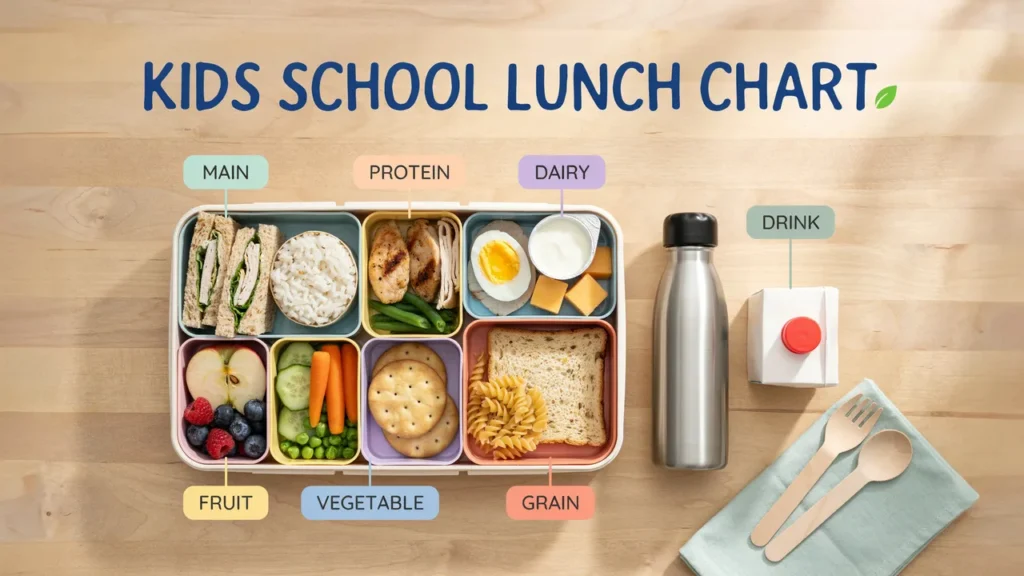
School lunches should be easy to pack, eat, and transport.
| Lunch Box Item | Examples |
|---|---|
| Main | Sandwich, wrap, rice bowl |
| Protein | Chicken, turkey, egg, beans |
| Fruit | Apple, banana, berries |
| Vegetable | Cucumber, carrots, peas |
| Dairy | Yogurt, cheese |
| Grain | Bread, crackers, pasta |
| Drink | Water or milk |
Including a familiar food alongside something new can make lunch more appealing.
Kids Meal Portion Comparison
Portion size should generally increase as children grow, but appetite is also an important guide.
| Meal Component | Younger Child | Older Child |
|---|---|---|
| Grain | Small portion | Moderate portion |
| Protein | Small portion | Moderate portion |
| Vegetables | Small portion | Moderate portion |
| Fruit | Small portion | Moderate portion |
| Dairy | Small cup | Larger cup |
| Snack | Small snack | Larger snack |
Children do not all eat the same amount, even at the same age.
Kids Meal Flavor Chart
Different flavors can help children explore a wider variety of foods.
| Flavor | Kid-Friendly Examples |
|---|---|
| Mild & Savory | Chicken, rice |
| Sweet | Banana, oatmeal |
| Creamy | Yogurt, cheese |
| Fresh | Cucumber, berries |
| Cheesy | Quesadilla, pasta |
| Tomato-Based | Pasta sauce, pizza |
| Nutty | Peanut or seed butter |
| Mildly Spiced | Vegetable rice, chicken |
Strong spices can be introduced gradually according to the child’s preferences and tolerance.
Healthy Kids Meal Pairing Chart
Pairing foods can create more balanced meals.
| Main Food | Good Pairings |
|---|---|
| Chicken | Rice, broccoli |
| Eggs | Toast, fruit |
| Fish | Potatoes, peas |
| Pasta | Tomato sauce, vegetables |
| Beans | Rice, avocado |
| Yogurt | Fruit, oats |
| Cheese | Crackers, fruit |
| Tofu | Rice, vegetables |
| Turkey | Bread, cucumber |
| Lentils | Rice, vegetables |
A balanced meal does not need to be complicated or perfectly arranged.
Kids Meal Prep Chart
Preparing some foods ahead can make busy mealtimes easier.
| Meal Prep Food | Easy Uses |
|---|---|
| Cooked Chicken | Rice bowls, wraps |
| Cooked Rice | Rice bowls, fried rice |
| Hard-Boiled Eggs | Breakfast, snacks |
| Chopped Fruit | Breakfast, lunch boxes |
| Cooked Vegetables | Lunch, dinner |
| Beans | Bowls, wraps |
| Pasta | Lunch, dinner |
| Yogurt | Breakfast, snacks |
Keep prepared foods refrigerated and follow appropriate food-safety practices.
Common Mistakes When Choosing Kids Meals
Serving adult-sized portions: Large portions can overwhelm children. Start small and offer more if needed.
Focusing only on vegetables: Vegetables are important, but children also need protein, grains, fruits, and other nutrient-rich foods.
Making every meal perfect: A balanced diet develops over time rather than from one individual meal.
Using too much added sugar: Sweet foods can be included occasionally, but meals should not rely heavily on sugary drinks or desserts.
Forcing children to finish everything: Appetite naturally changes, and children may eat more or less at different meals.
Offering only familiar foods: Familiar foods are useful, but gently introducing new foods can help children develop broader food preferences.
Ignoring food allergies: Always consider known allergies and individual dietary restrictions when planning meals.
Tips For Making Kids Meals More Appealing
Use colorful foods: Different colors can make a plate more visually interesting.
Keep portions manageable: Small servings can feel less overwhelming.
Offer choices: Giving children two suitable options can make them feel involved.
Use fun shapes: Sandwiches, fruit, and vegetables can sometimes be cut into simple shapes.
Serve familiar foods with new foods: This can make trying something unfamiliar easier.
Keep textures varied: Include soft, crunchy, creamy, and chewy foods when appropriate for the child’s age.
Let children participate: Simple tasks such as washing fruit or arranging food can make mealtime more engaging.
The Importance Of Variety In Kids Meals
Children benefit from being exposed to a variety of foods over time. Different foods provide different combinations of protein, carbohydrates, fats, vitamins, minerals, and fiber.
One day a child may eat a large meal, while another day they may eat much less. Looking at eating patterns over time is generally more useful than judging nutrition from a single meal.
Offering different fruits, vegetables, grains, protein foods, and dairy or suitable alternatives can help create a varied eating pattern.
Frequently Asked Questions
What Is A Good Meal For Kids?
A good kids meal can include a protein source, grain or other carbohydrate, fruit or vegetables, and dairy or a suitable alternative. Examples include chicken and rice with vegetables or eggs with toast and fruit.
How Much Should A Child Eat?
There is no single portion size for every child. Start with small, age-appropriate portions and allow the child to ask for more if they are still hungry.
What Is A Healthy Kids Breakfast?
Good options include oatmeal with fruit, eggs and toast, yogurt with berries and oats, or a simple egg sandwich.
What Should I Pack In A Kids Lunch Box?
A lunch box can include a main meal, protein food, fruit, vegetable, and water or another suitable drink.
Are Snacks Important For Children?
Many children need snacks between meals because their stomachs are smaller and they have high energy needs. Nutritious snacks can help bridge the gap between meals.
What Are Good High Protein Foods For Kids?
Examples include eggs, chicken, fish, yogurt, cheese, beans, lentils, tofu, and nut or seed butters.
Can Kids Eat Vegetarian Meals?
Yes. Vegetarian meals can include beans, lentils, tofu, eggs, dairy, whole grains, fruits, and vegetables. Individual nutritional needs should be considered.
How Can I Get My Child To Eat More Vegetables?
Offer vegetables regularly without pressure, try different preparations, and serve them alongside foods the child already enjoys.
Should Children Finish Everything On Their Plate?
Not necessarily. Appetite changes from meal to meal. Encouraging children to notice their hunger and fullness can be more helpful than requiring them to clean their plate.
What Is A Good Portion Of Rice For A Child?
A broad starting range is around ¼–½ cup of cooked rice, but the appropriate amount varies by age, appetite, and the rest of the meal.
What Foods Should Young Children Avoid?
Certain foods can pose choking risks, and some children have allergies or other dietary restrictions. Foods should be prepared in an age-appropriate form, and caregivers should follow current pediatric food-safety guidance.
Kids’ meals do not need to be complicated to be nutritious and enjoyable. From eggs and oatmeal to chicken, rice, pasta, fish, beans, fruit, vegetables, and yogurt, there are countless combinations to choose from. Understanding the kids meal chart can help parents and caregivers plan age-appropriate portions, create balanced meals, introduce different foods, and make everyday mealtimes easier and more enjoyable.
