
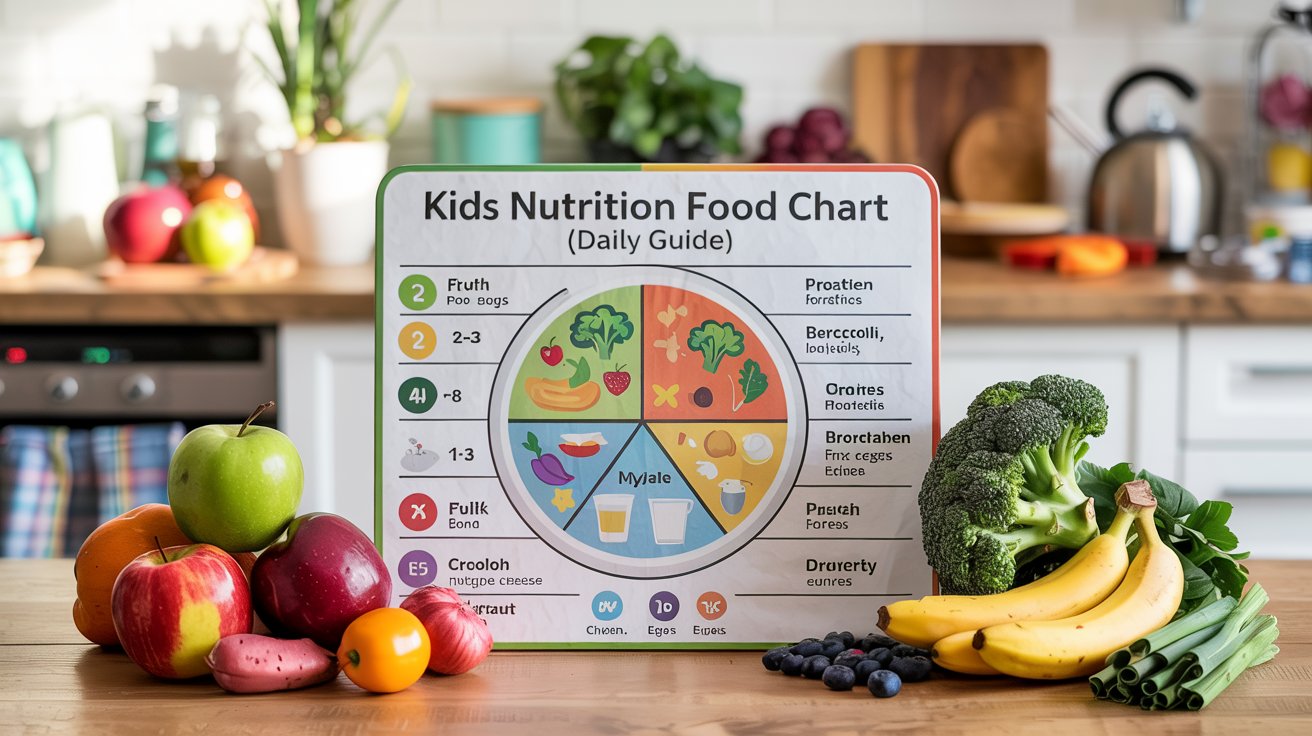
Providing the right nutrition for kids is essential for growth, energy, and overall development. A balanced diet includes a mix of fruits, vegetables, grains, protein, and dairy. Understanding a nutrition food chart for kids helps parents plan meals that support healthy habits from an early age.
Why Nutrition Matters for Kids
Children are constantly growing, so they need a variety of nutrients to support their bodies and minds.
Good nutrition helps:
- Build strong bones and muscles
- Support brain development
- Improve energy and focus
- Strengthen immunity
Balanced meals are key to long-term health.
Nutrition Food Chart for Kids (Daily Guide)
Here’s a general guideline based on common nutrition recommendations:
Kids Daily Nutrition Chart
| Food Group | Ages 2–3 | Ages 4–8 | Ages 9–13 |
|---|---|---|---|
| Fruits | 1 cup | 1–1.5 cups | 1.5–2 cups |
| Vegetables | 1 cup | 1.5 cups | 2–2.5 cups |
| Grains | 3 oz | 4–5 oz | 5–6 oz |
| Protein | 2 oz | 3–4 oz | 4–5 oz |
| Dairy | 2 cups | 2–2.5 cups | 3 cups |
👉 Needs may vary depending on activity level.
What Makes a Balanced Plate for Kids
A healthy plate should include:
- Half the plate: Fruits and vegetables
- Quarter: Grains (preferably whole grains)
- Quarter: Protein
- Side: Dairy or dairy alternatives
This follows the MyPlate model.
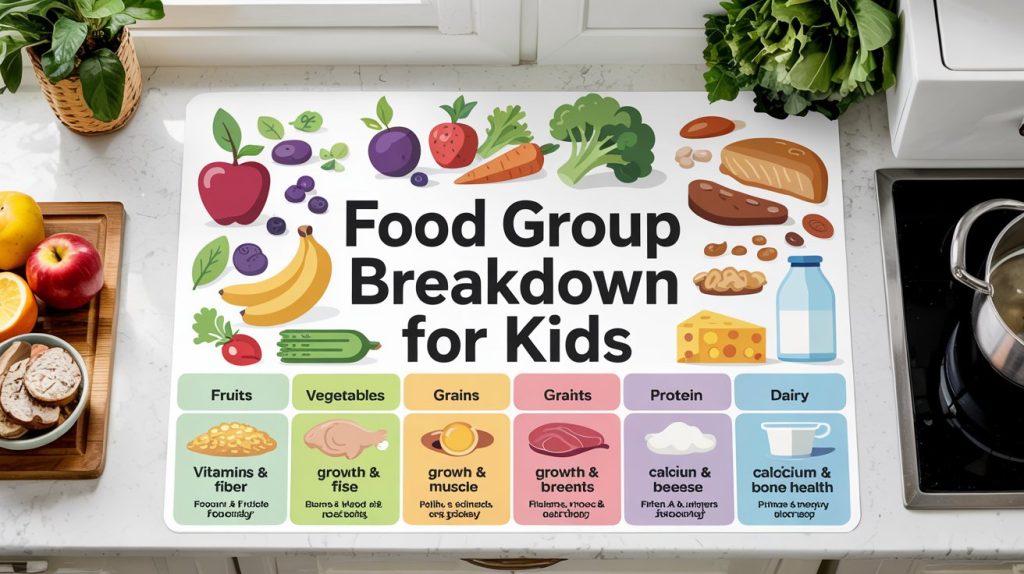
Food Group Breakdown
Fruits
- Apples, bananas, berries
- Provide vitamins and fiber
Vegetables
- Carrots, spinach, broccoli
- Rich in vitamins and minerals
Grains
- Rice, bread, pasta
- Choose whole grains for more fiber
Protein
- Chicken, fish, eggs, beans
- Supports growth and muscle development
Dairy
- Milk, yogurt, cheese
- Important for calcium and bone health
Visual Guide: Kids Meal Portions
Here’s a simple way to picture a balanced meal:
| Plate Section | Portion | Example |
|---|---|---|
| Half Plate | Fruits & Veggies | Apple + carrots |
| Quarter Plate | Grains | Rice or bread |
| Quarter Plate | Protein | Chicken or beans |
| Side | Dairy | Milk or yogurt |
Visuals make meal planning easier.
Healthy Snack Ideas for Kids
- Fresh fruit with yogurt
- Peanut butter and apple slices
- Whole grain crackers with cheese
- Smoothies with fruits and milk
Snacks should be nutritious, not just filling.
Tips for Healthy Eating in Kids
- Offer variety: Different foods provide different nutrients
- Keep portions age-appropriate
- Limit sugary snacks and drinks
- Encourage water over soda
- Make meals fun and colorful
Small habits build lifelong healthy eating patterns.
Common Mistakes in Kids’ Nutrition
- Too many processed foods: Low nutrients
- Skipping vegetables: Missing vitamins
- Oversized portions: Leads to overeating
- Too much sugar: Affects health and energy
Balance is the key to a healthy diet.
How Nutrition Affects Kids’ Growth
Proper nutrition supports:
- Physical growth
- Brain development
- Energy levels
- Strong immunity
Healthy eating habits formed early can last a lifetime.
Frequently Asked Questions
How Many Meals Should Kids Eat Daily?
3 meals and 2–3 healthy snacks.
What Is the Most Important Nutrient for Kids?
A mix of protein, calcium, vitamins, and fiber.
Should Kids Drink Milk Every Day?
Yes, or dairy alternatives for calcium.
Are Snacks Necessary for Kids?
Yes, they help maintain energy levels.
How Do I Know If My Child Is Eating Enough?
Look for steady growth and energy levels.
A nutrition food chart for kids makes it easier to plan balanced meals and ensure proper growth. By following these guidelines, you can help your child develop healthy eating habits that last a lifetime.
