
Blueberries are one of the most popular berries because they are sweet, easy to eat, and packed with nutrients. Many people add them to oatmeal, smoothies, yogurt, salads, or simply enjoy them as a snack.
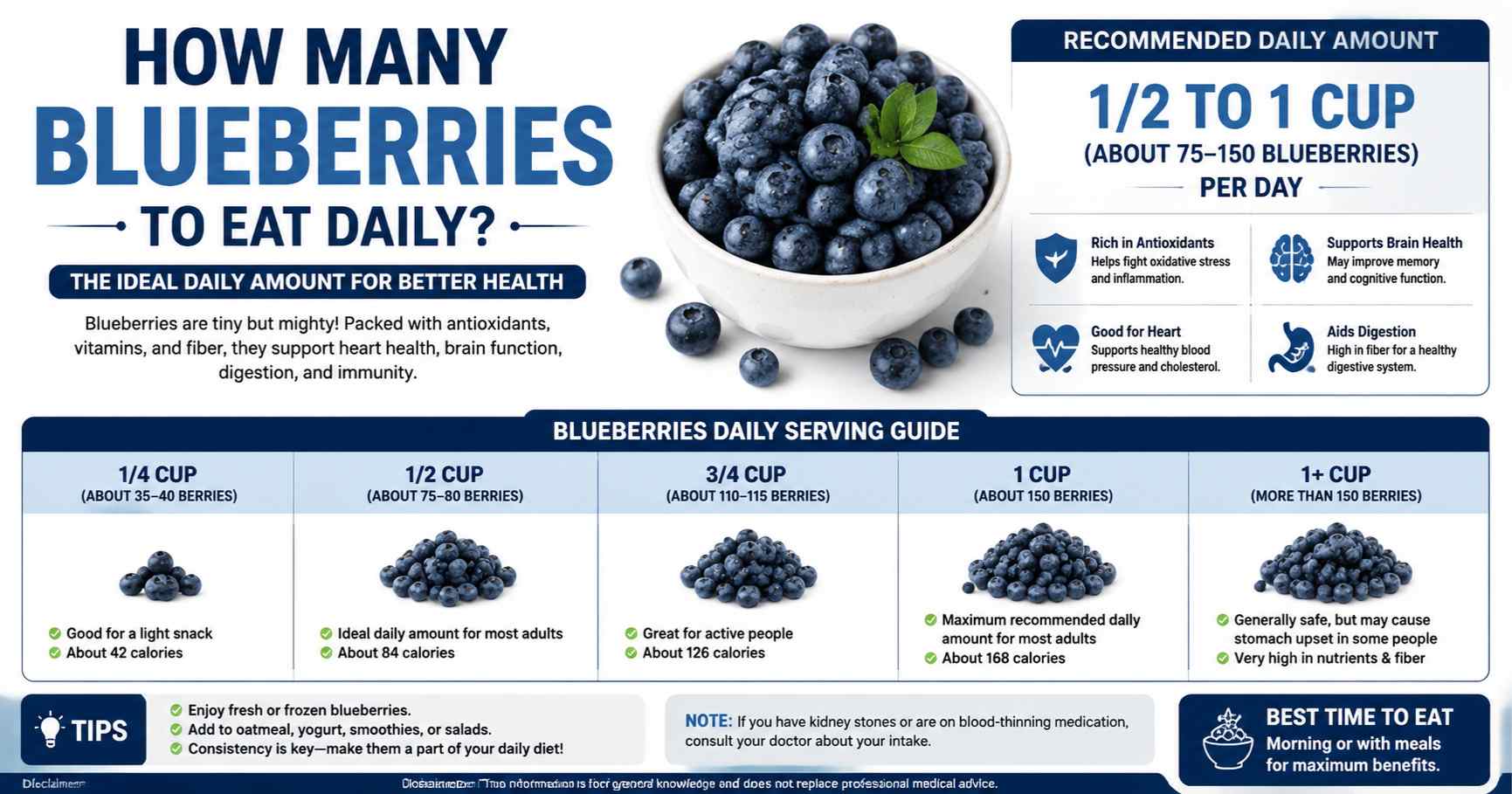
But how many blueberries should you eat daily? While there is no official daily blueberry requirement, nutrition experts often recommend including about 1 cup of blueberries per day as part of a balanced diet.
A daily serving provides important nutrients like fiber, vitamin C, vitamin K, and plant compounds called antioxidants. However, the ideal amount depends on your overall diet, calorie needs, and personal health goals.
How Many Blueberries Should You Eat Daily?
A common serving size for blueberries is:
| Serving Size | Amount |
|---|---|
| Small serving | ½ cup (about 75 grams) |
| Standard serving | 1 cup (about 148 grams) |
| Large serving | 1½ cups or more |
For most healthy adults, eating ½ to 1 cup of blueberries daily is a reasonable amount.
One cup of blueberries contains approximately:
- 148 grams
- 84 calories
- 3.6 grams of fiber
- 14.4 mg vitamin C
- 29 micrograms vitamin K
Nutrition values can vary slightly depending on the blueberry variety and growing conditions.
How Many Blueberries Are in One Cup?
The exact number depends on the size of the berries, but one cup of blueberries usually contains about 65 to 80 individual blueberries.
Large blueberries may fill a cup with fewer berries, while smaller berries may require more.
A typical serving looks like:
- ½ cup: About 30–40 blueberries
- 1 cup: About 65–80 blueberries
Is Eating Blueberries Every Day Good?
Yes, blueberries can be a healthy addition to your daily diet.
They contain antioxidants, especially anthocyanins, which give blueberries their deep blue color. These plant compounds help protect cells from oxidative stress.
Regular blueberry consumption is associated with a healthy eating pattern that supports:
- Heart health
- Digestive health
- Brain health
- Overall nutrient intake
However, blueberries work best as part of a balanced diet that includes vegetables, proteins, whole grains, and other fruits.
Best Time to Eat Blueberries
There is no single perfect time to eat blueberries. You can enjoy them whenever they fit your routine.
Popular ways to eat blueberries include:
Morning
Adding blueberries to breakfast is a simple choice. Try mixing them with:
- Oatmeal
- Greek yogurt
- Cereal
- Smoothies
Afternoon Snack
A handful of blueberries makes a convenient snack because they require little preparation.
After Exercise
Blueberries can be added to smoothies with protein sources like yogurt or protein powder for a balanced recovery snack.
Can You Eat Too Many Blueberries?
Blueberries are healthy, but eating very large amounts may cause digestive discomfort for some people.
Eating several cups at once may lead to:
- Bloating
- Gas
- Loose stools
This happens because blueberries contain fiber and natural sugars.
For most people, staying around 1 to 2 cups per day is generally well tolerated as part of a balanced diet.
Fresh vs Frozen Blueberries
Both fresh and frozen blueberries can be nutritious.
Fresh blueberries are convenient for snacking, while frozen blueberries are useful for smoothies and cooking.
Frozen blueberries are often picked when ripe and frozen quickly, which helps preserve many nutrients.
When buying packaged blueberries, check the label and avoid products with added sugar.
Blueberry Portion Size for Different People
The ideal amount can vary based on age, activity level, and dietary needs.
Adults
Most adults can enjoy:
- ½ to 1 cup daily
Children
A smaller serving is usually appropriate:
- ¼ to ½ cup depending on age
Athletes
Active people may include:
- 1 to 2 cups as part of a balanced diet
Remember that individual nutritional needs vary.
How to Add More Blueberries to Your Diet
Blueberries are easy to include in everyday meals.
Some simple ideas:
- Add them to overnight oats
- Blend them into smoothies
- Mix them with plain yogurt
- Use them in homemade muffins
- Sprinkle them over pancakes
- Add them to fruit salads
Combining blueberries with protein or healthy fats, such as yogurt or nuts, can make snacks more filling.
Blueberry Nutrition Facts
One cup of fresh blueberries (about 148 grams) provides approximately:
| Nutrient | Amount |
|---|---|
| Calories | 84 kcal |
| Carbohydrates | 21 grams |
| Fiber | 3.6 grams |
| Protein | 1.1 grams |
Blueberries are naturally low in calories while providing important vitamins, minerals, and antioxidants.
Conclusion
For most people, eating ½ to 1 cup of blueberries daily is a healthy and practical serving size. This amount provides valuable nutrients without adding many calories.
Whether you eat them fresh, frozen, in smoothies, or with breakfast, blueberries are an easy way to add more fruit to your daily routine.
The best approach is consistency. A moderate serving of blueberries combined with a varied diet can help you enjoy their nutritional benefits every day.
FAQs
How many blueberries should I eat per day?
Most people can enjoy about ½ to 1 cup of blueberries daily. This provides fiber, vitamins, and antioxidants.
Is eating 100 blueberries a day too much?
For most healthy adults, 100 blueberries is usually around 1 to 1½ cups and is generally fine. However, large amounts may cause digestive discomfort in some people.
What happens if I eat blueberries every day?
Eating blueberries daily can add important nutrients and antioxidants to your diet. They are best enjoyed as part of an overall balanced eating pattern.
Can I eat blueberries at night?
Yes. Blueberries can be eaten at night as a snack. They are low in calories and provide fiber.
Are frozen blueberries as healthy as fresh blueberries?
Yes. Frozen blueberries can retain many nutrients and are a convenient alternative to fresh berries.
