
Japanese knives are known for their exceptional sharpness, lightweight construction, and precision. Whether you’re a home cook or a professional chef, choosing the correct knife size can improve your cutting speed, accuracy, and comfort.
Unlike Western chef’s knives, Japanese knives are designed for specific kitchen tasks. Some excel at slicing fish, while others are made for chopping vegetables or handling everyday meal prep. Understanding the different blade lengths helps you choose the knife that best matches your cooking style.
In this guide, you’ll find an easy-to-understand Japanese knife size chart, learn the purpose of each knife type, and discover which blade length is right for your kitchen.
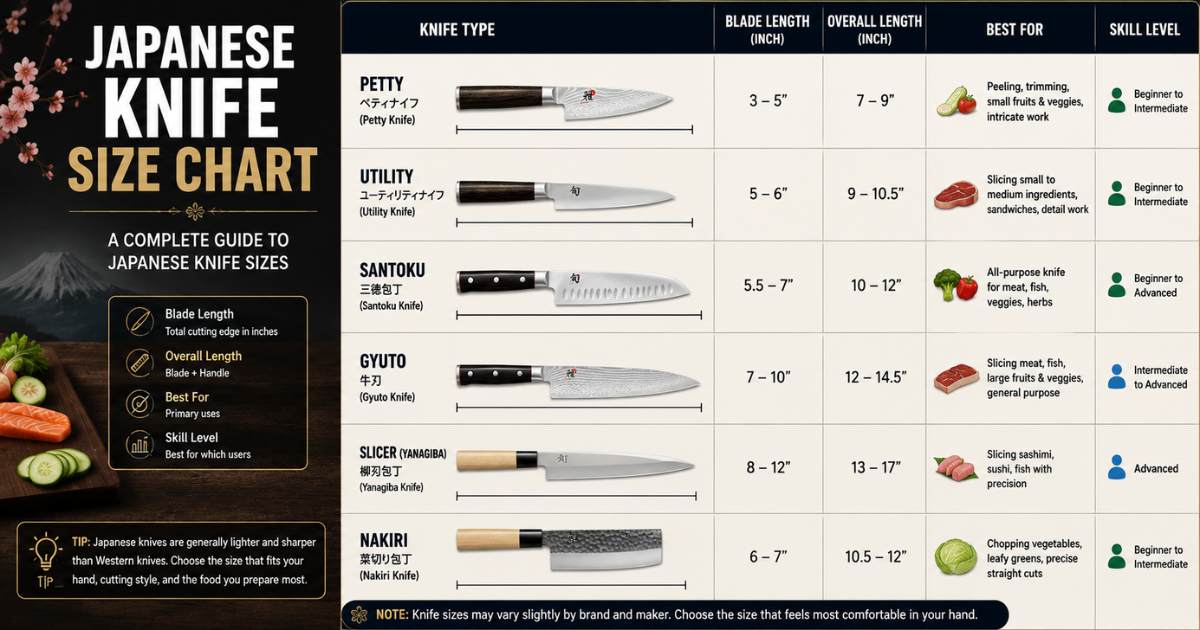
Japanese Knife Size Chart
| Knife Type | Common Blade Length | Best For |
|---|---|---|
| Petty Knife | 3–5 inches (75–150 mm) | Peeling, trimming, fruits, small vegetables |
| Utility Knife | 5–6 inches (130–150 mm) | Everyday cutting and light prep |
| Santoku | 5.5–7 inches (140–180 mm) | All-purpose kitchen tasks |
| Nakiri | 6–7 inches (165–180 mm) | Chopping vegetables |
| Gyuto | 7–10 inches (180–270 mm) | Meat, vegetables, fish, general cooking |
| Yanagiba | 8–12 inches (210–330 mm) | Slicing sashimi and sushi |
Why Japanese Knife Size Matters
Choosing the right blade length isn’t just about preference. The size of your knife affects balance, cutting efficiency, control, and overall comfort.
A shorter blade offers greater precision for detailed work, while a longer blade allows smoother cuts through large ingredients. Selecting the right size also helps reduce fatigue during extended food preparation.
Petty Knife (3–5 Inches)
The Petty knife is one of the smallest Japanese kitchen knives. It works similarly to a Western paring knife but offers a longer blade for extra versatility.
It’s ideal for:
- Peeling fruits
- Trimming vegetables
- Slicing garlic
- Preparing herbs
- Small kitchen tasks
Home cooks who prepare fresh produce daily often find a Petty knife indispensable.
Utility Knife (5–6 Inches)
A Japanese Utility knife bridges the gap between a Petty knife and a Santoku. It’s compact, lightweight, and easy to control.
Common uses include:
- Sandwich preparation
- Small meat cuts
- Cheese
- Fruits
- Everyday meal prep
It’s an excellent choice for beginners who want a versatile knife without moving to a full-size chef’s knife.
Santoku Knife (5.5–7 Inches)
The Santoku is arguably the most popular Japanese knife outside Japan. The name roughly translates to “three virtues,” referring to slicing, dicing, and chopping.
A Santoku handles:
- Meat
- Fish
- Vegetables
- Herbs
- Everyday cooking
A 7-inch (180 mm) Santoku is considered the standard size for most home kitchens because it balances cutting power with excellent control.
Gyuto Knife (7–10 Inches)
Often called the Japanese chef’s knife, the Gyuto is designed for versatility. It performs nearly every kitchen task with ease.
Typical uses include:
- Slicing beef
- Cutting poultry
- Chopping vegetables
- Mincing herbs
- Large meal preparation
Recommended Gyuto Sizes
| Blade Length | Best For |
|---|---|
| 180 mm (7″) | Beginners |
| 210 mm (8.2″) | Most home cooks |
| 240 mm (9.5″) | Experienced cooks |
| 270 mm (10.6″) | Professional chefs |
Among these, the 210 mm Gyuto is the most popular because it provides excellent balance between maneuverability and cutting efficiency.
Nakiri Knife (6–7 Inches)
The Nakiri is designed specifically for vegetables. Its straight cutting edge creates clean, full-contact cuts without rocking.
It’s perfect for:
- Carrots
- Cabbage
- Lettuce
- Onions
- Leafy greens
If vegetables make up a large part of your cooking, a Nakiri can significantly speed up prep work.
Yanagiba Knife (8–12 Inches)
The Yanagiba is the traditional Japanese slicing knife used for sushi and sashimi.
Its long, narrow blade allows chefs to slice raw fish in a single smooth motion, helping preserve texture and presentation.
Common blade sizes include:
- 210 mm
- 240 mm
- 270 mm
- 300 mm
- 330 mm
Longer blades are generally preferred by sushi chefs because they reduce tearing during slicing.
How to Choose the Right Japanese Knife Size
Before buying a Japanese knife, consider these factors.
Your Cooking Style
If you mainly cook vegetables, choose a Nakiri. For all-purpose cooking, a Santoku or Gyuto is usually the better option.
Experience Level
Beginners often feel more comfortable with shorter blades around 180 mm (7 inches). Experienced cooks typically prefer longer knives for greater efficiency.
Hand Size
People with smaller hands often find compact knives easier to control, while larger hands usually pair well with longer blades.
Kitchen Space
Small kitchens benefit from shorter knives that are easier to maneuver and store.
Japanese Knife vs Western Chef Knife
| Feature | Japanese Knife | Western Knife |
|---|---|---|
| Weight | Lighter | Heavier |
| Edge Angle | Sharper | More durable |
| Cutting Style | Push cutting | Rock chopping |
| Precision | Excellent | Very Good |
| Maintenance | Requires more care | Easier to maintain |
Frequently Asked Questions
What is the most versatile Japanese knife?
The Gyuto is widely considered the most versatile Japanese kitchen knife because it handles meat, vegetables, herbs, and fish with ease.
Is a Santoku better than a chef’s knife?
Neither is objectively better. A Santoku offers excellent control and precision, while a Western chef’s knife generally has a longer blade and is better suited for rocking cuts.
What size Gyuto should I buy?
A 210 mm (about 8.2 inches) Gyuto is the best choice for most home cooks. It provides an ideal balance of reach, comfort, and versatility.
Are Japanese knives worth it?
Yes. High-quality Japanese knives are prized for their exceptional sharpness, precise cutting performance, and lightweight feel. With proper care, they can last for many years.
Final Thoughts
Choosing the right Japanese knife size depends on the foods you prepare, your cooking experience, and your personal preferences. While each knife has a specialized purpose, the 210 mm Gyuto and 180 mm Santoku remain the most practical choices for everyday home cooking.
If you frequently prepare vegetables, a Nakiri can make chopping faster and more precise. For sushi or sashimi, a Yanagiba delivers the clean, single-stroke cuts that Japanese cuisine is known for. By understanding the strengths of each knife and selecting the appropriate blade length, you’ll enjoy safer, more efficient, and more enjoyable food preparation every time.
