
Tuna are among the fastest, strongest, and most valuable fish in the ocean. Known for their streamlined bodies, incredible speed, and importance in commercial fisheries, tuna species range from relatively small fish to giants weighing over 1,000 pounds. Understanding a tuna size chart helps anglers, seafood buyers, marine enthusiasts, and students compare species, estimate fish weight, and appreciate the remarkable diversity of tuna around the world.
Why Tuna Size Matters
Tuna size affects fishing regulations, market value, meat yield, and species identification. Smaller tuna are commonly used for canned products, while larger species such as bluefin tuna are prized in premium seafood markets.
For anglers, understanding tuna sizes helps select proper tackle and fishing techniques. Large tuna are famous for their powerful runs and endurance, making them some of the most sought-after game fish in the world.
Knowing average tuna sizes also helps consumers understand seafood cuts and serving portions.
Common Tuna Species And Sizes
Several tuna species are harvested commercially and recreationally. Here are the most common tuna species and their average sizes.
Tuna Size Chart
| Tuna Species | Average Length | Average Weight | Common Habitat |
|---|---|---|---|
| Skipjack Tuna | 16–32 inches | 5–20 lbs | Tropical oceans |
| Albacore Tuna | 24–50 inches | 10–80 lbs | Temperate oceans |
| Yellowfin Tuna | 40–80 inches | 40–400 lbs | Tropical waters |
| Bigeye Tuna | 40–90 inches | 50–450 lbs | Deep offshore waters |
| Bluefin Tuna | 60–120+ inches | 150–1,500+ lbs | Atlantic & Pacific oceans |
| Blackfin Tuna | 20–40 inches | 5–40 lbs | Western Atlantic |
Actual size varies depending on age, region, and food availability.
Choosing The Right Tuna Species
Different tuna species are known for different characteristics. Here are some common examples:
- Skipjack Tuna: Most commonly used in canned tuna products.
- Albacore Tuna: Famous for “white tuna” meat.
- Yellowfin Tuna: Popular for sushi and sport fishing.
- Bigeye Tuna: Known for rich, fatty meat.
- Bluefin Tuna: The largest and most valuable tuna species.
Bluefin tuna are considered among the most prized fish in the seafood industry.
Tuna Size Comparison: Yellowfin Vs. Bluefin
Yellowfin and bluefin tuna are often compared because of their popularity.
Yellowfin vs Bluefin Tuna
| Species | Typical Size | Notable Feature |
|---|---|---|
| Yellowfin Tuna | Large | Speed and athleticism |
| Bluefin Tuna | Much larger | Massive size and value |
Bluefin tuna can weigh several times more than yellowfin tuna.
Tuna Size And Meat Yield
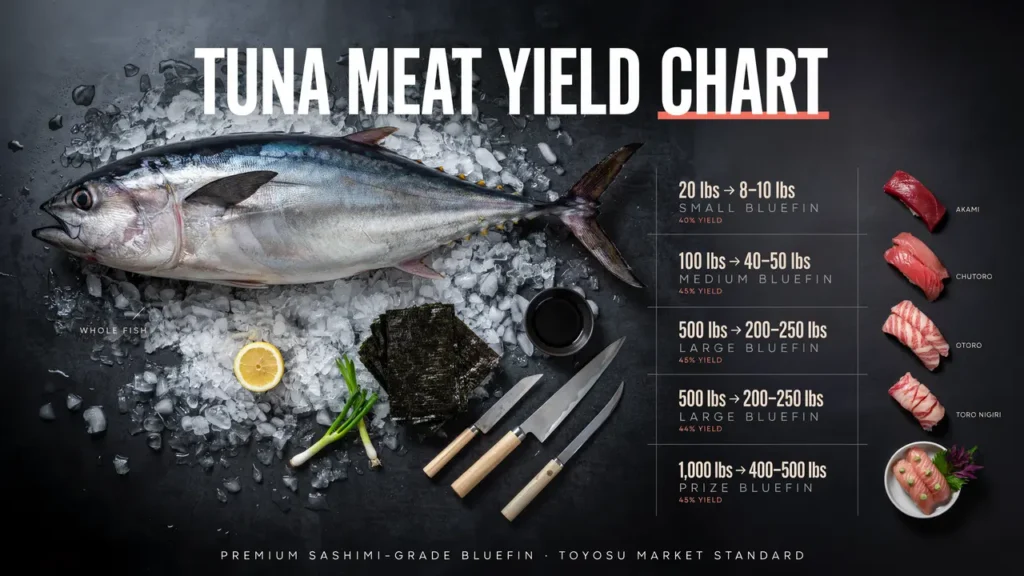
Larger tuna produce significantly more usable meat.
Tuna Meat Yield Chart
| Tuna Weight | Approximate Meat Yield |
|---|---|
| 20 lbs | 8–10 lbs |
| 100 lbs | 40–50 lbs |
| 500 lbs | 200–250 lbs |
| 1,000 lbs | 400–500 lbs |
Premium tuna cuts are highly valued in sushi and sashimi markets.
Visual Guide: Tuna Sizes
Visual comparisons help anglers and seafood buyers understand tuna sizes more easily.
Tuna Size Visual Chart
| Tuna Species | Visual Comparison | Typical Use |
|---|---|---|
| Skipjack Tuna | Small child height | Canned tuna products |
| Albacore Tuna | Adult arm length | Seafood markets |
| Yellowfin Tuna | Human height | Sport fishing |
| Bluefin Tuna | Small car length | Premium seafood trade |
Tips For Understanding Tuna Sizes
- Warm waters support fast growth: Tropical species grow rapidly.
- Larger tuna migrate long distances: Some travel across entire oceans.
- Bluefin tuna live longer: They can reach enormous sizes over time.
- Weight increases rapidly with length: Large tuna become extremely heavy.
- Species identification matters: Different tuna vary greatly in value.
Understanding tuna growth helps both anglers and seafood buyers.
Common Mistakes When Estimating Tuna Size
- Underestimating fish weight: Large tuna are heavier than they appear.
- Confusing tuna species: Similar-looking species may differ greatly in size.
- Ignoring age differences: Younger tuna can look very different from adults.
- Assuming all tuna are giant: Many species remain relatively small.
Proper species identification improves fishing and seafood knowledge.
How Tuna Size Affects Fishing
Small tuna are often targeted with light tackle, while giant bluefin tuna require specialized equipment capable of handling hundreds of pounds of pulling force.
Large tuna are famous for long, exhausting battles that can last several hours.
Their speed and endurance make them some of the most respected game fish in the world.
The Importance Of Tuna Worldwide
Tuna are among the most commercially important fish species globally. They support major fisheries, seafood markets, and recreational fishing industries.
Species such as bluefin tuna are especially valuable because of their demand in sushi and sashimi markets.
Today, tuna remain symbols of strength, speed, and ocean conservation efforts.
Frequently Asked Questions
What Is The Largest Tuna Species?
Bluefin tuna are the largest tuna species and can exceed 1,500 pounds.
How Big Do Yellowfin Tuna Get?
Large yellowfin tuna can exceed 400 pounds.
Which Tuna Is Used For Canned Tuna?
Skipjack tuna is the most common species used in canned products.
Are Bluefin Tuna Valuable?
Yes, bluefin tuna are among the most valuable fish sold worldwide.
How Fast Can Tuna Swim?
Some tuna species can reach speeds exceeding 40 mph.
Tuna size charts may seem simple, but they provide valuable information for anglers, seafood enthusiasts, and marine wildlife lovers alike. From small skipjack tuna to giant bluefin giants, understanding tuna sizes helps improve fishing knowledge, seafood appreciation, and awareness of these incredible ocean predators.
Average tuna weights by species
Comparison of average adult weights among common tuna species.
| species | weight |
|---|---|
| Skipjack | 12 |
| Blackfin | 20 |
| Albacore | 45 |
| Yellowfin | 220 |
| Bigeye | 250 |
| Bluefin | 800 |
