
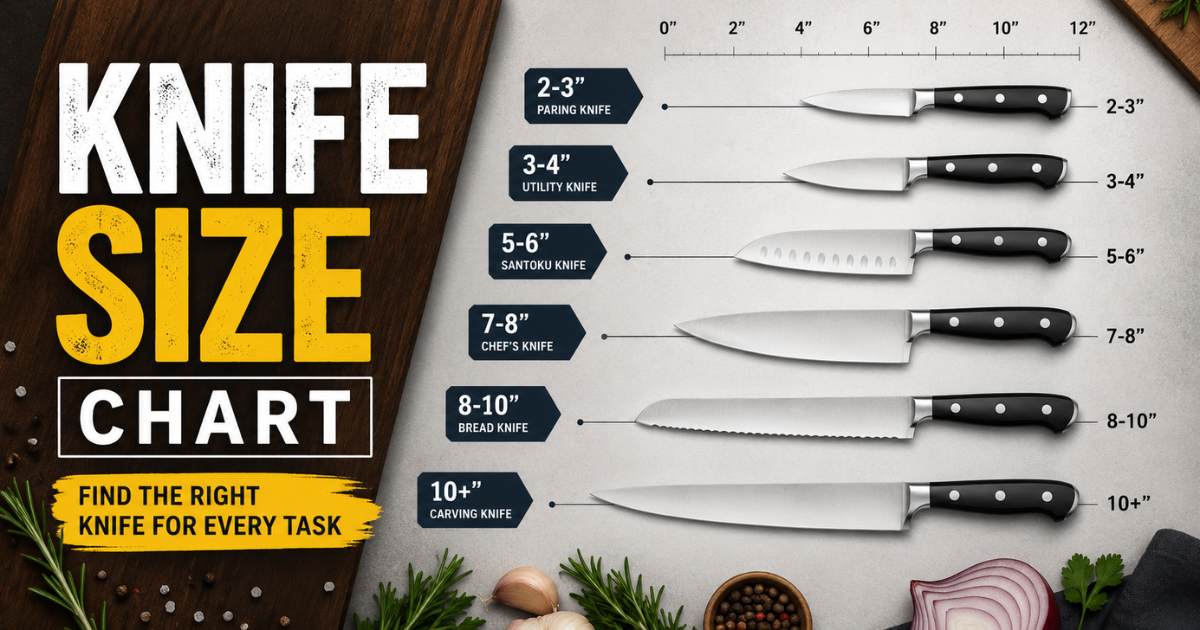
Choosing the right knife size is more important than many people realize. Whether you’re preparing dinner, camping outdoors, or looking for an everyday carry knife, the blade length affects comfort, safety, precision, and overall performance. A knife that feels too large can be difficult to control, while one that’s too small may not handle bigger cutting tasks efficiently.
This knife size chart explains the most common knife sizes, what each size is best suited for, and how to choose the right option based on your needs.
Knife Size Chart
| Blade Length | Blade Length (cm) | Best For |
|---|---|---|
| 2–3 inches | 5–7.5 cm | Small cutting tasks, peeling fruits, precision work |
| 3–4 inches | 7.5–10 cm | Everyday carry (EDC), utility tasks |
| 5–6 inches | 12.5–15 cm | Utility knives, boning knives, small outdoor tasks |
| 7–8 inches | 18–20 cm | Chef’s knives, all-purpose kitchen use |
| 9–10 inches | 23–25 cm | Large food preparation, slicing meat |
| 10+ inches | 25+ cm | Professional kitchens, heavy-duty cutting |
Understanding Knife Measurements
Knife size is usually measured by the length of the blade, not the entire knife. Manufacturers typically list blade length in inches, although many European brands also include centimeters.
For example, an 8-inch chef’s knife refers to an 8-inch blade, while the overall knife length will be several inches longer because of the handle.
When comparing knives, always check the blade length first since it determines cutting performance and handling.
Why Knife Size Matters
Knife size directly impacts how comfortable and efficient the knife feels during use. A properly sized knife offers better balance, improved control, and safer handling. Using a blade that’s appropriate for the task also helps produce cleaner cuts and reduces hand fatigue.
Common Kitchen Knife Sizes
Most home kitchens contain several knife sizes because each serves a different purpose.
- 3–4 inch Paring Knife: Perfect for peeling fruits, trimming vegetables, and detailed cutting.
- 5–6 inch Utility Knife: Great for sandwiches, fruits, and medium-sized ingredients.
- 7–8 inch Chef’s Knife: The most versatile choice for everyday cooking.
- 8–10 inch Bread Knife: Designed for slicing bread without crushing it.
- 9–10 inch Carving Knife: Best for slicing cooked meat and poultry.
Outdoor and Everyday Carry Knife Sizes
Outdoor knives are selected differently than kitchen knives.
- 2–3 inches: Lightweight everyday carry.
- 3–4 inches: Camping, hiking, and general outdoor use.
- 4–6 inches: Bushcraft and survival tasks.
- 6 inches or longer: Heavy-duty chopping and demanding outdoor work.
How to Choose the Right Knife Size
When selecting a knife, consider these factors:
Purpose
Think about how you’ll use the knife most often. Food preparation, camping, hunting, or everyday tasks all require different blade lengths.
Hand Size
A comfortable grip improves control. People with larger hands often prefer slightly longer handles and blades.
Weight and Balance
A well-balanced knife feels stable during use. Balance is often more important than blade length alone.
Storage
Larger knives require more storage space, while smaller knives are easier to carry and organize.
Knife Size Tips for Beginners
If you’re buying your first quality knife, an 8-inch chef’s knife is often the best all-around choice for the kitchen. It handles most daily cooking tasks while remaining comfortable for beginners.
For everyday carry, a 3 to 4-inch blade offers an excellent balance between portability and usefulness.
Frequently Asked Questions
What is the most popular kitchen knife size?
An 8-inch chef’s knife is considered the standard size because it offers excellent versatility for most cooking tasks.
Is a longer knife always better?
No. Longer knives are better for slicing larger foods, while shorter knives provide greater control for precision work.
What knife size is best for beginners?
Most beginners will find an 8-inch chef’s knife easy to learn and suitable for everyday kitchen use.
Which knife size is best for everyday carry?
A blade between 3 and 4 inches is commonly preferred because it’s compact, practical, and comfortable for daily tasks.
Final Thoughts
Choosing the correct knife size makes cutting easier, safer, and more enjoyable. Instead of focusing only on the biggest blade, consider the work you’ll perform most often. A well-sized knife improves accuracy, reduces fatigue, and lasts for years when properly maintained.
Use this knife size chart as a practical reference whenever you’re shopping for a new knife, upgrading your kitchen tools, or selecting an outdoor blade.
