
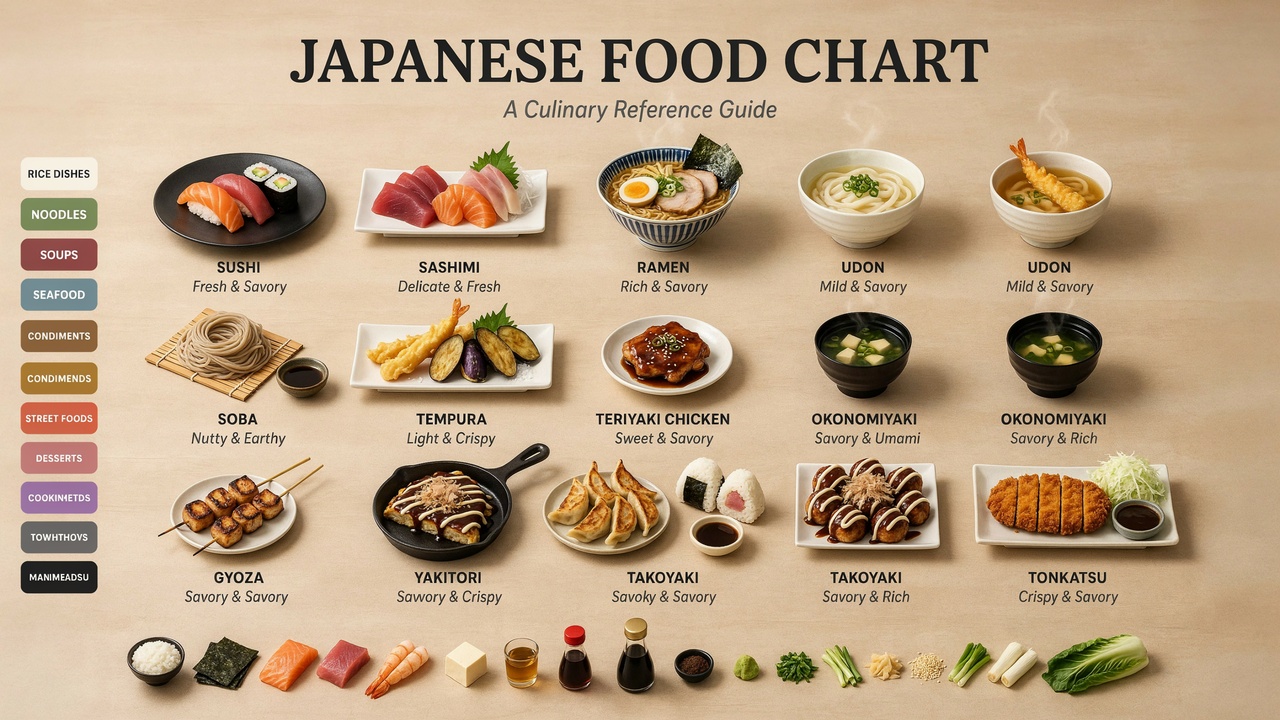
Japanese cuisine is known for its balance of flavor, texture, seasonality, and presentation. From sushi and ramen to tempura, udon, teriyaki, and miso soup, Japanese food includes a wide variety of dishes ranging from light and delicate to rich and comforting. Understanding the Japanese food chart makes it easier to explore popular Japanese dishes, learn what ingredients they contain, and discover which foods are commonly served together.
Why Japanese Food Matters
Japanese food often focuses on fresh ingredients and simple preparation. Rice, seafood, vegetables, noodles, soy-based products, and fermented ingredients are important parts of the cuisine.
Different cooking methods create very different dishes. Seafood may be served raw as sashimi, vegetables can be lightly battered and fried as tempura, while noodles can be served in hot broth as ramen or udon.
Japanese meals also often balance several flavors and textures instead of relying on one dominant ingredient.
Standard Japanese Food Chart
Japanese cuisine includes hundreds of dishes, but some foods are especially well known around the world.
Japanese Food Chart
| Japanese Food | Main Ingredients | Flavor Profile | Common Serving |
|---|---|---|---|
| Sushi | Rice, seafood, vegetables | Fresh & savory | Main dish |
| Sashimi | Raw seafood | Delicate & fresh | Appetizer/main |
| Ramen | Noodles, broth, toppings | Rich & savory | Main dish |
| Udon | Thick wheat noodles, broth | Mild & savory | Main dish |
| Soba | Buckwheat noodles | Nutty & earthy | Main dish |
| Tempura | Seafood, vegetables, batter | Light & crispy | Main dish/side |
| Teriyaki Chicken | Chicken, soy-based sauce | Sweet & savory | Main dish |
| Miso Soup | Miso, dashi, tofu | Savory & umami | Side |
| Yakitori | Grilled chicken | Smoky & savory | Snack/main |
| Okonomiyaki | Cabbage, batter, toppings | Savory & rich | Main dish |
| Gyoza | Dumpling, meat, vegetables | Savory & crispy | Side/main |
| Onigiri | Rice, fillings | Mild & savory | Snack |
| Takoyaki | Batter, octopus | Savory & rich | Snack |
| Curry Rice | Rice, curry sauce | Mild-spicy & savory | Main dish |
| Tonkatsu | Breaded pork | Crispy & savory | Main dish |
Recipes and ingredients can vary between regions and restaurants.
Choosing The Right Japanese Food
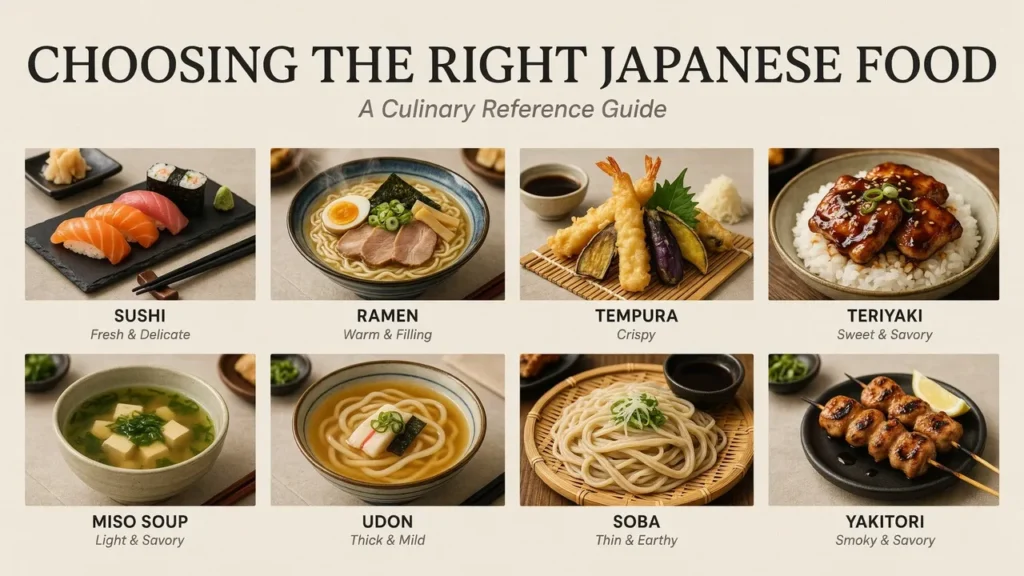
The best Japanese dish depends on your preferred flavor, texture, and meal type.
Sushi: Ideal if you enjoy fresh seafood, rice, and delicate flavors.
Ramen: Great when you want a warm, filling bowl with noodles and flavorful broth.
Tempura: A good choice when you enjoy crispy seafood or vegetables.
Teriyaki: Works well for people who prefer sweet and savory flavors.
Miso Soup: A light and savory option often served alongside other dishes.
Udon: Best for those who enjoy thick, soft noodles and mild broth.
Soba: A good choice when you prefer thinner noodles with an earthy flavor.
Yakitori: Excellent for grilled chicken lovers looking for smoky, savory flavors.
Japanese Rice Dishes Chart
Rice is one of the most important staples in Japanese cuisine.
| Rice Dish | Main Ingredients | Flavor |
|---|---|---|
| Onigiri | Rice, filling, nori | Mild & savory |
| Donburi | Rice, meat/seafood, sauce | Savory |
| Katsudon | Rice, pork cutlet, egg | Rich & savory |
| Oyakodon | Rice, chicken, egg | Mild & savory |
| Gyudon | Rice, beef, onion | Sweet & savory |
| Unadon | Rice, grilled eel | Rich & sweet-savory |
| Takikomi Gohan | Rice, vegetables, meat | Savory & aromatic |
| Japanese Curry Rice | Rice, curry sauce | Rich & savory |
Rice dishes are often served in bowls and can be topped with meat, seafood, vegetables, eggs, or sauces.
Japanese Noodle Chart
Japanese cuisine includes several major noodle varieties.
| Noodle | Main Ingredient | Texture | Common Dishes |
|---|---|---|---|
| Ramen | Wheat | Thin to medium | Ramen |
| Udon | Wheat | Thick & chewy | Udon soup |
| Soba | Buckwheat | Thin & firm | Soba noodles |
| Somen | Wheat | Very thin | Cold somen |
| Yakisoba | Wheat-based | Chewy | Stir-fried noodles |
Noodles can be served hot, cold, in broth, or stir-fried depending on the dish.
Japanese Soup Chart
Soups are an important part of many Japanese meals.
| Soup | Main Ingredients | Flavor |
|---|---|---|
| Miso Soup | Miso, dashi, tofu | Savory & umami |
| Ramen Broth | Meat/fish/vegetables | Rich & savory |
| Udon Broth | Dashi, soy sauce | Mild & savory |
| Clear Soup | Dashi, vegetables | Light & delicate |
| Tonjiru | Miso, pork, vegetables | Rich & savory |
| Nabemono Broth | Dashi, vegetables, protein | Savory |
Miso soup is often served as part of a larger meal rather than as the main dish.
Japanese Seafood Food Chart
Seafood plays a major role in traditional Japanese cuisine.
| Seafood | Common Japanese Dish | Typical Preparation |
|---|---|---|
| Salmon | Sushi, sashimi | Raw or grilled |
| Tuna | Sushi, sashimi | Raw |
| Eel | Unagi | Grilled |
| Shrimp | Tempura, sushi | Fried or raw |
| Octopus | Takoyaki, sashimi | Cooked or raw |
| Mackerel | Saba | Grilled or cured |
| Yellowtail | Sushi, sashimi | Raw |
| Squid | Sushi, sashimi | Raw or cooked |
| Crab | Sushi, hot pot | Cooked |
| Scallop | Sushi, sashimi | Raw or cooked |
Preparation varies depending on the dish and the type of seafood.
Japanese Food By Cooking Method
Japanese dishes can also be categorized by how they are prepared.
| Cooking Method | Japanese Examples |
|---|---|
| Raw | Sushi, sashimi |
| Grilled | Yakitori, yakizakana |
| Deep-Fried | Tempura, tonkatsu |
| Simmered | Nikujaga, nimono |
| Steamed | Chawanmushi |
| Stir-Fried | Yakisoba |
| Boiled | Udon, some noodle dishes |
| Fermented | Miso, natto, pickles |
| Hot Pot | Shabu-shabu, sukiyaki |
Different cooking methods create distinct textures and flavors.
Japanese Food Flavor Chart
Japanese cuisine often emphasizes umami, but many dishes combine several flavors.
| Flavor | Common Ingredients |
|---|---|
| Umami | Miso, dashi, soy sauce |
| Salty | Soy sauce, miso |
| Sweet | Mirin, sugar, teriyaki sauce |
| Sour | Rice vinegar, citrus |
| Spicy | Wasabi, chili |
| Nutty | Sesame, buckwheat |
| Fresh | Shiso, green onion, citrus |
| Smoky | Grilled meats, fish |
The balance of these flavors helps create the characteristic taste of many Japanese dishes.
Japanese Condiments Chart
Condiments are an important part of Japanese food.
| Condiment | Flavor | Common Uses |
|---|---|---|
| Soy Sauce | Salty & savory | Sushi, dipping |
| Wasabi | Sharp & spicy | Sushi, sashimi |
| Miso | Salty & umami | Soup, sauces |
| Ponzu | Citrus & savory | Seafood, hot pot |
| Japanese Mayonnaise | Creamy & tangy | Okonomiyaki, sandwiches |
| Teriyaki Sauce | Sweet & savory | Chicken, beef |
| Togarashi | Spicy & aromatic | Noodles, soups |
| Sesame Sauce | Nutty & savory | Vegetables, noodles |
| Pickled Ginger | Sweet & tangy | Sushi |
A small amount of condiment can significantly change the flavor of a dish.
Japanese Food Pairing Chart
Many Japanese foods are traditionally served with complementary side dishes and condiments.
| Main Food | Good Pairings |
|---|---|
| Sushi | Soy sauce, wasabi, pickled ginger |
| Ramen | Green onion, egg, nori |
| Udon | Green onion, tempura |
| Soba | Green onion, wasabi |
| Tempura | Dipping sauce, grated daikon |
| Teriyaki Chicken | Rice, vegetables |
| Tonkatsu | Cabbage, tonkatsu sauce |
| Yakitori | Rice, pickles |
| Gyoza | Soy-vinegar dip, chili oil |
| Okonomiyaki | Japanese mayo, sauce, bonito flakes |
| Unagi | Rice, Japanese pepper |
| Miso Soup | Rice, pickles, grilled fish |
Japanese Breakfast Food Chart
Traditional Japanese breakfasts can include several small dishes rather than one large main item.
| Food | Common Breakfast Pairings |
|---|---|
| Steamed Rice | Miso soup, grilled fish |
| Grilled Salmon | Rice, pickles |
| Miso Soup | Rice, vegetables |
| Natto | Rice, green onion |
| Tamagoyaki | Rice, miso soup |
| Pickled Vegetables | Rice, fish |
| Tofu | Soy sauce, green onion |
A Japanese-style breakfast often combines rice, soup, protein, vegetables, and small side dishes.
Japanese Street Food Chart
Japan has a wide variety of popular street and festival foods.
| Street Food | Main Ingredients | Texture |
|---|---|---|
| Takoyaki | Batter, octopus | Crispy outside, soft inside |
| Yakitori | Chicken | Grilled & juicy |
| Taiyaki | Sweet filling, batter | Crispy outside |
| Okonomiyaki | Cabbage, batter | Soft & savory |
| Yakisoba | Noodles, vegetables | Chewy |
| Karaage | Chicken | Crispy |
| Dango | Rice flour | Soft & chewy |
| Imagawayaki | Batter, sweet filling | Soft & warm |
Street foods are commonly served at festivals, markets, and casual food stalls.
Japanese Food For Beginners
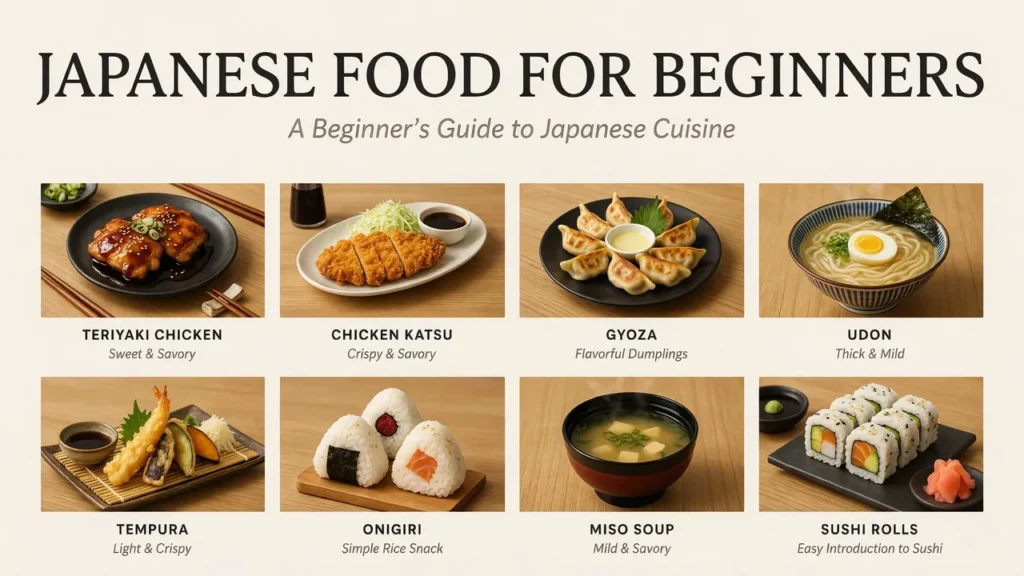
If you’re new to Japanese cuisine, some dishes are easier starting points than others.
Teriyaki Chicken: Familiar sweet and savory flavor.
Chicken Katsu: Crispy breaded chicken with a savory sauce.
Gyoza: Crispy dumplings with a flavorful filling.
Udon: Thick noodles with a relatively mild broth.
Tempura: Lightly battered vegetables or seafood.
Onigiri: Simple rice snacks with different fillings.
Miso Soup: Mild, savory, and easy to pair with other foods.
Sushi Rolls: A convenient introduction to sushi with different fillings and sauces.
Japanese Food For Seafood Lovers
Seafood lovers have many choices.
| Dish | Seafood | Style |
|---|---|---|
| Sashimi | Tuna, salmon, yellowtail | Raw |
| Sushi | Various seafood | Raw/cooked |
| Unagi | Eel | Grilled |
| Saba | Mackerel | Grilled |
| Ebi Tempura | Shrimp | Fried |
| Takoyaki | Octopus | Cooked |
| Kani | Crab | Cooked/raw depending on dish |
Seafood preparation ranges from raw and delicate to grilled, fried, or simmered.
Japanese Vegetarian Food Chart
Japanese cuisine also includes many vegetable- and plant-based dishes.
| Food | Main Ingredients | Flavor |
|---|---|---|
| Vegetable Tempura | Vegetables, batter | Light & crispy |
| Tofu | Soybeans | Mild & savory |
| Edamame | Soybeans | Fresh & nutty |
| Vegetable Sushi | Rice, vegetables | Fresh & mild |
| Miso Soup | Miso, tofu, seaweed | Savory |
| Yasai Yakisoba | Noodles, vegetables | Savory |
| Pickled Vegetables | Various vegetables | Tangy |
| Vegetable Donburi | Rice, vegetables | Savory |
Some dishes may contain fish-based dashi or other animal ingredients, so preparation should be checked if following a strict vegetarian diet.
Japanese Food And Rice Pairings
Rice can serve as the base for many Japanese meals.
| Rice Type/Dish | Best Pairings |
|---|---|
| Steamed Japanese Rice | Fish, vegetables, miso soup |
| Sushi Rice | Seafood, vegetables |
| Onigiri Rice | Salmon, tuna, pickled plum |
| Donburi Rice | Beef, chicken, seafood |
| Curry Rice | Japanese curry, vegetables |
| Rice With Natto | Soy sauce, green onion |
Short-grain Japanese rice is commonly used because its texture works well for many traditional dishes.
Japanese Dessert Chart
Japanese cuisine includes a variety of traditional and modern desserts.
| Dessert | Main Ingredients | Texture |
|---|---|---|
| Mochi | Glutinous rice | Soft & chewy |
| Dango | Rice flour | Chewy |
| Dorayaki | Pancake-like cakes, sweet filling | Soft |
| Taiyaki | Batter, sweet filling | Crisp & soft |
| Matcha Ice Cream | Matcha, dairy | Creamy |
| Anmitsu | Jelly, fruit, sweet beans | Mixed |
| Castella | Sponge cake | Soft & airy |
| Japanese Cheesecake | Cream cheese, eggs | Light & fluffy |
Matcha, red bean, sesame, and fruit are common flavors in Japanese sweets.
Japanese Food And Texture
Texture is an important part of Japanese cuisine.
| Texture | Examples |
|---|---|
| Crispy | Tempura, karaage |
| Chewy | Udon, mochi, dango |
| Soft | Tofu, steamed egg |
| Crunchy | Pickles, vegetables |
| Tender | Grilled fish, simmered meat |
| Creamy | Japanese cheesecake, some desserts |
| Silky | Chawanmushi, tofu |
A meal may include several different textures to create variety from one bite to the next.
Tips For Exploring Japanese Food
Start with familiar flavors: Teriyaki, chicken katsu, and gyoza can be approachable choices.
Try different noodles: Ramen, udon, and soba have noticeably different textures.
Explore condiments: Soy sauce, wasabi, ponzu, and Japanese mayonnaise can change a dish significantly.
Try seasonal foods: Japanese cuisine places considerable emphasis on seasonal ingredients.
Don’t judge everything by appearance: Some traditional foods have unfamiliar textures but mild flavors.
Balance your meal: Pair a main dish with rice, soup, vegetables, or pickles for variety.
Common Mistakes When Exploring Japanese Food
Assuming all sushi is raw: Sushi can contain cooked seafood, vegetables, eggs, or other ingredients.
Thinking soy sauce is used for everything: Many Japanese dishes use different sauces, broths, and seasonings.
Adding too much wasabi: Wasabi has a strong flavor and is usually used in small amounts.
Confusing sushi and sashimi: Sushi involves seasoned rice, while sashimi is sliced seafood served without sushi rice.
Ignoring texture: Japanese dishes often emphasize texture as much as flavor.
Assuming Japanese food is always light: Dishes such as tonkatsu, ramen, curry, and tempura can be rich and filling.
The History Behind Japanese Food
Japanese cuisine developed over centuries and was influenced by geography, agriculture, religion, trade, and seasonal availability. Rice became a major staple, while seafood, vegetables, soy products, noodles, and fermented foods became important parts of the diet.
Traditional Japanese cuisine is often associated with washoku, a style that emphasizes seasonality, balance, presentation, and a variety of ingredients.
Over time, Japanese cuisine also incorporated influences from other countries. Foods such as curry rice, ramen, and some Western-style baked goods were adapted into distinctly Japanese versions.
Today, Japanese food is enjoyed around the world, from traditional dishes to modern restaurant creations.
Frequently Asked Questions
What Is The Most Popular Japanese Food?
Some of the most internationally popular Japanese foods include sushi, ramen, tempura, teriyaki, udon, soba, gyoza, and miso soup.
What Is A Traditional Japanese Staple Food?
Rice is one of the most important staples in traditional Japanese cuisine and is commonly served with fish, vegetables, soup, and other dishes.
What Is The Difference Between Sushi And Sashimi?
Sushi includes seasoned rice with toppings or fillings, while sashimi is generally sliced raw seafood served without sushi rice.
What Are The Main Japanese Noodles?
The three major noodle varieties are ramen, udon, and soba. Ramen is typically made from wheat, udon is thick and chewy, and soba is traditionally made with buckwheat.
What Is Miso Soup Made Of?
Miso soup is commonly made with miso paste and dashi, often with ingredients such as tofu, seaweed, and green onions.
What Japanese Food Is Good For Beginners?
Teriyaki chicken, chicken katsu, gyoza, tempura, udon, onigiri, and sushi rolls can be approachable options for people trying Japanese cuisine for the first time.
What Are Popular Japanese Street Foods?
Popular examples include takoyaki, yakitori, okonomiyaki, yakisoba, karaage, taiyaki, and dango.
What Are Common Japanese Condiments?
Common condiments include soy sauce, wasabi, ponzu, miso, Japanese mayonnaise, teriyaki sauce, pickled ginger, and chili seasoning.
What Is Washoku?
Washoku is the traditional dietary culture of Japan, emphasizing seasonal ingredients, balance, variety, and presentation.
Is Japanese Food Always Healthy?
Japanese cuisine includes many nutritious foods such as fish, vegetables, rice, tofu, and fermented products, but dishes can vary greatly. Fried foods, rich ramen, sweets, and heavily seasoned dishes can contain more calories, fat, or sodium.
Japanese cuisine offers an enormous variety of flavors, textures, and cooking styles. From sushi and sashimi to ramen, udon, tempura, teriyaki, gyoza, curry, and traditional sweets, there is something for almost every preference. Understanding the Japanese food chart makes it easier to explore popular dishes, identify their main ingredients, choose complementary foods, and discover new Japanese flavors with confidence.
