
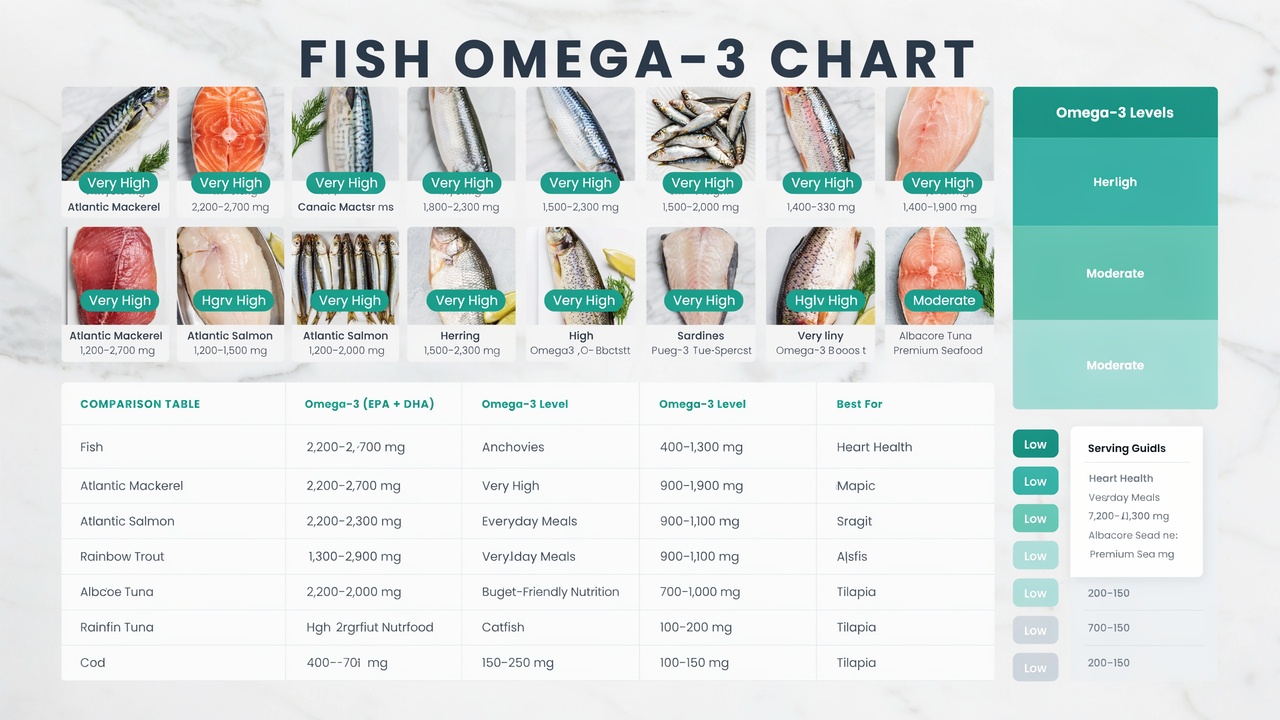
Omega-3 fatty acids (EPA and DHA) are essential nutrients that support heart, brain, eye, and joint health. Fatty fish are the richest natural sources of omega-3s, while lean fish generally contain lower amounts. This fish omega-3 chart compares common seafood based on the approximate amount of omega-3 per 3-ounce (85g) cooked serving.
Why Omega-3 Matters
Eating omega-3-rich fish may help:
- Support heart health
- Promote brain function
- Maintain eye health
- Reduce inflammation
- Support healthy pregnancy
- Improve overall nutrition
Most health organizations recommend eating 2 servings of fatty fish per week.
Fish Omega-3 Chart
| Fish | Omega-3 (EPA + DHA) | Omega-3 Level | Best For |
|---|---|---|---|
| Atlantic Mackerel | 2,200–2,700 mg | Very High | Heart health |
| Atlantic Salmon | 1,800–2,300 mg | Very High | Everyday meals |
| Sardines | 1,400–1,900 mg | Very High | Budget-friendly nutrition |
| Herring | 1,500–2,000 mg | Very High | Omega-3 boost |
| Rainbow Trout | 900–1,100 mg | High | Healthy dinners |
| Albacore Tuna | 700–1,000 mg | High | Sandwiches, salads |
| Bluefin Tuna | 1,200–1,500 mg | High | Premium seafood |
| Anchovies | 900–1,300 mg | High | Pizza, pasta |
| Halibut | 400–700 mg | Moderate | Lean meals |
| Cod | 150–250 mg | Low | Low-fat recipes |
| Tilapia | 100–150 mg | Low | Everyday cooking |
| Catfish | 100–200 mg | Low | Fried or grilled dishes |
Values are approximate and vary with species, farming method, and cooking style.
Omega-3 Levels by Fish
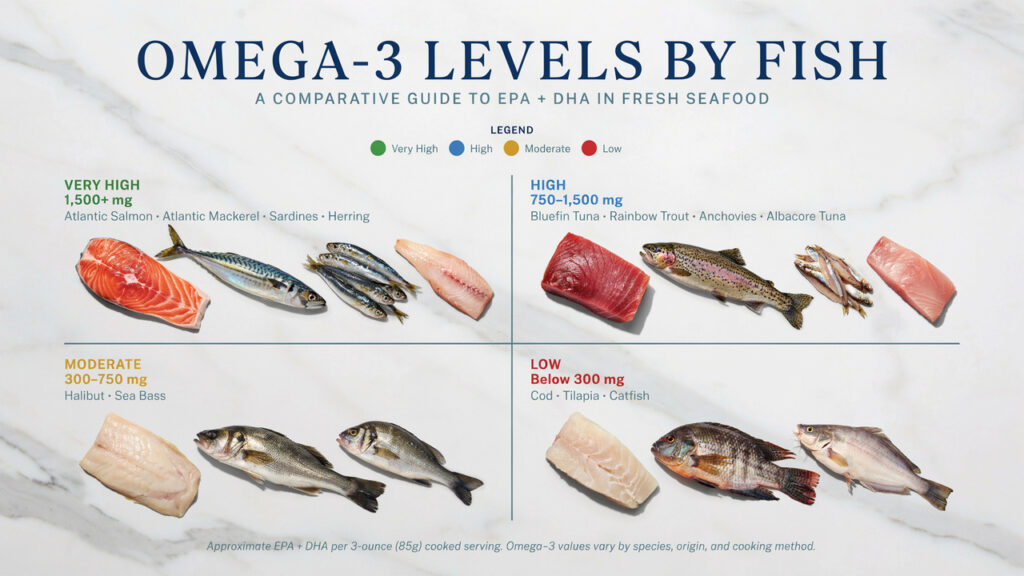
| Omega-3 Level | Fish Examples |
|---|---|
| Very High (1,500+ mg) | Atlantic Salmon, Mackerel, Sardines, Herring |
| High (750–1,500 mg) | Bluefin Tuna, Rainbow Trout, Anchovies, Albacore Tuna |
| Moderate (300–750 mg) | Halibut, Sea Bass |
| Low (Below 300 mg) | Cod, Tilapia, Catfish |
Best Fish for Omega-3
Excellent Choices
- Atlantic Salmon
- Atlantic Mackerel
- Sardines
- Herring
- Rainbow Trout
Good Choices
- Bluefin Tuna
- Albacore Tuna
- Anchovies
- Halibut
Lower Omega-3 Options
- Cod
- Tilapia
- Catfish
Serving Size Guide
| Person | Recommended Fish Serving |
|---|---|
| Child | 2–3 oz (57–85g) |
| Adult | 3–4 oz (85–113g) |
| Active Adult | 4–6 oz (113–170g) |
Tips for Getting More Omega-3
- Eat fatty fish twice a week.
- Grill, bake, or steam instead of deep frying.
- Include sardines or salmon in salads and sandwiches.
- Choose fresh or canned fish packed in water or olive oil.
- Rotate different fish to enjoy a variety of nutrients.
Frequently Asked Questions
Which fish has the most omega-3?
Atlantic mackerel and Atlantic salmon are among the richest natural sources of omega-3 fatty acids.
Is salmon higher in omega-3 than tuna?
Yes. Most varieties of salmon provide significantly more omega-3 than most tuna varieties.
Is tilapia high in omega-3?
No. Tilapia contains relatively low levels of omega-3 compared with fatty fish like salmon or mackerel.
How much fish should I eat each week?
Most dietary guidelines recommend at least two servings (about 8 ounces/227g total) of fatty fish per week.
Conclusion
A fish omega-3 chart helps you compare the healthiest seafood choices for increasing your intake of EPA and DHA. Atlantic mackerel, salmon, sardines, and herring are among the best sources, while cod, tilapia, and catfish provide much smaller amounts. Including omega-3-rich fish in your weekly diet is an excellent way to support overall health.
Meta Description:
Omega-3 content in common fish
Approximate EPA + DHA per 3-ounce (85g) cooked serving.
| fish | omega3 |
|---|---|
| Atlantic Mackerel | 2,450 |
| Atlantic Salmon | 2,050 |
| Herring | 1,750 |
| Sardines | 1,650 |
| Bluefin Tuna | 1,350 |
| Anchovies | 1,100 |
| Rainbow Trout | 1,000 |
| Albacore Tuna | 850 |
| Halibut | 550 |
| Cod | 200 |
| Catfish | 150 |
| Tilapia | 120 |
