
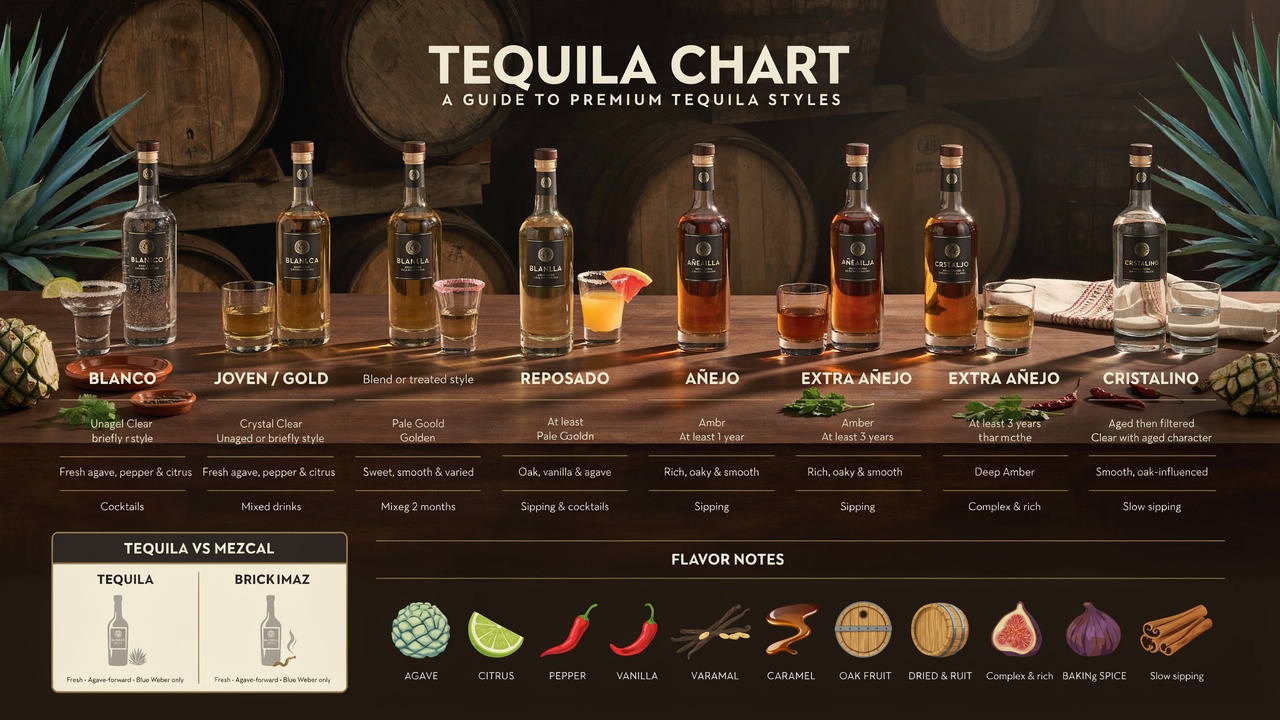
Tequila is one of Mexico’s most famous spirits, traditionally made from the blue agave plant. While tequila may look like a simple category, different varieties can have very different colors, aromas, textures, and flavors depending on how they are produced and aged. Understanding the tequila chart makes it easier to compare tequila types, aging periods, flavor profiles, alcohol content, and the best ways to enjoy each style.
Why Tequila Type Matters
The biggest difference between tequila varieties is often how long the spirit is aged and how it is treated after distillation.
Blanco tequila is generally unaged or rested only briefly, so it tends to have a fresh agave character. Reposado spends some time in oak, developing a smoother texture and subtle vanilla or caramel notes. Añejo is aged longer and usually develops deeper flavors.
The right tequila depends on whether you want to make cocktails, enjoy a simple pour, or explore the natural character of agave.
Standard Tequila Types Chart
| Tequila Type | Aging | Color | General Flavor | Best Use |
|---|---|---|---|---|
| Blanco | Unaged or briefly rested | Clear | Fresh agave, pepper & citrus | Cocktails |
| Joven/Gold | Blend or treated style | Gold | Sweet, smooth & varied | Mixed drinks |
| Reposado | At least 2 months | Light Gold | Oak, vanilla & agave | Sipping, cocktails |
| Añejo | At least 1 year | Amber | Rich, oaky & smooth | Sipping |
| Extra Añejo | At least 3 years | Deep Amber | Complex & rich | Slow sipping |
| Cristalino | Varies; aged then filtered | Clear | Smooth, oak-influenced | Sipping |
Specific flavor profiles vary by producer, agave source, barrel, and production method.
Tequila Aging Chart
Aging is one of the most important factors in tequila classification.
| Type | Minimum Aging Requirement | General Character |
|---|---|---|
| Blanco | No minimum aging | Fresh & agave-forward |
| Reposado | 2 months | Lightly oaked |
| Añejo | 1 year | Rich & mature |
| Extra Añejo | 3 years | Deep & complex |
Aging requirements are based on tequila regulations, while the actual taste can vary significantly between products.
Blanco Tequila Chart
Blanco is often considered the purest expression of the cooked agave character because it generally spends little or no time aging in oak.
| Feature | Blanco Tequila |
|---|---|
| Color | Clear |
| Aging | None or brief resting |
| Flavor | Agave-forward |
| Aroma | Herbal, peppery, citrusy |
| Texture | Crisp & clean |
| Best For | Margaritas, Palomas, sipping |
Blanco is particularly popular in cocktails because its fresh agave character can remain noticeable alongside citrus and other ingredients.
Reposado Tequila Chart
Reposado means “rested.” It is aged in oak for a minimum of two months.
| Feature | Reposado Tequila |
|---|---|
| Color | Pale Gold |
| Aging | At least 2 months |
| Flavor | Agave + oak |
| Common Notes | Vanilla, caramel, spice |
| Texture | Smooth & rounded |
| Best For | Sipping, Margaritas, cocktails |
Reposado provides a middle ground between fresh Blanco and richer Añejo.
Añejo Tequila Chart
Añejo tequila is aged for at least one year in oak.
| Feature | Añejo Tequila |
|---|---|
| Color | Amber |
| Aging | At least 1 year |
| Flavor | Rich & mature |
| Common Notes | Oak, vanilla, caramel |
| Texture | Smooth & full |
| Best For | Sipping |
Añejo is often enjoyed slowly rather than mixed into cocktails with many competing flavors.
Extra Añejo Tequila Chart
Extra Añejo is the longest-aged standard tequila category.
| Feature | Extra Añejo |
|---|---|
| Color | Deep Amber |
| Aging | At least 3 years |
| Flavor | Deep & complex |
| Common Notes | Oak, spice, vanilla |
| Texture | Rich & smooth |
| Best For | Slow sipping |
Longer aging can produce more pronounced barrel characteristics, although the exact flavor depends on the individual tequila.
Tequila Color Chart
| Color | Common Tequila Type | General Impression |
|---|---|---|
| Crystal Clear | Blanco | Fresh & agave-forward |
| Pale Gold | Reposado | Lightly oaked |
| Amber | Añejo | Rich & mature |
| Deep Amber | Extra Añejo | Complex & barrel-influenced |
| Clear With Aged Character | Cristalino | Smooth & polished |
Color alone does not determine quality.
Tequila Flavor Chart
| Flavor Profile | Common Characteristics | Often Found In |
|---|---|---|
| Fresh Agave | Herbal, vegetal, earthy | Blanco |
| Citrus | Lime, grapefruit | Blanco |
| Peppery | Black pepper, spice | Blanco |
| Vanilla | Sweet & aromatic | Reposado, Añejo |
| Caramel | Rich & sweet | Reposado, Añejo |
| Oak | Woody & warm | Reposado, Añejo |
| Dried Fruit | Rich & sweet | Añejo, Extra Añejo |
| Baking Spice | Cinnamon-like warmth | Añejo, Extra Añejo |
| Roasted Agave | Deep & earthy | Aged varieties |
These are general tasting characteristics rather than guarantees for every bottle.
Tequila Smoothness Chart
| Type | General Smoothness |
|---|---|
| Blanco | Crisp & lively |
| Reposado | Smooth & rounded |
| Añejo | Rich & smooth |
| Extra Añejo | Very smooth & complex |
| Cristalino | Smooth & polished |
Smoothness can also depend on proof, production method, and individual palate.
Tequila Alcohol Content Chart
Most tequila is bottled within a relatively narrow alcohol range.
| Tequila Style | Typical ABV |
|---|---|
| Blanco | Around 35–40% |
| Reposado | Around 35–40% |
| Añejo | Around 35–40% |
| Extra Añejo | Around 35–40% |
| Cristalino | Around 35–40% |
The exact alcohol content should always be checked on the bottle label.
Tequila Vs Mezcal
Tequila and mezcal are both Mexican agave spirits, but they are not the same thing.
| Feature | Tequila | Mezcal |
|---|---|---|
| Main Agave | Blue Weber agave | Many agave species |
| Production | Regulated tequila regions | Regulated mezcal regions |
| Flavor | Often fresh, earthy & peppery | Often smoky & earthy |
| Common Style | Blanco, Reposado, Añejo | Joven, Reposado, Añejo |
| Smoke Character | Usually lower | Often more noticeable |
Mezcal can be made from several agave species, while tequila is made from Agave tequilana Weber var. azul, commonly called Blue Weber agave.
Tequila Cocktail Chart
Different tequila styles work better in different drinks.
| Cocktail | Common Tequila Choice | Flavor Character |
|---|---|---|
| Margarita | Blanco | Fresh & citrusy |
| Paloma | Blanco or Reposado | Bright & refreshing |
| Tequila Sunrise | Blanco | Fruity & sweet |
| Ranch Water | Blanco | Crisp & light |
| Tequila Sour | Blanco or Reposado | Tart & balanced |
| Old Fashioned-Style Tequila Cocktail | Añejo | Rich & spirit-forward |
| Tequila Negroni-Style Drink | Reposado or Añejo | Bitter & complex |
Cocktail recipes can use different tequila styles depending on the desired flavor.
Tequila Serving Chart
| Serving Style | Suggested Tequila |
|---|---|
| Margarita | Blanco |
| Paloma | Blanco or Reposado |
| Shot | Blanco or Reposado |
| Neat Pour | Reposado or Añejo |
| Slow Sipping | Añejo or Extra Añejo |
| Cocktail With Strong Flavors | Blanco |
| Spirit-Forward Cocktail | Reposado or Añejo |
When sipping tequila, the glass and serving temperature can influence how aromas are perceived.
Tequila Food Pairing Chart
| Food | Suggested Tequila |
|---|---|
| Tacos | Blanco |
| Seafood | Blanco |
| Grilled Chicken | Reposado |
| Steak | Añejo |
| Spicy Foods | Blanco or Reposado |
| Guacamole | Blanco |
| Grilled Vegetables | Reposado |
| Dark Chocolate | Añejo |
| Fruit Desserts | Reposado |
| Rich Desserts | Añejo |
Fresh Blanco works well with bright foods, while aged tequila can complement richer flavors.
Tequila Flavor Pairing Chart
| Tequila Flavor | Food Pairing |
|---|---|
| Citrus | Seafood, ceviche |
| Pepper | Spicy tacos |
| Herbal | Guacamole, vegetables |
| Vanilla | Desserts |
| Caramel | Grilled meats |
| Oak | Steak |
| Dried Fruit | Dark chocolate |
| Roasted Agave | Smoky grilled foods |
Pairing works best when the intensity of the food and tequila is reasonably balanced.
Tequila Glass Chart
| Glass | Common Use |
|---|---|
| Shot Glass | Quick serving |
| Copita | Tasting & sipping |
| Glencairn-Style Glass | Aroma-focused tasting |
| Rocks Glass | Neat or with ice |
| Highball Glass | Cocktails |
| Margarita Glass | Margaritas |
A narrow or tulip-shaped glass can help concentrate aromas during tasting.
Tequila Serving Temperature
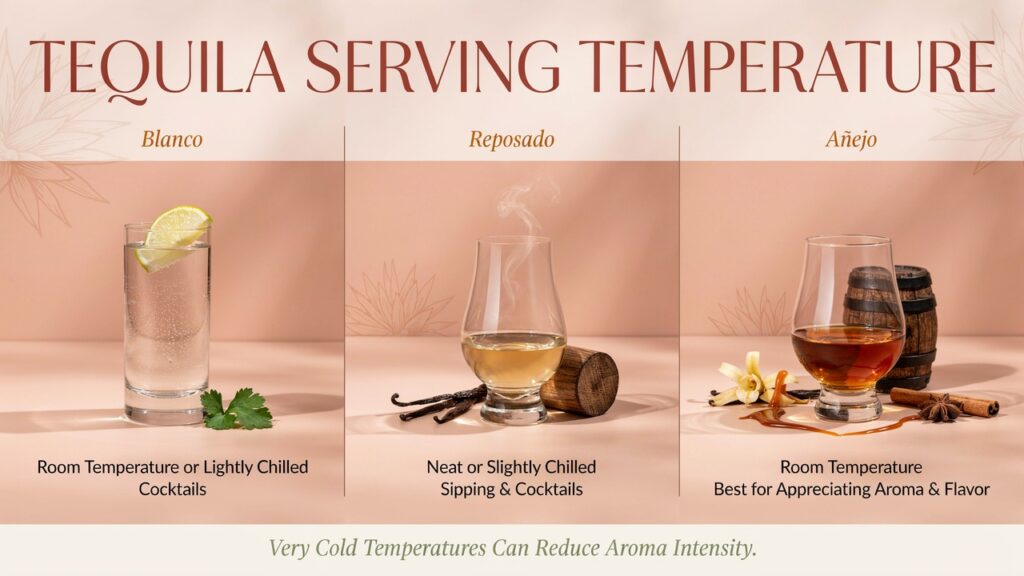
Tequila can be served at different temperatures depending on the style.
Blanco: Often served at room temperature or lightly chilled in cocktails.
Reposado: Commonly enjoyed neat or with a small amount of chilling.
Añejo: Often served neat at room temperature so its aromas and flavors can be appreciated.
Very cold temperatures can reduce the intensity of aromas.
Tequila Tasting Chart
When tasting tequila, several characteristics can be considered.
| Characteristic | What To Notice |
|---|---|
| Appearance | Clarity & color |
| Aroma | Agave, citrus, spice, oak |
| First Taste | Sweetness & agave |
| Mid-Palate | Fruit, herbs, oak |
| Finish | Pepper, spice, warmth |
| Texture | Light, smooth, rich |
Taking small sips allows the flavor to develop gradually.
How Tequila Is Made
Tequila production begins with mature blue agave plants.
- Agave plants are harvested.
- The leaves are removed.
- The agave hearts, or piñas, are cooked.
- Cooked agave is crushed to extract juice and fibers.
- The juice is fermented.
- The fermented liquid is distilled.
- The tequila may be rested or aged.
- It is diluted to the desired bottling strength and bottled.
Different producers use different equipment and techniques, which can influence the final flavor.
Tequila Production Chart
| Stage | What Happens |
|---|---|
| Harvesting | Mature agave is collected |
| Cooking | Agave starches are converted into fermentable sugars |
| Extraction | Juice is extracted |
| Fermentation | Sugars are converted into alcohol |
| Distillation | Alcohol is concentrated and refined |
| Aging | Some tequila rests in oak |
| Bottling | Final spirit is prepared for sale |
Agave Maturity And Tequila
The blue agave used for tequila typically takes several years to mature before harvest.
| Stage | General Character |
|---|---|
| Young Agave | Not normally harvested for premium tequila production |
| Mature Agave | Suitable for harvesting |
| Cooked Agave | Sweet & aromatic |
| Fermented Agave | Alcohol-producing stage |
| Distilled Spirit | Finished tequila base |
Agave maturity can influence the amount of sugars available for fermentation.
Tequila Quality Factors
Several factors can influence the character of a tequila.
Agave quality: Mature, healthy agave contributes to the spirit’s foundation.
Cooking method: Different cooking techniques can produce different aromas.
Fermentation: Yeast and fermentation conditions influence flavor.
Distillation: Equipment and distillation practices affect the spirit’s character.
Barrel aging: Oak can add vanilla, caramel, spice, and woody notes.
Water: Water used during production and proofing can influence the final product.
Common Mistakes When Choosing Tequila
Choosing only by color: A darker tequila is not automatically better.
Assuming older always means better: Aging changes flavor but does not guarantee that you will prefer it.
Using expensive Añejo in every cocktail: Strong barrel notes may be unnecessary in cocktails.
Ignoring the agave character: Blanco can offer a clearer expression of cooked agave.
Drinking too quickly: Aged tequila can reveal more flavors when tasted slowly.
Not checking the label: Alcohol content, tequila category, and product information can vary.
Tips For Choosing Tequila
For cocktails: Start with Blanco.
For a smoother middle ground: Try Reposado.
For sipping: Consider Añejo.
For complex flavors: Explore Extra Añejo.
For fresh agave flavor: Choose a Blanco.
For oak and vanilla notes: Look toward Reposado or Añejo.
Check the bottle: Look for the tequila category, alcohol content, and producer information.
Tequila Nutrition Chart
Tequila contains alcohol and is generally low in carbohydrates.
| Nutrient | General Character |
|---|---|
| Carbohydrates | Very Low |
| Protein | 0 g |
| Fat | 0 g |
| Fiber | 0 g |
| Alcohol | Present |
| Calories | Primarily from alcohol |
Calories increase with the amount consumed, and flavored or mixed drinks can contain additional calories from mixers and sweeteners.
Tequila Serving Size Chart
A standard serving depends on local guidelines and the type of drink.
| Serving Style | Typical Amount |
|---|---|
| Small Pour | 15 ml |
| Standard Shot | 30–45 ml |
| Neat Tasting Pour | 15–30 ml |
| Cocktail Base | Varies by Recipe |
| Large Pour | 45 ml+ |
Serving sizes vary by country, bar, and recipe.
Tequila Storage Chart
| Storage Condition | Recommendation |
|---|---|
| Upright | Recommended |
| Cool Location | Best |
| Away From Sunlight | Important |
| Room Temperature | Suitable |
| High Heat | Avoid |
| Freezing | Generally Unnecessary |
Keep the bottle tightly sealed and away from direct sunlight and excessive heat.
How Long Does Tequila Last?
An unopened bottle of tequila can remain stable for a long time when stored properly. Once opened, the spirit gradually changes as it is exposed to oxygen, although it does not spoil in the same way as perishable food.
Keeping the bottle tightly sealed and away from heat and sunlight helps preserve its quality.
Tequila Vs Rum Vs Whiskey
| Feature | Tequila | Rum | Whiskey |
|---|---|---|---|
| Main Ingredient | Blue agave | Sugarcane | Grain |
| Typical Flavor | Agave, pepper, citrus | Sweet, molasses, fruit | Grain, oak, spice |
| Aging | Optional depending on type | Often aged | Commonly aged |
| Popular Cocktails | Margarita, Paloma | Mojito, Daiquiri | Old Fashioned, Manhattan |
| Origin Association | Mexico | Caribbean & other regions | Several countries |
Each spirit has a different raw ingredient and production tradition.
Frequently Asked Questions
What Are The Main Types Of Tequila?
The main tequila categories are Blanco, Joven or Gold, Reposado, Añejo, and Extra Añejo. Cristalino is also commonly sold as a style made from aged tequila that has been filtered.
What Is Blanco Tequila?
Blanco tequila is generally unaged or only briefly rested and usually has a clear appearance with a fresh agave-forward flavor.
What Is Reposado Tequila?
Reposado means “rested.” It is aged in oak for at least two months, giving it a more rounded flavor and light barrel character.
What Is Añejo Tequila?
Añejo tequila is aged for at least one year, developing deeper flavors such as oak, vanilla, caramel, and spice.
What Is Extra Añejo Tequila?
Extra Añejo is tequila aged for at least three years. It generally has a deeper color and more developed barrel character.
Which Tequila Is Best For Margaritas?
Blanco tequila is a popular choice for Margaritas because its fresh agave and citrus-friendly character works well with lime and other cocktail ingredients.
Which Tequila Is Best For Sipping?
Reposado, Añejo, and Extra Añejo are commonly chosen for sipping because aging can create smoother textures and more complex flavors.
Is Darker Tequila Better?
Not necessarily. Color mainly indicates the influence of aging or other processing. A clear Blanco can be excellent, while an aged tequila may simply offer a different flavor profile.
What Is The Difference Between Tequila And Mezcal?
Tequila is made specifically from Blue Weber agave, while mezcal can be produced from several agave species. Mezcal is also often associated with a more pronounced smoky character.
How Much Alcohol Is In Tequila?
Most tequila is bottled at approximately 35–40% alcohol by volume, although exact strength varies by product.
Does Tequila Have Carbohydrates?
Pure tequila contains very little carbohydrate, but cocktails and flavored tequila products can contain additional carbohydrates and calories.
How Should Tequila Be Stored?
Store tequila upright, tightly sealed, and away from direct sunlight and excessive heat.
Tequila offers a wide range of experiences, from the fresh and peppery character of Blanco to the smooth oak and vanilla notes of Reposado and Añejo. Extra Añejo provides an even deeper, more mature profile, while different tequila styles can be matched to cocktails, food, or slow sipping. Understanding the tequila chart makes it easier to compare aging, flavor, alcohol content, serving styles, and the best uses for each type.
