
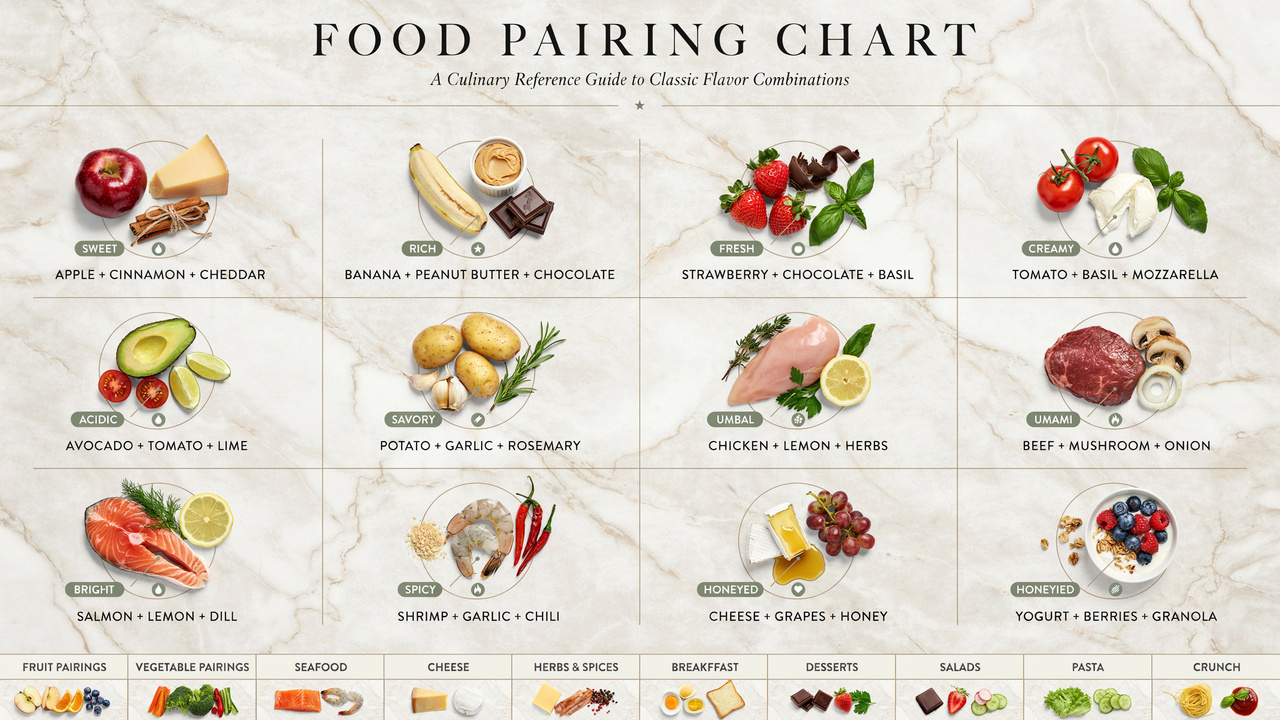
Food pairing is more than simply putting two ingredients on the same plate. The right combination can balance sweetness, acidity, saltiness, bitterness, richness, and texture to create a much more enjoyable meal. But have you ever wondered why tomatoes and basil taste so good together, or why cheese works so well with apples and grapes? Understanding the food pairing chart makes it easier to discover classic combinations and create new dishes at home. Let’s explore some of the best food pairings, flavor combinations, and serving ideas.
Why Food Pairing Matters
Food pairing helps ingredients work together instead of competing with each other. A rich or fatty food can benefit from something acidic, while sweet ingredients can balance spicy or salty foods.
Texture also matters. Crispy ingredients can add contrast to creamy foods, while fresh herbs can make rich dishes feel lighter.
For home cooks, a food pairing chart is useful when planning meals, salads, appetizers, desserts, and snacks. It can also help when you have ingredients available but aren’t sure what to combine them with.
Standard Food Pairing Chart
There are countless possible food combinations, but some pairings are especially popular because their flavors and textures complement one another.
Food Pairing Chart
| Main Food | Best Pairings | Flavor Combination |
|---|---|---|
| Apple | Cinnamon, cheddar, peanut butter | Sweet, warm, savory |
| Banana | Peanut butter, chocolate, oats | Sweet, nutty, rich |
| Strawberry | Chocolate, cream, basil | Sweet, creamy, fresh |
| Tomato | Basil, mozzarella, olive oil | Fresh, savory |
| Avocado | Tomato, lime, chili | Creamy, fresh, acidic |
| Potato | Garlic, rosemary, cheese | Savory, earthy |
| Chicken | Lemon, garlic, herbs | Savory, fresh |
| Beef | Mushroom, onion, garlic | Rich, earthy |
| Salmon | Lemon, dill, asparagus | Rich, fresh |
| Shrimp | Garlic, lemon, chili | Savory, bright, spicy |
| Eggs | Cheese, spinach, tomato | Creamy, savory, fresh |
| Cheese | Apple, grape, honey | Salty, sweet |
| Chocolate | Strawberry, banana, peanut butter | Sweet, fruity, nutty |
| Yogurt | Berries, honey, granola | Creamy, sweet, crunchy |
| Rice | Chicken, vegetables, soy sauce | Savory, balanced |
These combinations are flexible, so you can adjust them depending on the recipe and your personal taste.
Choosing The Right Food Pairing
The “best” pairing depends on the flavor you want to create.
Sweet With Acidic: Sweet foods often pair well with acidic ingredients. Strawberries with balsamic vinegar or fruit with citrus are good examples.
Rich With Acidic: Rich foods can benefit from acidity. Lemon with fish or pickles with a rich sandwich can create a more balanced bite.
Salty With Sweet: Salty cheese with honey or fruit creates a popular sweet-and-savory combination.
Spicy With Cooling: Spicy foods often work well with cooling ingredients such as yogurt, cucumber, or creamy sauces.
Earthy With Fresh: Mushrooms and potatoes can become brighter when paired with fresh herbs, lemon, or greens.
Food Pairing By Flavor
Flavor balance is one of the easiest ways to understand food pairing.
| Flavor | Works Well With | Example |
|---|---|---|
| Sweet | Acidic, salty, spicy | Honey + cheese |
| Salty | Sweet, acidic | Feta + watermelon |
| Sour | Sweet, rich | Lemon + cream |
| Bitter | Sweet, fatty | Dark chocolate + orange |
| Spicy | Cooling, sweet | Chili + yogurt |
| Umami | Acidic, aromatic | Mushrooms + garlic |
| Rich | Acidic, fresh | Fried food + lemon |
Pairing doesn’t always mean matching similar flavors. In many cases, the best combinations come from contrast.
Fruit Pairing Chart
Fruit is particularly easy to pair because its natural sweetness works with many flavors.
Best Fruit Pairings
| Fruit | Pairs Well With | Best For |
|---|---|---|
| Apple | Cinnamon, cheese, caramel | Desserts & snacks |
| Banana | Chocolate, peanut butter, oats | Breakfast & desserts |
| Strawberry | Cream, chocolate, basil | Desserts & drinks |
| Blueberry | Lemon, yogurt, oats | Breakfast & baking |
| Raspberry | Chocolate, lemon, cream | Desserts |
| Orange | Chocolate, cinnamon, ginger | Desserts & drinks |
| Mango | Lime, chili, coconut | Salads & desserts |
| Pineapple | Coconut, chili, lime | Drinks & savory dishes |
| Peach | Cream, honey, basil | Desserts & salads |
| Watermelon | Feta, mint, lime | Salads & snacks |
| Pear | Cheese, honey, walnuts | Appetizers & desserts |
| Grape | Cheese, nuts, honey | Snack plates |
Fruit can also be used to add freshness and acidity to savory meals.
Vegetable Pairing Chart
Vegetables can be combined based on flavor, texture, and cooking method.
| Vegetable | Best Pairings | Flavor Profile |
|---|---|---|
| Tomato | Basil, mozzarella | Fresh & savory |
| Potato | Rosemary, garlic | Earthy & savory |
| Carrot | Ginger, honey | Sweet & aromatic |
| Broccoli | Garlic, lemon, cheese | Earthy & fresh |
| Spinach | Garlic, egg, cheese | Mild & savory |
| Mushroom | Garlic, thyme, butter | Earthy & rich |
| Corn | Butter, chili, lime | Sweet & spicy |
| Cucumber | Yogurt, mint, lemon | Cool & fresh |
| Eggplant | Tomato, garlic, tahini | Rich & earthy |
| Bell Pepper | Onion, tomato, cheese | Sweet & savory |
| Asparagus | Lemon, parmesan, eggs | Fresh & savory |
Roasting, grilling, steaming, and sautéing can also change how these vegetables pair with other ingredients.
Meat Pairing Chart
Different meats work best with ingredients that complement their richness and natural flavor.
| Meat | Best Pairings | Common Uses |
|---|---|---|
| Chicken | Lemon, garlic, rosemary | Roasting & grilling |
| Beef | Mushroom, onion, pepper | Steaks & burgers |
| Pork | Apple, mustard, herbs | Roasting & grilling |
| Lamb | Mint, rosemary, garlic | Roasting & grilling |
| Turkey | Cranberry, sage, herbs | Roasting |
| Duck | Orange, cherry, ginger | Roasting |
| Bacon | Egg, cheese, tomato | Breakfast & sandwiches |
| Sausage | Onion, pepper, mustard | Breakfast & sandwiches |
Acidic ingredients, fresh herbs, and fruit-based sauces can be particularly useful with rich meats.
Seafood Pairing Chart
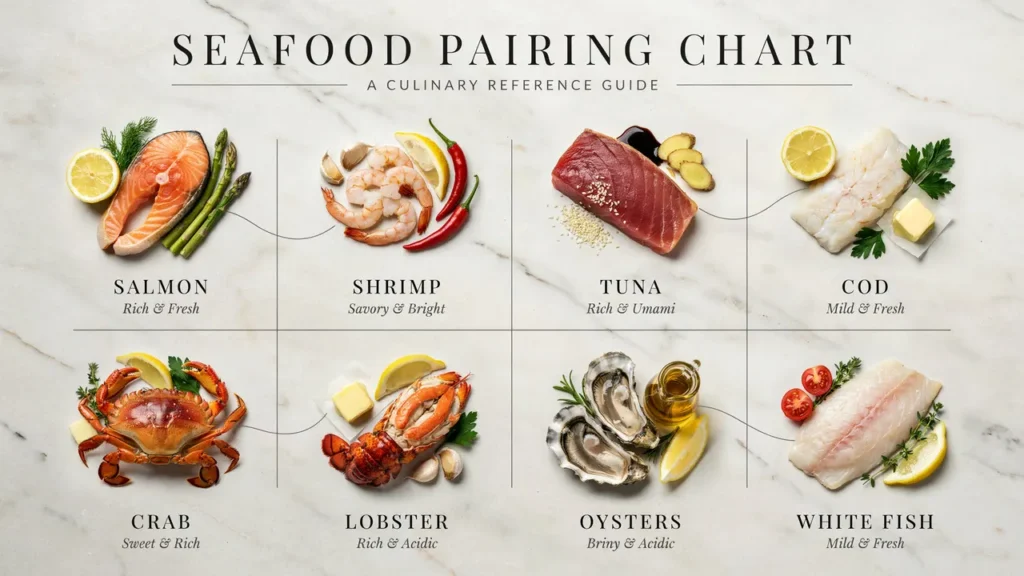
Seafood generally works well with fresh, acidic, and aromatic ingredients.
| Seafood | Best Pairings | Flavor Combination |
|---|---|---|
| Salmon | Lemon, dill, asparagus | Rich & fresh |
| Shrimp | Garlic, lemon, chili | Savory & bright |
| Tuna | Sesame, soy, ginger | Rich & umami |
| Cod | Lemon, parsley, butter | Mild & fresh |
| Crab | Lemon, butter, herbs | Sweet & rich |
| Lobster | Butter, lemon, garlic | Rich & acidic |
| Oysters | Lemon, vinegar, herbs | Briny & acidic |
| White Fish | Tomato, herbs, lemon | Mild & fresh |
Lemon is one of the most versatile ingredients for seafood because its acidity can brighten rich flavors.
Cheese Pairing Chart
Cheese offers a wide range of flavors, from mild and creamy to salty, sharp, and aged.
| Cheese | Best Pairings | Flavor Match |
|---|---|---|
| Cheddar | Apple, crackers, mustard | Sharp & sweet |
| Brie | Apple, pear, honey | Creamy & sweet |
| Mozzarella | Tomato, basil, olive oil | Mild & fresh |
| Feta | Watermelon, cucumber, mint | Salty & refreshing |
| Goat Cheese | Honey, berries, walnuts | Tangy & sweet |
| Blue Cheese | Pear, walnut, honey | Strong & sweet |
| Parmesan | Tomato, pasta, mushroom | Salty & umami |
| Cream Cheese | Salmon, cucumber, bagel | Creamy & savory |
Cheese boards often work particularly well because they combine cheese with fruit, nuts, crackers, and sweet or acidic ingredients.
Herb And Spice Pairing Chart
Herbs and spices can completely change the character of a dish.
| Herb or Spice | Best Food Pairings |
|---|---|
| Basil | Tomato, mozzarella, pasta |
| Rosemary | Potato, chicken, lamb |
| Thyme | Mushroom, chicken, potato |
| Dill | Salmon, cucumber, yogurt |
| Mint | Lamb, watermelon, yogurt |
| Parsley | Seafood, potatoes, garlic |
| Cilantro | Lime, chili, avocado |
| Cinnamon | Apple, banana, oats |
| Ginger | Carrot, chicken, seafood |
| Garlic | Meat, vegetables, seafood |
| Black Pepper | Beef, eggs, cheese |
| Chili | Mango, shrimp, chocolate |
Using herbs and spices is an easy way to create more complex flavor without adding large amounts of other ingredients.
Breakfast Food Pairing Chart
Breakfast foods can combine sweet, savory, creamy, and crunchy textures.
| Breakfast Food | Best Pairings |
|---|---|
| Eggs | Cheese, spinach, tomato |
| Oatmeal | Banana, berries, cinnamon |
| Pancakes | Maple syrup, berries, butter |
| Waffles | Strawberries, cream, banana |
| Toast | Avocado, egg, tomato |
| Yogurt | Granola, berries, honey |
| Bagel | Cream cheese, salmon, cucumber |
| Cereal | Milk, banana, berries |
| French Toast | Cinnamon, berries, maple syrup |
The best breakfast combinations often include a mixture of protein, carbohydrates, fruit, and healthy fats.
Dessert Food Pairing Chart
Desserts are especially good for experimenting with contrasting flavors.
| Dessert Ingredient | Best Pairings |
|---|---|
| Chocolate | Strawberry, orange, mint |
| Vanilla | Berry, caramel, cinnamon |
| Caramel | Apple, banana, sea salt |
| Strawberry | Chocolate, cream, basil |
| Lemon | Blueberry, raspberry, cream |
| Coconut | Mango, pineapple, chocolate |
| Peanut Butter | Chocolate, banana, oats |
| Apple | Cinnamon, caramel, walnut |
| Pumpkin | Cinnamon, nutmeg, cream |
| Coffee | Chocolate, caramel, vanilla |
Sweet foods don’t always need another sweet ingredient. A small amount of salt, acidity, or bitterness can make a dessert taste more balanced.
Food Pairing By Texture
Flavor isn’t the only thing that matters. Texture can make a meal much more interesting.
| Texture | Good Contrast |
|---|---|
| Creamy | Crispy |
| Soft | Crunchy |
| Juicy | Crisp |
| Rich | Fresh |
| Smooth | Grainy |
| Chewy | Crunchy |
For example, creamy avocado can be paired with crispy toast, soft cheese with crunchy crackers, or creamy yogurt with crunchy granola.
Using contrasting textures prevents a meal from feeling flat or repetitive.
Food Pairing For Salads
Salads are one of the easiest places to experiment with food pairing because they can combine vegetables, fruits, cheese, nuts, proteins, and dressings.
Salad Pairing Chart
| Main Ingredient | Add | Dressing Style |
|---|---|---|
| Lettuce | Chicken, tomato, cheese | Lemon vinaigrette |
| Spinach | Strawberry, goat cheese, nuts | Balsamic |
| Arugula | Pear, parmesan, walnut | Lemon vinaigrette |
| Cucumber | Tomato, feta, mint | Lemon & olive oil |
| Kale | Apple, cheddar, nuts | Honey mustard |
| Watermelon | Feta, mint | Lime vinaigrette |
A good salad often combines at least three elements: freshness, texture, and a flavorful dressing.
Food Pairing For Pasta
Pasta pairing works best when the pasta shape and sauce are considered together.
| Pasta | Best Food Pairings |
|---|---|
| Spaghetti | Tomato, garlic, basil |
| Linguine | Shrimp, lemon, herbs |
| Fettuccine | Chicken, mushroom, cream |
| Penne | Tomato, cheese, vegetables |
| Rigatoni | Beef, sausage, tomato |
| Fusilli | Pesto, vegetables, cheese |
| Orecchiette | Sausage, broccoli, chili |
| Ravioli | Butter, sage, parmesan |
The shape of the pasta affects how sauce and other ingredients are distributed throughout each bite.
Tips For Better Food Pairing
Balance rich foods: Add something acidic or fresh to rich dishes.
Use contrasting textures: Combine creamy ingredients with something crispy or crunchy.
Don’t overload flavors: Too many strong ingredients can make a dish confusing.
Use herbs carefully: Fresh herbs can brighten heavy dishes.
Think about temperature: Cold, fresh ingredients can contrast nicely with warm foods.
Start with classic combinations: Once you understand why they work, you can experiment with new ingredients.
Common Mistakes When Pairing Foods
Using too many flavors: A dish can become overwhelming when every ingredient has a strong flavor.
Ignoring texture: Two soft ingredients can sometimes make a meal feel flat.
Pairing only similar flavors: Contrast can often create a more interesting dish.
Adding too much acidity: Lemon, vinegar, and other acidic ingredients should enhance rather than dominate.
Ignoring ingredient strength: Strong cheeses, spices, and sauces can easily overpower delicate ingredients.
Forgetting freshness: Fresh herbs, citrus, and vegetables can help balance rich meals.
Classic Food Pairings Around The World
Different cuisines have developed their own iconic combinations based on local ingredients and traditions.
| Cuisine | Classic Pairing | Common Dish |
|---|---|---|
| Italian | Tomato + Basil + Mozzarella | Caprese |
| Mexican | Lime + Chili + Avocado | Guacamole |
| American | Peanut Butter + Jelly | Sandwich |
| French | Cheese + Fruit | Cheese Plate |
| Japanese | Soy + Ginger + Sesame | Various dishes |
| Mediterranean | Tomato + Cucumber + Feta | Greek-style salad |
| Indian | Yogurt + Cumin + Chili | Raita & dishes |
| Middle Eastern | Chickpea + Tahini + Lemon | Hummus |
These combinations demonstrate how food pairing is influenced by both flavor chemistry and culinary tradition.
The Science Behind Food Pairing
Food pairing can be based on several factors, including aroma, taste, texture, temperature, and contrast.
Ingredients can work together because they share similar aromatic characteristics, or because they provide a useful contrast. For example, sweet fruit can balance salty cheese, while acidic lemon can brighten rich fish or creamy sauces.
However, there isn’t one universal rule that determines whether two foods “belong” together. Personal taste, cooking traditions, ingredients, and preparation methods all influence successful combinations.
Frequently Asked Questions
What Is A Food Pairing Chart?
A food pairing chart is a guide showing ingredients that commonly work well together based on flavor, aroma, texture, and culinary tradition.
What Foods Pair Well Together?
Popular combinations include apple and cinnamon, tomato and basil, strawberry and chocolate, cheese and honey, chicken and lemon, and salmon and dill.
What Foods Pair Well With Cheese?
Cheese pairs well with fruits, nuts, honey, crackers, vegetables, and various herbs. Apples, pears, grapes, walnuts, and honey are particularly popular choices.
What Foods Pair Well With Chicken?
Chicken works well with lemon, garlic, rosemary, thyme, mushrooms, tomatoes, herbs, and many vegetables.
What Foods Pair Well With Chocolate?
Chocolate pairs especially well with strawberries, bananas, oranges, mint, coffee, caramel, peanut butter, and nuts.
What Foods Pair Well With Salmon?
Salmon pairs well with lemon, dill, garlic, asparagus, cucumber, herbs, and creamy sauces.
What Is The Best Sweet And Savory Food Pairing?
Some popular sweet-and-savory combinations include cheese and honey, apple and cheddar, watermelon and feta, and bacon and maple syrup.
How Do I Create My Own Food Pairings?
Start with one main ingredient, identify its dominant flavor, and then add something that either complements or contrasts with it. Consider acidity, sweetness, saltiness, richness, aroma, and texture.
Food pairing doesn’t have to be complicated. Once you understand how flavors and textures interact, it becomes much easier to create meals that taste balanced and interesting. From tomato and basil to apple and cheddar, the best combinations often come from simple ingredients that complement or contrast with one another. Understanding the food pairing chart gives you a useful starting point for experimenting with new recipes, improving everyday meals, and discovering combinations you may not have tried before.
