
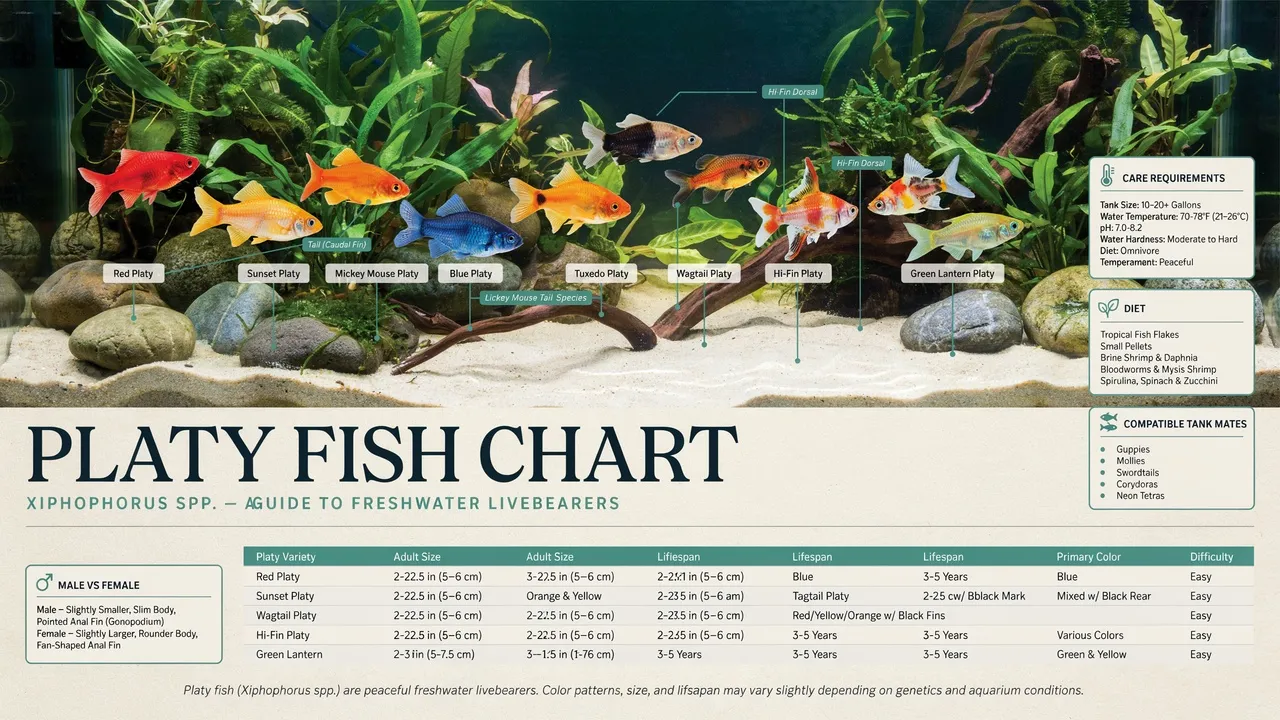
Platy fish (Xiphophorus spp.) are colorful, peaceful freshwater fish popular among beginner and experienced aquarium hobbyists. Native to Central America, they are easy to care for, highly adaptable, and available in many color varieties. A platy fish chart helps compare common varieties by size, color, lifespan, and aquarium requirements.
Whether you’re setting up your first community tank or expanding an existing aquarium, this chart provides a quick reference for platy fish care.
Why Choose Platy Fish?
Platy fish are popular because they:
- Are beginner-friendly
- Come in many bright colors
- Live peacefully with other community fish
- Breed easily in aquariums
- Thrive in a wide range of water conditions
Platy Fish Chart
| Platy Variety | Adult Size | Lifespan | Primary Color | Difficulty |
|---|---|---|---|---|
| Red Platy | 2–2.5 in (5–6 cm) | 3–5 years | Bright Red | Easy |
| Sunset Platy | 2–2.5 in (5–6 cm) | 3–5 years | Orange & Yellow | Easy |
| Mickey Mouse Platy | 2–2.5 in (5–6 cm) | 3–5 years | Orange with Black Tail Mark | Easy |
| Blue Platy | 2–2.5 in (5–6 cm) | 3–5 years | Blue | Easy |
| Tuxedo Platy | 2–2.5 in (5–6 cm) | 3–5 years | Mixed Colors with Black Rear | Easy |
| Wagtail Platy | 2–2.5 in (5–6 cm) | 3–5 years | Red, Yellow or Orange with Black Fins | Easy |
| Hi-Fin Platy | 2–3 in (5–7.5 cm) | 3–5 years | Various Colors | Easy |
| Green Lantern Platy | 2–2.5 in (5–6 cm) | 3–5 years | Green & Yellow | Easy |
Platy Fish Care Requirements
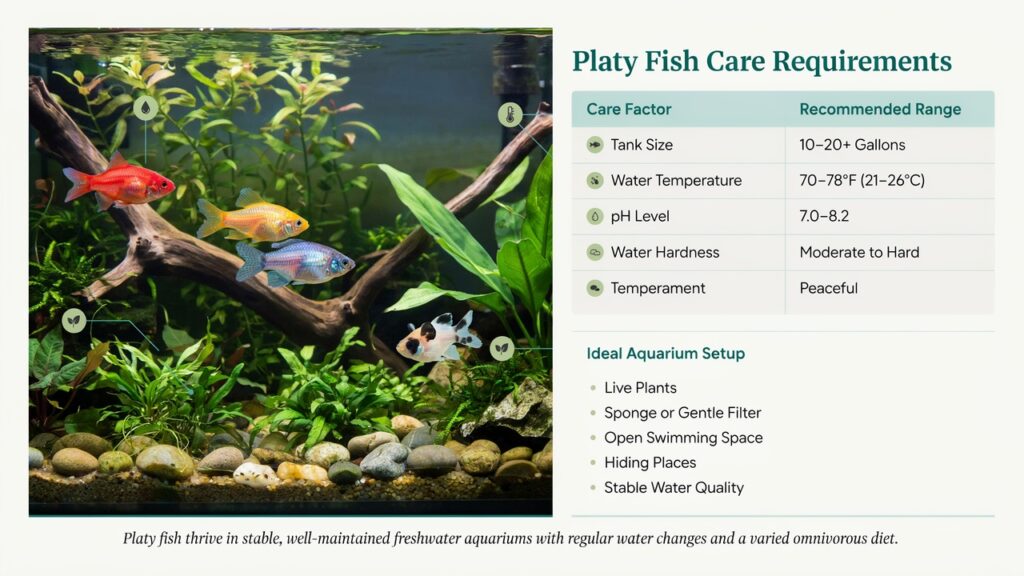
| Care Factor | Recommended Range |
|---|---|
| Tank Size | 10–20+ gallons |
| Water Temperature | 70–78°F (21–26°C) |
| pH Level | 7.0–8.2 |
| Water Hardness | Moderate to Hard |
| Diet | Omnivore |
| Activity Level | Active |
| Temperament | Peaceful |
Diet Chart
| Food Type | Examples |
|---|---|
| Flakes | Tropical fish flakes |
| Pellets | Small sinking or floating pellets |
| Live Foods | Brine shrimp, daphnia |
| Frozen Foods | Bloodworms, mysis shrimp |
| Vegetables | Spirulina, spinach, zucchini |
A varied diet helps maintain bright colors and good health.
Compatible Tank Mates
| Excellent Tank Mates | Avoid |
|---|---|
| Guppies | Large Cichlids |
| Mollies | Oscars |
| Swordtails | Aggressive Bettas |
| Corydoras | Large Predatory Fish |
| Neon Tetras | Tiger Barbs (may nip fins) |
Male vs Female Platy
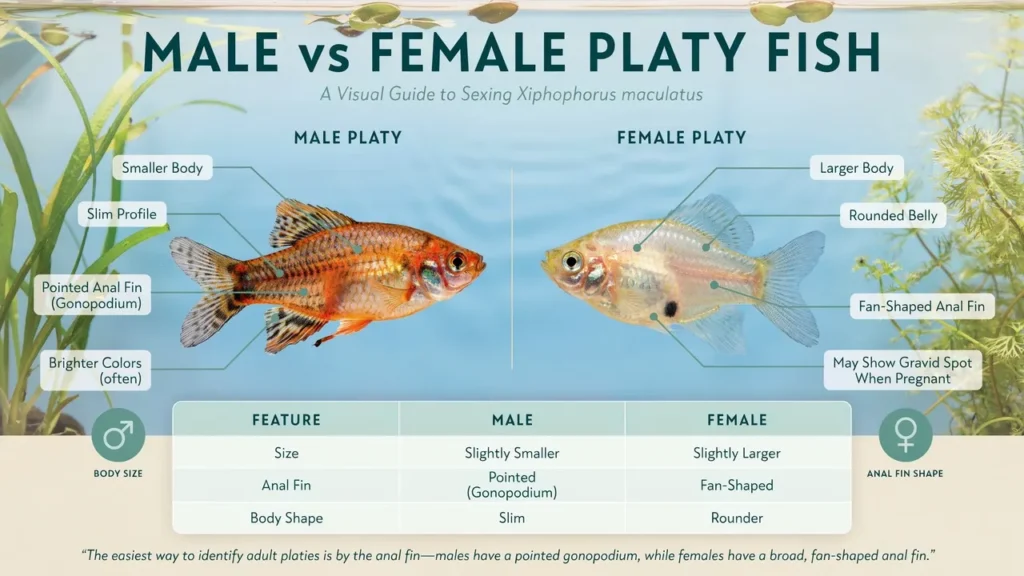
| Feature | Male | Female |
|---|---|---|
| Size | Slightly Smaller | Slightly Larger |
| Anal Fin | Pointed (Gonopodium) | Fan-shaped |
| Body Shape | Slim | Rounder |
Females are generally larger, especially when carrying fry.
Interesting Facts
| Feature | Details |
|---|---|
| Scientific Genus | Xiphophorus |
| Family | Poeciliidae |
| Water Type | Freshwater |
| Breeding | Livebearer |
| Average Fry per Birth | 20–80 |
| Native Range | Mexico & Central America |
Tips for Keeping Platy Fish
- Keep at least 3–5 platies together.
- Maintain stable water quality with regular water changes.
- Provide live plants for shelter and fry protection.
- Feed small portions 1–2 times daily.
- Keep more females than males (about 2–3 females per male) to reduce stress.
Frequently Asked Questions
How big do platy fish grow?
Most platy fish reach 2–2.5 inches (5–6 cm), although some Hi-Fin varieties may grow slightly larger.
How long do platy fish live?
With proper care, platies typically live 3–5 years.
Are platy fish good for beginners?
Yes. They are among the easiest freshwater fish to keep due to their peaceful nature and hardy characteristics.
What do platy fish eat?
They are omnivores and eat flakes, pellets, live foods, frozen foods, and vegetable-based foods.
Can platy fish live with guppies?
Yes. Platies and guppies are excellent community fish and generally live together peacefully.
Conclusion
A platy fish chart is a helpful guide for comparing the most popular platy varieties by size, color, lifespan, and care requirements. Whether you choose a Red Platy, Mickey Mouse Platy, or Sunset Platy, these colorful freshwater fish are hardy, peaceful, and an excellent addition to community aquariums.
