
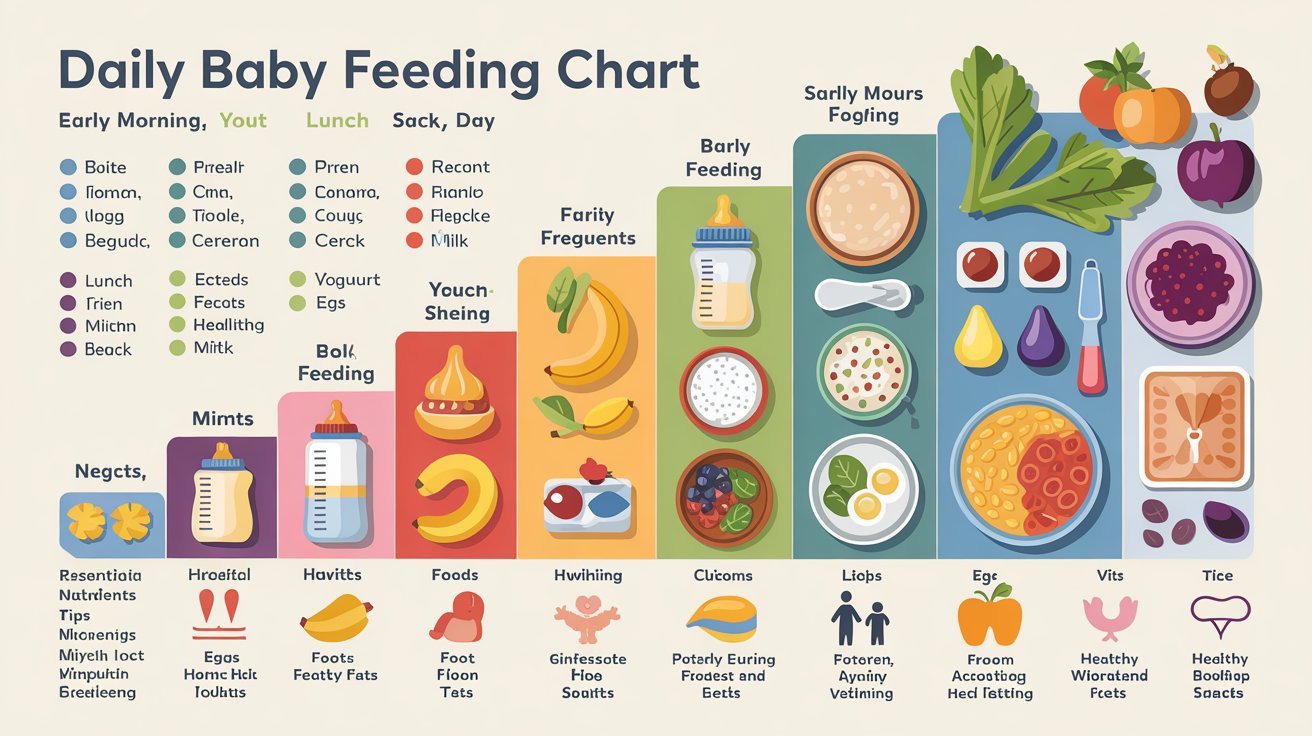
A daily feeding chart helps parents provide the right amount of nutrition for their baby at every stage of growth. Babies need different types of food and feeding schedules based on their age, development, and nutritional needs. A proper feeding routine supports healthy weight gain, brain development, strong immunity, and better digestion.
Parents should introduce foods gradually and maintain balanced meals that include proteins, healthy fats, vitamins, minerals, fruits, vegetables, and grains.
Daily Feeding Chart by Age
| Baby Age | Early Morning | Breakfast | Lunch | Snack | Dinner | Milk Feeding |
|---|---|---|---|---|---|---|
| 0–6 Months | Breast milk/formula | Breast milk/formula | Breast milk/formula | Breast milk/formula | Breast milk/formula | Every 2–4 hours |
| 6–8 Months | Milk feeding | Rice cereal or oatmeal | Vegetable puree | Fruit puree | Soft mashed food | 4–5 times daily |
| 8–10 Months | Milk feeding | Oatmeal with banana | Rice with vegetables | Yogurt or fruits | Mashed chicken or lentils | 3–4 times daily |
| 10–12 Months | Milk feeding | Egg and soft toast | Soft family foods | Healthy snacks | Rice, vegetables, protein | 3 times daily |
| 1–2 Years | Milk | Healthy breakfast | Balanced lunch | Fruits or yogurt | Family dinner | 2 times daily |
Feeding Guide for Newborns (0–6 Months)
During the first six months, babies mainly depend on breast milk or infant formula for complete nutrition.
Recommended Feeding Routine
- Feed every 2–4 hours
- Breastfeed on demand
- Watch hunger cues carefully
- Burp after feeding
Hunger Signs
- Sucking fingers
- Crying
- Opening mouth
- Moving hands toward mouth
Feeding Guide for 6–8 Month Babies
At this stage, babies begin trying soft solid foods while continuing milk feeding.
Best Foods
- Banana puree
- Oatmeal
- Rice cereal
- Sweet potato puree
- Apple puree
Feeding Tips
- Introduce one food at a time
- Use soft textures
- Avoid sugar and salt
- Start with small portions
Feeding Guide for 8–10 Month Babies
Babies can now eat thicker textures and soft finger foods.
Healthy Meal Ideas
- Mashed vegetables
- Yogurt
- Soft rice
- Lentils
- Scrambled eggs
Snacks
- Soft fruits
- Yogurt
- Boiled vegetables
Feeding Guide for 10–12 Month Babies
Babies can begin eating more family-style foods.
Foods to Include
- Rice
- Soft bread
- Eggs
- Chicken
- Fish
- Vegetables
- Fruits
Important Tips
- Encourage self-feeding
- Cut foods into small pieces
- Avoid choking hazards
Essential Nutrients for Babies
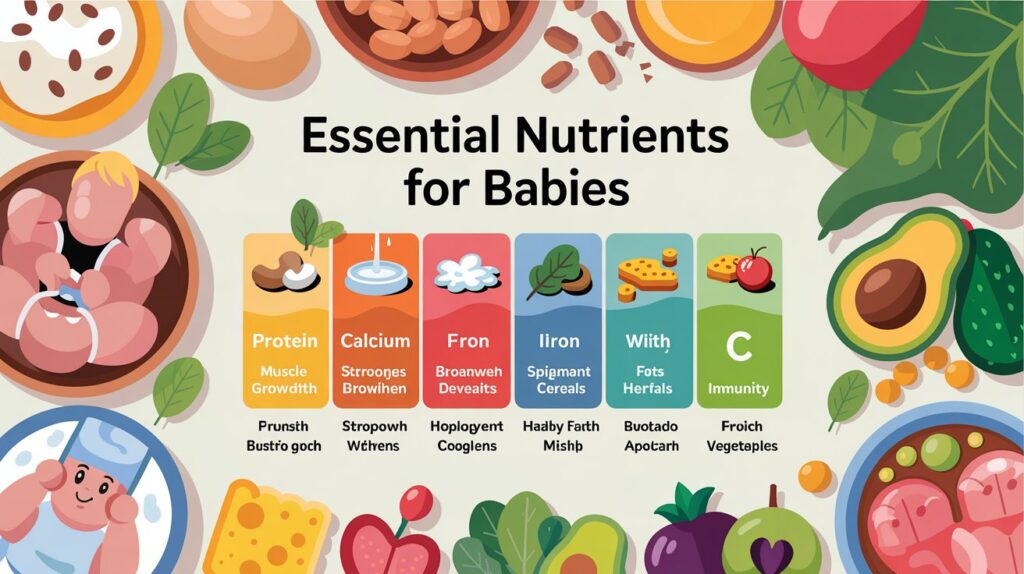
| Nutrient | Benefits | Food Sources |
|---|---|---|
| Protein | Muscle growth | Eggs, chicken, lentils |
| Calcium | Strong bones | Milk, yogurt |
| Iron | Brain development | Spinach, cereals |
| Healthy Fats | Brain health | Avocado, fish |
| Vitamin C | Immunity | Fruits, vegetables |
Foods Babies Should Avoid
Some foods may be harmful or difficult for babies to digest.
Avoid These Foods
- Honey before age 1
- Whole nuts
- Popcorn
- Sugary drinks
- Raw seafood
- Excess salt
Healthy Snack Ideas for Babies
- Banana slices
- Yogurt
- Steamed vegetables
- Apple puree
- Soft cheese
- Avocado mash
Baby Hydration Tips
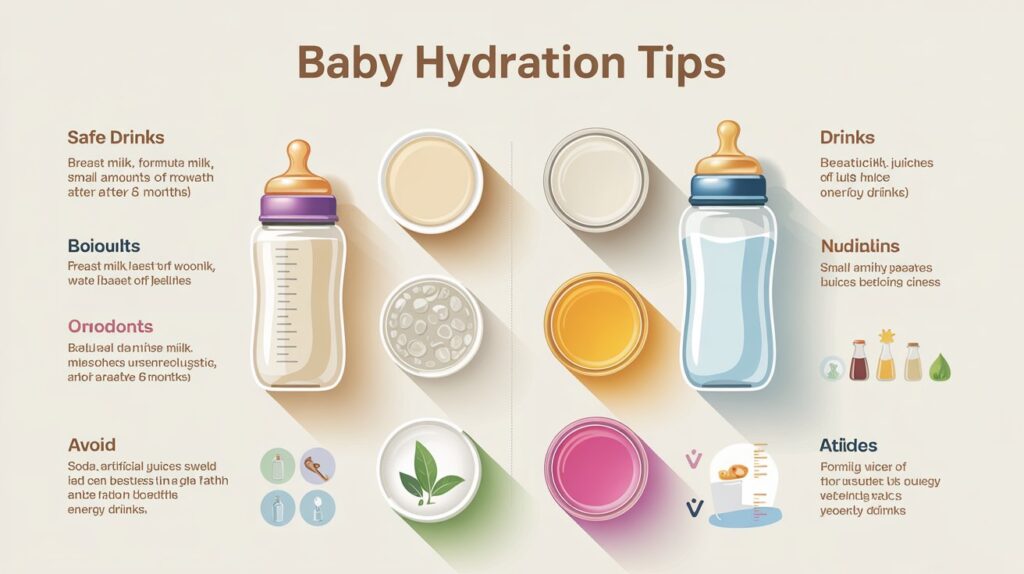
Hydration is important for healthy digestion and body function.
Safe Drinks
- Breast milk
- Formula milk
- Small amounts of water after 6 months
Avoid
- Soda
- Artificial juices
- Energy drinks
Common Feeding Mistakes Parents Make
- Overfeeding the baby
- Starting solids too early
- Adding sugar or salt
- Ignoring food allergies
- Giving unsafe finger foods
Signs of Food Allergy in Babies
Parents should monitor babies carefully after introducing new foods.
Common Symptoms
- Rash
- Vomiting
- Diarrhea
- Swelling
- Difficulty breathing
Contact a doctor immediately if severe symptoms appear.
Tips for Building Healthy Eating Habits
- Maintain regular meal times
- Offer different healthy foods
- Encourage self-feeding
- Avoid processed snacks
- Be patient with picky eaters
Frequently Asked Questions
How many times should a baby eat daily?
It depends on age. Younger babies feed every few hours, while older babies eat meals and snacks throughout the day.
Can babies drink water daily?
Small amounts of water can be given after 6 months of age.
What is the best first food for babies?
Soft foods like banana puree, oatmeal, and rice cereal are common first foods.
When should babies stop pureed foods?
Most babies transition to textured foods between 8–10 months.
Conclusion
Following a proper daily feeding chart helps babies receive balanced nutrition during every stage of development. Healthy feeding habits support growth, strong immunity, better digestion, and brain development.
Parents should provide age-appropriate foods, maintain feeding routines, and introduce healthy meals gradually. A balanced baby diet today creates a healthier future tomorrow.
