
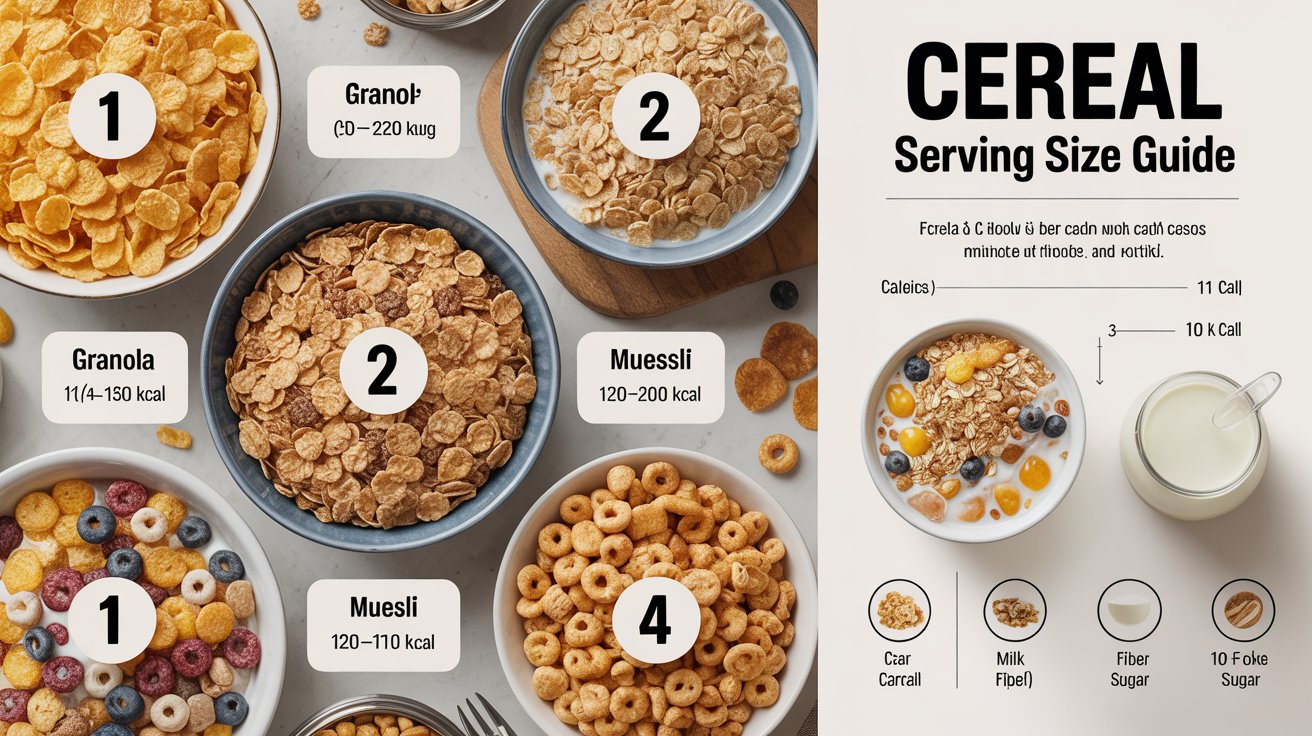
Cereal is one of the quickest and most popular breakfast options—but it’s also one of the easiest to overpour. What looks like a normal bowl can actually be two or three servings. Understanding the cereal serving size helps you manage portions, calories, and nutrition more effectively.
Why Cereal Serving Size Matters
Cereal can be a healthy start to your day—but portion size and added ingredients (like sugar and milk) can quickly increase calories.
Proper serving sizes help:
- Control calorie and sugar intake
- Balance breakfast nutrition
- Avoid overeating
- Maintain steady energy levels
Measuring your portion makes a big difference.
Standard Cereal Serving Size
Cereal is usually measured by cups (volume) or grams (weight).
Cereal Serving Size Chart
| Cereal Type | Serving Size (Cups) | Weight (Approx.) | Calories (Approx.) |
|---|---|---|---|
| Flakes (corn, bran) | 1 cup | 25–30g | 100–120 kcal |
| Granola | 1/4–1/2 cup | 30–55g | 120–250 kcal |
| Muesli | 1/2 cup | 45–50g | 150–200 kcal |
| Puff Cereals | 1–1.5 cups | 15–25g | 80–110 kcal |
A standard serving is typically 1 cup of cereal (about 25–30g), depending on the type.
Cereal Serving Size With Milk
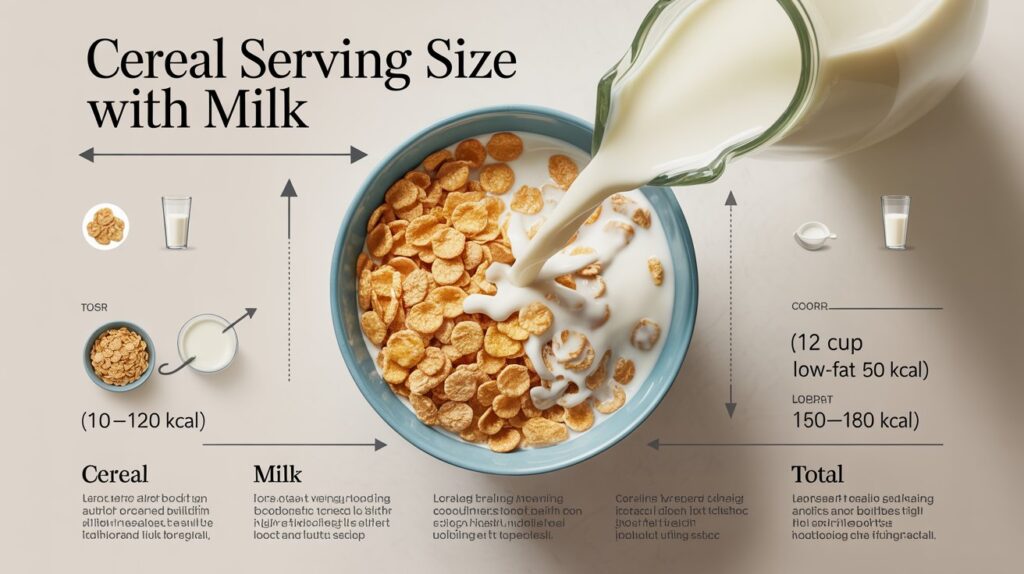
Milk adds additional calories and nutrients:
Cereal + Milk Example
| Item | Amount | Calories (Approx.) |
|---|---|---|
| Cereal | 1 cup | 100–120 kcal |
| Milk (low-fat) | 1/2 cup | 50–60 kcal |
| Total | — | 150–180 kcal |
Using more milk or cereal increases total calories quickly.
Choosing The Right Cereal Serving Size
The best portion depends on your needs:
- 1 cup (standard): Balanced breakfast portion
- 1.5 cups: Larger appetite or active lifestyle
- 1/2 cup granola: Due to higher calorie density
Always check nutrition labels, as serving sizes vary by brand.
Cereal Serving Size And Nutrition
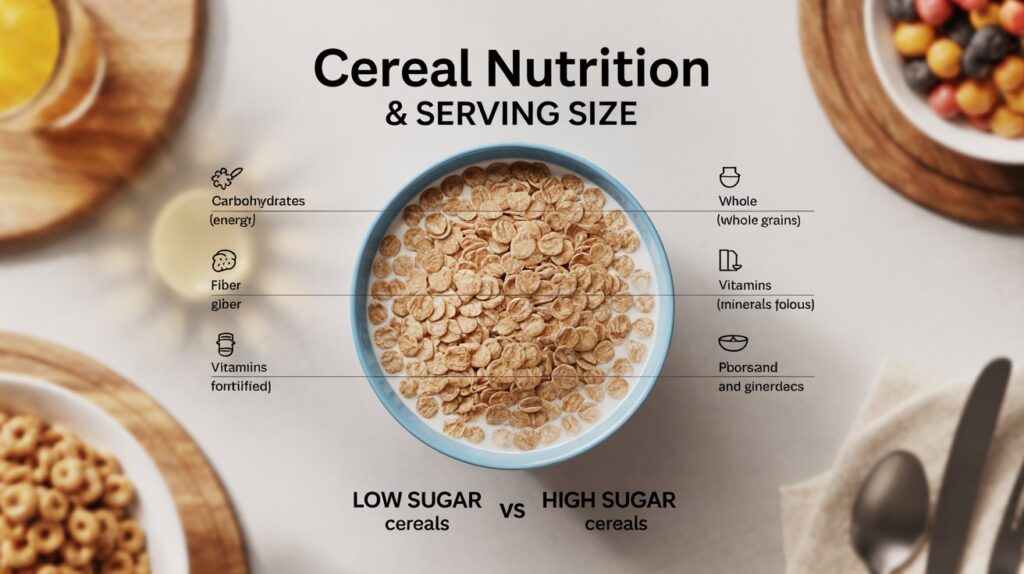
Cereal can provide:
- Carbohydrates for energy
- Fiber (especially whole grain cereals)
- Vitamins and minerals (often fortified)
However:
- Some cereals are high in sugar
- Portion size affects nutritional value
Choosing whole grain, low-sugar cereals is الأفضل
Tips For Managing Cereal Portions
- Measure your cereal: Use a cup instead of guessing
- Use smaller bowls: Helps control portions
- Add protein: Like milk, yogurt, or nuts
- Choose whole grain options: More fiber and nutrients
- Limit sugary cereals: Reduce excess sugar intake
Small habits can improve your breakfast quality.
Common Mistakes When Eating Cereal
- Overfilling the bowl: Often 2–3 servings
- Ignoring labels: Serving sizes vary
- Adding too much milk: Increases calories
- Choosing high-sugar cereals: Less nutritious
Being mindful helps you eat smarter.
How Serving Size Affects Breakfast
The amount of cereal you eat can impact your energy and hunger. A balanced portion keeps you full, while oversized servings may lead to excess calorie intake.
Pairing cereal with protein helps keep you satisfied longer.
Cereal In Different Diets
Serving sizes may vary depending on your goals:
- Weight loss: 3/4–1 cup
- Balanced diet: 1 cup
- Active lifestyle: 1–1.5 cups
- Low-sugar diet: Smaller portions of sweet cereals
Adjust portions based on your needs.
Frequently Asked Questions
What Is A Standard Serving Size Of Cereal?
About 1 cup or 25–30 grams.
Why Does My Bowl Look Bigger Than One Serving?
Most people pour more than the recommended portion.
Is Granola The Same Serving Size As Cereal?
No, granola is more calorie-dense, so servings are smaller.
Can I Eat Cereal Every Day?
Yes, if you choose healthy options and control portions.
How Can I Make Cereal Healthier?
Choose whole grains, reduce sugar, and add protein.
Cereal serving size may seem small, but it plays a big role in your daily nutrition. By understanding proper portions, you can enjoy a quick and balanced breakfast without overdoing it.
