
Olive oil is a staple in many healthy diets—especially in Mediterranean-style eating. It’s rich in healthy fats and adds flavor to salads, cooking, and meals. But because it’s calorie-dense, understanding the olive oil serving size is essential for balanced nutrition.
Why Olive Oil Serving Size Matters
Olive oil is very healthy, but it’s also high in calories since it’s pure fat.
Proper serving sizes help:
- Control calorie intake
- Support heart health
- Balance meals without excess fat
- Maintain a healthy diet
Even small amounts provide benefits, so moderation is key.
Standard Olive Oil Serving Size
Olive oil is typically measured in teaspoons (tsp) or tablespoons (tbsp).
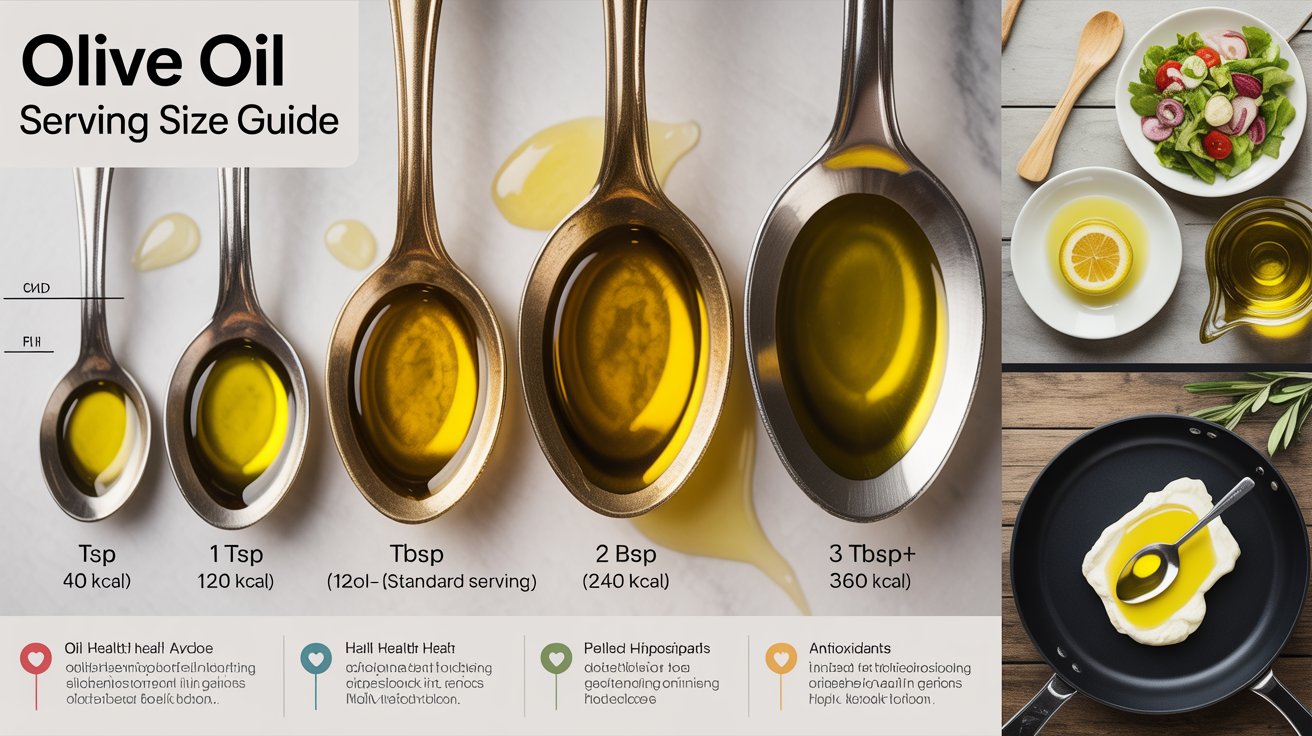
Olive Oil Serving Size Chart
| Serving Type | Amount | Calories (Approx.) |
|---|---|---|
| Small Serving | 1 tsp (5 ml) | 40 kcal |
| Standard Serving | 1 tbsp (15 ml) | 120 kcal |
| Large Serving | 2 tbsp | 240 kcal |
| Extra Large | 3 tbsp+ | 360+ kcal |
A standard serving is 1 tablespoon (15 ml).
Choosing The Right Olive Oil Serving Size
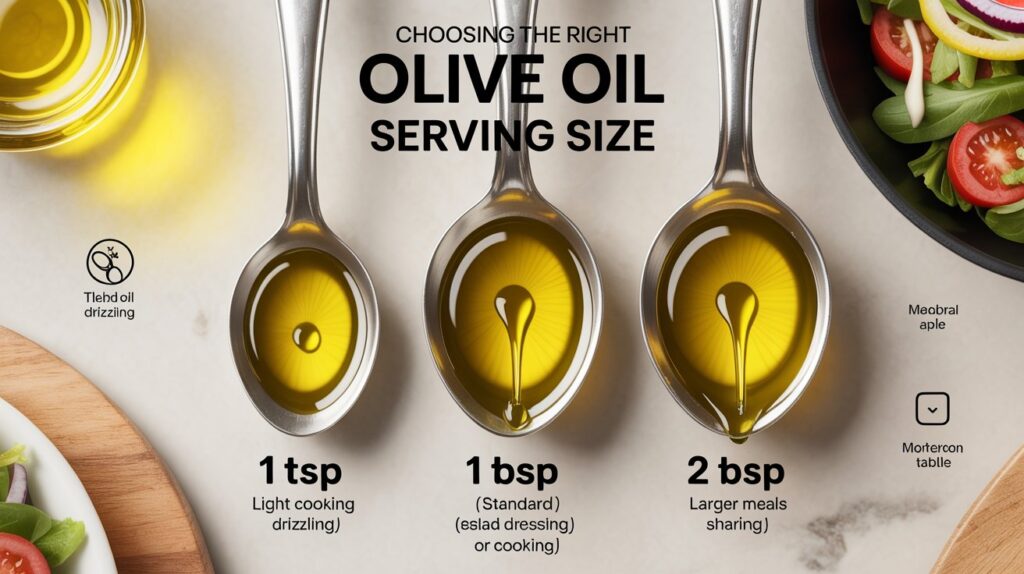
The ideal portion depends on how you use it:
- 1 tsp: Light cooking or drizzling
- 1 tbsp (standard): Salad dressing or cooking
- 2 tbsp: Larger meals or sharing
Because of its high calorie content, it’s best to measure rather than pour freely.
Olive Oil Serving Size And Nutrition
Olive oil is rich in beneficial nutrients:
- High in monounsaturated fats (heart-healthy)
- Contains antioxidants
- Supports heart and brain health
- Helps absorb fat-soluble vitamins
For example:
- 1 tbsp olive oil: ~120 calories, mostly healthy fats
It’s considered one of the healthiest fats when used in moderation.
Tips For Managing Olive Oil Portions
- Measure with a spoon: Avoid pouring directly
- Use a spray bottle: Helps control quantity
- Drizzle lightly: Especially on salads
- Balance with other fats: Avoid excess total fat intake
- Choose extra virgin olive oil: For maximum benefits
Small adjustments can help control calories.
Common Mistakes When Using Olive Oil
- Overpouring: Easy to exceed serving size
- Assuming it’s “unlimited healthy”: Calories still count
- Using too much in cooking: Adds extra fat
- Not measuring portions: Leads to hidden calories
Being mindful helps you stay balanced.
How Serving Size Affects Meals
Olive oil can quickly increase the calorie content of a meal. A small drizzle enhances flavor, while larger amounts can significantly raise total calories.
Balanced use keeps meals both tasty and healthy.
Olive Oil In Different Diets
Serving sizes may vary depending on your goals:
- Weight loss: 1–2 tsp per meal
- Balanced diet: 1 tbsp per meal
- Mediterranean diet: Regular moderate use
- Low-fat diet: Smaller portions
Adjust intake based on your needs.
Frequently Asked Questions
What Is A Standard Serving Size Of Olive Oil?
About 1 tablespoon (15 ml).
Is Olive Oil Healthy?
Yes, it contains heart-healthy fats and antioxidants.
Can I Use Olive Oil Every Day?
Yes, in moderate amounts.
Is 2 Tablespoons Too Much?
It can be high in calories if used frequently.
How Can I Reduce Olive Oil Intake?
Measure portions and avoid free pouring.
Olive oil serving size may seem small, but it plays a big role in your diet. By understanding proper portions, you can enjoy its health benefits while keeping your meals balanced and nutritious.
