
Peanut butter is creamy, delicious, and packed with nutrients—but it’s also easy to overeat. A quick spoonful can turn into several servings without noticing. Understanding a peanut butter serving size chart helps you enjoy it while keeping portions and calories under control.
Why Peanut Butter Serving Size Matters
Peanut butter is rich in healthy fats and protein, but it’s also calorie-dense.
Proper serving sizes help:
- Control calorie intake
- Maintain a balanced diet
- Support energy and satiety
- Avoid overeating
A small portion can be very satisfying.
Standard Peanut Butter Serving Size
Peanut butter is typically measured in tablespoons (tbsp) or grams.
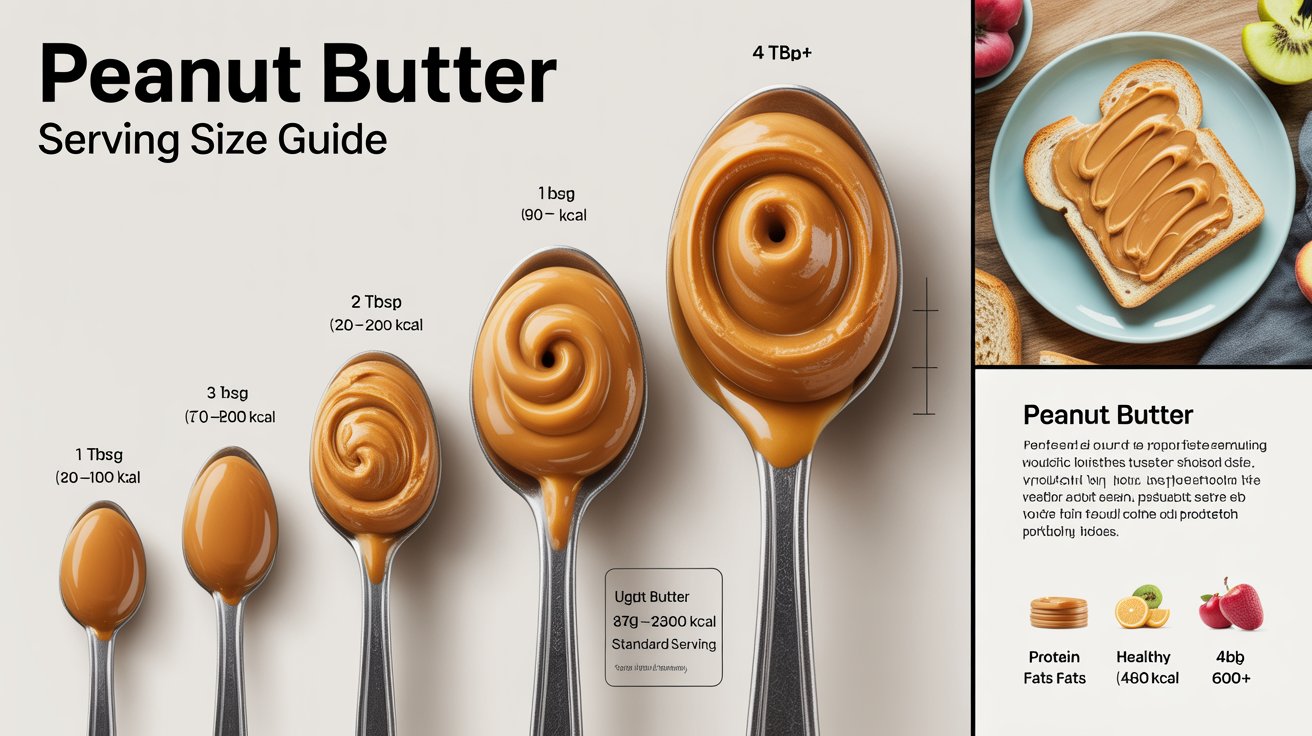
Peanut Butter Serving Size Chart
| Serving Type | Amount | Weight (Approx.) | Calories (Approx.) |
|---|---|---|---|
| Small Serving | 1 tbsp | 16g | 90–100 kcal |
| Standard Serving | 2 tbsp | 32g | 180–200 kcal |
| Large Serving | 3 tbsp | 48g | 270–300 kcal |
| Extra Large | 4 tbsp+ | 64g+ | 360+ kcal |
A standard serving is 2 tablespoons (about 32g).
Choosing The Right Peanut Butter Serving Size
The best portion depends on your needs:
- 1 tbsp: Light snack or topping
- 2 tbsp (standard): Balanced serving
- 3+ tbsp: Larger portion (use carefully)
Because it’s calorie-dense, measuring is important.
Peanut Butter Serving Size And Nutrition
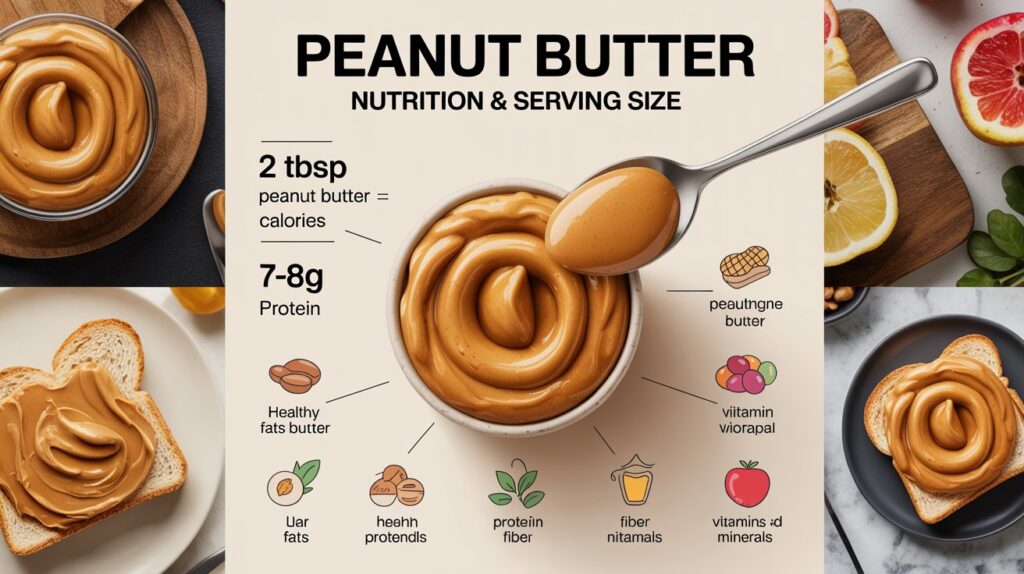
Peanut butter offers several benefits:
- High in healthy fats
- Good source of protein (~7–8g per 2 tbsp)
- Contains fiber
- Provides vitamins and minerals
For example:
- 2 tbsp peanut butter: ~190 calories
It’s nutritious but should be eaten in moderation.
Tips For Managing Peanut Butter Portions
- Measure with a spoon: Avoid guessing
- Spread thinly: Helps control intake
- Choose natural peanut butter: Less added sugar
- Pair with healthy foods: Like fruit or whole grain bread
- Avoid eating straight from the jar: Easy to overeat
Small habits help maintain balance.
Common Mistakes When Eating Peanut Butter
- Over-scooping: Portions quickly add up
- Ignoring calories: Healthy but high in fat
- Choosing sugary versions: Adds extra calories
- Using too much in recipes: Increases total intake
Being mindful helps you enjoy it without excess.
How Serving Size Affects Meals
The amount of peanut butter you use can change your meal significantly. A standard portion adds nutrition and flavor, while larger portions can double calorie intake.
Balanced portions keep your diet on track.
Peanut Butter In Different Diets
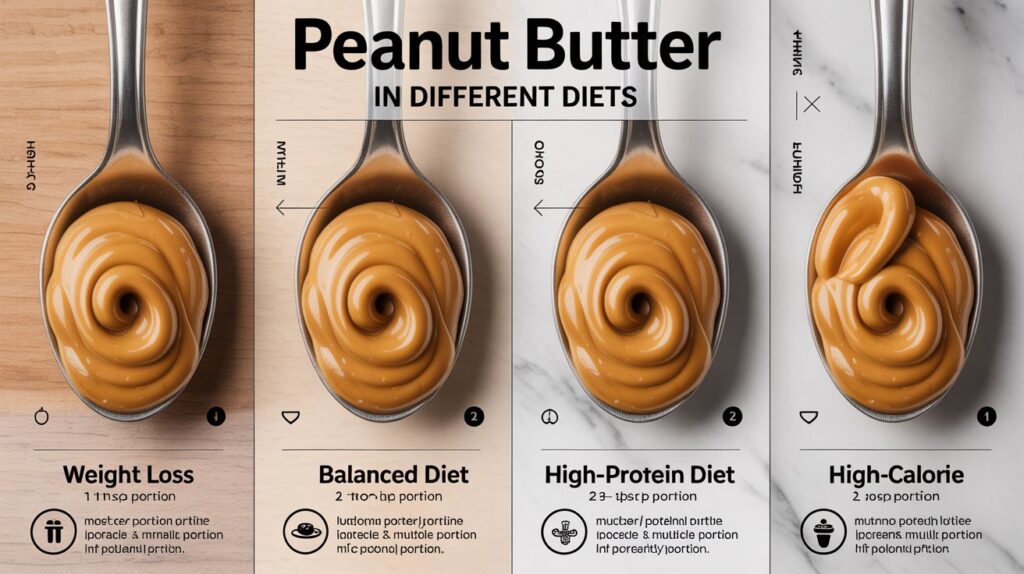
Serving sizes may vary depending on your goals:
- Weight loss: 1 tbsp
- Balanced diet: 2 tbsp
- High-protein diet: 2–3 tbsp
- High-calorie diet: Larger portions
Adjust based on your needs.
Frequently Asked Questions
What Is A Standard Serving Size Of Peanut Butter?
About 2 tablespoons (32 grams).
Is Peanut Butter Healthy?
Yes, when eaten in moderation.
Can I Eat Peanut Butter Every Day?
Yes, in controlled portions.
Is 4 Tablespoons Too Much?
It can be high in calories if eaten regularly.
How Can I Reduce Peanut Butter Intake?
Measure portions and avoid eating directly from the jar.
A peanut butter serving size chart makes it easy to enjoy this tasty spread without overdoing it. By understanding proper portions, you can include peanut butter in a healthy, balanced diet while keeping your calories in check.
