
Ribeye steak is one of the most popular premium cuts of beef, known for its rich marbling, tender texture, and deep beefy flavor. Because ribeye contains different amounts of fat and can be cut in many thicknesses, steak sizes can vary considerably.
Understanding the ribeye steak size chart helps you choose the right steak for a quick dinner, special occasion, grilling session, or larger meal. Weight, thickness, bone-in versus boneless preparation, and cooking method all affect the final portion.
Why Ribeye Steak Size Matters
Ribeye size affects cooking time, portion size, tenderness, and overall eating experience.
A thin ribeye cooks quickly but can easily become overcooked. A thick-cut ribeye takes longer but provides more control over the outside sear and inside doneness.
For restaurants, consistent steak sizes are also important for:
- Portion control
- Pricing
- Cooking consistency
- Meal planning
- Customer satisfaction
- Nutrition calculations
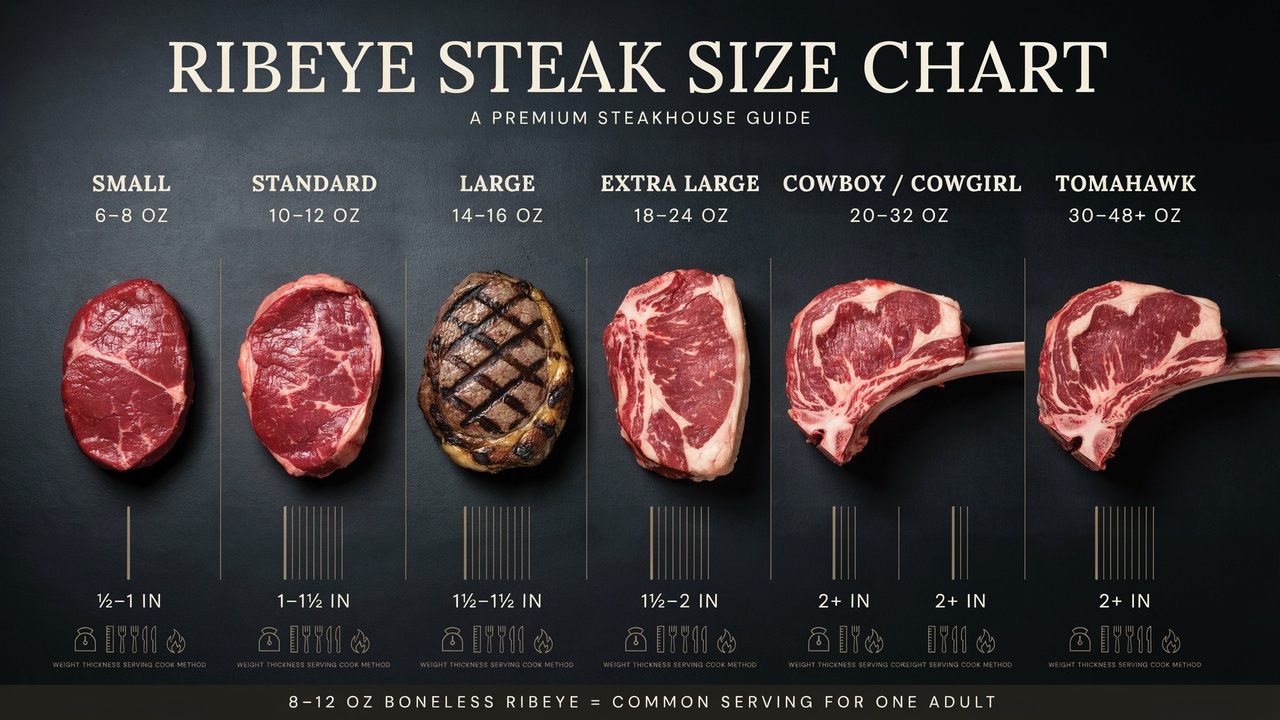
Standard Ribeye Steak Size Chart
| Ribeye Size | Weight | Thickness | Approx. Calories* | Best For |
|---|---|---|---|---|
| Small | 6–8 oz | ¾–1 in | 450–600 | Light meal |
| Standard | 10–12 oz | 1–1¼ in | 650–850 | Regular serving |
| Large | 14–16 oz | 1¼–1½ in | 900–1,100 | Hearty meal |
| Extra Large | 18–24 oz | 1½–2 in | 1,100–1,600+ | Large appetite |
| Cowboy/Cowgirl | 20–32 oz | 1½–2+ in | 1,300–2,000+ | Sharing or special occasion |
*Calories vary significantly depending on marbling, trimming, cooking method, and whether the weight includes bone.
Ribeye Steak Weight Chart
| Steak Weight | Approx. Grams | Typical Serving |
|---|---|---|
| 6 oz | 170 g | Small |
| 8 oz | 227 g | Small–Standard |
| 10 oz | 283 g | Standard |
| 12 oz | 340 g | Standard |
| 14 oz | 397 g | Large |
| 16 oz | 454 g | Large |
| 20 oz | 567 g | Extra Large |
| 24 oz | 680 g | Extra Large |
| 32 oz | 907 g | Large bone-in/shareable |
These are common retail and restaurant sizes rather than strict industry standards.
Ribeye Thickness Chart
Thickness can be just as important as weight.
| Thickness | Cooking Style | Approx. Cooking Time* |
|---|---|---|
| ¾ inch | Quick pan-sear | 3–6 min total |
| 1 inch | Pan or grill | 5–8 min total |
| 1¼ inch | Grill or pan | 7–12 min total |
| 1½ inch | Reverse sear | 15–25 min |
| 2 inch | Reverse sear | 20–35+ min |
*Cooking times vary with starting temperature, cooking temperature, equipment, and desired doneness. Internal temperature is a more reliable guide than time.
Ribeye Steak Serving Size
A typical adult serving is around 8–12 oz of boneless ribeye.
However, portion size depends on the rest of the meal.
| Situation | Recommended Raw Steak |
|---|---|
| Light meal | 6–8 oz |
| Regular dinner | 8–12 oz |
| Hearty dinner | 12–16 oz |
| Very large appetite | 16–20 oz |
| Sharing steak | 20–32 oz |
If several substantial side dishes are served, a smaller steak can provide plenty of food.
Boneless vs Bone-In Ribeye
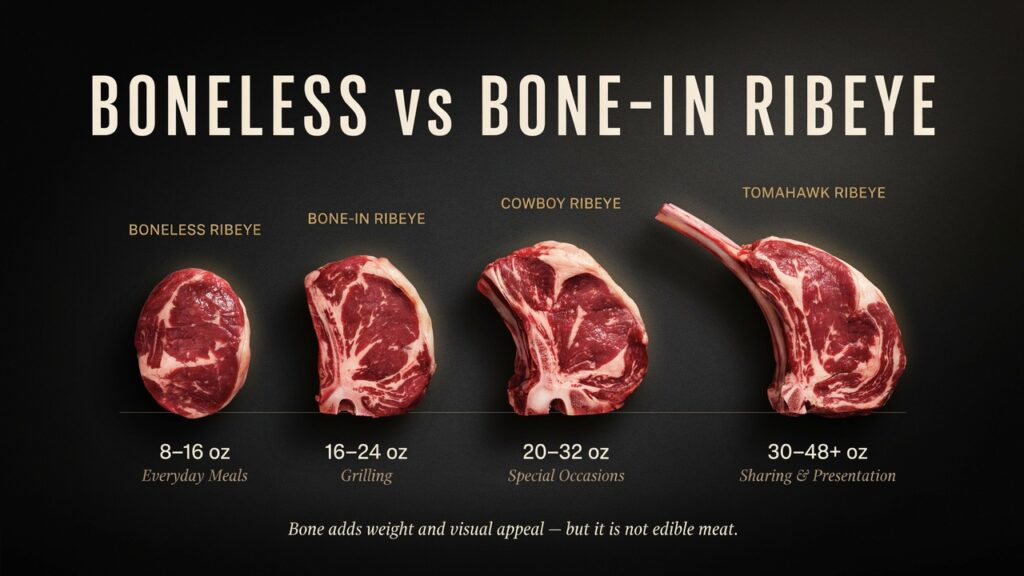
Bone-in ribeye steaks weigh more because the bone contributes to the total weight.
| Type | Typical Size | Best For |
|---|---|---|
| Boneless Ribeye | 8–16 oz | Everyday meals |
| Bone-In Ribeye | 16–24 oz | Grilling |
| Cowboy Ribeye | 20–32 oz | Special occasions |
| Tomahawk Ribeye | 30–48+ oz | Sharing & presentation |
The bone adds visual appeal and weight, but it does not represent edible meat.
Ribeye Steak Calories by Size
Ribeye is naturally calorie-dense because of its marbling and fat content.
| Raw Steak Size | Approx. Calories* |
|---|---|
| 6 oz | 450–600 |
| 8 oz | 550–700 |
| 10 oz | 650–850 |
| 12 oz | 750–1,000 |
| 16 oz | 1,000–1,300 |
| 20 oz | 1,300–1,650 |
| 24 oz | 1,500–2,000+ |
*Estimates vary substantially according to the steak’s fat content and whether the listed weight includes bone.
Butter, cooking oil, sauces, and toppings can add additional calories.
Ribeye Protein Chart
Ribeye provides substantial protein, although the exact amount depends on trimming and fat content.
| Steak Size | Approx. Protein |
|---|---|
| 6 oz | 35–45 g |
| 8 oz | 45–55 g |
| 10 oz | 50–65 g |
| 12 oz | 60–75 g |
| 16 oz | 80–100 g |
| 20 oz | 100–125 g |
These figures are approximate and can vary by cut and preparation.
Ribeye Steak Size for Grilling
For grilling, 1–1½ inch thick ribeye steaks are especially convenient because they provide enough thickness to develop a strong crust without overcooking the center too quickly.
For very thick steaks, a reverse-sear method can provide more even cooking.
Basic Grilling Approach
- Pat the steak dry.
- Season generously.
- Preheat the grill thoroughly.
- Sear both sides over high heat.
- Move to a cooler area if additional cooking is needed.
- Check the internal temperature.
- Rest before slicing.
Ribeye Steak Size for Pan-Seared Cooking
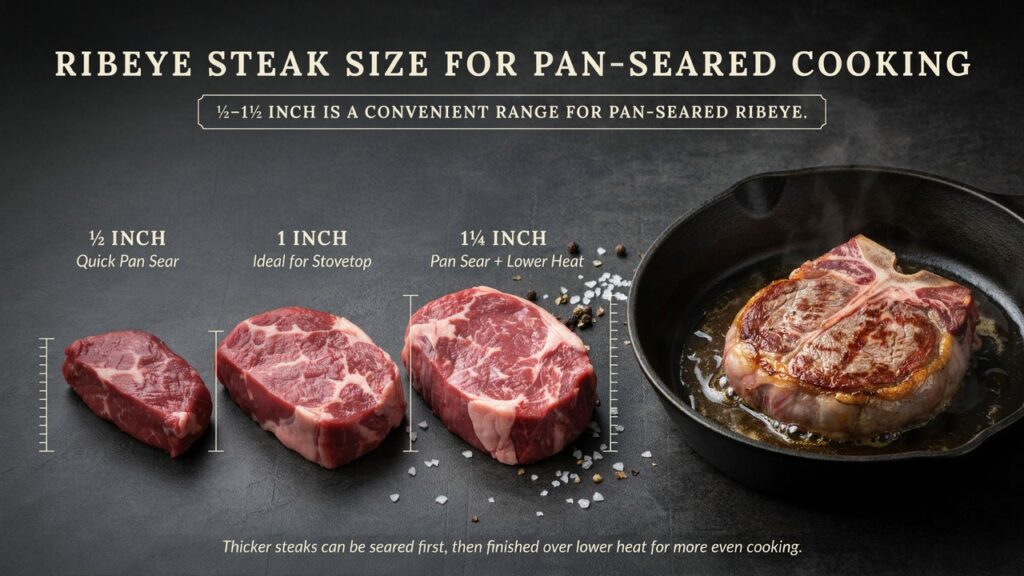
A ¾–1¼ inch ribeye is generally convenient for stovetop cooking.
A heavy skillet provides strong heat retention and helps develop a flavorful crust.
For thicker steaks, searing followed by lower-temperature cooking can help achieve more even doneness.
Ribeye Doneness Temperature Guide
| Doneness | Approx. Internal Temperature |
|---|---|
| Rare | 120–125°F |
| Medium Rare | 130–135°F |
| Medium | 140–145°F |
| Medium Well | 150–155°F |
| Well Done | 160°F+ |
Temperatures can continue rising slightly while the steak rests. For food safety, follow current food-safety guidance appropriate to the cut and preparation.
Ribeye Size and Cooking Method
| Steak Thickness | Recommended Method |
|---|---|
| Under 1 in | Fast pan-sear or grill |
| 1–1¼ in | Pan-sear or grill |
| 1¼–1½ in | Grill, skillet, or reverse sear |
| 1½–2 in | Reverse sear |
| 2+ in | Reverse sear or indirect grilling |
Thicker steaks benefit from slower cooking because it gives the center time to reach the desired temperature without burning the exterior.
Ribeye Steak Size Comparison
| Size | Approx. Weight | Meal Style |
|---|---|---|
| Small | 6–8 oz | Light dinner |
| Standard | 10–12 oz | Regular dinner |
| Large | 14–16 oz | Hearty dinner |
| Extra Large | 18–24 oz | Very hearty |
| Cowboy | 20–32 oz | Large/shareable |
| Tomahawk | 30–48+ oz | Sharing |
Ribeye vs Other Steak Sizes
Ribeye is often compared with other popular steak cuts.
| Cut | Typical Characteristics |
|---|---|
| Ribeye | Rich marbling and strong flavor |
| New York Strip | Firm texture and good marbling |
| Tenderloin | Very tender and relatively lean |
| Sirloin | Leaner and usually more affordable |
| T-Bone | Strip plus tenderloin with bone |
| Porterhouse | Large T-bone with larger tenderloin section |
Ribeye is especially popular with people who prioritize marbling and rich flavor.
Ribeye Steak for One Person
For an individual dinner, an 8–12 oz boneless ribeye is a common practical range.
Pair it with sides such as:
- Roasted vegetables
- Baked potato
- Mashed potatoes
- Green salad
- Grilled asparagus
- Corn
- Mushrooms
If you are serving several large sides, 8 oz may be enough. For a steak-focused meal, 12 oz or more may be preferred.
Ribeye Steak for Two People
A 16–24 oz ribeye can work well for two people, particularly when accompanied by several side dishes.
A large bone-in ribeye can also be sliced after resting and served family-style.
Ribeye Steak for a Dinner Party
When serving steak to several guests, plan according to whether the steaks are the main attraction or part of a larger menu.
For individual boneless steaks, around 8–12 oz per adult is a practical starting point.
For large bone-in steaks, calculate the edible meat separately from the bone weight.
How Much Ribeye for 10 People?
If ribeye is the main protein:
- 8 oz each: 5 lb total
- 10 oz each: 6.25 lb total
- 12 oz each: 7.5 lb total
For bone-in steaks, purchase additional weight because part of the listed weight comes from the bone.
Ribeye Steak Thickness and Tenderness
Thickness itself does not automatically make a steak more tender. Tenderness is influenced by the cut, marbling, aging, cooking method, and how the steak is sliced.
However, thicker steaks can make it easier to achieve:
- A deeply browned crust
- A properly cooked center
- Better control over doneness
Choosing the Right Ribeye
When selecting a ribeye, look for:
Good Marbling
Small streaks of intramuscular fat contribute to flavor and juiciness.
Even Thickness
An evenly cut steak generally cooks more consistently.
Fresh Appearance
The meat should have an appropriate fresh color and should be stored properly.
Appropriate Size
Choose based on appetite and the rest of the meal rather than simply selecting the largest steak available.
Common Ribeye Size Mistakes
1. Choosing Based Only on Weight
A 16 oz bone-in steak does not contain the same amount of edible meat as a 16 oz boneless steak.
2. Ignoring Thickness
Two steaks with the same weight can cook very differently if one is much thinner.
3. Cooking by Time Alone
Steak thickness, pan temperature, starting temperature, and equipment all affect cooking time.
4. Overloading the Pan
Crowding can reduce surface browning and make it harder to develop a good crust.
5. Cutting Immediately
Allowing the steak to rest before slicing helps keep the juices from spilling out immediately.
Ribeye Steak Size and Meal Planning
A balanced plate can include:
- 8–12 oz ribeye
- One starchy side
- One or two vegetables
- Optional salad
- Sauce or seasoning
The steak does not need to occupy the entire plate. A moderate steak combined with filling side dishes can create a satisfying meal.
Ribeye Storage Guide
| Storage | General Guidance |
|---|---|
| Refrigerator | Keep properly chilled and use according to food-safety guidance |
| Freezer | Package tightly to prevent freezer burn |
| Cooked Leftovers | Refrigerate promptly |
| Thawing | Thaw safely in the refrigerator |
Do not leave raw or cooked steak at room temperature for extended periods.
Frequently Asked Questions
What Is a Standard Ribeye Steak Size?
A standard ribeye is commonly around 10–12 oz and approximately 1–1¼ inches thick, although sizes vary by butcher and restaurant.
Is a 12 oz Ribeye Enough for One Person?
Yes. A 12 oz boneless ribeye is generally a substantial serving for one adult, especially when served with side dishes.
Is a 16 oz Ribeye Too Big for One Person?
It can be a large portion, but some people may choose a 16 oz steak for a hearty meal. Bone-in steaks can also weigh 16 oz or more because of the bone.
What Is a Cowboy Ribeye?
A cowboy ribeye is generally a thick, bone-in ribeye steak. Sizes commonly fall around 20–32 oz, although there is no single universal size.
What Is a Tomahawk Ribeye?
A tomahawk is a large bone-in ribeye with a long section of rib bone left attached. It is often served as a presentation steak and may weigh 30–48 oz or more.
What Thickness Is Best for Ribeye?
Around 1–1½ inches is a versatile thickness for grilling or pan-searing. Very thick steaks can work particularly well with reverse searing.
How Many Calories Are in a Ribeye Steak?
An 8–12 oz ribeye can contain roughly 550–1,000 calories, depending heavily on its fat content and whether the weight includes bone.
How Much Ribeye Should I Buy Per Person?
For boneless ribeye as the main protein, 8–12 oz per adult is a useful starting range. Increase the amount for large appetites or reduce it when serving several substantial side dishes.
Final Ribeye Steak Size Guide
Ribeye steaks come in a wide range of sizes, from 6–8 oz small cuts to 20–32 oz cowboy steaks and even larger tomahawk steaks. For most individual meals, an 8–12 oz boneless ribeye provides a practical balance between portion size and presentation.
Thickness is equally important. Steaks around 1–1½ inches thick are versatile for grilling and pan-searing, while thicker cuts are excellent candidates for reverse searing.
When choosing your ribeye, consider weight, thickness, bone-in versus boneless, marbling, appetite, cooking method, and side dishes. The biggest steak is not necessarily the best steak—the right size is the one that matches your meal and cooking style.
