
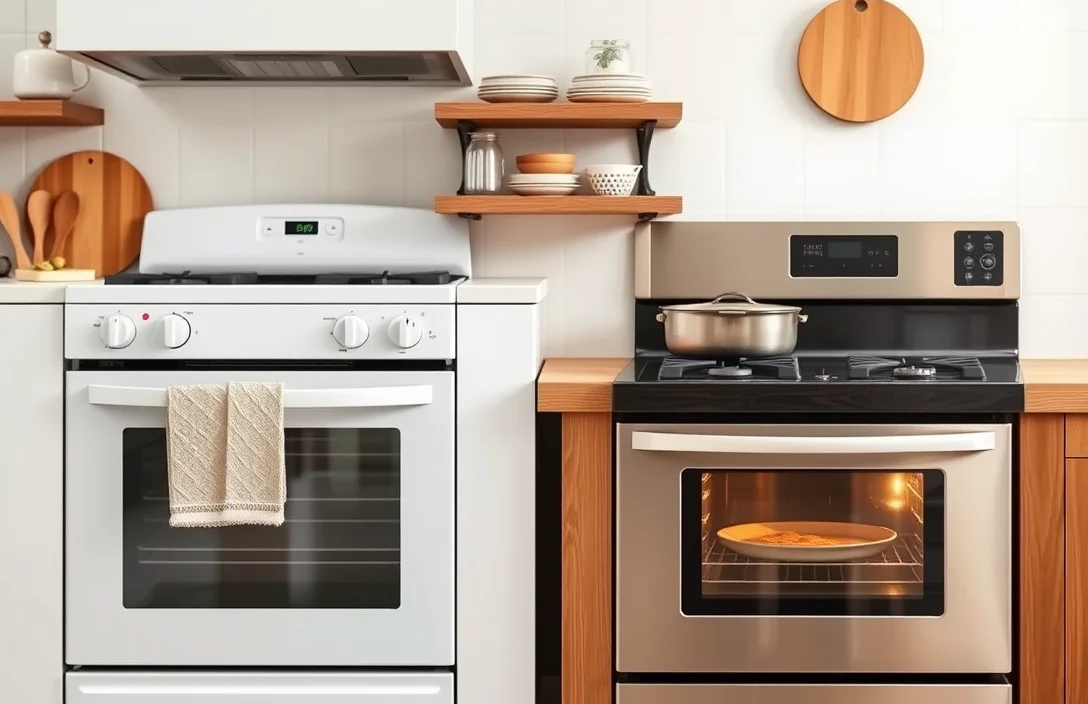
Surprisingly, 75% of American households have a range that combines both cooking and baking functions, yet many people confuse the terms “range,” “stove,” and “oven.” Understanding these distinctions can significantly impact your cooking experience and kitchen efficiency.
Ranges combine cooking surfaces and ovens; stoves refer specifically to the cooking top; ovens are solely for baking. Mastering these terms will enhance your culinary skills and help you choose the right appliances for your kitchen.
Understanding the Range as a Cooking Appliance
A range combines cooking and baking capabilities into one unit. Typically, it includes both a cooktop with burners and an oven below. This configuration is ideal for those who want a comprehensive cooking solution without needing separate appliances.
Many models feature various burner types, such as gas, electric, or induction, catering to different cooking preferences. The oven section often includes multiple settings, allowing for baking, broiling, and roasting. Knowing these features helps you select a range that fits your culinary needs.
Sizes of ranges can vary significantly, accommodating different kitchen layouts. Standard dimensions typically range from 30 to 36 inches in width. Compact options are available for smaller spaces, ensuring that even limited kitchens can benefit from this versatile appliance.
Energy efficiency is another vital characteristic to consider. Many modern ranges come equipped with advanced technology to reduce energy consumption, making them environmentally friendly while saving on utility bills. Opting for an energy-efficient model can positively impact both your cooking experience and household expenses.
Overall, a range serves as a multifunctional tool, combining the best features of a stove and an oven. Understanding its components and capabilities will enhance your cooking experience and help you create delicious meals efficiently.
Defining the Stove and Its Features
Stoves primarily consist of cooking surfaces equipped with burners, allowing for direct heat application. These appliances often come in gas, electric, or induction types, each offering unique benefits. Gas stoves provide instant heat control, while electric models offer consistent temperatures, and induction ranges heat cookware directly for efficiency.
Burners typically vary in size and power, accommodating different cooking needs. Most stoves feature a combination of high-output burners for boiling and simmer burners for more delicate tasks. Understanding burner types helps home cooks optimize their cooking techniques and achieve desired results.
Control knobs located on the front or side of the stove facilitate easy adjustments. Most modern stoves include digital displays, offering precise temperature settings and cooking functions. This integration improves user experience, making it easier for cooks to monitor their meals.
Cleaning features also enhance usability. Many stoves come with removable grates and sealed burners to simplify maintenance. Self-cleaning options are available on select models, making the task more manageable for busy cooks who prioritize efficiency.
Finally, safety features such as flame failure devices and child locks are common in contemporary stoves. These elements prevent accidents and provide peace of mind, especially in households with children. Prioritizing safety ensures a secure cooking environment for everyone.
Exploring the Oven’s Role in Cooking
Ovens provide essential cooking capabilities, primarily through dry heat. These appliances function by circulating hot air to cook food evenly, making them ideal for baking, roasting, and broiling. Adjusting temperature settings allows precise control over the cooking process, ensuring that dishes achieve desired textures and flavors.
Convection ovens enhance traditional designs by employing fans for improved heat distribution. This feature reduces cooking times and promotes even browning, which can be particularly beneficial for baking cookies or roasting meats. Different oven types, such as gas and electric, offer varied heating methods, catering to diverse culinary preferences.
Temperature accuracy is crucial for successful baking. Many recipes rely on specific degrees for optimal results, making an oven’s thermostat an important feature. Investing in an oven thermometer can help ensure that your appliance maintains accurate temperatures, vital for baking cakes or breads that require precise conditions.
Self-cleaning options simplify maintenance tasks. These ovens utilize high temperatures to burn away food residues, reducing manual scrubbing time. This feature is particularly useful for busy cooks who prioritize convenience while maintaining a clean cooking environment.
Versatility defines the modern oven’s role. From baking pastries to roasting vegetables, these appliances are indispensable in any kitchen. Understanding how your oven functions can enhance your cooking skills, allowing you to create a wider variety of dishes with confidence and ease.
Comparing Key Features of Each Appliance
Size significantly impacts your cooking experience. Standard ranges usually measure 30 inches wide, while stoves can vary greatly in dimensions. Ovens typically fit beneath these units, affecting overall kitchen layout and functionality. Consider available space to ensure the right fit for your cooking needs.
Burners differ in quantity and power. Most ranges feature four to six burners, but some models offer more for increased versatility. Stoves may include specialized burners like griddles or wok burners for diverse cooking styles. Analyze your cooking habits to choose the best configuration.
Capabilities vary widely among appliances. Ranges combine cooking and baking functions, making them versatile for various culinary tasks. Stoves focus primarily on stovetop cooking, while ovens excel at baking and roasting. Determine which features align with your cooking preferences before making a decision.
Efficiency plays a crucial role in appliance selection. Modern ranges often feature convection ovens and induction burners, enhancing cooking speed and energy savings. Older models may not offer these efficiencies, so compare energy ratings and features to find the best performance for your kitchen.
Different Cooking Methods for Each Device
Grilling and sautéing suit stovetops best. Use direct heat for quick cooking, allowing for browning and flavor development. Techniques like stir-frying and pan-searing thrive on this device, making it essential for fast meal preparation. Temperature control remains crucial; adjust flames or heat settings for perfect results.
Baking and roasting are ideal for ovens. This method distributes heat evenly, making it perfect for dishes that require prolonged cooking times. Casseroles, pastries, and breads benefit from the consistent environment, ensuring thorough cooking and browning. Always preheat for optimal results and adjust rack positions based on the recipe.
Ranges combine stovetop and oven capabilities. Flexibility enables various cooking methods, from boiling to baking. Utilizing both elements simultaneously allows for complete meal preparation, making it a versatile choice for any home chef. Experiment with techniques like braising or sous-vide for enhanced flavor and texture.
Microwaving offers quick reheating and defrosting. This method uses electromagnetic radiation to heat food rapidly, making it ideal for busy lifestyles. Although not suitable for all cooking styles, it excels in convenience, allowing users to prepare meals in minutes. Choose microwave-safe containers for best results.
Evaluating Energy Efficiency in Cooking Appliances
Energy consumption for cooking appliances varies significantly based on several factors. Key elements include the type of appliance, its size, and the cooking methods employed. For instance, induction cooktops are generally more efficient than traditional electric or gas options, reducing energy waste during cooking.
Appliance size impacts energy usage directly. Larger ranges or ovens often consume more energy than their smaller counterparts, particularly if the extra space isn’t utilized. Selecting the right size for your cooking needs can enhance efficiency and minimize unnecessary power consumption.
Cooking methods also play a crucial role. Conventional ovens may require longer preheating times compared to convection ovens, which circulate hot air for faster cooking. Utilizing appropriate cookware can maximize heat retention and reduce cooking time, leading to lower energy bills.
Insulation quality affects efficiency as well. Well-insulated ovens and ranges maintain heat better, reducing the energy required to maintain cooking temperatures. Investing in models with superior insulation can yield long-term energy savings.
Maintenance practices enhance appliance efficiency. Regular cleaning of burners and oven interiors ensures optimal performance. Dirty surfaces can impede cooking efficiency, leading to increased energy consumption.
Common Uses and Applications of Each Appliance
Cooking methods vary significantly across different appliances. Ranges combine both cooking and baking functionality, making them ideal for preparing full meals. Use the stovetop for quick tasks like boiling, sautéing, or frying. Ranges excel at multitasking, allowing simultaneous stovetop cooking and oven baking.
Baking requires precise temperature control, making ovens indispensable. Use it for cakes, bread, and casseroles that benefit from even heat distribution. Ranges accommodate larger meals, such as roasts or multiple dishes, while providing rapid access to boiling or frying tasks.
Grilling and broiling are best achieved using a range’s integrated options. Many models feature a grill or broiler, which allows for versatile cooking styles. For everyday cooking, the stovetop is often the most efficient choice, allowing quick adjustments to heat levels.
Heating leftovers is easily done in an oven, which provides even reheating without drying out food. Ranges support finishing touches, like crisping or melting cheese on casseroles, making them suitable for a variety of cooking tasks.
Meal prep benefits from the use of both the stovetop and oven. Utilize the stovetop for initial cooking and the oven for slow roasting or baking, ensuring flavors meld beautifully. Each appliance plays a vital role in creating diverse meals efficiently.
Quick Summary
- A range combines both a cooktop and an oven in a single appliance.
- A stove typically refers to the cooktop portion where pots and pans are placed for cooking.
- An oven is a separate appliance (or part of a range) used for baking, roasting, and broiling food.
- Ranges can be powered by gas, electricity, or a combination of both.
- Stoves usually have multiple burners for cooking different dishes simultaneously.
- Ovens can come as wall units or built-in designs, offering flexibility in kitchen layout.
- Different cooking methods (such as boiling, frying, baking) require different appliances for optimal results.
Frequently Asked Questions
What is the difference between a range and a stove?
A range refers to a cooking appliance that combines both a stove and an oven. The stove is the top part where you find burners for cooking, while the oven is the enclosed space below for baking and roasting.
Can I use the terms “stove” and “range” interchangeably?
While many people use “stove” to refer to the entire cooking unit, technically, a stove is just the top part with burners. It’s more accurate to use “range” when referring to the whole appliance that includes both the burners and the oven.
What is an oven used for?
An oven is designed for baking, roasting, and broiling food. It provides a controlled environment with even heat distribution, making it ideal for a variety of dishes such as bread, casseroles, and meats.
Are there different types of ovens?
Yes, there are several types of ovens, including conventional, convection, and microwave ovens. Each type has unique features that cater to different cooking methods and preferences.
Can I cook on a range without using the oven?
Absolutely! You can use the burners on a range to cook a wide variety of dishes without ever turning on the oven. This flexibility allows you to prepare meals using pots and pans on the stovetop while the oven remains unoccupied.
