
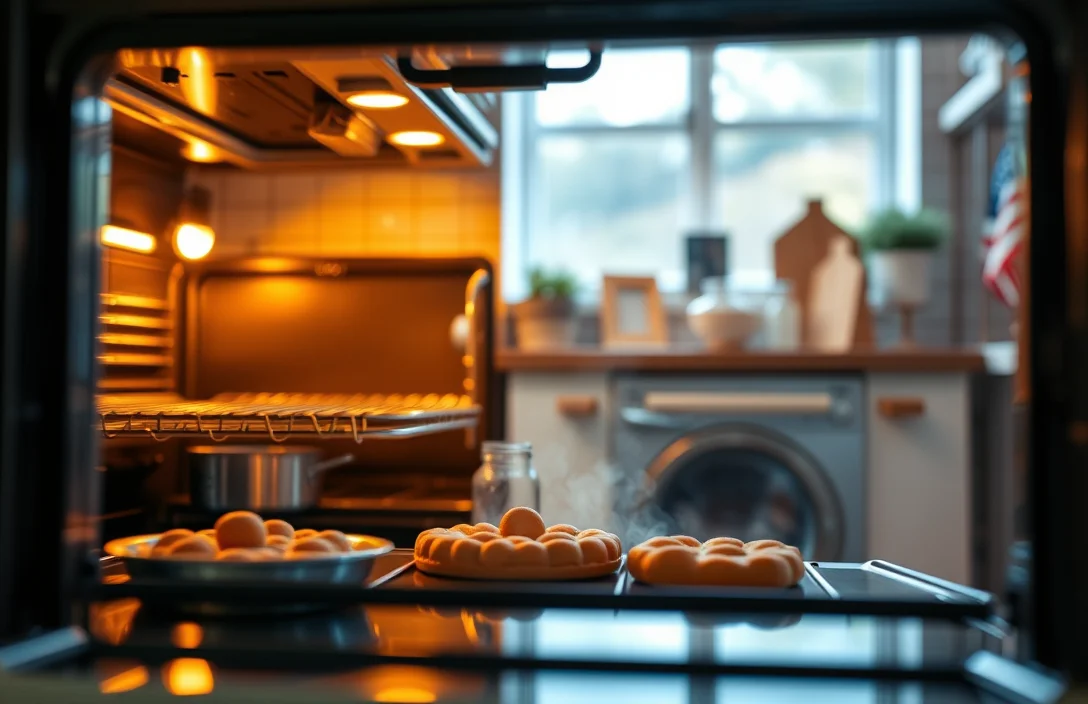
Ovens can reach temperatures of up to 500°F, making them essential for cooking everything from baked goods to roasted meats. Understanding how they function will help you become more confident in your new kitchen and ensure your meals turn out perfectly every time.
Heating elements in an oven create warmth, while thermostats regulate temperature, ensuring consistent cooking. Convection fans can circulate air for even heat distribution, and timers help monitor cooking times, preventing overcooking.
Understanding Different Types of Ovens
Various oven types serve unique cooking needs. Conventional ovens use radiant heat from top and bottom elements, ensuring even baking and roasting. Convection ovens add a fan that circulates hot air, cooking food faster and more evenly. These differences can significantly affect your cooking results, so knowing which type to use is crucial for beginners.
Microwave ovens, on the other hand, cook food by agitating water molecules, making them ideal for reheating leftovers or cooking certain foods quickly. While they can’t replace traditional baking for some recipes, they are convenient for quick meals. Understanding these distinctions helps you choose the right oven for your culinary tasks.
Wall ovens offer built-in space-saving options that can enhance kitchen aesthetics and functionality. They come in various styles, including convection and steam, allowing you to choose based on your cooking preferences. Selecting the right oven can lead to better meal preparation and a more enjoyable cooking experience.
Range ovens combine a cooktop and oven in one unit, giving flexibility in the kitchen. They often come in gas or electric options, allowing you to choose based on your cooking style. Familiarizing yourself with these types will build your confidence as you start your cooking adventures.
Explaining Heating Elements in Ovens
Heating elements generate the heat necessary for cooking. These components are typically made of metal and are located either at the bottom or top of the oven. Depending on the type of oven, they can be exposed or hidden beneath a protective cover. Understanding how they function is key to mastering oven cooking.
- Electric ovens utilize coil or ribbon heating elements. When electricity flows through these metal coils, they heat up and radiate heat into the oven cavity, cooking your food evenly.
- Gas ovens feature burners that ignite gas to produce flames. These flames heat the oven’s interior and can be adjusted to control the cooking temperature directly.
- Convection ovens have a fan that circulates hot air around the food. This enhances even cooking and reduces cooking time, thanks to the consistent heat distribution.
- Self-cleaning ovens have a special heating element that reaches extremely high temperatures, incinerating food residue. This makes cleaning easier, but requires caution.
- Broilers, found in many ovens, use a dedicated heating element located at the top. This method provides direct, intense heat to quickly brown or crisp food surfaces.
Familiarizing yourself with these heating elements will boost your confidence in using your oven correctly. Each type has its own unique characteristics, making it essential to know how they operate for successful cooking.
Thermostat Functionality Explained
Maintaining the right temperature is crucial for cooking success. The thermostat plays a vital role by regulating the oven’s internal heat. It senses the current temperature and communicates with the heating elements to adjust their output. This ensures that your dishes cook evenly and thoroughly, preventing undercooked or burnt meals.
Actively monitoring temperature, the thermostat uses a sensing bulb or thermocouple. These components detect heat levels and signal the oven to either turn off or on. When the set temperature is reached, the thermostat will cut power to the heating elements until the temperature drops below the desired level, at which point it will reactivate. This on-off cycle is essential for consistent cooking.
Understanding the temperature settings is equally important. Most ovens display a temperature dial or digital readout for easy adjustments. Familiarizing yourself with these settings allows for better control over cooking times and results. Always preheat your oven to the desired temperature before placing food inside, as this step is essential for achieving optimal cooking performance.
Mastering the thermostat’s functionality builds confidence in the kitchen. Knowing how to adjust temperatures based on your recipes will lead to improved cooking outcomes. Experimenting with different settings and observing the results is a practical way to learn and adapt your cooking techniques over time.
Key Components of an Oven
Heating elements play a critical role in oven functionality. These components are typically located at the top and bottom of the oven cavity and are responsible for generating heat. Electric ovens use metal coils, while gas ovens rely on flame. Understanding these elements helps you gauge how quickly your oven heats and how evenly it cooks food.
Insulation ensures that heat remains inside the oven, improving efficiency. High-quality insulation materials line the oven walls, preventing heat loss. This feature saves energy and helps maintain consistent cooking temperatures. A well-insulated oven can significantly reduce cooking times and improve meal outcomes.
Oven racks provide versatility for cooking different dishes simultaneously. Adjustable racks allow you to position food closer to the heating element for broiling or further away for baking. Knowing how to arrange your racks can help you optimize cooking space and achieve better results.
Control knobs or digital displays enable you to set temperatures and cooking modes. Whether using a dial or a touchscreen, these controls are essential for customizing your cooking experience. Familiarizing yourself with the functions can boost your confidence and ensure that meals are cooked properly.
Comparing Convection and Conventional Cooking
Convection ovens circulate hot air, cooking food more evenly and quickly. This method involves a fan that distributes heat throughout the oven, which can reduce cooking time by up to 25%. Conventional ovens, on the other hand, rely on radiant heat from the top and bottom elements, leading to potential hot spots. Understanding these differences can help you choose the right method for your cooking needs.
Cooking with convection is ideal for baking cookies or roasting meats, as it enhances browning and crispiness. Foods benefit from uniform heat, ensuring they cook thoroughly without the risk of burning. Conventional ovens excel at traditional baking since they provide a gentle heat that is perfect for items like soufflés and delicate cakes, which require careful temperature control.
Temperature settings also differ between the two. Convection recipes generally need a temperature adjustment, usually lowering the temperature by 25°F. This adjustment ensures the food cooks properly without over-baking. Conventional ovens maintain the set temperature throughout the cooking process, making it less complicated for beginners.
Ultimately, your cooking style and preferences will dictate which oven type to use. Embracing convection can lead to quicker meals and improved results, while conventional baking may suit more traditional recipes. Experimenting with both types will enhance your cooking skills and confidence.
Temperature Control Mechanisms in Ovens
Ovens regulate cooking temperatures through several mechanisms. These systems ensure that the heat remains consistent and effective for cooking. Understanding these mechanisms can significantly improve your cooking experience, allowing you to achieve better results with your dishes.
- Thermostats play a crucial role. They monitor the internal temperature and adjust the heating elements accordingly. This feedback loop helps maintain the desired heat level, making sure your food cooks evenly.
- Heating elements vary in design. Most ovens have both top and bottom heating elements, which can be activated independently or simultaneously. This flexibility allows for different cooking techniques, like broiling or baking.
- Convection fans enhance heat distribution. In convection ovens, fans circulate hot air around the food, promoting even cooking and reducing cooking time. This feature is especially beneficial for baked goods that require precise temperatures.
- Calibration ensures accuracy. Regularly checking and calibrating your oven’s thermostat can prevent discrepancies between the set temperature and actual heat. An inaccurate oven can lead to undercooked or burnt meals.
- Digital controls offer precision. Many modern ovens come with digital displays that allow for exact temperature settings. These controls can make cooking easier, especially for beginners who may not be familiar with traditional dials.
Safety Features Built into Ovens
Ovens incorporate several safety features to prevent accidents and ensure secure operation. Child locks are essential for households with young children, preventing them from accidentally turning the oven on. Automatic shut-off mechanisms also contribute by turning off the oven after a set time, reducing fire risks.
Temperature sensors play a crucial role in maintaining safe cooking conditions. These devices monitor the internal temperature and can shut down the heating elements if overheating occurs. This feature helps to protect both the appliance and your home from potential hazards.
Ventilation systems aid in preventing the buildup of harmful gases, especially in gas ovens. Proper ventilation ensures that any gases produced during cooking are safely expelled, protecting your health. Regularly checking and maintaining these systems is vital for safe appliance use.
Lastly, oven door locks are designed to prevent accidental openings during high-heat cooking processes. This feature is particularly important for self-cleaning ovens, which reach extremely high temperatures. Always ensure that these locks are functioning properly to enhance your safety while cooking.
Quick Summary
- An oven produces heat from an energy source—typically electric heating elements or a gas burner—to raise the internal temperature.
- A thermostat and control system cycle the heat source on and off to reach and maintain the set temperature.
- Heat transfers to food by conduction (contact with hot surfaces), convection (movement of hot air), and radiation (infrared from hot elements or flame).
- Convection ovens use a fan to circulate hot air for faster, more even cooking and browning.
- Preheating ensures the oven and cookware reach the target temperature; insulation and oven cavity size affect temperature stability.
- Modern ovens include safety and efficiency features such as sealed doors, automatic shutoffs, temperature limits, and ventilation systems.
Frequently Asked Questions
How does an oven heat food?
Most ovens heat with either electric heating elements or a gas flame that warms the air inside the cavity, and that hot air transfers heat to your food by conduction, convection, and radiation. Some ovens have a fan (convection) to circulate air for more even and faster cooking.
Do I need to preheat the oven every time?
Yes, preheating brings the oven to the recipe’s intended temperature so food cooks evenly and times are accurate; most baked goods and roasts need it. For quick items like some frozen snacks, the instructions may allow starting in a cold oven—check the recipe or package.
What’s the difference between Bake, Broil, and Convection?
“Bake” uses steady, even heat from the lower and upper elements for general cooking, while “Broil” uses intense top heat for browning or grilling. “Convection” turns on a fan to circulate air, which browns food more evenly and often lets you reduce temperature or cooking time slightly.
How do I know the right temperature and when my food is done?
Follow recipe temperatures as a starting point and use an oven thermometer to check your oven’s accuracy, since built-in dials can be off. Use a food thermometer for meats and visual cues (color, texture, toothpick test for cakes) to confirm doneness.
What safety tips should I follow when using the oven?
Always use oven mitts, keep flammable items away from the oven, and make sure children stay clear of hot surfaces; never leave high-heat cooking unattended. Keep vents and fans clear, clean spills to prevent smoke or flare-ups, and avoid blocking airflow with foil on rack bottoms.
