
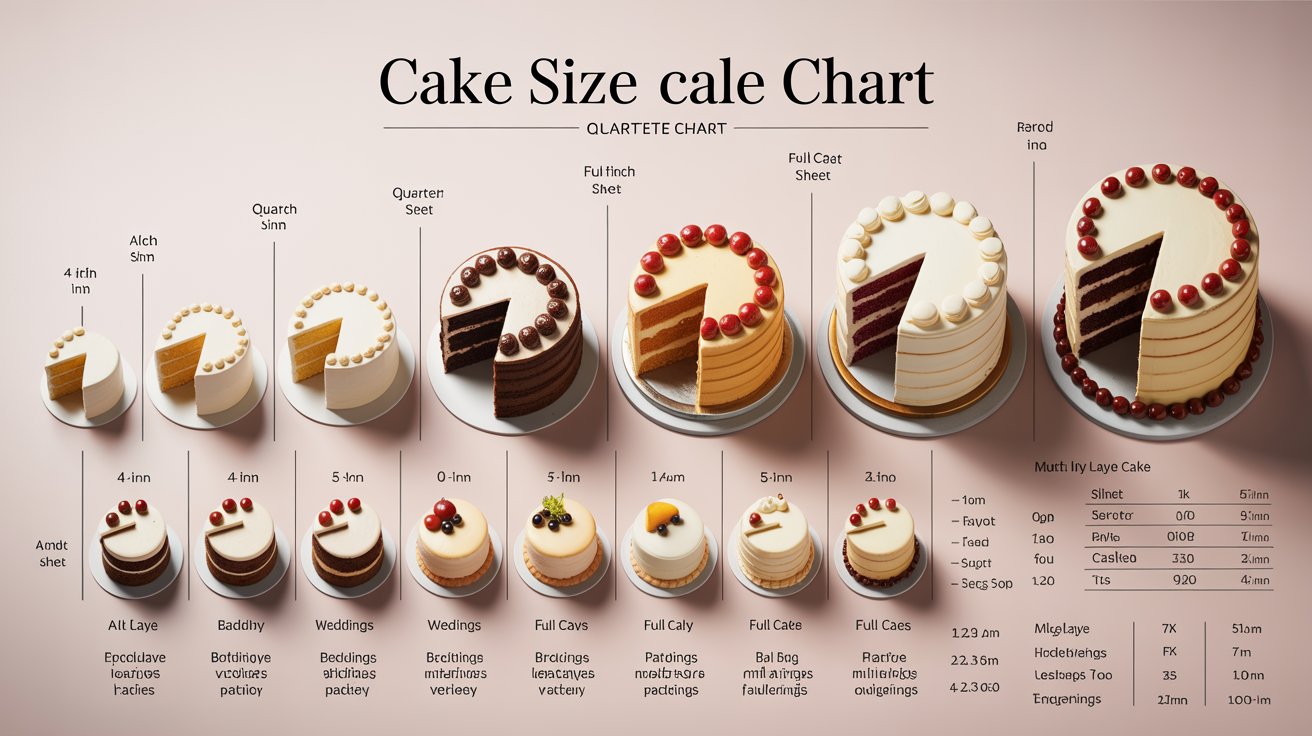
Choosing the right cake size can make a huge difference for birthdays, weddings, parties, and special events. A cake that’s too small may leave guests without a slice, while a cake that’s too large can lead to unnecessary leftovers and extra cost. Understanding a cake size scale chart helps bakers, event planners, and home cooks select the perfect cake size for any occasion. Whether you’re ordering from a bakery or baking at home, knowing standard cake dimensions and serving counts makes planning much easier.
Why Cake Size Matters
Cake size affects more than just appearance. It determines how many people you can serve, how tall the cake looks, and even baking time. Larger cakes often require longer baking and more support for layered designs.
For bakeries, consistent cake sizing helps with pricing and decorating. At home, understanding cake sizes prevents overbaking or running out of dessert during gatherings.
Choosing the correct cake size also helps balance portion sizes. Smaller slices work well for large events, while bigger slices are common for birthdays and casual parties.
Standard Cake Sizes And Servings
Cakes are usually measured by diameter for round cakes and by length and width for sheet cakes. Here are the most common cake sizes and their approximate serving counts.
Round Cake Size Chart
| Cake Size (Diameter) | Approximate Servings | Best Use |
|---|---|---|
| 4-inch | 2–4 servings | Small celebrations, smash cakes |
| 6-inch | 6–10 servings | Couples or small gatherings |
| 8-inch | 12–20 servings | Birthdays, family events |
| 10-inch | 20–30 servings | Medium parties |
| 12-inch | 30–40 servings | Large gatherings |
| 14-inch | 40–60 servings | Weddings and large events |
Serving numbers vary depending on slice size and cake height.
Sheet Cake Size Chart
Sheet cakes are popular for larger parties and events because they serve more guests efficiently.
Sheet Cake Serving Guide
| Sheet Cake Size | Approximate Dimensions | Approximate Servings |
|---|---|---|
| Quarter Sheet | 9 × 13 inches | 20–30 servings |
| Half Sheet | 13 × 18 inches | 40–60 servings |
| Full Sheet | 18 × 26 inches | 70–100 servings |
Sheet cakes are commonly used for school events, office parties, and weddings.
Choosing The Right Cake Size
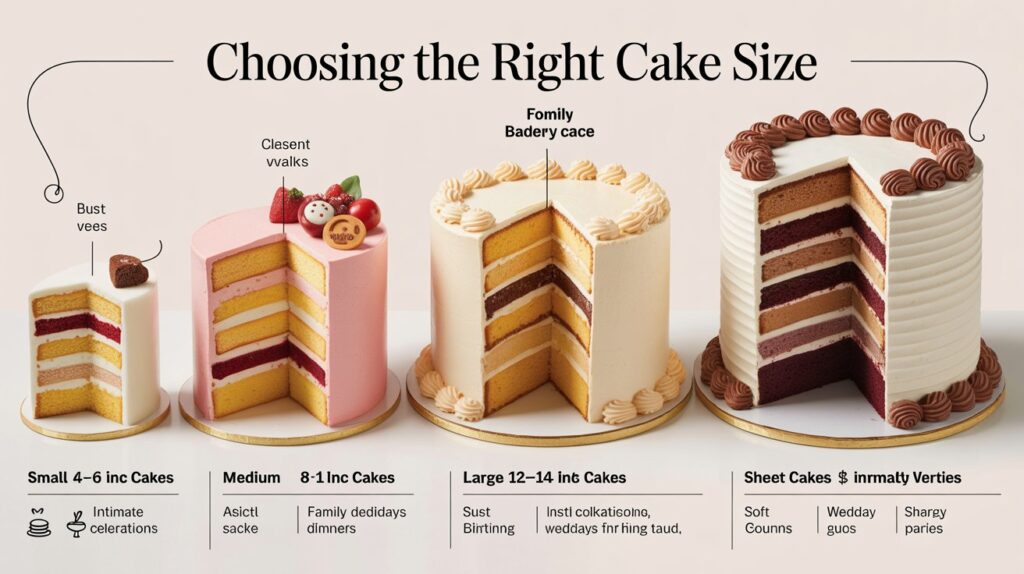
The best cake size depends on the number of guests and the type of event. Here are some general guidelines:
- Small Cakes (4–6 inch): Perfect for intimate celebrations.
- Medium Cakes (8–10 inch): Great for birthdays and family dinners.
- Large Cakes (12–14 inch): Best for weddings and large parties.
- Sheet Cakes: Ideal for serving large groups efficiently.
If you’re serving other desserts, you may need fewer cake servings per guest.
Cake Size Comparison: Single Layer Vs. Multi-Layer
Cake height also changes serving capacity.
Single vs Multi-Layer Cakes
| Cake Type | Height | Serving Capacity |
|---|---|---|
| Single Layer | Shorter | Standard |
| Double/Triple Layer | Taller | More servings |
Tall cakes may provide more servings even when the diameter stays the same.
Cake Size And Portion Sizes
Slice size matters when estimating servings. Weddings often use smaller slices than birthdays.
Cake Slice Size Guide
| Event Type | Slice Size |
|---|---|
| Wedding Cake | 1 × 2 inch slice |
| Party Cake | 1.5 × 2 inch slice |
| Casual Dessert | Larger personal slice |
Smaller slices help large cakes serve more guests.
Visual Guide: Cake Sizes
Visual comparisons help make cake sizes easier to understand.
Cake Size Comparison
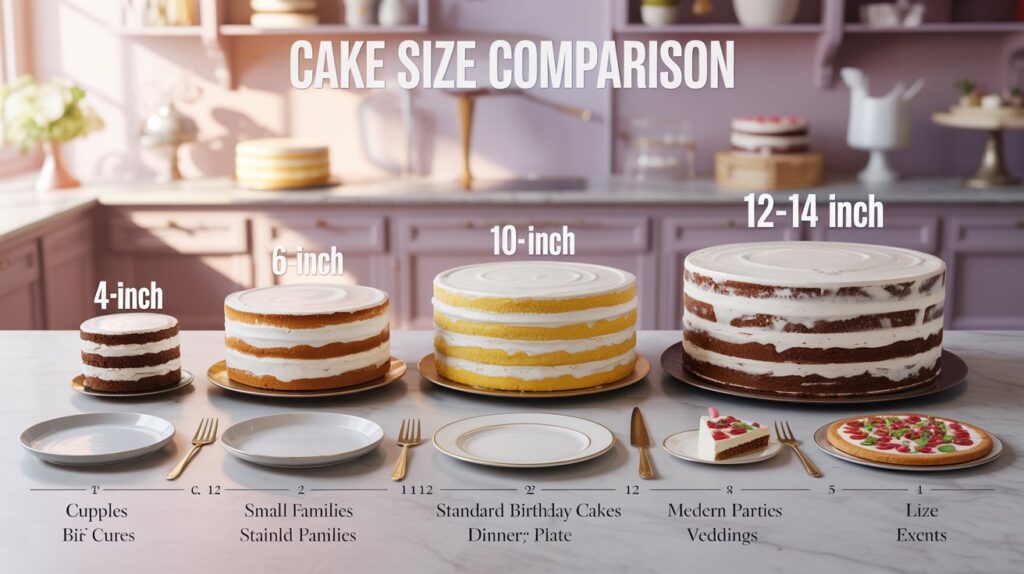
| Cake Size | Visual Comparison | Best For |
|---|---|---|
| 4-inch | Small dessert plate | Couples |
| 6-inch | Salad plate size | Small families |
| 8-inch | Dinner plate center | Standard birthday cakes |
| 10-inch | Large dinner plate | Medium parties |
| 12–14 inch | Pizza-size appearance | Weddings and events |
Tips For Choosing Cake Sizes
- Estimate guests carefully: Always plan a few extra servings.
- Consider other desserts: Multiple desserts reduce cake demand.
- Use taller cakes for more servings: Height increases portion count.
- Account for decorations: Fondant and toppings may reduce cutting space.
- Choose sheet cakes for efficiency: Easier for large crowds.
Proper planning helps avoid running short or overspending on cake.
Common Mistakes When Choosing Cake Sizes
- Underestimating guest count: Smaller cakes may not feed everyone.
- Ignoring cake height: Taller cakes serve more slices.
- Choosing oversized cakes unnecessarily: Leads to extra leftovers.
- Not considering slice size: Event style changes serving estimates.
Understanding cake dimensions improves event planning and presentation.
How Cake Size Affects Baking
Larger cakes require longer baking times and more structural support. Smaller cakes bake faster and are easier to decorate for beginners.
Tall or multi-tier cakes often need dowels or supports to remain stable during transport and serving.
The History Of Cake Sizing
Traditional cakes were much smaller and simpler than modern celebration cakes. As weddings and large events became more elaborate, bakeries developed standardized cake sizes and serving charts.
Today, cakes range from tiny single-serve desserts to massive multi-tier wedding centerpieces.
Frequently Asked Questions
What Size Cake Serves 20 People?
An 8-inch or 10-inch round cake typically serves around 20 people depending on slice size.
How Many People Does A Quarter Sheet Cake Serve?
A quarter sheet cake usually serves about 20–30 people.
Are Tall Cakes Better For Large Parties?
Yes, taller cakes can provide more servings without increasing diameter.
What Is The Most Common Birthday Cake Size?
An 8-inch round cake is one of the most common birthday cake sizes.
How Do Bakeries Calculate Cake Servings?
Bakeries estimate servings based on cake dimensions, height, and slice size.
Cake size charts may seem like a small detail, but they can greatly affect event planning, serving portions, and presentation. Whether you’re baking at home or ordering from a bakery, understanding cake sizes helps you choose the perfect cake for every occasion.
