
Poke bowls are a colorful and customizable meal made with a base such as rice or greens, fresh fish or another protein, vegetables, sauces, and toppings. Because every bowl can be built differently, portion sizes can vary considerably. A small poke bowl may work as a light lunch, while a large bowl can become a substantial meal with extra protein, rice, avocado, and sauces.
Understanding the poke bowl size chart helps you choose the right portion, bowl capacity, protein amount, toppings, and overall serving size for different appetites and occasions.
Why Poke Bowl Size Matters
Poke bowl size affects more than how much food you receive. The amount of rice, protein, sauce, and toppings can significantly change the calories and nutritional balance of the meal.
Choosing the right size helps with:
- Portion control
- Meal planning
- Protein intake
- Calorie estimation
- Balancing toppings
- Restaurant ordering
- Meal preparation
- Avoiding food waste
A larger bowl is not automatically a better choice. The best size depends on your appetite and the ingredients you choose.
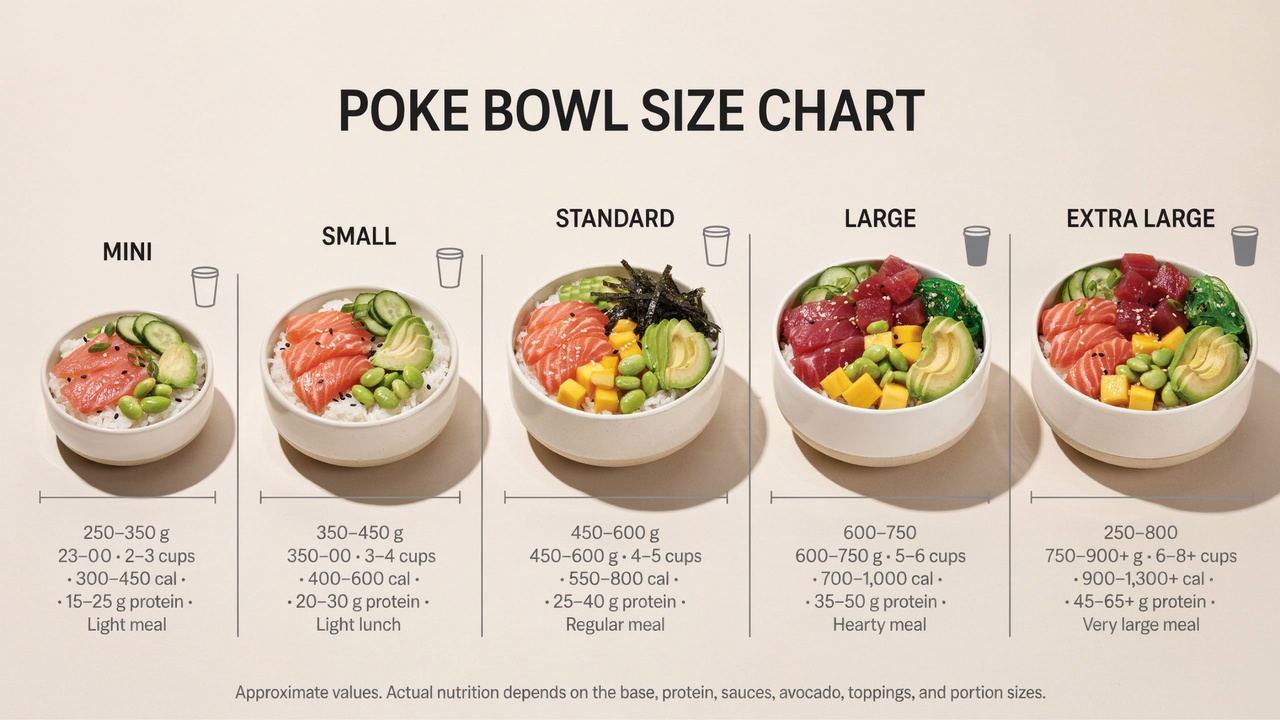
Standard Poke Bowl Size Chart
| Poke Bowl Size | Approx. Weight | Bowl Capacity | Calories* | Protein* | Best For |
|---|---|---|---|---|---|
| Mini | 250–350 g | 2–3 cups | 300–450 | 15–25 g | Light meal |
| Small | 350–450 g | 3–4 cups | 400–600 | 20–30 g | Light lunch |
| Standard | 450–600 g | 4–5 cups | 550–800 | 25–40 g | Regular meal |
| Large | 600–750 g | 5–6 cups | 700–1,000 | 35–50 g | Hearty meal |
| Extra Large | 750–900+ g | 6–8+ cups | 900–1,300+ | 45–65+ g | Very large meal |
*Approximate values. Actual nutrition depends heavily on the base, protein, sauces, avocado, toppings, and portion sizes.
Poke Bowl Serving Size Chart
| Serving Type | Approx. Amount | Best For |
|---|---|---|
| Mini | 2–3 cups | Snack or light meal |
| Small | 3–4 cups | Light lunch |
| Standard | 4–5 cups | Regular lunch or dinner |
| Large | 5–6 cups | Hearty meal |
| Extra Large | 6–8+ cups | Very large appetite |
A bowl’s volume can vary because rice and vegetables have different densities.
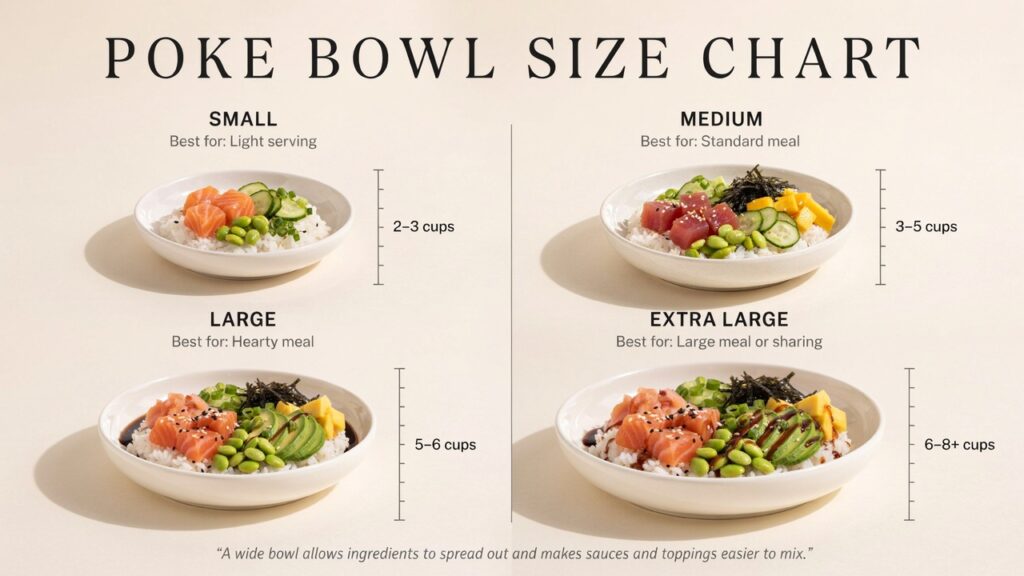
Poke Bowl Bowl Size Chart
| Bowl Size | Approx. Capacity | Best Use |
|---|---|---|
| Small | 2–3 cups | Light serving |
| Medium | 3–5 cups | Standard meal |
| Large | 5–6 cups | Hearty meal |
| Extra Large | 6–8+ cups | Large meal or sharing |
A wide bowl is often preferable because it allows the ingredients to be spread out and makes sauces and toppings easier to mix.
Poke Bowl Ingredient Chart
| Ingredient | Main Role |
|---|---|
| Sushi Rice | Carbohydrate base |
| Brown Rice | Whole-grain base |
| Mixed Greens | Light base |
| Salmon | Protein & healthy fats |
| Tuna | Lean protein |
| Shrimp | Lean seafood |
| Tofu | Plant-based protein |
| Cucumber | Freshness & crunch |
| Edamame | Protein & fiber |
| Avocado | Creaminess & healthy fats |
| Seaweed | Savory flavor |
| Sesame Seeds | Crunch |
| Poke Sauce | Flavor |
The combination of ingredients determines the final size, calories, and nutritional profile.
Poke Bowl Base Size Chart
The base usually makes up a significant portion of the bowl.
| Base | Typical Portion | Characteristics |
|---|---|---|
| White Rice | ¾–1½ cups | Soft & filling |
| Brown Rice | ¾–1½ cups | Nutty & hearty |
| Sushi Rice | ¾–1½ cups | Sticky & slightly sweet |
| Quinoa | ¾–1¼ cups | Nutty & protein-rich |
| Mixed Greens | 2–4 cups | Light & fresh |
| Half Rice/Half Greens | ½–¾ cup + greens | Balanced |
Using greens instead of a full rice base can make the bowl feel larger without adding as many calories from carbohydrates.
Poke Bowl Protein Size Chart
Protein is one of the most important components of a poke bowl.
| Bowl Size | Approx. Protein Portion |
|---|---|
| Mini | 2–3 oz |
| Small | 3–4 oz |
| Standard | 4–5 oz |
| Large | 5–6 oz |
| Extra Large | 6–8+ oz |
Fish portions can vary between restaurants, so these numbers are useful planning estimates rather than universal standards.
Poke Bowl Fish Chart
| Protein | Flavor | Typical Use |
|---|---|---|
| Salmon | Rich & buttery | Classic poke |
| Tuna | Lean & mild | Classic poke |
| Yellowtail | Rich & delicate | Premium bowl |
| Shrimp | Mild & slightly sweet | Cooked option |
| Octopus | Firm & savory | Specialty bowls |
| Tofu | Mild & creamy | Vegetarian |
| Chicken | Savory | Non-traditional option |
Traditional poke commonly features seafood, while modern poke restaurants offer many other protein choices.
Poke Bowl Calories Chart
Calories can vary dramatically depending on the ingredients.
| Bowl Size | Approx. Calories |
|---|---|
| Mini | 300–450 |
| Small | 400–600 |
| Standard | 550–800 |
| Large | 700–1,000 |
| Extra Large | 900–1,300+ |
Creamy sauces, large rice portions, avocado, crispy toppings, and multiple proteins can quickly increase calories.
Poke Bowl Sauce Chart
Sauce is often one of the easiest parts of a poke bowl to overdo.
| Sauce | Flavor |
|---|---|
| Soy Sauce | Salty & savory |
| Ponzu | Citrus & salty |
| Sesame Sauce | Nutty & rich |
| Spicy Mayo | Creamy & spicy |
| Eel Sauce | Sweet & savory |
| Wasabi Sauce | Sharp & spicy |
| Sriracha | Hot & tangy |
For portion control, ask for sauce on the side or use a measured amount.
Poke Bowl Sauce Portion Chart
| Bowl Size | Approx. Sauce |
|---|---|
| Mini | 1 tbsp |
| Small | 1–1½ tbsp |
| Standard | 1½–2 tbsp |
| Large | 2–3 tbsp |
| Extra Large | 3–4+ tbsp |
Creamy sauces can contain considerably more calories than lighter soy- or citrus-based sauces.
Poke Bowl Topping Chart
| Topping | Texture/Flavor |
|---|---|
| Edamame | Nutty & firm |
| Cucumber | Crisp & refreshing |
| Seaweed | Savory |
| Avocado | Creamy |
| Pickled Ginger | Sweet & spicy |
| Radish | Crisp & peppery |
| Corn | Sweet |
| Mango | Sweet & fruity |
| Green Onion | Fresh & sharp |
| Sesame Seeds | Nutty & crunchy |
| Crispy Onions | Crunchy & savory |
A combination of soft, crisp, crunchy, sweet, and savory ingredients creates a more interesting bowl.
Poke Bowl Topping Amount Chart
| Topping Type | Typical Amount |
|---|---|
| Light Topping | 1–2 tbsp |
| Standard Topping | 2–3 tbsp |
| Large Topping | ¼–½ cup |
| Multiple Toppings | ½–1 cup total |
Several small toppings can add up quickly, especially when avocado, crispy onions, and creamy sauces are included.
Poke Bowl Vegetable Chart
Vegetables can add volume without making the bowl overly heavy.
| Vegetable | Best Character |
|---|---|
| Cucumber | Crisp |
| Carrot | Sweet & crunchy |
| Cabbage | Crunchy |
| Radish | Peppery |
| Edamame | Nutty |
| Seaweed | Savory |
| Corn | Sweet |
| Scallions | Fresh & sharp |
| Bell Pepper | Sweet & crisp |
A mixture of vegetables provides more texture than relying on one topping.
Poke Bowl Size by Meal Type
| Meal Type | Recommended Size | Typical Composition |
|---|---|---|
| Snack | Mini | Greens + small protein |
| Light Lunch | Small | Greens + protein |
| Regular Lunch | Standard | Rice + protein + vegetables |
| Dinner | Standard–Large | Base + protein + toppings |
| Post-Workout Meal | Large | Protein + carbohydrate base |
| Very Large Meal | Extra Large | Large base + protein + toppings |
The right portion depends on the individual’s appetite and dietary needs.
Poke Bowl for Kids
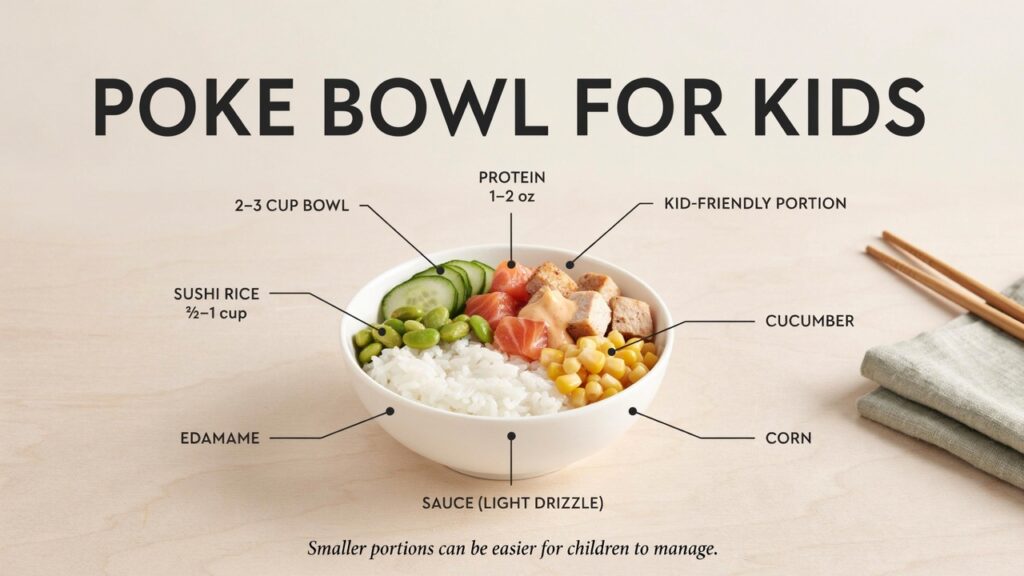
Children may do better with smaller portions.
A kid-sized poke bowl can include:
- ½–1 cup rice
- 1–2 oz protein
- Cucumber
- Edamame
- Corn
- Small amount of sauce
A 2–3 cup bowl is often easier for children to manage than a large restaurant-style bowl.
Poke Bowl for Adults
For most adults, a standard bowl can provide a balanced meal when it includes:
- 1 cup or so of rice or another base
- 4–5 oz protein
- 1–2 cups vegetables
- A moderate amount of toppings
- Controlled sauce
A large bowl may be appropriate when the meal is particularly filling or when additional ingredients are included.
Poke Bowl Protein Comparison
| Protein | General Character |
|---|---|
| Tuna | Lean, high-protein |
| Salmon | Rich, protein + fat |
| Shrimp | Lean, light |
| Tofu | Plant-based |
| Chicken | Lean and filling |
| Yellowtail | Rich seafood option |
Nutritional values vary according to preparation and serving size.
Poke Bowl vs Sushi
| Feature | Poke Bowl | Sushi |
|---|---|---|
| Format | Bowl | Rolls, nigiri, or sashimi |
| Base | Rice or greens | Usually rice |
| Protein | Cubed or sliced | Sliced or rolled |
| Toppings | Highly customizable | More structured |
| Sauce | Often mixed in | Usually served separately |
| Portion Control | Flexible | Piece-based |
Poke bowls are particularly convenient when you want to customize every part of the meal.
Poke Bowl vs Salad Bowl
| Feature | Poke Bowl | Salad Bowl |
|---|---|---|
| Base | Rice or greens | Mostly greens |
| Protein | Seafood commonly used | Meat, seafood, beans |
| Carbohydrates | Often higher | Usually lower |
| Toppings | Seaweed, edamame, vegetables | Vegetables, nuts, cheese |
| Dressing | Soy, ponzu, spicy mayo | Vinaigrette or creamy dressing |
A poke bowl can be built as a lighter salad-style meal by choosing greens instead of rice.
Healthy Poke Bowl Options
A balanced poke bowl can include:
- Mixed greens or a moderate rice portion
- Lean fish
- Plenty of vegetables
- Edamame
- Seaweed
- Fresh fruit
- Light sauce
- Moderate avocado
If you want to reduce calories, the easiest adjustments are often reducing creamy sauces and oversized rice portions.
Poke Bowl Nutrition Chart
| Nutrient | Main Sources |
|---|---|
| Protein | Fish, shrimp, tofu, edamame |
| Carbohydrates | Rice, quinoa, corn, fruit |
| Healthy Fats | Salmon, avocado, sesame |
| Fiber | Vegetables, edamame, greens |
| Sodium | Soy sauce, marinades, toppings |
| Calories | Rice, sauces, avocado, protein |
The nutritional profile depends on the ingredients and their portions.
Poke Bowl Meal Prep Chart
| Ingredient | Meal Prep Recommendation |
|---|---|
| Rice | Cook and cool properly |
| Fish | Use fresh, properly handled ingredients |
| Vegetables | Keep chilled |
| Sauce | Store separately |
| Avocado | Add close to serving |
| Crispy Toppings | Keep dry |
| Greens | Wash and dry thoroughly |
For food safety, perishable ingredients should be kept properly refrigerated and handled carefully.
How to Build a Balanced Poke Bowl
A simple formula is:
Base + Protein + Vegetables + Toppings + Sauce
For example:
- Rice as the base
- Salmon for protein
- Cucumber and edamame
- Seaweed and sesame
- Ponzu or another sauce
This approach makes it easier to control portions while still creating a filling bowl.
Common Poke Bowl Mistakes
1. Too Much Rice
A large rice portion can make the bowl much heavier than expected.
2. Too Many Sauces
Multiple sauces can add significant calories and sodium.
3. Overloading With Toppings
Avocado, crispy onions, nuts, and creamy sauces can quickly increase the energy content.
4. Too Little Protein
A bowl dominated by rice and toppings may not be as satisfying as one with a balanced protein portion.
5. Mixing Everything Too Early
Some ingredients are better kept separate until serving to preserve texture.
Tips for Choosing the Right Poke Bowl Size
Choose mini: when you want a snack or very light meal.
Choose small: for a lighter lunch.
Choose standard: for a typical lunch or dinner.
Choose large: for a hearty meal or high appetite.
Choose extra-large: when you intentionally want a very substantial portion.
Poke Bowl Storage Guide
| Component | Storage |
|---|---|
| Cooked Rice | Refrigerate promptly |
| Fresh Fish | Keep properly chilled |
| Vegetables | Refrigerate |
| Sauces | Refrigerate when required |
| Prepared Bowl | Best consumed promptly |
Fresh raw fish requires particular attention to food safety and proper refrigeration. When in doubt, follow the storage guidance provided by the supplier or restaurant.
Frequently Asked Questions
What Is the Standard Poke Bowl Size?
A standard poke bowl is commonly around 4–5 cups and may weigh approximately 450–600 grams, depending on its ingredients.
How Much Fish Goes in a Poke Bowl?
A standard bowl often contains around 4–5 oz of protein, although restaurant portions vary.
How Many Calories Are in a Poke Bowl?
A typical poke bowl may contain approximately 550–800 calories, but large portions with creamy sauces and calorie-dense toppings can exceed 1,000 calories.
Is a Poke Bowl Healthy?
It can be a balanced meal when it includes a reasonable portion of protein, vegetables, and a suitable base. Sauces and toppings can significantly change the nutritional profile.
What Size Poke Bowl Is Best for Lunch?
A standard 4–5 cup bowl is a practical choice for a regular lunch.
What Is the Best Base for a Poke Bowl?
Rice is traditional and filling, while greens provide a lighter base. A combination of rice and greens can provide a middle ground.
How Much Rice Goes in a Poke Bowl?
A typical bowl may contain around ¾–1½ cups of cooked rice, depending on the size of the bowl and the amount of other ingredients.
What Sauce Is Best for Poke Bowls?
Soy sauce, ponzu, sesame-based sauces, spicy mayo, and other flavorful sauces can work well. The best choice depends on your preferred flavor and desired richness.
Can I Make a Poke Bowl With Chicken?
Yes. Chicken is a popular modern alternative to seafood, although traditional poke is associated with seafood.
How Many Poke Bowls Should I Make for a Party?
For a party, it is often easier to set up a poke bowl bar where guests can choose their own base, protein, vegetables, toppings, and sauces rather than preparing individual bowls in advance.
Final Poke Bowl Size Guide
Poke bowls can range from 2–3 cup mini portions to 6–8+ cup extra-large meals. For most adults, a 4–5 cup standard bowl provides a practical balance of base, protein, vegetables, toppings, and sauce.
When choosing your size, remember that the ingredients matter just as much as the bowl itself. A rice-heavy bowl with creamy sauce and avocado can contain far more calories than a similar-sized bowl made with greens, lean fish, vegetables, and a lighter sauce.
Understanding the poke bowl size chart makes it easier to build a satisfying portion, control ingredients, estimate nutrition, and create the right bowl for snacks, lunches, dinners, meal prep, or gatherings.
:::
