
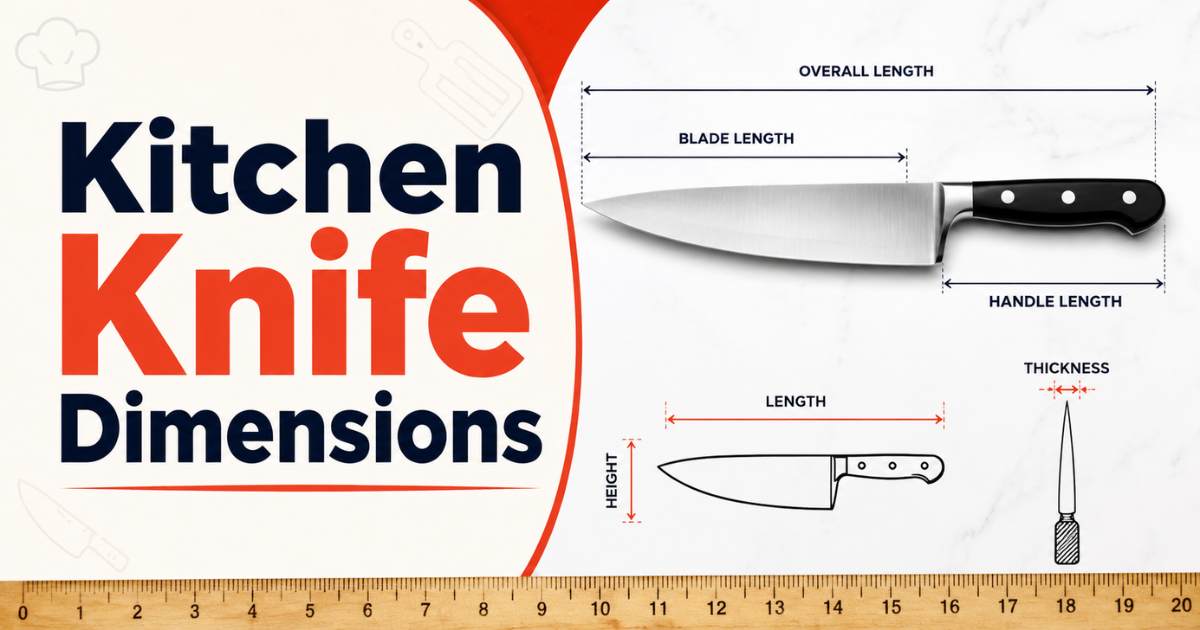
A kitchen knife is one of the most essential tools in every kitchen, but choosing the right size can be confusing. Different knives are designed for different cutting tasks, and selecting the correct blade length can improve comfort, safety, and efficiency while cooking.
Whether you’re a home cook or a professional chef, understanding kitchen knife dimensions helps you choose the right knife for chopping vegetables, slicing meat, carving poultry, or preparing delicate ingredients. This guide covers standard kitchen knife dimensions, blade length charts, and expert tips to help you find the perfect knife for every task.
Standard Kitchen Knife Dimensions
The table below shows the most common kitchen knife sizes used in homes and professional kitchens.
| Knife Type | Blade Length | Best For |
|---|---|---|
| Paring Knife | 3–4 in (8–10 cm) | Peeling, trimming, garnishing |
| Utility Knife | 5–6 in (13–15 cm) | Fruits, vegetables, sandwiches |
| Santoku Knife | 5–7 in (13–18 cm) | Chopping, slicing, dicing |
| Chef’s Knife | 8 in (20 cm) | Everyday kitchen tasks |
| Bread Knife | 8–10 in (20–25 cm) | Bread, cakes, pastries |
| Carving Knife | 8–12 in (20–30 cm) | Roasts, turkey, ham |
| Boning Knife | 5–6 in (13–15 cm) | Removing meat from bones |
| Cleaver | 6–8 in (15–20 cm) | Cutting bones and tough meat |
These measurements represent the blade only and do not include the handle.
Kitchen Knife Blade Length Guide
Choosing the right blade length depends on what you cook most often.
| Blade Length | Recommended Use |
|---|---|
| 3–4 inches | Small fruits and precision work |
| 5–6 inches | Everyday light food preparation |
| 7 inches | Compact all-purpose knife |
| 8 inches | Standard chef’s knife |
| 10 inches | Large vegetables and meat |
| 12 inches | Professional food preparation |
For most households, an 8-inch chef’s knife offers the best balance between control and versatility.
Chef’s Knife Dimensions
The chef’s knife is considered the most versatile knife in any kitchen. It handles chopping, slicing, dicing, and mincing with ease.
| Blade Size | Ideal For |
|---|---|
| 6 inches | Beginners and smaller hands |
| 8 inches | Most home cooks |
| 10 inches | Frequent cooking |
| 12 inches | Professional chefs |
An 8-inch chef’s knife remains the most popular choice because it provides excellent balance without feeling too heavy.
Santoku Knife Dimensions
A Santoku knife originated in Japan and has become increasingly popular worldwide. It features a shorter, wider blade designed for precision cutting.
| Blade Size | Best Use |
|---|---|
| 5 inches | Small kitchens |
| 6 inches | Daily meal preparation |
| 7 inches | Professional kitchens |
Santoku knives excel at slicing vegetables, boneless meat, and fish while reducing food from sticking to the blade.
Paring Knife Dimensions
Paring knives are compact and perfect for detailed cutting tasks that require precision.
| Blade Size | Common Uses |
|---|---|
| 3 inches | Peeling fruits |
| 3.5 inches | Decorative cutting |
| 4 inches | General kitchen prep |
Every kitchen should have at least one quality paring knife.
Bread Knife Dimensions
Bread knives feature long serrated blades designed to cut through crusty bread without crushing the soft interior.
| Blade Size | Suitable For |
|---|---|
| 8 inches | Sandwich bread |
| 9 inches | Artisan loaves |
| 10 inches | Homemade bread and cakes |
The serrated edge also works well for tomatoes and other soft-skinned produce.
Carving Knife Dimensions
Carving knives are designed for slicing cooked meats into thin, even pieces.
| Blade Size | Best For |
|---|---|
| 8 inches | Chicken and small roasts |
| 10 inches | Turkey and beef |
| 12 inches | Large roasts and professional carving |
A longer blade produces smoother slices with fewer strokes.
How to Choose the Right Kitchen Knife Size
When selecting a kitchen knife, consider more than just blade length.
Think about:
- Your hand size
- Cooking frequency
- Types of food you prepare
- Storage space
- Blade weight
- Handle comfort
If you cook daily, investing in a high-quality 8-inch chef’s knife is one of the best decisions you can make.
Kitchen Knife Dimensions by Kitchen Task
Different cutting jobs require different knife sizes.
| Kitchen Task | Recommended Knife |
|---|---|
| Peeling | 3–4-inch Paring Knife |
| Chopping Vegetables | 8-inch Chef’s Knife |
| Cutting Bread | 8–10-inch Bread Knife |
| Carving Meat | 10-inch Carving Knife |
| Filleting Fish | 6-inch Boning Knife |
| Slicing Herbs | 8-inch Chef’s Knife |
Using the right knife improves accuracy while reducing fatigue.
Do Bigger Kitchen Knives Cut Better?
Not necessarily.
A larger knife can cut bigger ingredients more efficiently, but it also requires greater control. Many home cooks find an 8-inch chef’s knife easier to manage than a 10-inch or 12-inch version.
The best knife is the one that feels balanced and comfortable in your hand.
Common Kitchen Knife Size Mistakes
Many people purchase knives that are either too large or too small for their needs.
Common mistakes include:
- Buying oversized knives for everyday cooking.
- Choosing blade length based only on appearance.
- Ignoring handle comfort.
- Using one knife for every cutting task.
- Purchasing inexpensive knives with poor balance.
A well-balanced knife is usually more important than having the longest blade.
Tips for Buying Kitchen Knives
Before buying a kitchen knife, keep these recommendations in mind:
- Measure your available storage space.
- Hold the knife if possible before purchasing.
- Choose stainless steel or high-carbon steel blades.
- Select ergonomic handles for better grip.
- Buy from reputable manufacturers.
- Keep your knives sharpened regularly.
A sharp knife is actually safer than a dull one because it requires less force during cutting.
Frequently Asked Questions
What is the standard kitchen knife size?
An 8-inch chef’s knife is considered the standard size for most home kitchens.
Is an 8-inch or 10-inch chef’s knife better?
Most home cooks prefer an 8-inch knife because it offers better control and versatility. A 10-inch knife is often preferred by experienced cooks and professionals.
What are the three essential kitchen knives?
Most kitchens only need three primary knives:
- 8-inch Chef’s Knife
- 3.5-inch Paring Knife
- 8-inch Bread Knife
These three knives can handle nearly every food preparation task.
How long should a bread knife be?
An 8- to 10-inch serrated bread knife is ideal for cutting sandwich bread, artisan loaves, and cakes.
Final Thoughts
Understanding kitchen knife dimensions makes it much easier to choose the right knife for your cooking style. While there are many blade sizes available, most home cooks only need a few essential knives to handle everyday meal preparation. An 8-inch chef’s knife, a 3.5-inch paring knife, and an 8-inch bread knife provide an excellent foundation for almost any kitchen. By selecting the right blade length, maintaining sharp edges, and using each knife for its intended purpose, you’ll enjoy safer, faster, and more precise food preparation for years to come.
